世家 · 巻 53
蕭相国世家 蕭相國世家
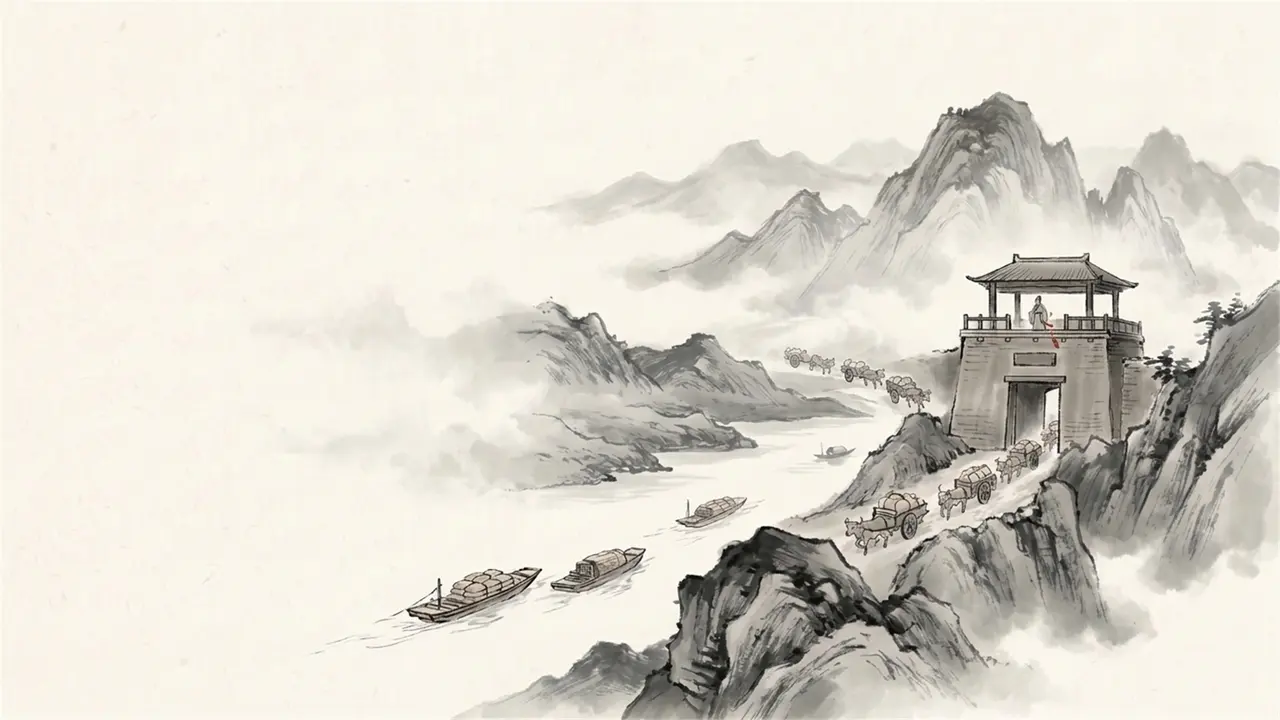
沛の役人だった蕭何は、無位無官のころから劉邦をかばい、挙兵後は丞相として支えた。咸陽に入ると、ほかの将が財宝に群がるなか、ひとり秦の法令や地図を収め、漢が天下の地勢や人口を知る土台をつくった。劉邦が各地で負けても、関中から兵と食糧を送り続け、天下統一後の論功行賞では「獣を追うのは犬、犬を放って獣のいる所を指すのは人だ」として功第一とされる。しかし晩年は、劉邦の疑いを避けるために恩賞を辞退し、わざと民の土地を安く買って評判を落とし、民のための願い出が怒りを買って投獄されもした。死の床では、仲の悪かった曹参を後継に推した。
音声
音声は合成音声です。
動画
節 1
原文
蕭相國何者,沛豐人也。以文無害為沛主吏掾。高祖為布衣時,何數以吏事護高祖。高祖為亭長,常左右之。高祖以吏繇咸陽,吏皆送奉錢三,何獨以五。秦御史監郡者與從事,常辨之。何乃給泗水卒史事,第一。秦御史欲入言徵何,何固請,得毋行。
書き下し文
蕭相国何なる者は、沛の豊の人なり。文無害なるを以て沛の主吏掾と為る。高祖布衣たりし時、何数しば吏事を以て高祖を護る。高祖亭長と為るや、常に之を左右す。高祖吏を以て咸陽に繇するや、吏皆送るに銭三を奉ずるに、何独り五を以てす。秦の御史の郡を監する者、与に事に従うに、常に之を辨ず。何乃ち泗水の卒史の事を給し、第一たり。秦の御史入りて言いて何を徴さんと欲するも、何固く請いて、行かざるを得たり。
現代語訳
相国の蕭何は、沛の豊邑の人である。法律や文書の扱いにそつがなかったので、沛の役所の主吏掾(人事係の長)になった。高祖(劉邦)がまだ無位無官だったころ、蕭何は役人の立場から何度も高祖をかばった。高祖が亭長になると、いつもそばで助けた。高祖が役人として人夫を率いて咸陽へ行くことになったとき、役人仲間はみな餞別に三百銭を贈ったが、蕭何だけは五百銭を贈った。郡の監察に来た秦の御史が蕭何と一緒に仕事をしたところ、蕭何はいつも見事にさばいた。そこで蕭何は泗水郡の卒史の仕事を任され、成績は第一だった。御史は朝廷に申し上げて蕭何を都に召し出そうとしたが、蕭何はかたく辞退して、行かずにすんだ。
英訳
Xiao He, the chancellor, was a man of Feng in Pei. Because he handled laws and documents without fault, he became chief clerk of personnel in Pei. When Gaozu was still a commoner, Xiao He more than once used his position to protect him. When Gaozu became a village head, Xiao He was always at his side to help. When Gaozu, as an official, was to lead a gang of laborers to Xianyang, the other clerks each gave him three hundred cash as a parting gift; Xiao He alone gave five hundred. An inspector of Qin who came to oversee the commandery worked with Xiao He, and Xiao He always handled matters well. So he was given the work of a clerk of Sishui Commandery and was ranked first. The inspector wanted to report to the court and have him summoned to the capital, but Xiao He firmly declined and was allowed to stay.
解説(日)
- 文無害: 法律や文書の処理に誤りがない。
- 主吏掾: 県の役所で人事をつかさどる役人の長。
- 布衣: 官位のない庶民。
- 亭長: 宿場と治安をあずかる下級の役人。
- 繇: 「徭」と同じ。労役。ここでは人夫を率いて都へ行くこと。
- 錢三・五: 三百銭と五百銭のこととされる(p7 でこの「二百銭多かった」分が恩賞に加えられる)。
- 御史監郡者: 郡を監察するために派遣された秦の御史。
- 徵: 召し出して中央の役人に取り立てる。
解説(英)
- 文無害: handling laws and documents without error.
- 主吏掾: the chief clerk in charge of personnel in a county office.
- Commoner (布衣): someone without office or rank.
- Village head (亭長): a minor official in charge of a post station and local order.
- 繇: forced labor; here, leading a gang of laborers to the capital.
- Three and five: taken to mean three hundred and five hundred cash (in p7 the extra two hundred is repaid as a reward).
- Inspector (御史監郡者): an official sent by Qin to oversee a commandery.
- 徵: to summon someone to serve at court.
英語の語注
- commoner/ˈkɑmənər/noun
a person with no title or rank
本文では: “When Gaozu was still a commoner”
似た語と違い: ordinary person — someone of no rank · subject — a person ruled by a king
- decline/dɪˈklaɪn/verb
to say no politely to an offer
本文では: “Xiao He firmly declined”
似た語と違い: refuse — say no · turn down — not accept
節 2
原文
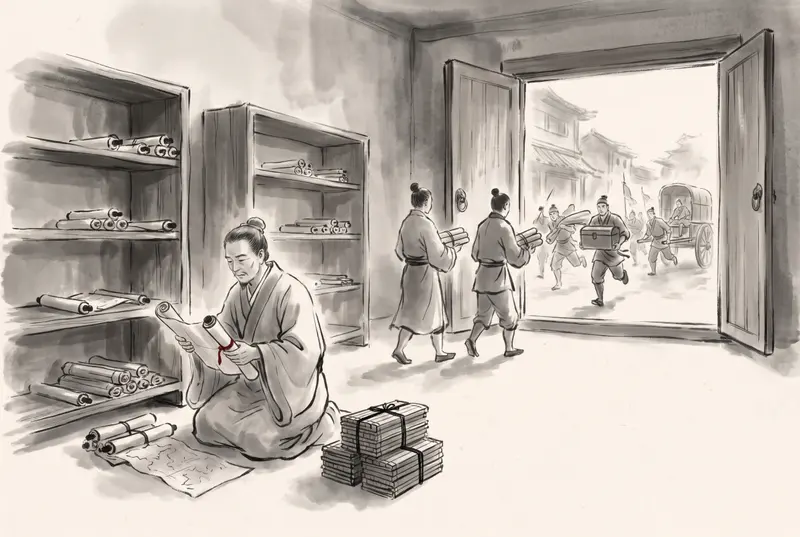
及高祖起為沛公,何常為丞督事。沛公至咸陽,諸將皆爭走金帛財物之府分之,何獨先入收秦丞相御史律令圖書藏之。沛公為漢王,以何為丞相。項王與諸侯屠燒咸陽而去。漢王所以具知天下阸塞,戶口多少,彊弱之處,民所疾苦者,以何具得秦圖書也。何進言韓信,漢王以信為大將軍。語在淮陰侯事中。
書き下し文
高祖起ちて沛公と為るに及び、何常に丞と為りて事を督す。沛公咸陽に至るや、諸将皆争いて金帛財物の府に走りて之を分かつ。何独り先ず入りて秦の丞相・御史の律令・図書を収めて之を蔵す。沛公漢王と為り、何を以て丞相と為す。項王諸侯と咸陽を屠焼して去る。漢王の具に天下の阸塞、戸口の多少、彊弱の処、民の疾苦する所の者を知る所以は、何の具に秦の図書を得たるを以てなり。何韓信を進言し、漢王信を以て大将軍と為す。語は淮陰侯の事の中に在り。
現代語訳
高祖が兵を挙げて沛公となると、蕭何はいつも補佐役として事務を取りしきった。沛公が咸陽に入ると、将軍たちは先を争って金銀や絹、財宝の倉に駆けつけ、山分けした。蕭何だけは真っ先に秦の丞相府と御史府に入り、法令と地図・帳簿を収めて、しまっておいた。沛公が漢王になると、蕭何を丞相にした。項王は諸侯とともに咸陽で人々を殺し、町を焼き払って去っていった。漢王が、天下の要害の地、戸数や人口の多い少ない、どこが強くどこが弱いか、民が何に苦しんでいるかを、細かく知ることができたのは、蕭何が秦の地図や帳簿をすべて手に入れていたからである。蕭何は韓信を推薦し、漢王は韓信を大将軍にした。このことは淮陰侯(韓信)の伝に書いてある。
英訳
When Gaozu rose in arms and became Lord of Pei, Xiao He always served as his deputy and ran affairs. When the Lord of Pei reached Xianyang, the generals all raced to the storehouses of gold, silk and treasure and divided them up. Xiao He alone went first into the offices of the Qin chancellor and censor and took away their laws, maps and registers for safekeeping. When the Lord of Pei became King of Han, he made Xiao He his chancellor. Xiang Yu and the lords massacred the people of Xianyang, burned the city and left. The reason the King of Han knew in detail the strongholds of the empire, the size of its population, where it was strong and where weak, and what the people suffered from, was that Xiao He had obtained all the maps and registers of Qin. Xiao He recommended Han Xin, and the King of Han made Han Xin supreme general. This is told in the biography of the Marquis of Huaiyin.
解説(日)
- 丞: 補佐役。
- 金帛財物之府: 金銀・絹織物・財宝をしまった倉。
- 律令圖書: 法令と、地図・戸籍などの帳簿。
- 屠燒: 住民を殺し、町を焼く(巻7「鴻門の会」のあと)。
- 阸塞: 地形のけわしい要害の地。
- 戶口: 戸数と人口。
- 進言韓信: 韓信を推薦したこと。逃げた韓信を蕭何が追いかけた話は巻92「韓信」の章を参照。
解説(英)
- 丞: deputy.
- Storehouses of gold, silk and treasure (金帛財物之府).
- 律令圖書: the laws, and the maps and household registers.
- Massacred and burned (屠燒): after the Feast at Hongmen (see Volume 7).
- 阸塞: strongholds in difficult terrain.
- 戶口: households and population.
- Recommended Han Xin: for Xiao He chasing after Han Xin when he ran away, see the chapter on Han Xin (Volume 92).
英語の語注
- register/ˈrɛdʒɪstər/noun
an official list of names or facts
本文では: “their laws, maps and registers”
似た語と違い: record — written information kept for later · list — names or things written one after another
- stronghold/ˈstrɔŋhoʊld/noun
a place that is strongly defended
本文では: “the strongholds of the empire”
似た語と違い: fortress — a large strong building for defense · bastion — a strongly defended place
節 3
原文
漢王引兵東定三秦,何以丞相留收巴蜀,填撫諭告,使給軍食。漢二年,漢王與諸侯擊楚,何守關中,侍太子,治櫟陽。為法令約束,立宗廟社稷宮室縣邑,輒奏上,可,許以從事;即不及奏上,輒以便宜施行,上來以聞。關中事計戶口轉漕給軍,漢王數失軍遁去,何常興關中卒,輒補缺。上以此專屬任何關中事。
書き下し文
漢王兵を引きて東して三秦を定むるや、何丞相を以て留まりて巴蜀を収め、塡撫諭告して、軍食を給せしむ。漢の二年、漢王諸侯と楚を撃つ。何関中を守り、太子に侍し、櫟陽を治む。法令約束を為り、宗廟・社稷・宮室・県邑を立て、輒ち奏上し、可なれば、許して以て事に従う。即し奏上するに及ばざれば、輒ち便宜を以て施行し、上来たりて以て聞す。関中の事は戸口を計りて転漕して軍に給す。漢王数しば軍を失いて遁れ去るも、何常に関中の卒を興して、輒ち欠を補う。上此を以て専ら関中の事を何に属任す。
現代語訳
漢王が兵を率いて東へ進み、三秦を平定すると、蕭何は丞相として残り、巴・蜀を治めて、人々をなだめ、命令を行き渡らせ、軍の食糧を供給させた。漢の二年(前205年)、漢王が諸侯とともに楚を攻めると、蕭何は関中を守り、太子に仕え、櫟陽で政務をとった。法令や決まりをつくり、宗廟や社稷、宮殿、県や町を整えるときは、そのつど漢王に申し上げ、許しが出てから実行した。申し上げる間がないときは、その場で最善と思うやり方で実行し、漢王が帰ってきてから報告した。関中では戸数と人口を調べて、陸路と水路で物資を運び、軍に送った。漢王はたびたび軍を失って逃げ帰ったが、蕭何はそのたびに関中で兵を集めて、すぐに欠けた分を補った。このため漢王は、関中のことはすべて蕭何に任せた。
英訳
When the King of Han led his army east and pacified the Three Qins, Xiao He stayed behind as chancellor to govern Ba and Shu, calming and instructing the people and supplying the army with food. In the second year of Han (205 BCE), when the King of Han and the lords attacked Chu, Xiao He held the land within the passes, attended the crown prince and governed from Yueyang. When he made laws and regulations, or set up ancestral temples, altars of the state, palaces, counties and towns, he always reported to the king and acted once he had approval; when there was no time to report, he did what seemed best and told the king when he returned. Within the passes he counted the households and people and shipped supplies by land and water to the army. The King of Han often lost his armies and fled, but each time Xiao He raised men in the land within the passes and filled the gaps at once. For this reason the king left all the affairs of the land within the passes to Xiao He.
解説(日)
- 三秦: 項羽が秦の旧地を三つに分けて秦の降将三人に与えた国(雍・塞・翟)。
- 巴蜀: 今の四川省あたり。漢王の最初の領地。
- 塡撫諭告: 人々をなだめ落ち着かせ、命令を言い聞かせる。
- 關中: 函谷関の西、秦の本拠地だった渭水の盆地。
- 櫟陽: 関中の町。漢の仮の都になった。
- 宗廟社稷: 祖先をまつる廟と、土地・穀物の神の社。国家の象徴。
- 便宜: その場でいちばん都合のよいやり方。
- 轉漕: 陸路(転)と水路(漕)で物資を運ぶ。
解説(英)
- The Three Qins: the old land of Qin, split by Xiang Yu into three kingdoms given to three surrendered Qin generals.
- Ba and Shu: roughly present-day Sichuan, the King of Han's first domain.
- 塡撫諭告: calming the people and making the orders known.
- The land within the passes (關中): the Wei River basin west of the Hangu Pass, Qin's heartland.
- Yueyang: a town within the passes that served as the temporary Han capital.
- Ancestral temples and altars (宗廟社稷): the symbols of the state.
- 便宜: whatever is most fitting on the spot.
- 轉漕: transport by land (轉) and by water (漕).
英語の語注
- supply/səˈplaɪ/verb
to provide something that is needed
本文では: “supplying the army with food”
似た語と違い: provide — give what is needed · furnish — give or provide
- regulation/ˌrɛɡjəˈleɪʃən/noun
an official rule
本文では: “When he made laws and regulations”
似た語と違い: rule — something you must do or not do · statute — a written law
節 4
原文
漢三年,漢王與項羽相距京索之間,上數使使勞苦丞相。鮑生謂丞相曰:「王暴衣露蓋,數使使勞苦君者,有疑君心也。為君計,莫若遣君子孫昆弟能勝兵者悉詣軍所,上必益信君。」於是何從其計,漢王大說。
書き下し文
漢の三年、漢王項羽と京・索の間に相距ぐ。上数しば使いをして丞相を労苦せしむ。鮑生丞相に謂いて曰く、「王衣を暴し蓋を露すに、数しば使いをして君を労苦せしむる者は、君を疑うの心有ればなり。君の為に計るに、君の子孫昆弟の兵に勝うる者を遣わして悉く軍所に詣らしむるに若くは莫し。上必ず益ます君を信ぜん」と。是に於いて何其の計に従う。漢王大いに説ぶ。
現代語訳
漢の三年(前204年)、漢王は項羽と京・索のあたりで対峙していた。漢王はたびたび使者を送って、丞相の蕭何の苦労をねぎらった。鮑生が丞相に言った。「王は野ざらしの陣中で苦労しておられるのに、たびたび使者をよこしてあなたをねぎらうのは、あなたを疑う気持ちがあるからです。あなたのためを思えば、子や孫、兄弟のうち戦える者をみな軍のもとへ送るのがいちばんです。そうすれば王はますますあなたを信用するでしょう」。そこで蕭何がその計に従うと、漢王は大いに喜んだ。
英訳
In the third year of Han (204 BCE), the King of Han and Xiang Yu faced each other between Jing and Suo. The king often sent envoys to thank the chancellor for his labors. Master Bao said to the chancellor, "The king is out in the field, his clothes exposed to the sun and his canopy to the rain, and yet he keeps sending envoys to thank you. That is because there is suspicion in his heart. If I may plan for you, nothing would be better than to send all your sons, grandsons and brothers who can bear arms to join the army. Then the king will trust you all the more." Xiao He followed his advice, and the King of Han was delighted.
解説(日)
- 京・索: 滎陽の近くの地名。楚と漢が長く対峙した。
- 相距: たがいに対峙する。
- 勞苦: 苦労をねぎらう。
- 鮑生: 蕭何の客。「生」は学者や先生に対する呼び方。
- 暴衣露蓋: 衣を日にさらし、車の覆いを雨露にさらす。野外で苦労すること。
- 昆弟: 兄弟。
- 詣軍所: 軍のいる所へ行く。一族を前線に送れば、人質を差し出したのと同じになる。
解説(英)
- Jing and Suo: places near Xingyang, where Chu and Han faced each other for a long time.
- 相距: to face each other in a standoff.
- 勞苦: to thank someone for their hard work.
- Master Bao (鮑生): a guest of Xiao He; 生 is a way of addressing a scholar.
- 暴衣露蓋: clothes in the sun and carriage canopy in the dew; enduring hardship in the field.
- 昆弟: brothers.
- Joining the army: sending his family to the front was in effect giving hostages.
英語の語注
- suspicion/səˈspɪʃən/noun
a feeling that someone may be doing something wrong
本文では: “there is suspicion in his heart”
似た語と違い: distrust — not believing someone is honest · doubt — a feeling of not being sure
- bear arms/bɛr ɑrmz/idiom
to carry weapons and fight
本文では: “who can bear arms”
似た語と違い: fight — take part in battle · serve — be a soldier
節 5
原文
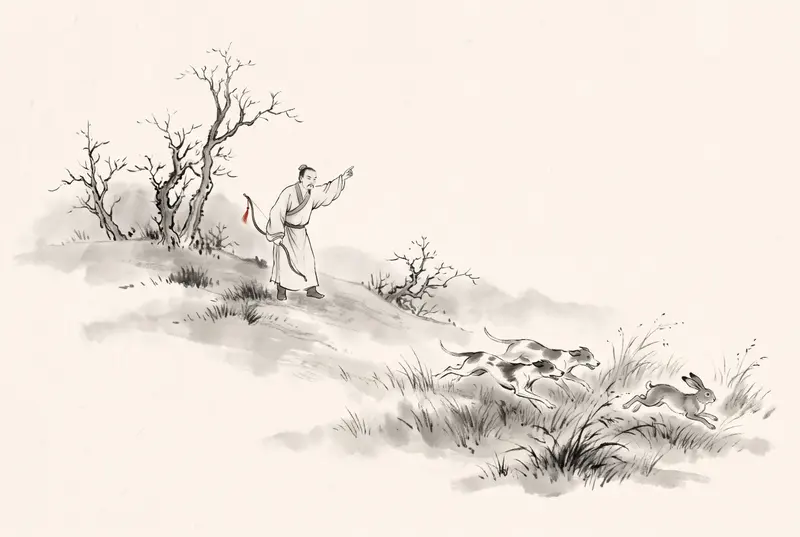
漢五年,既殺項羽,定天下,論功行封。群臣爭功,歲餘功不決。高祖以蕭何功最盛,封為酇侯,所食邑多。功臣皆曰:「臣等身被堅執銳,多者百餘戰,少者數十合,攻城掠地,大小各有差。今蕭何未嘗有汗馬之勞,徒持文墨議論,不戰,顧反居臣等上,何也?」高帝曰:「諸君知獵乎?」曰:「知之。」「知獵狗乎?」曰:「知之。」高帝曰:「夫獵,追殺獸兔者狗也,而發蹤指示獸處者人也。今諸君徒能得走獸耳,功狗也。至如蕭何,發蹤指示,功人也。且諸君獨以身隨我,多者兩三人。今蕭何舉宗數十人皆隨我,功不可忘也。」群臣皆莫敢言。
書き下し文
漢の五年、既に項羽を殺し、天下を定め、功を論じて封を行う。群臣功を争い、歳余にして功決せず。高祖蕭何の功最も盛んなるを以て、封じて酇侯と為し、食む所の邑多し。功臣皆曰く、「臣等は身に堅を被り鋭を執り、多き者は百余戦、少なき者は数十合、城を攻め地を掠め、大小各おの差有り。今蕭何未だ嘗て汗馬の労有らず、徒だ文墨を持して議論し、戦わず。顧って反って臣等の上に居るは、何ぞや」と。高帝曰く、「諸君猟を知るか」と。曰く、「之を知る」と。「猟狗を知るか」と。曰く、「之を知る」と。高帝曰く、「夫れ猟は、獣兎を追殺する者は狗なり。而して蹤を発して獣の処を指示する者は人なり。今諸君は徒だ能く走獣を得るのみ、功狗なり。蕭何の如きに至りては、蹤を発して指示す、功人なり。且つ諸君は独り身を以て我に随う、多き者も両三人なり。今蕭何は宗を挙げて数十人皆我に随う。功忘るべからざるなり」と。群臣皆敢えて言う莫し。
現代語訳
漢の五年(前202年)、項羽を殺して天下を平定すると、功績を論じて領地を与えることになった。家臣たちは手柄を争い、一年あまりたっても決まらなかった。高祖は蕭何の功績がいちばん大きいとして、酇侯に封じ、たくさんの領地を与えた。功臣たちはみな言った。「わたしたちはよろいを着て武器を取り、多い者は百回あまり、少ない者でも数十回戦って、城を攻め、土地を奪ってきました。手柄にはそれぞれ大小の差があります。ところが蕭何は、馬に汗をかかせて戦ったことは一度もなく、ただ筆と墨で議論していただけで、戦っていません。それなのに、わたしたちより上にいるのはなぜですか」。高帝は言った。「諸君は狩りを知っているか」。「知っています」。「猟犬を知っているか」。「知っています」。高帝は言った。「狩りでは、獣や兎を追いかけて殺すのは犬だ。だが、犬の綱を放って獣のいる場所を指し示すのは人だ。諸君はただ走る獣を捕まえただけで、手柄を立てた犬、つまり功狗だ。蕭何はといえば、犬を放って獣の居場所を指し示した。手柄を立てた人、功人だ。それに諸君は、自分ひとりの身でわたしに従ってきただけで、多い者でも二、三人だ。蕭何は一族数十人をあげて、みなわたしに従わせた。この功は忘れてはならない」。家臣たちはみな、何も言えなかった。
英訳
In the fifth year of Han (202 BCE), after Xiang Yu had been killed and the empire pacified, merits were assessed and fiefs granted. The ministers quarreled over their merits, and after more than a year nothing had been decided. Gaozu judged Xiao He's merit the greatest, made him Marquis of Zan and gave him many towns. The other men of merit all said, "We wore armor and carried weapons. Some of us fought more than a hundred battles, some only a few dozen; we attacked cities and seized land, and our merits differ, some great, some small. But Xiao He never once made his horse sweat. He only held a brush and debated, and never fought. Why should he be placed above us?" The emperor said, "Do you gentlemen know about hunting?" "We do." "Do you know about hunting dogs?" "We do." The emperor said, "In a hunt, it is the dogs that chase down and kill the beasts and hares, but it is a man who looses the dogs and points to where the beasts are. All you gentlemen did was catch running beasts: you are hounds of merit. As for Xiao He, he loosed the dogs and pointed the way: he is a man of merit. Besides, you followed me by yourselves, at most with two or three others. Xiao He brought his whole clan, dozens of people, to follow me. That merit must not be forgotten." None of the ministers dared say another word.
解説(日)
- 論功行封: 功績を論じて領地を与える。
- 酇侯: 酇(今の河南省永城市あたり)の侯。
- 被堅執銳: 堅いよろいを着て、鋭い武器を取る。
- 汗馬之勞: 馬に汗をかかせるほどの戦場での働き。
- 文墨: 筆と墨。文書の仕事。
- 發蹤指示: 犬の綱を放って、獣の居場所を指し示す。
- 功狗・功人: 手柄を立てた犬と、手柄を立てた人。実際に戦う者と、全体を指図する者のたとえ。
- 舉宗: 一族をあげて。
解説(英)
- 論功行封: assessing merit and granting fiefs.
- Marquis of Zan (酇侯): Zan was near present-day Yongcheng in Henan.
- 被堅執銳: wearing tough armor and carrying sharp weapons.
- 汗馬之勞: work on horseback that makes the horse sweat; service in battle.
- 文墨: brush and ink; paperwork.
- 發蹤指示: loosing the dogs and pointing to where the game is.
- Hounds of merit and man of merit (功狗・功人): those who do the fighting, and the one who directs it.
- 舉宗: the whole clan.
英語の語注
- merit/ˈmɛrɪt/noun
a deed or quality that deserves praise or reward
本文では: “Gaozu judged Xiao He's merit the greatest”
似た語と違い: credit — praise for something done · achievement — something done well
- hound/haʊnd/noun
a dog used for hunting
本文では: “you are hounds of merit”
似た語と違い: hunting dog — a dog trained to hunt · beagle — a small hunting dog
節 6
原文
列侯畢已受封,及奏位次,皆曰:「平陽侯曹參身被七十創,攻城掠地,功最多,宜第一。」上已橈功臣,多封蕭何,至位次未有以複難之,然心欲何第一。關內侯鄂君進曰:「群臣議皆誤。夫曹參雖有野戰略地之功,此特一時之事。夫上與楚相距五歲,常失軍亡眾,逃身遁者數矣。然蕭何常從關中遣軍補其處,非上所詔令召,而數萬眾會上之乏絕者數矣。夫漢與楚相守滎陽數年,軍無見糧,蕭何轉漕關中,給食不乏。陛下雖數亡山東,蕭何常全關中以待陛下,此萬世之功也。今雖亡曹參等百數,何缺於漢?漢得之不必待以全。奈何欲以一旦之功而加萬世之功哉!蕭何第一,曹參次之。」高祖曰:「善。」於是乃令蕭何,賜帶劍履上殿,入朝不趨。
書き下し文
列侯畢く已に封を受け、位次を奏するに及び、皆曰く、「平陽侯曹参は身に七十創を被り、城を攻め地を掠め、功最も多し。宜しく第一たるべし」と。上已に功臣を橈めて多く蕭何を封ずるも、位次に至りて未だ以て復た之を難ずる有らず。然れども心は何を第一とせんと欲す。関内侯鄂君進みて曰く、「群臣の議は皆誤れり。夫れ曹参は野戦略地の功有りと雖も、此れ特だ一時の事なり。夫れ上楚と相距ぐこと五歳、常に軍を失い衆を亡い、身を逃れて遁るる者数しばなり。然れども蕭何常に関中より軍を遣わして其の処を補う。上の詔令して召す所に非ずして、数万の衆上の乏絶に会する者数しばなり。夫れ漢楚と滎陽に相守ること数年、軍に見糧無し。蕭何関中より転漕し、食を給して乏しからしめず。陛下数しば山東を亡うと雖も、蕭何常に関中を全うして以て陛下を待つ。此れ万世の功なり。今曹参等百数を亡うと雖も、何ぞ漢に欠けん。漢之を得るも必ずしも待ちて以て全からず。奈何ぞ一旦の功を以て万世の功に加えんと欲するや。蕭何第一、曹参之に次ぐ」と。高祖曰く、「善し」と。是に於いて乃ち蕭何をして、剣を帯び履をはきて殿に上り、朝に入りて趨らざるを賜わしむ。
現代語訳
諸侯への領地の授与がすべて終わり、朝廷での席次を申し上げることになると、みなが言った。「平陽侯の曹参は、体に七十か所も傷を負い、城を攻め土地を奪って、手柄がいちばん多い。第一にすべきです」。高祖はすでに功臣たちを押し切って蕭何に多くの領地を与えていたので、席次についてまでは、また反対することはできなかった。しかし心の中では蕭何を第一にしたかった。関内侯の鄂君が進み出て言った。「みなさんの議論はまちがっています。曹参には野戦で土地を奪った手柄がありますが、それは一時のことにすぎません。陛下が楚と対峙した五年のあいだ、いつも軍を失い兵をなくし、身ひとつで逃げたことが何度もありました。そのたびに蕭何は関中から軍を送り、その穴を埋めました。陛下が命じて呼び寄せたのでもないのに、数万の兵が、陛下がいちばん困っているときに駆けつけたことが何度もあったのです。漢と楚が滎陽で何年もにらみ合っていたとき、軍には手持ちの食糧がありませんでした。蕭何は関中から物資を運び、食糧を切らさずに送り続けました。陛下は何度も山東の地を失いましたが、蕭何はいつも関中を守り抜いて、陛下を待っていました。これは万世の功績です。いま曹参のような者を百人失っても、漢に何の欠けるところがありましょう。漢は、彼らがいなければ成り立たなかったわけではありません。どうして一時の功績を、万世の功績の上に置こうとなさるのですか。蕭何が第一、曹参がその次です」。高祖は言った。「よろしい」。そして蕭何に、剣を帯び、履をはいたまま殿上にのぼり、朝廷で小走りにならなくてもよいという特権を与えた。
英訳
When all the lords had received their fiefs and it came to proposing the order of rank at court, everyone said, "Cao Can, Marquis of Pingyang, bears seventy wounds; he attacked cities and seized land, and his merits are the greatest. He should be first." The emperor had already overruled the men of merit to give Xiao He a large fief, and he had no ground to oppose them again over the order of rank; but in his heart he wanted Xiao He first. Then Lord E, a Marquis within the Passes, stepped forward and said, "The ministers are all mistaken. Cao Can won battles in the field and took land, but that was the work of a moment. For five years Your Majesty faced Chu, and again and again you lost your armies and men and escaped with your life alone. Each time, Xiao He sent troops from the land within the passes to fill the gap. Without any order or summons from Your Majesty, tens of thousands of men came to you when you were at your lowest, again and again. When Han and Chu faced each other at Xingyang for years, the army had no grain on hand; Xiao He shipped supplies from the land within the passes and never let the food run out. Your Majesty lost the lands east of the mountains many times, but Xiao He always kept the land within the passes whole and waited for you. That is a merit for ten thousand generations. Even if we lost a hundred men like Cao Can, what would Han lack? Han did not depend on them to survive. How can you place the merit of a day above the merit of ten thousand generations? Xiao He first, Cao Can after him." Gaozu said, "Good." So Xiao He was granted the right to wear his sword and shoes up into the hall, and not to hurry when he came to court.
解説(日)
- 位次: 朝廷での席次・順位。
- 曹參: 平陽侯。沛の人で、蕭何と同じく役人あがりの将軍。蕭何の次の相国。
- 七十創: 七十か所の傷。
- 橈: 曲げる。功臣たちの意見を押し曲げる。
- 關內侯: 領地を持たない、名誉だけの侯。
- 鄂君: 鄂千秋。この発言で領地を与えられる(p7)。
- 見糧: 手元にある食糧。
- 山東: 崤山・函谷関より東の地。
- 帶劍履上殿,入朝不趨: 剣を帯び履をはいたまま殿上にのぼり、朝廷で小走りしなくてよい。臣下としては破格の特権。
解説(英)
- 位次: the order of rank at court.
- Cao Can (曹參): Marquis of Pingyang, like Xiao He a former clerk of Pei, and his successor as chancellor.
- 七十創: seventy wounds.
- 橈: to bend; to overrule.
- Marquis within the Passes (關內侯): an honorary marquis with no fief.
- Lord E (鄂君): E Qianqiu, rewarded with a fief for this speech (p7).
- 見糧: grain on hand.
- East of the mountains (山東): the lands east of Mount Xiao and the Hangu Pass.
- Sword and shoes in the hall, no hurrying at court: extraordinary privileges for a subject.
英語の語注
- overrule/ˌoʊvərˈrul/verb
to set aside other people's opinion by using power
本文では: “The emperor had already overruled the men of merit”
似た語と違い: override — decide against others · reject — refuse to accept
- generation/ˌdʒɛnəˈreɪʃən/noun
all the people born at about the same time
本文では: “a merit for ten thousand generations”
似た語と違い: age — a long period of time · descendants — children, grandchildren and so on
節 7
原文
上曰:「吾聞進賢受上賞。蕭何功雖高,得鄂君乃益明。」於是因鄂君故所食關內侯邑封為安平侯。是日,悉封何父子兄弟十餘人,皆有食邑。乃益封何二千戶,以帝嘗繇咸陽時何送我獨贏錢二也。
書き下し文
上曰く、「吾聞く、賢を進むるは上賞を受くと。蕭何の功高しと雖も、鄂君を得て乃ち益ます明らかなり」と。是に於いて鄂君の故の食む所の関内侯の邑に因りて封じて安平侯と為す。是の日、悉く何の父子兄弟十余人を封じ、皆食邑有り。乃ち何に二千戸を益封す。帝嘗て咸陽に繇せし時、何我を送ること独り銭二を贏せるを以てなり。
現代語訳
高祖は言った。「すぐれた者を推す者は最上の賞を受ける、と聞いている。蕭何の功は高いが、鄂君のおかげでいっそうはっきりした」。そこで鄂君がもともと関内侯として受けていた領地をもとに、鄂君を安平侯に封じた。この日、蕭何の父子兄弟十人あまりもすべて封じ、みな領地を持った。さらに蕭何には二千戸を加えた。高祖がむかし咸陽へ労役に行ったとき、蕭何だけがほかの者より二百銭多く贈ってくれたからである。
英訳
The emperor said, "I have heard that whoever recommends a worthy man receives the highest reward. Xiao He's merit was great, but with Lord E it has become clearer still." So, on the basis of the towns Lord E already held as a Marquis within the Passes, he was enfeoffed as Marquis of Anping. That same day Xiao He's father, sons and brothers, more than ten in all, were enfeoffed, each with towns of their own. And Xiao He's own fief was increased by two thousand households, because when the emperor had once gone to Xianyang on labor service, Xiao He alone had given him two hundred cash more than the others.
解説(日)
- 進賢受上賞: 賢い人を推薦した者は、最上の賞を受ける。
- 安平侯: 安平(今の河北省)の侯。
- 食邑: 税を受け取れる領地。
- 贏錢二: ほかの者より銭が二(百)多い。p1 の三百銭と五百銭の差。
解説(英)
- 進賢受上賞: whoever recommends a worthy man receives the highest reward.
- Marquis of Anping: Anping is in present-day Hebei.
- 食邑: towns whose taxes the holder receives.
- 贏錢二: two (hundred) cash more than the others: the difference between three hundred and five hundred in p1.
英語の語注
- recommend/ˌrɛkəˈmɛnd/verb
to say that someone is good for a job
本文では: “whoever recommends a worthy man”
似た語と違い: put forward — suggest someone · endorse — say you support someone
節 8
原文
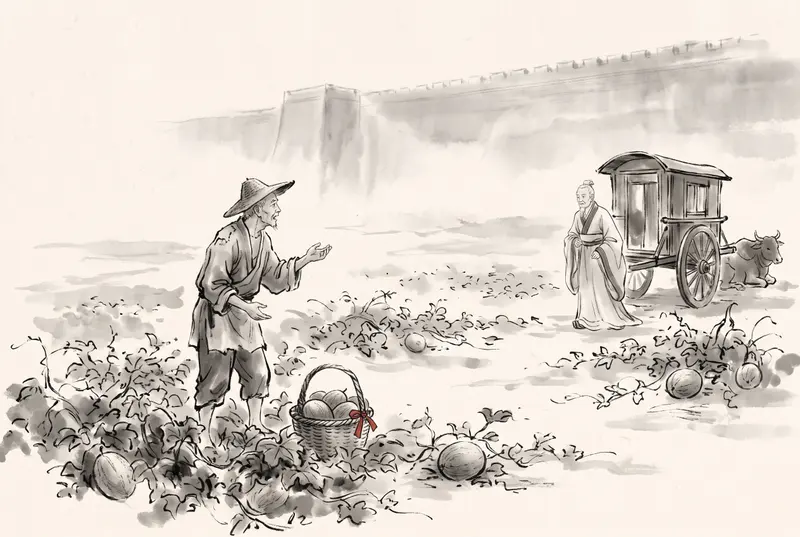
漢十一年,陳豨反,高祖自將,至邯鄲。未罷,淮陰侯謀反關中,呂后用蕭何計,誅淮陰侯,語在淮陰事中。上已聞淮陰侯誅,使使拜丞相何為相國,益封五千戶,令卒五百人一都尉為相國衛。諸君皆賀,召平獨吊。召平者,故秦東陵侯。秦破,為布衣,貧,種瓜於長安城東,瓜美,故世俗謂之「東陵瓜」,從召平以為名也。召平謂相國曰:「禍自此始矣。上暴露於外而君守於中,非被矢石之事而益君封置衛者,以今者淮陰侯新反於中,疑君心矣。夫置衛衛君,非以寵君也。原君讓封勿受,悉以家私財佐軍,則上心說。」相國從其計,高帝乃大喜。
書き下し文
漢の十一年、陳豨反す。高祖自ら将として、邯鄲に至る。未だ罷めざるに、淮陰侯関中に反を謀る。呂后蕭何の計を用いて、淮陰侯を誅す。語は淮陰の事の中に在り。上已に淮陰侯の誅せらるるを聞き、使いをして丞相何を拝して相国と為し、五千戸を益封し、卒五百人一都尉をして相国の衛と為さしむ。諸君皆賀するに、召平独り弔す。召平なる者は、故の秦の東陵侯なり。秦破れ、布衣と為り、貧しくして、瓜を長安城の東に種う。瓜美し。故に世俗之を「東陵の瓜」と謂う。召平に従いて以て名と為すなり。召平相国に謂いて曰く、「禍此より始まらん。上外に暴露して君中を守る。矢石の事を被るに非ずして君の封を益し衛を置く者は、今者淮陰侯新たに中に反するを以て、君の心を疑えばなり。夫れ衛を置きて君を衛るは、以て君を寵するに非ざるなり。願わくは君封を譲りて受くる勿く、悉く家の私財を以て軍を佐けよ。則ち上の心説ばん」と。相国其の計に従う。高帝乃ち大いに喜ぶ。
現代語訳
漢の十一年(前196年)、陳豨が反乱を起こした。高祖は自ら軍を率いて邯鄲まで出陣した。戦いが終わらないうちに、淮陰侯の韓信が関中で謀反をくわだてた。呂后は蕭何の計を用いて、淮陰侯を殺した。このことは淮陰侯の伝に書いてある。高祖は淮陰侯が殺されたと聞くと、使者を送って丞相の蕭何を相国に任じ、五千戸を加え、兵士五百人と都尉一人を相国の護衛につけた。人々はみな祝ったが、召平だけはお悔やみを言った。召平はもと秦の東陵侯である。秦が滅びると無位無官となり、貧しくなって、長安の町の東で瓜を作っていた。その瓜がおいしかったので、世間では「東陵の瓜」と呼んだ。召平の名から取ったのである。召平は相国に言った。「災いはここから始まります。陛下は外で野ざらしの苦労をなさり、あなたは都を守っています。矢や石の飛んでくるような目にあったわけでもないのに、あなたの領地を増やし、護衛をつけたのは、淮陰侯がつい先ごろ都で謀反を起こしたので、あなたの心をも疑っているからです。護衛をつけてあなたを守らせるのは、あなたをかわいがっているからではありません。どうか恩賞は辞退して受けとらず、家の私財をすべて軍に差し出してください。そうすれば陛下はお喜びになるでしょう」。相国がその計に従うと、高帝は大いに喜んだ。
英訳
In the eleventh year of Han (196 BCE), Chen Xi rebelled. Gaozu led the army himself and went as far as Handan. Before the campaign was over, the Marquis of Huaiyin plotted rebellion within the passes, and Empress Lü, using Xiao He's plan, put him to death; this is told in the biography of the Marquis of Huaiyin. When the emperor heard that the Marquis of Huaiyin had been executed, he sent an envoy to raise Chancellor Xiao He to the rank of chancellor of state, added five thousand households to his fief, and gave him a guard of five hundred soldiers under a commandant. Everyone came to congratulate him; only Shao Ping offered condolences. Shao Ping had been Marquis of Dongling under Qin. When Qin fell he became a commoner and, being poor, grew melons east of the city of Chang'an. His melons were so good that people called them "Dongling melons," after his title. Shao Ping said to the chancellor, "Your misfortune begins here. His Majesty is out in the field, exposed to wind and weather, while you guard the capital. You have not faced arrows or stones, yet he increases your fief and gives you a guard. That is because the Marquis of Huaiyin has just rebelled at the center, and now he suspects you too. A guard set to watch over you is not a sign of favor. I beg you to decline the fief and accept nothing, and to give all your family's private wealth to the army. Then His Majesty will be pleased." The chancellor followed his advice, and the emperor was delighted.
解説(日)
- 陳豨: 代の相国。前196年に反乱を起こした(巻92「韓信の最期」の章を参照)。
- 淮陰侯: 韓信。蕭何が「陛下の勝利の祝いに参内せよ」と呼び出し、呂后が斬らせた(巻92の章)。
- 相國: 丞相より上の位。
- 都尉: 武官の長。
- 弔: お悔やみを言う。
- 東陵瓜: 東陵侯だった召平が作った瓜。のちに、隠れ住む賢者の暮らしのたとえになる。
- 暴露: 野外で風雨にさらされる。
- 矢石: 矢と石。戦場の危険。
解説(英)
- Chen Xi: chancellor of Dai, who rebelled in 196 BCE (see the chapter on the end of Han Xin, Volume 92).
- The Marquis of Huaiyin: Han Xin. Xiao He lured him to court to congratulate the emperor on a victory, and Empress Lü had him beheaded (Volume 92).
- 相國: chancellor of state, a rank above chancellor.
- 都尉: commandant, a military officer.
- 弔: to offer condolences.
- Dongling melons: grown by Shao Ping, former Marquis of Dongling; later a figure for the life of a worthy man in retirement.
- 暴露: exposed to wind and weather in the field.
- 矢石: arrows and stones; the dangers of battle.
英語の語注
- condolences/kənˈdoʊlənsɪz/noun
words of sympathy when something bad happens
本文では: “only Shao Ping offered condolences”
似た語と違い: sympathy — sharing someone's sadness · commiseration — feeling sorry for someone
- misfortune/mɪsˈfɔrtʃən/noun
bad luck; trouble
本文では: “Your misfortune begins here”
似た語と違い: disaster — something very bad that happens · trouble — a difficult or dangerous situation
節 9
原文
漢十二年秋,黥布反,上自將擊之,數使使問相國何為。相國為上在軍,乃拊循勉力百姓,悉以所有佐軍,如陳豨時。客有說相國曰:「君滅族不久矣。夫君位為相國,功第一,可複加哉?然君初入關中,得百姓心,十餘年矣,皆附君,常複孳孳得民和。上所為數問君者,畏君傾動關中。今君胡不多買田地,賤貰貸以自汙?上心乃安。」於是相國從其計,上乃大說。
書き下し文
漢の十二年秋、黥布反す。上自ら将として之を撃ち、数しば使いをして相国何をか為すと問わしむ。相国上の軍に在るが為に、乃ち百姓を拊循勉力し、悉く有る所を以て軍を佐くること、陳豨の時の如し。客に相国に説く有りて曰く、「君族を滅ぼさるること久しからず。夫れ君は位は相国為り、功は第一なり。複た加うべけんや。然れども君初めて関中に入りて、百姓の心を得ること十余年なり。皆君に附く。常に複た孳孳として民の和を得。上の数しば君を問う所以の者は、君の関中を傾動するを畏るればなり。今君胡ぞ多く田地を買い、賤く貰貸して以て自ら汚さざる。上の心乃ち安からん」と。是に於いて相国其の計に従う。上乃ち大いに説ぶ。
現代語訳
漢の十二年(前195年)の秋、黥布が反乱を起こした。高祖は自ら軍を率いて討ちに行き、たびたび使者をよこして、相国は何をしているかとたずねさせた。相国は、高祖が戦場にいるので、民をいたわり励まし、持っているものをすべて軍に差し出した。陳豨のときと同じである。すると客の一人が相国に言った。「あなたの一族が滅ぼされる日も遠くありません。あなたは位は相国、功は第一で、これ以上加えようがありません。しかもあなたは、はじめて関中に入ってから十年あまり、民の心をつかんできました。民はみなあなたになついています。それでもまだせっせと民に慕われるようにしておられる。陛下がたびたびあなたの様子をたずねるのは、あなたが関中を動かして寝返るのを恐れているからです。いっそ田畑をたくさん買い、安く掛け買いして、ご自分の評判を落としてはいかがですか。そうすれば陛下は安心なさるでしょう」。相国がその計に従うと、高祖は大いに喜んだ。
英訳
In the autumn of the twelfth year of Han (195 BCE), Qing Bu rebelled. The emperor led the army against him himself, and kept sending envoys to ask what the chancellor was doing. Because the emperor was with the army, the chancellor comforted and encouraged the people and gave everything he had to the army, as he had at the time of Chen Xi. Then one of his guests said to him, "It will not be long before your clan is wiped out. You are chancellor of state and first in merit; what more could be added? Yet ever since you first entered the land within the passes, more than ten years ago, you have won the people's hearts. They all look to you, and still you work tirelessly to keep their affection. The reason His Majesty keeps asking about you is that he fears you could sway the land within the passes against him. Why not buy up a great deal of farmland, cheaply and on credit, and blacken your own name? Then His Majesty will be at ease." The chancellor followed his advice, and the emperor was delighted.
解説(日)
- 黥布: 英布。もと項羽の将で、のちに漢についた淮南王。前196年に反乱。
- 拊循勉力: いたわって励ます。
- 複: この版では「復」(また)の意。
- 孳孳: せっせと努めるさま。
- 傾動: 揺り動かして、ひっくり返す。
- 賤貰貸: 安い値で、掛け(つけ)で買う。
- 自汙: 自分の評判をわざと汚す。
解説(英)
- Qing Bu: Ying Bu, once one of Xiang Yu's generals, later King of Huainan under Han; he rebelled in 196 BCE.
- 拊循勉力: to comfort and encourage.
- 複: in this edition, used for 復 ("again, still").
- 孳孳: working tirelessly.
- 傾動: to sway and overturn.
- 賤貰貸: buying cheaply and on credit.
- 自汙: deliberately blackening one's own name.
英語の語注
- on credit/ɑn ˈkrɛdɪt/phrase
buying something now and paying for it later
本文では: “cheaply and on credit”
似た語と違い: on account — to be paid later · in installments — paying a little at a time
- blacken/ˈblækən/verb
to damage someone's good name
本文では: “blacken your own name”
似た語と違い: tarnish — make less respected · sully — spoil someone's reputation
節 10
原文
上罷布軍歸,民道遮行上書,言相國賤彊買民田宅數千萬。上至,相國謁。上笑曰:「夫相國乃利民!」民所上書皆以與相國,曰:「君自謝民。」相國因為民請曰:「長安地狹,上林中多空地,棄,原令民得入田,毋收槁為禽獸食。」上大怒曰:「相國多受賈人財物,乃為請吾苑!」乃下相國廷尉,械繫之。
書き下し文
上布の軍を罷めて帰る。民道を遮りて行きて上書し、相国賤く民の田宅数千万を彊買すと言う。上至るや、相国謁す。上笑いて曰く、「夫れ相国乃ち民を利す」と。民の上書する所は皆以て相国に与え、曰く、「君自ら民に謝せよ」と。相国因りて民の為に請いて曰く、「長安は地狭く、上林の中に空地多くして、棄てらる。原わくは民をして入りて田するを得しめ、槁を収めて禽獣の食と為すこと毋かれ」と。上大いに怒りて曰く、「相国多く賈人の財物を受け、乃ち為に吾が苑を請う」と。乃ち相国を廷尉に下し、械して之を繫ぐ。
現代語訳
高祖が黥布の軍を破って帰ってくると、民が道をふさいで上書し、相国が民の田畑や家屋を数千万銭分も、安く無理やり買い取ったと訴えた。高祖が都に着くと、相国が挨拶に来た。高祖は笑って言った。「相国はたいそう民のためになることをしてくれたな」。そして民の上書をすべて相国に渡して言った。「自分で民にあやまってこい」。すると相国は、これを機に民のために願い出た。「長安は土地が狭いのに、上林苑の中には空き地が多く、使われずに放っておかれています。どうか民が入って耕すことを許し、刈り取った藁は苑の鳥や獣のえさにしないで(民のものにして)ください」。高祖は激怒して言った。「相国は商人からたくさん金品を受け取って、そのためにわたしの苑をよこせと言うのか」。そして相国を廷尉に引き渡し、手かせ足かせをはめて牢につないだ。
英訳
When the emperor came back from defeating Qing Bu's army, people blocked the road with petitions saying that the chancellor had forced them to sell their fields and houses cheaply, to the value of tens of millions of cash. When the emperor arrived, the chancellor came to pay his respects. The emperor laughed and said, "So the chancellor has been doing the people good!" He handed him all the petitions and said, "Go and apologize to the people yourself." The chancellor took the chance to make a request for the people: "Chang'an is short of land, and in the Shanglin park there is much empty land lying unused. I beg that the people be allowed to go in and farm it, and that the straw not be kept as fodder for the birds and beasts." The emperor flew into a rage. "The chancellor has taken a fortune from merchants, and now he asks for my park on their behalf!" He handed the chancellor over to the Commandant of Justice and had him put in fetters.
解説(日)
- 遮行: 道をふさいで行く手をさえぎる。
- 彊買: 無理やり買い取る。p9 の客の計のとおり、わざと評判を落としていた。
- 乃利民: 「なんと民のためになることを」という皮肉。
- 上林: 上林苑。長安の西南にあった皇帝の広大な狩り場の庭園。
- 原: この版では「願」(願う)の意。
- 毋收槁為禽獸食: 刈った藁を苑の鳥獣のえさとして取り上げないでほしい。
- 賈人: 商人。
- 廷尉: 裁判と刑罰をつかさどる長官。
- 械繫: 手かせ・足かせをはめて牢につなぐ。
解説(英)
- 遮行: to block someone's way on the road.
- 彊買: forced purchase. As his guest had advised in p9, he was spoiling his own name on purpose.
- "Doing the people good": said with irony.
- Shanglin park (上林): the emperor's vast hunting park southwest of Chang'an.
- 原: in this edition, used for 願 ("to beg").
- 毋收槁為禽獸食: not to take the straw as fodder for the animals of the park.
- 賈人: merchants.
- Commandant of Justice (廷尉): the official in charge of trials and punishments.
- 械繫: put in fetters and imprisoned.
英語の語注
- petition/pəˈtɪʃən/noun
a written request to someone in authority
本文では: “people blocked the road with petitions”
似た語と違い: appeal — a serious request · complaint — a statement that something is wrong
- fetters/ˈfɛtərz/noun
chains put on a prisoner's feet
本文では: “had him put in fetters”
似た語と違い: shackles — metal rings for a prisoner's arms or legs · chains — linked metal rings
節 11
原文
數日,王衛尉侍,前問曰:「相國何大罪,陛下系之暴也?」上曰:「吾聞李斯相秦皇帝,有善歸主,有惡自與。今相國多受賈豎金而為民請吾苑,以自媚於民,故系治之。」王衛尉曰:「夫職事苟有便於民而請之,真宰相事,陛下奈何乃疑相國受賈人錢乎!且陛下距楚數歲,陳豨、黥布反,陛下自將而往,當是時,相國守關中,搖足則關以西非陛下有也。相國不以此時為利,今乃利賈人之金乎?且秦以不聞其過亡天下,李斯之分過,又何足法哉。陛下何疑宰相之淺也。」高帝不懌。是日,使使持節赦出相國。相國年老,素恭謹,入,徒跣謝。高帝曰:「相國休矣!相國為民請苑,吾不許,我不過為桀紂主,而相國為賢相。吾故系相國,欲令百姓聞吾過也。」
書き下し文
数日にして、王衛尉侍し、前みて問いて曰く、「相国何の大罪ありて、陛下之を系ぐこと暴なるや」と。上曰く、「吾聞く、李斯秦の皇帝に相たるや、善有れば主に帰し、悪有れば自ら与ると。今相国多く賈豎の金を受けて民の為に吾が苑を請い、以て自ら民に媚ぶ。故に系ぎて之を治む」と。王衛尉曰く、「夫れ職事苟くも民に便有りて之を請うは、真に宰相の事なり。陛下奈何ぞ乃ち相国の賈人の銭を受くるを疑うや。且つ陛下楚を距ぐこと数歳、陳豨・黥布反し、陛下自ら将として往く。是の時に当たり、相国関中を守る。足を揺るがさば則ち関以西は陛下の有に非ざるなり。相国此の時を以て利と為さず、今乃ち賈人の金を利とせんや。且つ秦は其の過ちを聞かざるを以て天下を亡ぼす。李斯の過ちを分かつは、又何ぞ法るに足らんや。陛下何ぞ宰相を疑うことの浅きや」と。高帝懌ばず。是の日、使いをして節を持して相国を赦し出さしむ。相国年老い、素より恭謹なり。入りて、徒跣して謝す。高帝曰く、「相国休めよ。相国民の為に苑を請い、吾許さず。我は桀紂の主為るに過ぎずして、相国は賢相為り。吾故に相国を系ぐは、百姓をして吾が過ちを聞かしめんと欲すればなり」と。
現代語訳
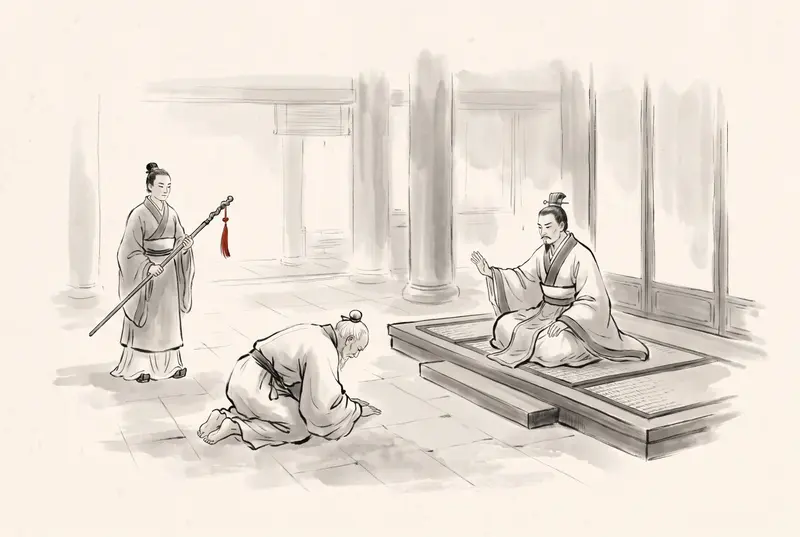
数日たって、王衛尉が高祖のそばに仕えていたとき、進み出てたずねた。「相国にどんな大罪があって、陛下はあれほど手荒く牢につながれたのですか」。高祖は言った。「李斯は秦の皇帝の宰相だったとき、よいことがあれば主君の手柄にし、悪いことがあれば自分がかぶったと聞く。ところが相国は、商人どもからたくさん金を受け取って、民のためにわたしの苑をよこせと言い、自分が民に好かれようとした。だから牢につないで取り調べているのだ」。王衛尉は言った。「職務の上で、民のためになることがあれば願い出るのは、まことに宰相の仕事です。陛下はどうして相国が商人の金を受け取ったなどと疑われるのですか。それに、陛下が楚と戦った数年のあいだ、また陳豨や黥布が反乱を起こして陛下が自ら出陣されたとき、相国は関中を守っていました。そのとき相国が足を一歩動かしさえすれば、関中から西は陛下のものではなくなっていたのです。相国はあのときでさえ私利を求めなかったのに、いまさら商人の金を欲しがるでしょうか。それに、秦は自分の過ちを耳にしなかったために天下を失ったのです。主君の過ちをかぶった李斯のやり方など、どうして手本になりましょう。陛下は宰相をなんと浅はかにお疑いになるのでしょう」。高帝は不機嫌になったが、その日のうちに使者に節を持たせて、相国を赦して牢から出した。相国は年老いていて、もともと慎み深い人だった。参内すると、はだしになって罪をわびた。高帝は言った。「相国、もういい。相国は民のために苑を願い出たのに、わたしは許さなかった。わたしは桀や紂のような暴君にすぎず、相国は賢い宰相だ。わたしがわざと相国を牢につないだのは、民にわたしの過ちを知ってもらいたかったからだ」。
英訳
A few days later, Commandant of the Guard Wang, attending the emperor, stepped forward and asked, "What great crime has the chancellor committed, that Your Majesty has imprisoned him so harshly?" The emperor said, "I have heard that when Li Si was chancellor to the First Emperor of Qin, he gave his master credit for whatever went well and took the blame himself for whatever went wrong. But the chancellor takes money from those merchant louts and asks for my park on the people's behalf, to win their favor for himself. That is why I have had him imprisoned and tried." Commandant Wang said, "If something in his work would benefit the people and he asks for it, that is truly a chancellor's business. How can Your Majesty suspect him of taking merchants' money? Besides, for years Your Majesty fought Chu, and when Chen Xi and Qing Bu rebelled you led the army yourself. All that time the chancellor held the land within the passes. Had he so much as shifted his feet, everything west of the pass would no longer have been yours. If he did not seek gain then, would he be after a merchant's gold now? Besides, Qin lost the empire because it never heard of its faults. Li Si's taking the blame for his master is nothing to copy. How shallow of Your Majesty to suspect his chancellor!" The emperor was displeased, but that same day he sent an envoy with his tally to pardon the chancellor and release him. The chancellor was old and had always been respectful and careful. He came to court barefoot to apologize. The emperor said, "Enough, chancellor. You asked for the park for the people's sake, and I refused. I am no better than Jie or Zhou, and you are a worthy chancellor. I imprisoned you on purpose, so that the people would hear of my fault."
解説(日)
- 衞尉: 宮殿の門の警備をつかさどる長官。王衛尉の名は伝わらない。
- 系: この版では「繫」(つなぐ)の意。
- 李斯: 秦の始皇帝の宰相(巻87の章を参照)。
- 賈豎: 商人をののしって言う言葉。
- 搖足: 足を動かす。わずかでも寝返ろうとすれば、の意。
- 節: 皇帝の使者であることを示す旗じるし。
- 徒跣: はだし。罪をわびるときの姿。
- 桀紂: 夏の桀王と殷の紂王。暴君の代表。
解説(英)
- Commandant of the Guard (衞尉): the official in charge of guarding the palace gates; Wang's given name is not recorded.
- 系: in this edition, used for 繫 ("to imprison").
- Li Si: chancellor to the First Emperor of Qin (see Volume 87).
- 賈豎: a contemptuous word for merchants.
- 搖足: to shift one's feet; to make the slightest move to rebel.
- Tally (節): the token of an imperial envoy.
- 徒跣: barefoot, as a sign of asking pardon.
- Jie and Zhou: the last kings of Xia and Shang, the classic tyrants.
英語の語注
- harshly/ˈhɑrʃli/adverb
in a cruel or severe way
本文では: “has imprisoned him so harshly”
似た語と違い: severely — very strictly · cruelly — without kindness
- pardon/ˈpɑrdən/verb
to officially forgive a crime and set someone free
本文では: “to pardon the chancellor and release him”
似た語と違い: forgive — stop blaming someone · release — set free
節 12
原文
何素不與曹參相能,及何病,孝惠自臨視相國病,因問曰:「君即百歲後,誰可代君者?」對曰:「知臣莫如主。」孝惠曰:「曹參何如?」何頓首曰:「帝得之矣!臣死不恨矣!」何置田宅必居窮處,為家不治垣屋。曰:「後世賢,師吾儉;不賢,毋為勢家所奪。」孝惠二年,相國何卒,諡為文終侯。後嗣以罪失侯者四世,絕,天子輒複求何後,封續酇侯,功臣莫得比焉。
書き下し文
何素より曹参と相能からず。何の病むに及び、孝恵自ら臨みて相国の病を視、因りて問いて曰く、「君即し百歳の後、誰か君に代わるべき者ぞ」と。対えて曰く、「臣を知るは主に如くは莫し」と。孝恵曰く、「曹参は何如」と。何頓首して曰く、「帝之を得たり。臣死すとも恨みず」と。何田宅を置くに必ず窮処に居り、家を為るに垣屋を治めず。曰く、「後世賢ならば、吾が倹を師とせよ。賢ならずとも、勢家の奪う所と為ること毋からん」と。孝恵の二年、相国何卒す。諡して文終侯と為す。後嗣罪を以て侯を失う者四世、絶ゆ。天子輒ち複た何の後を求め、封じて酇侯を続がしむ。功臣比するを得る莫し。
現代語訳
蕭何は以前から曹参と仲がよくなかった。蕭何が病気になると、孝恵帝が自ら見舞いに来て、たずねた。「あなたにもしものことがあったら、だれが代わりになれるだろう」。蕭何は答えた。「臣下のことをいちばんよく知っているのは、主君です」。孝恵帝が「曹参はどうか」と言うと、蕭何は頭を地につけて言った。「陛下はふさわしい人を得られました。わたしは死んでも心残りはありません」。蕭何は田畑や屋敷を持つとき、必ず辺鄙な土地を選び、家を建てても塀や建物を立派にしなかった。そして言った。「子孫が賢ければ、わたしの倹約を手本にせよ。賢くなくても、(こんな土地なら)権勢のある家に奪われることはあるまい」。孝恵帝の二年(前193年)、相国の蕭何は亡くなり、文終侯というおくり名を受けた。跡継ぎは罪を犯して侯の位を失うことが四代続き、家は絶えたが、天子はそのたびに蕭何の子孫を探し出して酇侯を継がせた。ほかの功臣で、これほどの扱いを受けた者はいない。
英訳
Xiao He had never got on with Cao Can. When Xiao He fell ill, Emperor Hui came himself to see the chancellor in his sickness and asked, "When you are gone, who could take your place?" Xiao He answered, "No one knows a servant better than his master." Emperor Hui said, "What about Cao Can?" Xiao He bowed his head to the ground and said, "Your Majesty has found the man. I can die without regret." Whenever Xiao He acquired fields or a house, he always chose a poor, out-of-the-way place, and he never built fine walls or buildings. He said, "If my descendants are worthy, let them learn from my thrift. If they are not, at least no powerful family will take it from them." In the second year of Emperor Hui (193 BCE), Chancellor Xiao He died and was given the posthumous name Marquis Wenzhong. Four times his heirs lost the marquisate for crimes and the line was cut off, and each time the emperor sought out a descendant of Xiao He and made him Marquis of Zan again. No other man of merit was treated so.
解説(日)
- 不相能: 仲がよくない。
- 孝惠: 高祖の子、恵帝。高祖の死後に即位した。
- 百歲後: 死んだあと。死を直接言わない言い方。
- 知臣莫如主: 臣下のことは主君がいちばんよく知っている。
- 曹參: 蕭何の次の相国。前任のやり方を変えずに守り、「蕭規曹随」の言葉が生まれた(巻54)。
- 窮處: 辺鄙な土地。
- 勢家: 権勢のある家。
- 諡: おくり名。死後に生前の行いにちなんで贈る名。
- 複: この版では「復」(ふたたび)の意。
解説(英)
- 不相能: not to get on with each other.
- Emperor Hui (孝惠): Gaozu's son, who succeeded him.
- 百歲後: "after a hundred years," a way of not mentioning death.
- 知臣莫如主: no one knows a servant better than his master.
- Cao Can: chancellor after Xiao He, who kept his predecessor's ways unchanged; hence the saying "Xiao made the rules, Cao followed them" (Volume 54).
- 窮處: a poor, out-of-the-way place.
- 勢家: a powerful family.
- Posthumous name (諡): a name given after death, reflecting a person's life.
- 複: in this edition, used for 復 ("again").
英語の語注
- regret/rɪˈɡrɛt/noun
sadness about something you did or did not do
本文では: “I can die without regret”
似た語と違い: remorse — sorrow for doing wrong · sorrow — deep sadness
- thrift/θrɪft/noun
careful use of money
本文では: “let them learn from my thrift”
似た語と違い: frugality — not spending much · economy — careful use of money
節 13
原文
太史公曰:蕭相國何於秦時為刀筆吏,錄錄未有奇節。及漢興,依日月之末光,何謹守管籥,因民之疾法,順流與之更始。淮陰、黥布等皆以誅滅,而何之勳爛焉。位冠群臣,聲施後世,與閎夭、散宜生等爭烈矣。
書き下し文
太史公曰く、蕭相国何は秦の時に於いて刀筆の吏為り。録録として未だ奇節有らず。漢の興るに及び、日月の末光に依り、何謹んで管籥を守り、民の秦法を疾むに因りて、流れに順いて之と与に更始す。淮陰・黥布等は皆以て誅滅せられ、而して何の勲は爛焉たり。位は群臣に冠たり、声は後世に施き、閎夭・散宜生等と烈を争う。
現代語訳
太史公はいう。相国の蕭何は、秦の時代には文書を扱う下役人で、平凡で、とりたてて目立つ節操もなかった。漢がおこると、日や月のような主君の光のおこぼれを受けて、慎重に関中の鍵を守り、民が秦の法を憎んでいたのに乗じて、時の流れに従い、民とともに新しい世を始めた。淮陰侯や黥布らはみな誅殺されて滅んだが、蕭何の勲功は輝いている。位は臣下の最上で、名声は後世に伝わり、周の文王を支えた閎夭や散宜生らと功績を競うほどである。
英訳
The Grand Historian says: Under Qin, Chancellor Xiao He was a clerk with a writing knife, ordinary and without any remarkable deeds. When Han arose, he basked in the last rays of the sun and moon. He carefully kept the keys of the passes, and taking advantage of the people's hatred of the laws of Qin, he went with the current and made a new beginning with them. The Marquis of Huaiyin, Qing Bu and the rest were all executed and destroyed, but Xiao He's achievements shine. He ranked first among all the ministers, his fame has passed down to later ages, and he rivals Hong Yao and San Yisheng in glory.
解説(日)
- 刀筆吏: 文書を扱う下役人。竹簡に筆で書き、誤りを小刀で削ったことから。
- 錄錄: 平凡で目立たないさま。
- 日月之末光: 日や月(高祖)の光の端。主君のおかげをこうむること。
- 管籥: 鍵。ここでは関中を守ること。
- 更始: 新しく始める。
- 爛焉: 輝くさま。
- 閎夭・散宜生: 周の文王に仕えた賢臣。
解説(英)
- A clerk with a writing knife (刀筆吏): documents were written with a brush on bamboo, and mistakes scraped off with a knife.
- 錄錄: ordinary, unremarkable.
- The last rays of the sun and moon: the reflected glory of his ruler.
- 管籥: keys; here, guarding the land within the passes.
- 更始: to make a new beginning.
- 爛焉: shining.
- Hong Yao and San Yisheng: worthy ministers of King Wen of Zhou.
英語の語注
- bask/bæsk/verb
to enjoy warmth, light or attention
本文では: “he basked in the last rays of the sun and moon”
似た語と違い: enjoy — take pleasure in · revel — enjoy very much