Biographies · Vol. 123
The Account of Dayuan 大宛列傳
Zhang Qian Opens the West 張騫鑿空
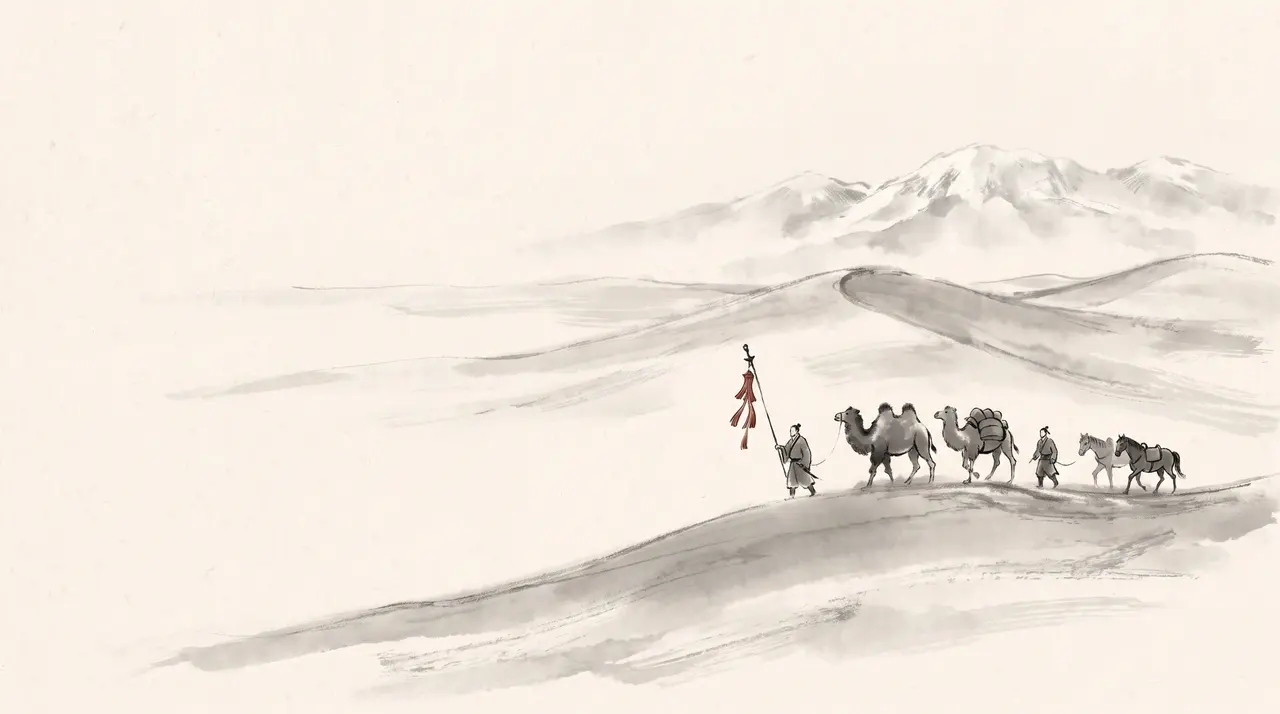
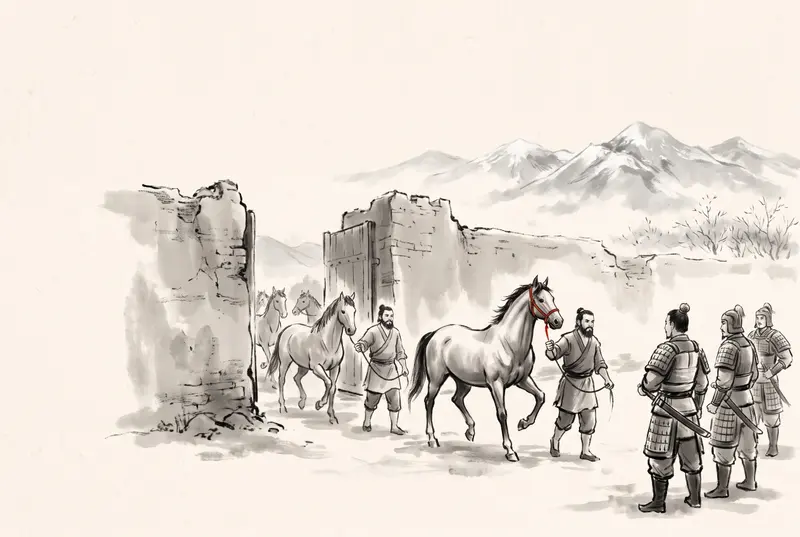
Seeking an ally against the Xiongnu, Emperor Wu called for an envoy to go to the Yuezhi in the far west. Zhang Qian, a palace gentleman, volunteered. He was soon captured by the Xiongnu and held for more than ten years, but he never gave up the Han staff of office. He escaped, crossed Dayuan and Kangju, and at last reached the Yuezhi, only to find they had no wish for revenge, and he came away without getting to the point of his mission. Of more than a hundred men, two came home after thirteen years. What he reported about the lands of the west changed the Han view of the world. Grapes and alfalfa came east, and envoys streamed back and forth. Then, wanting its famous horses, Emperor Wu sent great armies against Dayuan, and after four years of war and terrible losses he got a few dozen fine horses.
This page has the scene "Zhang Qian Opens the West" from this volume, not the whole volume.
Audio
The audio is synthetic speech.
Video
Passage 1
Original
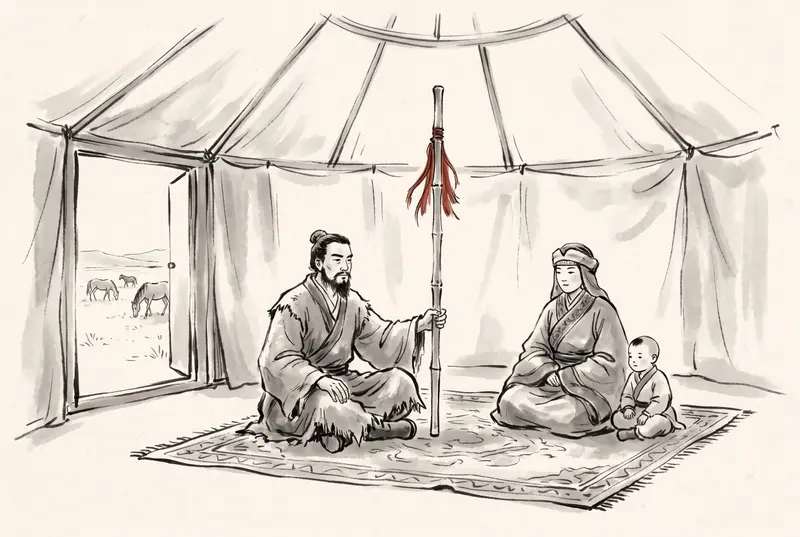
大宛之跡,見自張騫。張騫,漢中人。建元中為郎。是時天子問匈奴降者,皆言匈奴破月氏王,以其頭為飲器,月氏遁逃而常怨仇匈奴,無與共擊之。漢方欲事滅胡,聞此言,因欲通使。道必更匈奴中,乃募能使者。騫以郎應募,使月氏,與堂邑氏(故)胡奴甘父俱出隴西。經匈奴,匈奴得之,傳詣單于。單于留之,曰:「月氏在吾北,漢何以得往使?吾欲使越,漢肯聽我乎?」留騫十餘歲,與妻,有子,然騫持漢節不失。
Kundoku (Japanese reading)
大宛の跡は、張騫より見る。張騫は漢中の人なり。建元中に郎と為る。是の時天子匈奴の降る者に問うに、皆言う、匈奴月氏の王を破り、其の頭を以て飲器と為す。月氏遁逃して常に匈奴を怨仇するも、与に共に之を撃つもの無しと。漢方に胡を滅ぼすを事とせんと欲す。此の言を聞き、因りて使を通ぜんと欲す。道は必ず匈奴の中を更。乃ち能く使いする者を募る。騫郎を以て募に応じ、月氏に使いす。堂邑氏の(故)胡奴甘父と倶に隴西を出づ。匈奴を経るに、匈奴之を得て、伝えて単于に詣らしむ。単于之を留めて曰く、「月氏は吾が北に在り、漢何を以てか往きて使いするを得ん。吾越に使いせんと欲せば、漢肯えて我に聴かんや」と。騫を留むること十余歳、妻を与え、子有り。然れども騫漢の節を持して失わず。
Japanese
大宛のことが知られるようになったのは、張騫からである。張騫は漢中の人で、建元年間に郎となった。当時、武帝が匈奴の投降者に尋ねると、みなこう言った。「匈奴は月氏の王を破り、その頭蓋骨で酒杯を作りました。月氏は逃げ去って匈奴を恨み続けていますが、共に戦う相手がいません」。漢はちょうど匈奴を滅ぼそうとしていたので、これを聞いて月氏と通じようと考えた。だが道は必ず匈奴の地を通る。そこで使者になれる者を募った。張騫は郎の身で応募し、月氏への使者となって、堂邑氏の胡人の奴隷である甘父とともに隴西を出た。匈奴の地を通ったところで捕らえられ、単于のもとへ送られた。単于は彼を留めて言った。「月氏は我らの北にある。漢がどうして使者を送れようか。もし私が越へ使者を送りたいと言えば、漢は通してくれるのか」。こうして張騫を十年あまり抑留し、妻を与え、子もできた。しかし張騫は漢の節を手放さなかった。
English
What we know of Dayuan begins with Zhang Qian. Zhang Qian was a man of Hanzhong who became a palace gentleman in the Jianyuan era. At that time the emperor questioned Xiongnu who had surrendered, and all of them said: "The Xiongnu defeated the king of the Yuezhi and made his skull into a drinking cup. The Yuezhi fled, and they still hate the Xiongnu, but they have no one to join them in striking back." Han was then planning to destroy the Xiongnu, and on hearing this it wished to send an envoy. The road, however, had to pass through Xiongnu land, so a call went out for someone able to go. Zhang Qian volunteered, and set out from Longxi for the Yuezhi with Ganfu, a Xiongnu slave of the Tangyi family. Crossing Xiongnu territory he was captured and sent on to the Chanyu, who held him and said: "The Yuezhi are to the north of us. How can Han send envoys there? If I wanted to send envoys to Yue, would Han let me through?" He kept Zhang Qian for more than ten years and gave him a wife, who bore him a son. But Zhang Qian held on to the Han staff of office and never let it go.
Notes (JA)
- 大宛: 中央アジアのフェルガナ盆地にあった国。
- 建元: 武帝の最初の年号(前140〜前135)。出発は前139年ごろとされる。
- 月氏: 遊牧民族。もと河西回廊にいた。
- 飲器: 敵の頭蓋骨で作った酒杯。
- 節: 皇帝の使者のしるしの杖。
- (故): 校訂で削るとされる字。
Notes (EN)
- Dayuan (大宛): a state in the Ferghana Valley of Central Asia.
- Jianyuan era: 140-135 BCE. He probably set out around 139.
- Yuezhi (月氏): a nomadic people, originally from the Gansu corridor.
- Staff of office (節): the tasseled rod that marked an imperial envoy.
Word notes
- envoy/ˈɛnvɔɪ/noun
a person sent to represent a ruler
In the text: “it wished to send an envoy”
Similar words: ambassador — a state's representative · emissary — a person sent on a mission
- volunteer/ˌvɑlənˈtɪr/verb
to offer to do something
In the text: “Zhang Qian volunteered”
Similar words: step forward — offer yourself · offer — say you are willing
- staff/stæf/noun
a long stick, here a sign of office
In the text: “the Han staff of office”
Similar words: rod — a straight stick · scepter — a rod held by a ruler
Passage 2
Original
居匈奴中,益寬,騫因與其屬亡鄉月氏,西走數十日至大宛。大宛聞漢之饒財,欲通不得,見騫,喜,問曰:「若欲何之?」騫曰:「為漢使月氏,而為匈奴所閉道。今亡,唯王使人導送我。誠得至,反漢,漢之賂遺王財物不可勝言。」大宛以為然,遣騫,為發導繹,抵康居,康居傳致大月氏。大月氏王已為胡所殺,立其太子為王。既臣大夏而居,地肥饒,少寇,志安樂,又自以遠漢,殊無報胡之心。騫從月氏至大夏,竟不能得月氏要領。
Kundoku (Japanese reading)
匈奴の中に居ること、益々寛し。騫因りて其の属と亡れて月氏に郷い、西に走ること数十日にして大宛に至る。大宛漢の饒財を聞き、通ぜんと欲するも得ず。騫を見て喜び、問いて曰く、「若何くに之かんと欲する」と。騫曰く、「漢の為に月氏に使いし、而して匈奴の為に道を閉ざさる。今亡る。唯だ王人をして我を導送せしめよ。誠に至るを得て、漢に反らば、漢の王に賂遺する財物は言うに勝うべからず」と。大宛以て然りと為し、騫を遣わし、為に導繹を発して、康居に抵らしむ。康居伝えて大月氏に致す。大月氏の王已に胡の為に殺され、其の太子を立てて王と為す。既に大夏を臣として居り、地は肥饒にして、寇少なく、志は安楽にして、又自ら漢に遠きを以て、殊に胡に報ゆるの心無し。騫月氏より大夏に至るも、竟に月氏の要領を得る能わず。
Japanese
匈奴の中での監視がしだいにゆるくなると、張騫は部下とともに逃げ出して月氏へ向かい、西へ数十日走って大宛に着いた。大宛は漢の豊かさを聞いて、国交を持ちたいと思いながら果たせずにいたので、張騫を見て喜び、尋ねた。「どこへ行くのか」。張騫は言った。「漢の使者として月氏へ向かう途中、匈奴に道をふさがれ、今逃げてきました。どうか人をつけて送ってください。無事に着いて漢へ帰れたら、漢が王に贈る財物は言葉に尽くせないほどでしょう」。大宛はもっともだと思い、案内人と通訳をつけて康居まで送らせ、康居が大月氏まで送り届けた。大月氏の王はすでに胡に殺され、太子が王となっていた。大夏を従えてそこに住み、土地は肥えて外敵も少なく、安楽に暮らしており、漢からは遠いので、もはや匈奴に報復する気はなかった。張騫は月氏から大夏まで行ったが、ついに月氏から要領を得た返事をもらえなかった。
English
As time passed among the Xiongnu he was watched less closely. Zhang Qian escaped with his men, headed for the Yuezhi, and after riding west for several dozen days he reached Dayuan. Dayuan had heard of the wealth of Han and had longed to make contact, but could not. Delighted to see him, they asked: "Where are you going?" Zhang Qian said: "I was sent by Han to the Yuezhi, but the Xiongnu blocked the way. Now I have escaped. I beg the king to have someone guide me. If I reach them and return to Han, the gifts Han will send the king will be beyond counting." Dayuan thought this reasonable and sent him on with guides and interpreters to Kangju, and Kangju passed him on to the Great Yuezhi. The king of the Great Yuezhi had been killed by the Xiongnu, and his son was now king. They had conquered Daxia and settled there. The land was rich, enemies were few, and they were content. Being so far from Han, they had no wish to take revenge on the Xiongnu. Zhang Qian went from the Yuezhi on to Daxia, but in the end he could not get to the point with them.
Notes (JA)
- 導繹: 案内人と通訳。
- 康居: シル川流域の遊牧国家。
- 大月氏: 西へ移った月氏の主力。
- 大夏: バクトリア。今のアフガニスタン北部。
- 要領を得ず: 「要」は腰、「領」は襟で、衣の要所。ここが「要領を得ない」の出典。
Notes (EN)
- Kangju (康居): a nomadic state around the Syr Darya.
- Daxia (大夏): Bactria, in what is now northern Afghanistan.
- Could not get to the point (不得要領): literally "could not grasp the waist and collar" of the robe, the origin of the Japanese expression yōryō o ezu.
Idioms from this passage: Fail to get to the point 要領を得ず
Word notes
- interpreter/ɪnˈtɜrprətər/noun
a person who translates speech
In the text: “with guides and interpreters”
Similar words: translator — one who changes language · go-between — one who links two sides
- revenge/rɪˈvɛndʒ/noun
harm done in return for harm
In the text: “no wish to take revenge”
Similar words: vengeance — punishment for a wrong · retaliation — striking back
Passage 3
Original
留歲餘,還,并南山,欲從羌中歸,復為匈奴所得。留歲餘,單于死,左谷蠡王攻其太子自立,國內亂,騫與胡妻及堂邑父俱亡歸漢。漢拜騫為太中大夫,堂邑父為奉使君。騫為人彊力,寬大信人,蠻夷愛之。堂邑父故胡人,善射,窮急射禽獸給食。初,騫行時百餘人,去十三歲,唯二人得還。
Kundoku (Japanese reading)
留まること歳余にして、還る。南山に並びて、羌中より帰らんと欲するも、復た匈奴の得る所と為る。留まること歳余、単于死し、左谷蠡王其の太子を攻めて自立し、国内乱る。騫胡妻及び堂邑父と倶に亡れて漢に帰る。漢騫を拝して太中大夫と為し、堂邑父を奉使君と為す。騫は人と為り彊力にして、寛大にして人を信じ、蛮夷之を愛す。堂邑父は故の胡人にして、射を善くし、窮急なれば禽獣を射て食に給す。初め、騫の行く時百余人、去ること十三歳、唯だ二人のみ還るを得たり。
Japanese
一年あまりとどまって帰途についた。南の山沿いを進み、羌の地を通って帰ろうとしたが、また匈奴に捕らえられた。一年あまり留められたとき、単于が死に、左谷蠡王が太子を攻めて自ら単于となり、国内が乱れた。張騫は胡人の妻と堂邑父とともに逃げて、漢に帰った。漢は張騫を太中大夫とし、堂邑父を奉使君とした。張騫は意志が強く、寛大で人を信じたので、異民族の人々にも愛された。堂邑父はもともと胡人で弓がうまく、食べ物に窮すると鳥や獣を射て食糧にした。はじめ張騫が出発したときは百人あまりいたが、十三年後に帰ることができたのは、ただ二人であった。
English
After staying more than a year he started back, following the Southern Mountains in the hope of returning through the land of the Qiang, but the Xiongnu captured him again. He had been held for over a year when the Chanyu died, and the Luli King of the Left attacked the crown prince and took the throne, throwing the country into chaos. Zhang Qian escaped with his Xiongnu wife and Ganfu of Tangyi and returned to Han. Han made him a palace counselor, and gave Ganfu the title of Lord Envoy. Zhang Qian was strong-willed and generous and trusted people, and the foreign peoples loved him. Ganfu, a Xiongnu by birth, was a fine archer, and when they were desperate he shot birds and animals for food. When Zhang Qian set out he had more than a hundred men. After thirteen years, only two came back.
Notes (JA)
- 南山: 崑崙・祁連の山並み。
- 左谷蠡王: 匈奴の高位の王。のちの伊稚斜単于。
- 帰還は前126年ごろとされる。
- 堂邑父: 甘父のこと。
Notes (EN)
- Southern Mountains (南山): the Kunlun and Qilian ranges.
- Luli King of the Left (左谷蠡王): a high Xiongnu title; this was the future Chanyu Yizhixie.
- He probably returned around 126 BCE.
Word notes
- chaos/ˈkeɪɑs/noun
complete disorder
In the text: “throwing the country into chaos”
Similar words: disorder — lack of order · turmoil — great confusion
- strong-willed/ˌstrɔŋˈwɪld/adjective
determined to do what one wants
In the text: “Zhang Qian was strong-willed”
Similar words: determined — firmly decided · resolute — not giving up
Passage 4
Original
騫身所至者大宛、大月氏、大夏、康居,而傳聞其旁大國五六,具為天子言之。曰:大宛在匈奴西南,在漢正西,去漢可萬里。其俗土著,耕田,田稻麥。有蒲陶酒。多善馬,馬汗血,其先天馬子也。有城郭屋室。其屬邑大小七十餘城,眾可數十萬。其兵弓矛騎射。其北則康居,西則大月氏,西南則大夏,東北則烏孫,東則扜穼、于窴。于窴之西,則水皆西流,注西海;其東水東流,注鹽澤。鹽澤潛行地下,其南則河源出焉。多玉石,河注中國。而樓蘭、姑師邑有城郭,臨鹽澤。鹽澤去長安可五千里。匈奴右方居鹽澤以東,至隴西長城,南接羌,鬲漢道焉。
Kundoku (Japanese reading)
騫の身づから至る所の者は大宛・大月氏・大夏・康居にして、而して其の旁らの大国五六を伝聞し、具に天子の為に之を言う。曰く、大宛は匈奴の西南に在り、漢の正西に在り、漢を去ること万里可り。其の俗は土著にして、田を耕し、稲麦を田す。蒲陶酒有り。善馬多く、馬は血を汗す。其の先は天馬の子なり。城郭屋室有り。其の属邑大小七十余城、衆数十万可り。其の兵は弓矛騎射。其の北は則ち康居、西は則ち大月氏、西南は則ち大夏、東北は則ち烏孫、東は則ち扜穼・于窴。于窴の西は、則ち水皆西に流れ、西海に注ぐ。其の東は水東に流れ、塩沢に注ぐ。塩沢は潜行して地下にあり、其の南は則ち河源出づ。玉石多く、河は中国に注ぐ。而して楼蘭・姑師の邑は城郭有りて、塩沢に臨む。塩沢は長安を去ること五千里可り。匈奴の右方は塩沢より以東に居り、隴西の長城に至り、南は羌に接し、漢の道を鬲つ。
Japanese
張騫が自分で訪れたのは大宛、大月氏、大夏、康居で、その周りの大国五、六か国のことも伝え聞いており、それらを詳しく武帝に報告した。大宛は匈奴の西南、漢の真西にあり、漢から一万里ほど離れている。人々は定住して田を耕し、稲や麦を作る。葡萄酒がある。良馬が多く、馬は血の汗を流す。その先祖は天馬の子である。城郭や家屋があり、属する町は大小七十あまり、人口は数十万ほどである。兵は弓と矛を用い、馬上から弓を射る。北は康居、西は大月氏、西南は大夏、東北は烏孫、東は扜穼と于窴である。于窴より西では川はみな西へ流れて西海に注ぎ、東では川は東へ流れて塩沢に注ぐ。塩沢の水は地下を流れ、その南から黄河の源が出る。玉石が多く、河は中国へ注ぐ。楼蘭と姑師の町には城郭があり、塩沢に臨んでいる。塩沢は長安から五千里ほどである。匈奴の右方の地は塩沢より東、隴西の長城まで広がり、南は羌に接して、漢の道をさえぎっている。
English
The places Zhang Qian reached himself were Dayuan, the Great Yuezhi, Daxia and Kangju, and he heard reports of five or six other great states nearby. He described them all to the emperor. Dayuan, he said, lies southwest of the Xiongnu and due west of Han, some ten thousand li away. Its people are settled farmers who grow rice and wheat. They have wine made from grapes. They have many fine horses, and the horses sweat blood; they are said to descend from a heavenly horse. There are walled cities and houses, more than seventy towns, great and small, and a population of several hundred thousand. Its soldiers use bows and spears and shoot from the saddle. To the north is Kangju, to the west the Great Yuezhi, to the southwest Daxia, to the northeast the Wusun, and to the east Yumi and Khotan. West of Khotan all the rivers flow west into the Western Sea. East of it they flow east into the Salt Marsh. The Salt Marsh runs underground, and to its south rises the source of the Yellow River. There is much jade there, and the River flows on into China. The towns of Loulan and Gushi have walls and stand beside the Salt Marsh, which is some five thousand li from Chang'an. The right wing of the Xiongnu holds the land from the Salt Marsh east to the Long Wall of Longxi, touching the Qiang to the south and blocking the Han road.
Notes (JA)
- 土著: 定住する。
- 蒲陶: 葡萄。
- 汗血馬: 血のような汗を流す名馬。寄生虫による出血とする説がある。
- 于窴: コータン。扜穼: 于弥。
- 鹽澤: ロプ・ノール。黄河の源がその地下を通るというのは当時の誤った理解。
- 樓蘭・姑師: タリム盆地東部のオアシス国家。
Notes (EN)
- Grapes (蒲陶): the word probably came from an Iranian language.
- Blood-sweating horses (汗血馬): the reddish sweat may have been caused by a parasite.
- Khotan (于窴), Yumi (扜穼): oasis states in the Tarim Basin.
- Salt Marsh (鹽澤): Lop Nur. The idea that it fed the Yellow River underground was a mistake of the time.
- Loulan and Gushi: oasis states in the eastern Tarim Basin.
Word notes
- settled/ˈsɛtəld/adjective
living in one place
In the text: “settled farmers”
Similar words: sedentary — not moving around · resident — living in a place
Passage 5
Original
大月氏在大宛西可二三千里,居媯水北。其南則大夏,西則安息,北則康居。行國也,隨畜移徙,與匈奴同俗。控弦者可一二十萬。故時彊,輕匈奴,及冒頓立,攻破月氏,至匈奴老上單于,殺月氏王,以其頭為飲器。始月氏居敦煌、祁連閒,及為匈奴所敗,乃遠去,過宛,西擊大夏而臣之,遂都媯水北,為王庭。其餘小眾不能去者,保南山羌,號小月氏。安息在大月氏西可數千里。其俗土著,耕田,田稻麥,蒲陶酒。城邑如大宛。其屬小大數百城,地方數千里,最為大國。臨媯水,有市,民商賈用車及船,行旁國或數千里。以銀為錢,錢如其王面,王死輒更錢,效王面焉。畫革旁行以為書記。其西則條枝,北有奄蔡、黎軒。大夏在大宛西南二千餘里媯水南。其俗土著,有城屋,與大宛同俗。無大(王)[君]長,往往城邑置小長。其兵弱,畏戰。善賈市。及大月氏西徙,攻敗之,皆臣畜大夏。大夏民多,可百餘萬。其都曰藍市城,有市販賈諸物。其東南有身毒國。
Kundoku (Japanese reading)
大月氏は大宛の西二三千里可りに在り、媯水の北に居る。其の南は則ち大夏、西は則ち安息、北は則ち康居。行国なり。畜に随いて移徙し、匈奴と俗を同じくす。控弦の者一二十万可り。故時は彊く、匈奴を軽んず。冒頓立つに及び、月氏を攻め破り、匈奴の老上単于に至りて、月氏の王を殺し、其の頭を以て飲器と為す。始め月氏は敦煌・祁連の間に居り、匈奴の為に敗らるるに及びて、乃ち遠く去り、宛を過ぎ、西のかた大夏を撃ちて之を臣とし、遂に媯水の北に都して、王庭と為す。其の余の小衆の去る能わざる者は、南山の羌に保ち、小月氏と号す。安息は大月氏の西数千里可りに在り。其の俗は土著にして、田を耕し、稲麦を田し、蒲陶酒あり。城邑は大宛の如し。其の属小大数百城、地方数千里、最も大国たり。媯水に臨み、市有り、民商賈は車及び船を用い、旁国に行くこと或いは数千里。銀を以て銭と為し、銭は其の王の面の如く、王死すれば輒ち銭を更え、王の面に效う。革に画きて旁行し以て書記と為す。其の西は則ち条枝、北に奄蔡・黎軒有り。大夏は大宛の西南二千余里、媯水の南に在り。其の俗は土著にして、城屋有り、大宛と俗を同じくす。大(王)[君]長無く、往往城邑に小長を置く。其の兵は弱く、戦いを畏る。賈市を善くす。大月氏の西徙するに及び、攻めて之を敗り、皆大夏を臣畜す。大夏の民は多く、百余万可り。其の都を藍市城と曰い、市有りて諸物を販賈す。其の東南に身毒国有り。
Japanese
大月氏は大宛の西二、三千里にあり、媯水の北に住む。南は大夏、西は安息、北は康居である。遊牧の国で、家畜とともに移動し、風俗は匈奴と同じである。弓を引く兵は十万から二十万いる。昔は強く、匈奴を軽んじていたが、冒頓単于が立つと月氏を攻め破り、老上単于に至って月氏の王を殺し、その頭蓋骨を酒杯にした。もともと月氏は敦煌と祁連山の間にいたが、匈奴に敗れて遠くへ去り、大宛を通り過ぎて西の大夏を討って従え、媯水の北に都を置いた。逃げられなかった少数の者は南山の羌の地にたてこもり、小月氏と呼ばれた。安息は大月氏の西数千里にある。人々は定住して田を耕し、稲や麦を作り、葡萄酒がある。町は大宛と似ている。属する町は大小数百、国土は数千里四方で、最も大きな国である。媯水に面して市場があり、商人は車や船で周辺の国へ数千里も行く。銀で貨幣を作り、貨幣には王の顔が刻まれ、王が死ぬと新しい王の顔の貨幣に改める。革に文字を横書きして記録とする。西には条枝、北には奄蔡と黎軒がある。大夏は大宛の西南二千里あまり、媯水の南にある。定住して城や家があり、風俗は大宛と同じである。大きな君主はなく、町ごとに小さな長がいる。兵は弱く、戦いを恐れるが、商売はうまい。大月氏が西へ移ってくると、攻め破られて従属させられた。大夏の人口は多く、百万あまりである。都を藍市城といい、市場があって様々な物を売っている。その東南に身毒の国がある。
English
The Great Yuezhi are some two or three thousand li west of Dayuan, north of the Gui River. To their south is Daxia, to the west Anxi, and to the north Kangju. They are a nomad nation, moving with their herds, with the same customs as the Xiongnu. They have from one to two hundred thousand archers. They were once strong and looked down on the Xiongnu. But when Modu became Chanyu he attacked and broke them, and under the Laoshang Chanyu the Xiongnu killed the king of the Yuezhi and made his skull a drinking cup. The Yuezhi once lived between Dunhuang and the Qilian Mountains. Defeated by the Xiongnu, they moved far away, passed Dayuan, attacked and subdued Daxia in the west, and set up their royal court north of the Gui River. The few who could not leave took shelter with the Qiang in the Southern Mountains and are known as the Lesser Yuezhi. Anxi lies several thousand li west of the Great Yuezhi. Its people are settled farmers who grow rice and wheat and make grape wine. Its cities are like those of Dayuan. It has hundreds of towns, large and small, and its land stretches several thousand li; it is the greatest of these states. On the Gui River there are markets, and its merchants travel by cart and boat to neighboring countries, sometimes thousands of li away. They make coins of silver with the face of their king. When a king dies, the coins are changed to show the new king's face. They keep records by writing sideways on leather. To the west is Tiaozhi, and to the north are Yancai and Lixuan. Daxia lies more than two thousand li southwest of Dayuan, south of the Gui River. Its people are settled, with walled towns and houses, and share the customs of Dayuan. It has no great ruler, only petty chiefs in its various towns. Its soldiers are weak and afraid to fight, but its people are good at trade. When the Great Yuezhi moved west they defeated Daxia and made it their subject. Daxia has a large population, over a million. Its capital is called Lanshi, with markets selling all kinds of goods. To its southeast is the country of Shendu.
Notes (JA)
- 媯水: アム川。
- 控弦: 弓を引く者。兵士。
- 冒頓: 匈奴を強大にした単于。
- 安息: パルティア(今のイラン)。「安息」は王家の名アルサケスの音訳とされる。
- 條枝: シリア付近とされる。黎軒: ローマ領エジプトとする説などがある。
- 身毒: インド。
Notes (EN)
- Gui River (媯水): the Amu Darya, or Oxus.
- Anxi (安息): Parthia, in present-day Iran. The name likely echoes the royal house of Arsaces.
- Tiaozhi (條枝): probably around Syria. Lixuan (黎軒) may be Roman Egypt.
- Shendu (身毒): India.
Word notes
- nomad/ˈnoʊmæd/noun
a person who moves from place to place with animals
In the text: “a nomad nation”
Similar words: wanderer — one who travels without a home · herder — one who keeps animals
- merchant/ˈmɜrtʃənt/noun
a person who buys and sells goods
In the text: “its merchants travel”
Similar words: trader — one who buys and sells · dealer — one who does business
Passage 6
Original
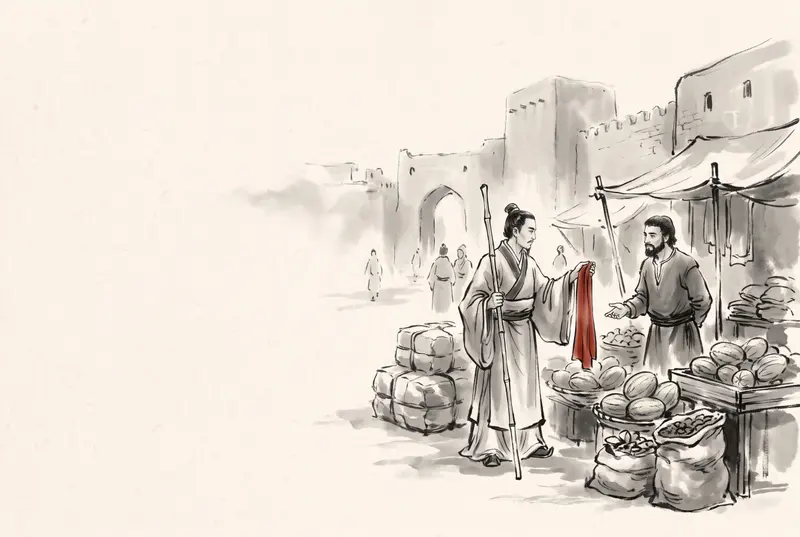
騫曰:「臣在大夏時,見邛竹杖、蜀布。問曰:『安得此?』大夏國人曰:『吾賈人往市之身毒。身毒在大夏東南可數千里。其俗土著,大與大夏同,而卑溼暑熱云。其人民乘象以戰。其國臨大水焉。』以騫度之,大夏去漢萬二千里,居漢西南。今身毒國又居大夏東南數千里,有蜀物,此其去蜀不遠矣。今使大夏,從羌中,險,羌人惡之;少北,則為匈奴所得;從蜀宜徑,又無寇。」
Kundoku (Japanese reading)
騫曰く、「臣大夏に在りし時、邛竹の杖、蜀の布を見たり。問いて曰く、『安くにか此を得たる』と。大夏の国人曰く、『吾が賈人往きて之を身毒に市う。身毒は大夏の東南数千里可りに在り。其の俗は土著にして、大いに大夏と同じく、而して卑溼暑熱なりと云う。其の人民は象に乗りて以て戦う。其の国は大水に臨む』と。騫を以て之を度るに、大夏は漢を去ること万二千里、漢の西南に居る。今身毒国又大夏の東南数千里に居り、蜀の物有り。此れ其の蜀を去ること遠からず。今大夏に使いするに、羌中よりすれば、険にして、羌人之を悪む。少しく北すれば、則ち匈奴の得る所と為る。蜀よりすれば宜しく径にして、又寇無かるべし」と。
Japanese
張騫は言った。「私は大夏にいたとき、邛の竹の杖と蜀の布を見ました。『どこで手に入れたのか』と尋ねると、大夏の人は言いました。『我が国の商人が身毒へ行って買ってくるのです。身毒は大夏の東南数千里にあり、人々は定住して大夏によく似ていますが、土地は低く湿気が多く、暑いそうです。人々は象に乗って戦い、国は大きな川に面しています』。私が考えますに、大夏は漢から一万二千里、漢の西南にあります。身毒はさらに大夏の東南数千里にあり、そこに蜀の品があるのなら、蜀からそう遠くないはずです。大夏へ使者を送るのに、羌の地を通れば道が険しいうえ、羌の人に嫌われます。少し北を通れば、匈奴に捕まります。蜀から行けば近道で、しかも敵もいないでしょう」。
English
Zhang Qian said: "When I was in Daxia I saw bamboo staffs from Qiong and cloth from Shu. I asked: 'Where did you get these?' The people of Daxia said: 'Our merchants buy them in Shendu. Shendu is several thousand li southeast of Daxia. Its people are settled and much like us, but the land is low, damp and hot, they say. The people ride elephants to war, and the country lies on a great river.' By my reckoning, Daxia is twelve thousand li from Han, to the southwest. If Shendu is several thousand li southeast of Daxia and has goods from Shu, it cannot be far from Shu. If we send envoys to Daxia through the land of the Qiang, the way is dangerous and the Qiang will resent it. A little farther north, they will be taken by the Xiongnu. The way through Shu should be direct, and free of enemies."
Notes (JA)
- 邛竹: 邛(今の四川省西昌付近)に産する節の高い竹。
- 蜀布: 蜀(四川)の布。
- 卑溼: 土地が低く湿っている。
- 大水: インダス川またはガンジス川。
- 実際に中国とインドを結ぶ交易路があったことを示す早い記録とされる。
Notes (EN)
- Qiong and Shu: in what is now Sichuan.
- The great river: the Indus or the Ganges.
- This is an early sign that trade already linked southwest China with India.
Word notes
- reckoning/ˈrɛkənɪŋ/noun
a calculation or judgment
In the text: “By my reckoning”
Similar words: estimate — a rough calculation · calculation — working something out
Passage 7
Original
天子既聞大宛及大夏、安息之屬皆大國,多奇物,土著,頗與中國同業,而兵弱,貴漢財物;其北有大月氏、康居之屬,兵彊,可以賂遺設利朝也。且誠得而以義屬之,則廣地萬里,重九譯,致殊俗,威德遍於四海。天子欣然,以騫言為然,乃令騫因蜀犍為發閒使,四道并出:出駹,出冉,出徙,出邛、僰,皆各行一二千里。其北方閉氐、筰,南方閉巂、昆明。昆明之屬無君長,善寇盜,輒殺略漢使,終莫得通。然聞其西可千餘里有乘象國,名曰滇越,而蜀賈姦出物者或至焉,於是漢以求大夏道始通滇國。初,漢欲通西南夷,費多,道不通,罷之。及張騫言可以通大夏,乃復事西南夷。
Kundoku (Japanese reading)
天子既に大宛及び大夏・安息の属は皆大国にして、奇物多く、土著にして、頗る中国と業を同じくし、而して兵弱く、漢の財物を貴び、其の北に大月氏・康居の属有りて、兵彊く、賂遺して利を設けて朝せしむべきを聞く。且つ誠に得て義を以て之を属せしめば、則ち地を広むること万里、九訳を重ね、殊俗を致し、威徳四海に遍からん。天子欣然として、騫の言を以て然りと為し、乃ち騫をして蜀の犍為に因りて間使を発せしむ。四道並び出づ。駹より出で、冉より出で、徙より出で、邛・僰より出で、皆各々一二千里を行く。其の北方は氐・筰に閉ざされ、南方は巂・昆明に閉ざさる。昆明の属は君長無く、寇盗を善くし、輒ち漢の使いを殺略し、終に通ずるを得る莫し。然れども聞く、其の西千余里可りに象に乗る国有り、名を滇越と曰い、而して蜀の賈の姦に物を出だす者或いは焉に至ると。是に於いて漢は大夏の道を求むるを以て始めて滇国に通ず。初め、漢西南夷に通ぜんと欲するも、費多く、道通ぜず、之を罷む。張騫の大夏に通ずべしと言うに及びて、乃ち復た西南夷を事とす。
Japanese
武帝は、大宛、大夏、安息などはいずれも大国で珍しい物が多く、定住して中国と似た暮らしをしているうえ、兵が弱くて漢の財物を貴んでいると聞き、北の大月氏や康居は兵が強いが、財物を贈って利益を与えれば朝貢させられると聞いた。もし本当に彼らを道義で従えられれば、領土は万里に広がり、九度の通訳を重ねて風俗の異なる国々を招き、威徳は四海にあまねく及ぶだろう。武帝は大いに喜び、張騫の言葉をもっともだとして、蜀と犍為から密使を出させた。四つの道に分かれて、駹、冉、徙、邛・僰から出発し、それぞれ一、二千里進んだ。しかし北は氐と筰に、南は巂と昆明にはばまれた。昆明の人々には君主がなく、略奪を好み、すぐに漢の使者を殺して奪ったので、ついに通ることができなかった。それでも、その西千里あまりに象に乗る国があり、滇越といって、蜀の密貿易商人が行くことがあると聞いた。こうして漢は大夏への道を探すうちに、初めて滇国と通じた。以前、漢は西南の異民族と通じようとして、費用がかさみ、道も通じないのでやめていた。張騫が大夏へ通じられると言ったので、再び西南夷に手をつけることになった。
English
The emperor had now heard that Dayuan, Daxia, Anxi and the like were all great states, rich in rare goods, settled and much like China in their ways of life, but weak in arms and fond of Han wealth; and that to their north were the Great Yuezhi and Kangju, strong in arms, who might be brought to court with gifts and profit. If they could truly be won over by right conduct, then the empire would spread ten thousand li, reach through nine interpreters, draw in peoples of strange customs, and its might and virtue would fill the four seas. Delighted, the emperor accepted Zhang Qian's words and ordered him to send secret envoys from Shu and Qianwei. They set out on four roads at once, from Mang, Ran, Xi, and Qiong and Bo, and each went one or two thousand li. In the north they were blocked by the Di and the Zuo, and in the south by the Sui and Kunming. The Kunming people had no rulers and were fond of raiding. They killed and robbed the Han envoys, and no one ever got through. But the Han heard that a thousand li or so to their west was a country whose people rode elephants, called Dianyue, and that smugglers from Shu sometimes reached it. So, in looking for the road to Daxia, Han first came into contact with the state of Dian. Han had once tried to open up the southwestern peoples but had given up because of the expense and the impassable roads. When Zhang Qian said that this was a way to Daxia, it took up the southwest again.
Notes (JA)
- 九譯: 九度の通訳を重ねるほど遠い国。
- 犍為: 蜀の南の郡。
- 駹・冉・徙・邛・僰: 四川西部・南部の諸族の地。
- 昆明: 今の雲南省の諸族。
- 滇: 今の雲南省にあった王国。
- 西南夷: 中国西南の諸民族(巻116)。
Notes (EN)
- Nine interpreters (九譯): so far away that speech must pass through many languages.
- Kunming: peoples of what is now Yunnan.
- Dian (滇): a kingdom in present-day Yunnan.
Word notes
- smuggler/ˈsmʌɡlər/noun
a person who moves goods secretly and illegally
In the text: “smugglers from Shu”
Similar words: trafficker — one who trades illegally · runner — one who carries illegal goods
Passage 8
Original
騫以校尉從大將軍擊匈奴,知水草處,軍得以不乏,乃封騫為博望侯。是歲元朔六年也。其明年,騫為衛尉,與李將軍俱出右北平擊匈奴。匈奴圍李將軍,軍失亡多;而騫後期當斬,贖為庶人。是歲漢遣驃騎破匈奴西(城)[域]數萬人,至祁連山。其明年,渾邪王率其民降漢,而金城、河西西并南山至鹽澤空無匈奴。匈奴時有候者到,而希矣。其後二年,漢擊走單于於幕北。是後天子數問騫大夏之屬。騫既失侯,因言曰:「臣居匈奴中,聞烏孫王號昆莫,昆莫之父,匈奴西邊小國也。匈奴攻殺其父,而昆莫生棄於野。烏嗛肉蜚其上,狼往乳之。單于怪以為神,而收長之。及壯,使將兵,數有功,單于復以其父之民予昆莫,令長守於西(城)[域]。昆莫收養其民,攻旁小邑,控弦數萬,習攻戰。單于死,昆莫乃率其眾遠徙,中立,不肯朝會匈奴。匈奴遣奇兵擊,不勝,以為神而遠之,因羈屬之,不大攻。今單于新困於漢,而故渾邪地空無人。蠻夷俗貪漢財物,今誠以此時而厚幣賂烏孫,招以益東,居故渾邪之地,與漢結昆弟,其勢宜聽,聽則是斷匈奴右臂也。既連烏孫,自其西大夏之屬皆可招來而為外臣。」天子以為然,拜騫為中郎將,將三百人,馬各二匹,牛羊以萬數,齎金幣帛直數千巨萬,多持節副使,道可使,使遺之他旁國。
Kundoku (Japanese reading)
騫校尉を以て大将軍に従いて匈奴を撃ち、水草の処を知り、軍以て乏しからざるを得たり。乃ち騫を封じて博望侯と為す。是の歳元朔六年なり。其の明年、騫衛尉と為り、李将軍と倶に右北平を出でて匈奴を撃つ。匈奴李将軍を囲み、軍の失亡すること多し。而して騫は期に後れて斬に当たるも、贖いて庶人と為る。是の歳漢驃騎を遣わして匈奴の西(城)[域]の数万人を破り、祁連山に至る。其の明年、渾邪王其の民を率いて漢に降る。而して金城・河西の西、南山に並びて塩沢に至るまで空しくして匈奴無し。匈奴時に候者の到ること有るも、希なり。其の後二年、漢単于を幕北に撃ち走らす。是の後天子数しば騫に大夏の属を問う。騫既に侯を失い、因りて言いて曰く、「臣匈奴の中に居りしとき、聞く、烏孫の王は昆莫と号す。昆莫の父は、匈奴の西辺の小国なり。匈奴其の父を攻め殺し、而して昆莫生まれて野に棄てらる。烏肉を嗛みて其の上に蜚び、狼往きて之に乳す。単于怪しみて以て神と為し、収めて之を長ぜしむ。壮なるに及び、兵を将いしむるに、数しば功有り。単于復た其の父の民を以て昆莫に予え、長く西(城)[域]を守らしむ。昆莫其の民を収養し、旁の小邑を攻め、控弦数万、攻戦に習う。単于死し、昆莫乃ち其の衆を率いて遠く徙り、中立して、匈奴に朝会するを肯ぜず。匈奴奇兵を遣わして撃つも勝たず、以て神と為して之を遠ざけ、因りて之を羈属せしめ、大いには攻めず。今単于新たに漢に困しみ、而して故の渾邪の地は空しくして人無し。蛮夷の俗は漢の財物を貪る。今誠に此の時を以て厚く烏孫に幣賂し、招きて以て益々東せしめ、故の渾邪の地に居らしめ、漢と昆弟を結ばば、其の勢い宜しく聴くべし。聴かば則ち是れ匈奴の右臂を断つなり。既に烏孫に連なれば、其の西の大夏の属より皆招来して外臣と為すべし」と。天子以て然りと為し、騫を拝して中郎将と為し、三百人を将いしむ。馬各々二匹、牛羊は万を以て数え、金幣帛の直数千巨万を齎し、多く節を持つ副使を持ち、道使いすべくば、之をして他の旁国に遺らしむ。
Japanese
張騫は校尉として大将軍に従い匈奴を討ち、水や草のある場所を知っていたので、軍は不足せずにすんだ。そこで博望侯に封じられた。元朔六年のことである。翌年、衛尉となって、李将軍とともに右北平を出て匈奴を討った。匈奴は李将軍を包囲し、軍は多くの兵を失った。張騫は到着が遅れて斬罪にあたるところを、贖って庶民となった。この年、漢は驃騎将軍を送って匈奴の西部の数万人を破り、祁連山に至った。翌年、渾邪王が民を率いて漢に降り、金城・河西より西、南山に沿って塩沢までの地には匈奴がいなくなった。たまに斥候が来るくらいであった。その二年後、漢は単于を砂漠の北へ追い払った。その後、武帝はたびたび張騫に大夏のことを尋ねた。張騫は侯を失っていたので、こう言った。「私が匈奴にいたとき聞いたことですが、烏孫の王は昆莫と称します。昆莫の父は匈奴の西辺の小国の王で、匈奴に攻め殺されました。生まれたばかりの昆莫は野に捨てられましたが、鳥が肉をくわえて飛んで来て、狼が来て乳を与えました。単于は不思議に思い、神の子だとして引き取って育てました。成長すると兵を率いさせ、たびたび手柄を立てたので、単于は父の民を昆莫に返し、長く西域を守らせました。昆莫は民を養い、周りの小さな町を攻め、弓を引く兵は数万に達して戦に慣れました。単于が死ぬと、昆莫は民を率いて遠くへ移り、中立して匈奴に朝貢しなくなりました。匈奴は奇襲をかけましたが勝てず、神であるとして遠ざけ、ゆるやかな従属にとどめて大きく攻めません。いま単于は漢に苦しめられ、もとの渾邪の地は無人です。蛮夷は漢の財物を欲しがります。今こそ烏孫に手厚く贈り物をして東へ招き、もとの渾邪の地に住まわせ、漢と兄弟の約を結べば、きっと応じるでしょう。応じれば匈奴の右腕を断つことになります。烏孫と結べば、その西の大夏などもみな招いて外臣とすることができます」。武帝はもっともだと思い、張騫を中郎将に任じて三百人を率いさせ、一人に馬二頭、牛や羊は万の単位で、金や絹など数千万の値の品を持たせ、節を持った副使を多くつけて、道が通じるなら周りの国へも遣わせるようにした。
English
Zhang Qian served as a commander under the Grand General against the Xiongnu. He knew where water and grass were to be found, and the army never went short. For this he was made Marquis of Bowang, in the sixth year of Yuanshuo. The next year, as Commandant of the Guards, he went out from Youbeiping with General Li against the Xiongnu. The Xiongnu surrounded General Li, and the army suffered heavy losses. Zhang Qian, having arrived late, should have been beheaded, but he paid a ransom and became a commoner. That year Han sent the General of Swift Cavalry to crush tens of thousands of the western Xiongnu, and he reached the Qilian Mountains. The following year the Hunye King surrendered to Han with all his people, and from Jincheng and west of the River, along the Southern Mountains to the Salt Marsh, the land was empty of Xiongnu, apart from a rare scout. Two years later Han drove the Chanyu north of the desert. After this the emperor often asked Zhang Qian about Daxia and its neighbors. Having lost his marquisate, Zhang Qian said: "When I lived among the Xiongnu I heard that the king of the Wusun is called the Kunmo. His father ruled a small state on the western edge of the Xiongnu. The Xiongnu attacked and killed him, and the newborn Kunmo was left in the wild. Crows flew over him with meat in their beaks, and a she-wolf came and suckled him. The Chanyu, amazed, took him for a divine being and raised him. When he grew up he was given troops and won many victories, so the Chanyu gave him back his father's people and set him to guard the Western Regions. The Kunmo fed and gathered his people, attacked the small towns nearby, and built up tens of thousands of seasoned archers. When the Chanyu died, he led his people far away, stood apart, and refused to go to the Xiongnu court. The Xiongnu sent surprise attacks but could not win, and thinking him divine they left him alone, holding him only loosely as a subject. Now the Chanyu has been hard pressed by Han, and the old land of the Hunye King lies empty. These foreign peoples are greedy for Han wealth. If we send rich gifts to the Wusun now and invite them to move east into the Hunye lands and swear brotherhood with Han, they will surely agree. That would cut off the right arm of the Xiongnu. And once we are allied with the Wusun, all the lands west of them, such as Daxia, can be drawn in as outer subjects." The emperor agreed. He made Zhang Qian a general of the palace guard and gave him three hundred men, two horses each, cattle and sheep by the tens of thousands, gold and silk worth many millions, and many deputy envoys bearing staffs, to be sent on to other countries wherever the roads allowed.
Notes (JA)
- 元朔六年: 前123年。翌年、李広とともに右北平へ(巻109 p10)。
- 渾邪王: 匈奴の西部の王。前121年に漢に降った。
- 烏孫: 天山山脈の北の遊牧国家。
- 昆莫: 烏孫の王の称号。
- 西(城)[域]: 校訂で「域」に改める。
- 右臂: 右腕。匈奴の西の勢力をたとえる。
Notes (EN)
- Sixth year of Yuanshuo: 123 BCE. For the campaign with Li Guang, see Volume 109, p10.
- Hunye King: a western Xiongnu king who surrendered to Han in 121 BCE.
- Wusun (烏孫): nomads north of the Tian Shan.
- Kunmo (昆莫): the title of the Wusun king. Stories of a child raised by a wolf are found across Eurasia.
Word notes
- suckle/ˈsʌkəl/verb
to feed a baby with milk
In the text: “a she-wolf came and suckled him”
Similar words: nurse — feed with milk · breastfeed — feed from the breast
- allied/ˈælaɪd/adjective
joined by an agreement to help each other
In the text: “once we are allied”
Similar words: united — joined together · in league — working together
Passage 9
Original
騫既至烏孫,烏孫王昆莫見漢使如單于禮,騫大慚,知蠻夷貪,乃曰:「天子致賜,王不拜則還賜。」昆莫起拜賜,其他如故。騫諭使指曰:「烏孫能東居渾邪地,則漢遣翁主為昆莫夫人。」烏孫國分,王老,而遠漢,未知其大小,素服屬匈奴日久矣,且又近之,其大臣皆畏胡,不欲移徙,王不能專制。騫不得其要領。昆莫有十餘子,其中子曰大祿,彊,善將眾,將眾別居萬餘騎。大祿兄為太子,太子有子曰岑娶,而太子蚤死。臨死謂其父昆莫曰:「必以岑娶為太子,無令他人代之。」昆莫哀而許之,卒以岑娶為太子。大祿怒其不得代太子也,乃收其諸昆弟,將其眾畔,謀攻岑娶及昆莫。昆莫老,常恐大祿殺岑娶,予岑娶萬餘騎別居,而昆莫有萬餘騎自備,國眾分為三,而其大總取羈屬昆莫,昆莫亦以此不敢專約於騫。
Kundoku (Japanese reading)
騫既に烏孫に至る。烏孫の王昆莫漢の使いに見ゆること単于の礼の如し。騫大いに慚じ、蛮夷の貪るを知り、乃ち曰く、「天子賜を致す。王拝せずんば則ち賜を還さん」と。昆莫起ちて賜を拝するも、其の他は故の如し。騫使いの指を諭して曰く、「烏孫能く東して渾邪の地に居らば、則ち漢翁主を遣わして昆莫の夫人と為さん」と。烏孫国分かれ、王老い、而して漢に遠く、未だ其の大小を知らず。素より匈奴に服属すること日久しく、且つ又之に近し。其の大臣皆胡を畏れ、移徙するを欲せず。王も専制する能わず。騫其の要領を得ず。昆莫に十余子有り。其の中子を大禄と曰い、彊くして、善く衆を将い、衆を将いて別に万余騎に居る。大禄の兄太子と為り、太子に子有り岑娶と曰う。而して太子蚤く死す。死に臨みて其の父昆莫に謂いて曰く、「必ず岑娶を以て太子と為し、他人をして之に代わらしむる無かれ」と。昆莫哀しみて之を許し、卒に岑娶を以て太子と為す。大禄其の太子に代わるを得ざるを怒り、乃ち其の諸昆弟を収め、其の衆を将いて畔き、岑娶及び昆莫を攻めんことを謀る。昆莫老い、常に大禄の岑娶を殺さんことを恐れ、岑娶に万余騎を予えて別に居らしめ、而して昆莫も万余騎有りて自ら備う。国衆分かれて三と為り、而して其の大総は取りて昆莫に羈属す。昆莫も亦此を以て敢えて専ら騫に約せず。
Japanese
張騫が烏孫に着くと、烏孫の王昆莫は、単于に対するような尊大な礼で漢の使者に会った。張騫は大いに恥じ、蛮夷が欲深いことを知っていたので言った。「天子が賜り物を届けたのです。王が拝礼しないなら持ち帰ります」。昆莫は立ち上がって拝礼したが、そのほかは元のままだった。張騫は使命を告げて言った。「烏孫が東へ移って渾邪の地に住むなら、漢は翁主を昆莫の夫人として遣わしましょう」。しかし烏孫の国は分裂しており、王は老い、漢からは遠く、漢の大きさも知らなかった。もともと匈奴に長く従っていて距離も近く、大臣たちはみな匈奴を恐れて移住を望まず、王も一人では決められなかった。張騫はここでも要領を得なかった。昆莫には十数人の子があり、中の子の大禄は強く、兵を率いるのがうまく、一万騎あまりを率いて別に住んでいた。大禄の兄が太子で、太子には岑娶という子があったが、太子は早く死んだ。死に際に父の昆莫に言った。「必ず岑娶を太子にして、ほかの者に代えないでください」。昆莫は哀れんで承知し、岑娶を太子とした。大禄は自分が太子になれなかったことを怒り、兄弟を集めて兵を率いて背き、岑娶と昆莫を攻めようと企てた。昆莫は年老いて、大禄が岑娶を殺すことを常に恐れ、岑娶に一万騎あまりを与えて別に住まわせ、自分も一万騎あまりで備えた。国は三つに分かれ、大まかに昆莫に従っているだけだった。昆莫もこのため、張騫と勝手に約束することはできなかった。
English
When Zhang Qian reached the Wusun, their king, the Kunmo, received the Han envoy with the rites he would use for a Chanyu's man, as if he were the superior. Zhang Qian felt deeply insulted. Knowing how greedy these peoples were, he said: "The Son of Heaven has sent these gifts. If the king does not bow, I will take them back." The Kunmo rose and bowed for the gifts, but in all else he went on as before. Zhang Qian explained his mission: "If the Wusun will move east and live in the Hunye lands, Han will send an imperial princess to be the Kunmo's wife." But the country of the Wusun was divided and its king was old. It was far from Han, and did not know how great Han was. It had long been subject to the Xiongnu and lay close to them. Its ministers all feared the Xiongnu and did not want to move, and the king could not decide alone. Again, Zhang Qian could not get to the point. The Kunmo had more than ten sons. One of the middle sons, Dalu, was strong and a good leader, and lived apart with more than ten thousand horsemen. Dalu's elder brother was crown prince, and had a son named Cenzou. The crown prince died young. On his deathbed he said to his father: "You must make Cenzou crown prince, and let no one take his place." The Kunmo was moved and agreed, and in the end made Cenzou crown prince. Dalu, furious at being passed over, gathered his brothers, rebelled with his followers and plotted to attack Cenzou and the Kunmo. The old Kunmo lived in fear that Dalu would kill Cenzou. He gave Cenzou more than ten thousand horsemen to live apart, and kept more than ten thousand for his own defense. The nation was split in three, all held only loosely under the Kunmo, and for this reason he dared not make any pact with Zhang Qian on his own.
Notes (JA)
- 翁主: 諸侯王の娘。
- 指: 「旨」と同じ。使命の趣旨。
- 羈屬: ゆるやかに従う。
- 岑娶: 『漢書』では岑陬。
Notes (EN)
- Imperial princess (翁主): strictly, the daughter of a regional king.
- Cenzou (岑娶): written 岑陬 in the History of the Former Han.
Word notes
- insult/ɪnˈsʌlt/verb
to treat with disrespect
In the text: “felt deeply insulted”
Similar words: offend — upset someone · slight — treat as unimportant
- rebel/rɪˈbɛl/verb
to fight against those in power
In the text: “rebelled with his followers”
Similar words: revolt — rise against · mutiny — refuse to obey
Passage 10
Original
騫因分遣副使使大宛、康居、大月氏、大夏、安息、身毒、于窴、扜穼及諸旁國。烏孫發導譯送騫還,騫與烏孫遣使數十人,馬數十匹報謝,因令窺漢,知其廣大。騫還到,拜為大行,列於九卿。歲餘,卒。烏孫使既見漢人眾富厚,歸報其國,其國乃益重漢。其後歲餘,騫所遣使通大夏之屬者皆頗與其人俱來,於是西北國始通於漢矣。然張騫鑿空,其後使往者皆稱博望侯,以為質於外國,外國由此信之。
Kundoku (Japanese reading)
騫因りて副使を分遣して大宛・康居・大月氏・大夏・安息・身毒・于窴・扜穼及び諸々の旁国に使いせしむ。烏孫導訳を発して騫を送り還す。騫烏孫の遣わす使い数十人、馬数十匹と報謝し、因りて漢を窺わしめ、其の広大を知らしむ。騫還り到り、拝して大行と為り、九卿に列す。歳余にして、卒す。烏孫の使い既に漢の人衆く富厚なるを見て、帰りて其の国に報ず。其の国乃ち益々漢を重んず。其の後歳余、騫の遣わす所の使いの大夏の属に通ずる者皆頗る其の人と倶に来たる。是に於いて西北の国始めて漢に通ず。然れども張騫鑿空し、其の後使いして往く者皆博望侯を称し、以て外国に質と為す。外国是に由りて之を信ず。
Japanese
張騫は副使を手分けして大宛、康居、大月氏、大夏、安息、身毒、于窴、扜穼や周辺の国々へ遣わした。烏孫は案内人と通訳をつけて張騫を送り返し、使者数十人と馬数十頭を返礼につけて、漢の様子を探らせ、その広大さを知らせようとした。張騫は帰ると大行に任じられて九卿に列し、一年あまりで亡くなった。烏孫の使者は漢の人の多さと豊かさを見て帰国して報告し、烏孫はますます漢を重んじるようになった。その一年あまり後、張騫が大夏などに遣わした使者たちが、それぞれの国の人を連れて帰ってきた。こうして西北の国々が初めて漢と通じた。張騫が道を切り開いたので、そののち使者として行く者はみな博望侯の名を出し、それを外国への信用のあかしとした。外国もこれによって彼らを信じた。
English
Zhang Qian then sent his deputies off to Dayuan, Kangju, the Great Yuezhi, Daxia, Anxi, Shendu, Khotan, Yumi and the neighboring states. The Wusun provided guides and interpreters to see him home, and sent with him several dozen envoys and several dozen horses as thanks, so that they could spy out Han and learn how large it was. When Zhang Qian got back he was made Grand Herald, ranked among the Nine Ministers. A little over a year later he died. The Wusun envoys, having seen how many people Han had and how rich it was, reported this at home, and their country came to think much more highly of Han. A year or so later the envoys Zhang Qian had sent to Daxia and other lands began to return, bringing people from those countries with them. So it was that the states of the northwest first came into contact with Han. Because Zhang Qian had broken open the way, all the envoys who went after him invoked the name of the Marquis of Bowang as their pledge to foreign lands, and because of it, those lands trusted them.
Notes (JA)
- 大行: 外国や諸侯の接待をつかさどる大臣。
- 張騫の死は前114年ごろ。
- 鑿空: 穴をうがって道を通す。未知の道を切り開くこと。
- 質: 信用のあかし。
Notes (EN)
- Grand Herald (大行): the minister in charge of foreign visitors.
- Zhang Qian died around 114 BCE.
- Broken open the way (鑿空): literally "chiseled through the void", the classic phrase for his achievement.
Idioms from this passage: Breaking open the way 鑿空
Word notes
- deputy/ˈdɛpjəti/noun
a person who acts for a superior
In the text: “sent his deputies off”
Similar words: assistant — a helper · second-in-command — the next highest
- pledge/plɛdʒ/noun
something given as a guarantee
In the text: “as their pledge to foreign lands”
Similar words: guarantee — a firm promise · assurance — a statement to give confidence
Passage 11
Original
自博望侯騫死後,匈奴聞漢通烏孫,怒,欲擊之。及漢使烏孫,若出其南,抵大宛、大月氏相屬,烏孫乃恐,使使獻馬,願得尚漢女翁主為昆弟。天子問群臣議計,皆曰「必先納聘,然後乃遣女」。初,天子發書易,云「神馬當從西北來」。得烏孫馬好,名曰「天馬」。及得大宛汗血馬,益壯,更名烏孫馬曰「西極」,名大宛馬曰「天馬」云。而漢始筑令居以西,初置酒泉郡以通西北國。因益發使抵安息、奄蔡、黎軒、條枝、身毒國。而天子好宛馬,使者相望於道。諸使外國一輩大者數百,少者百餘人,人所齎操大放博望侯時。其后益習而衰少焉。漢率一歲中使多者十餘,少者五六輩,遠者八九歲,近者數歲而反。
Kundoku (Japanese reading)
博望侯騫の死せし後より、匈奴漢の烏孫に通ずるを聞きて怒り、之を撃たんと欲す。漢の烏孫に使いする、若し其の南に出でて、大宛・大月氏に抵りて相属するに及び、烏孫乃ち恐れ、使いをして馬を献じ、漢の女翁主を尚りて昆弟と為らんことを願う。天子群臣に議計を問う。皆曰く、「必ず先ず聘を納れ、然る後に乃ち女を遣わせ」と。初め、天子易を発書して云く、「神馬当に西北より来たるべし」と。烏孫の馬の好きを得て、名づけて「天馬」と曰う。大宛の汗血馬を得るに及び、益々壮なり。更めて烏孫の馬を名づけて「西極」と曰い、大宛の馬を名づけて「天馬」と云う。而して漢始めて令居より以西に築き、初めて酒泉郡を置きて以て西北の国に通ず。因りて益々使いを発して安息・奄蔡・黎軒・条枝・身毒国に抵らしむ。而して天子宛馬を好み、使者道に相望む。諸々の外国に使いする一輩、大なる者は数百、少なき者は百余人、人の齎操する所は大いに博望侯の時に放う。其の后益々習いて衰少す。漢率ね一歳の中に使い多き者は十余、少なき者は五六輩、遠き者は八九歳、近き者は数歳にして反る。
Japanese
博望侯張騫の死後、匈奴は漢が烏孫と通じたと聞いて怒り、攻めようとした。漢の使者が烏孫の南を通って大宛や大月氏まで次々に行き来するようになると、烏孫は恐れて、使者を送って馬を献じ、漢の皇族の女性を妻に迎えて兄弟の国となることを願った。武帝が群臣に諮ると、みな「必ず先に結納を納めさせてから女性を送るべきです」と言った。以前、武帝が『易』で占ったところ「神馬は西北から来るであろう」と出た。烏孫の良馬を得て「天馬」と名づけたが、大宛の汗血馬を得ると、さらにたくましかったので、烏孫の馬を「西極」と改め、大宛の馬を「天馬」と呼んだ。漢は初めて令居より西に長城を築き、酒泉郡を置いて西北の国々と通じた。そしてますます使者を送って、安息、奄蔡、黎軒、条枝、身毒まで行かせた。武帝は大宛の馬を好んだので、使者は道に絶えず連なった。外国へ行く一団は、多いもので数百人、少ないもので百人あまりで、持っていく品はおおむね博望侯のときにならった。のちには慣れて人数が減った。漢は一年に多いときで十数回、少なくとも五、六回の使者を送り、遠いものは八、九年、近いものは数年で帰ってきた。
English
After the death of Zhang Qian, Marquis of Bowang, the Xiongnu heard that Han was in touch with the Wusun, and in anger they planned to attack them. When Han envoys began to pass south of the Wusun in a steady stream to Dayuan and the Great Yuezhi, the Wusun grew afraid. They sent envoys with horses and asked for a Han princess in marriage and a pact of brotherhood. The emperor asked his ministers, who all said: "They must first send betrothal gifts, and only then should a bride be sent." Earlier, the emperor had consulted the Book of Changes and found: "A divine horse will come from the northwest." When he got the fine horses of the Wusun, he named them "Heavenly Horses." When he got the blood-sweating horses of Dayuan, which were stronger still, he renamed the Wusun horses "Far West" and called the horses of Dayuan "Heavenly Horses." Han now began to build walls west of Lingju, and set up Jiuquan Commandery to reach the countries of the northwest. It sent still more envoys, as far as Anxi, Yancai, Lixuan, Tiaozhi and Shendu. Because the emperor loved the horses of Dayuan, the envoys followed one another along the road, each within sight of the last. A mission to foreign lands might have several hundred men, or at least a hundred or more, and carried about what the Marquis of Bowang had carried. Later, as the road grew familiar, they became smaller. In a year Han sent as many as ten or more missions, and at least five or six. The farthest took eight or nine years to come back, and the nearer ones a few years.
Notes (JA)
- 翁主: ここでは漢から嫁がせる皇族の女性。
- 天馬: 天を翔ける神馬。武帝は「天馬の歌」を作らせた。
- 令居: 今の甘粛省永登県付近。
- 酒泉郡: 河西回廊の郡。のちの敦煌などとともに河西四郡となる。
Notes (EN)
- Heavenly Horses (天馬): Emperor Wu had hymns written in their honor.
- Jiuquan: a commandery in the Gansu corridor, one of the four that opened the road west.
Word notes
- betrothal/bɪˈtroʊðəl/noun
a formal promise to marry
In the text: “betrothal gifts”
Similar words: engagement — an agreement to marry · troth — an old word for a promise
- consult/kənˈsʌlt/verb
to look to for information or advice
In the text: “had consulted the Book of Changes”
Similar words: refer to — look at for information · look up — search in a book
Passage 12
Original
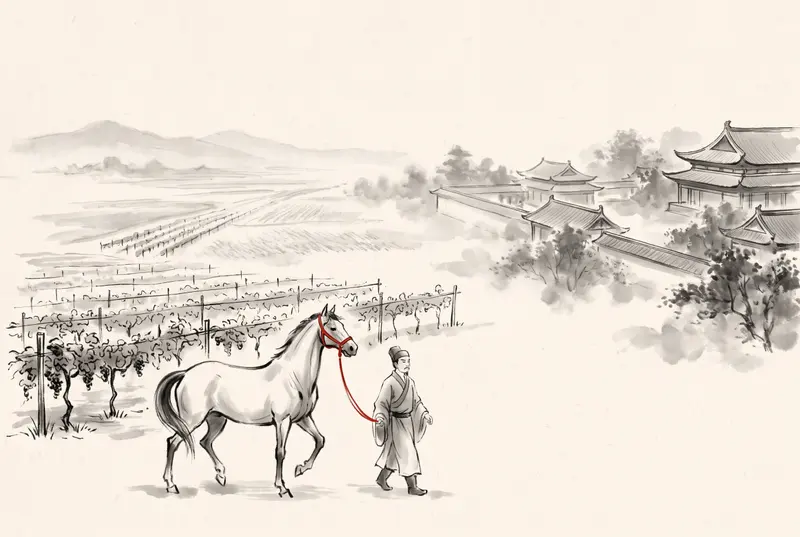
西北外國使,更來更去。宛以西,皆自以遠,尚驕恣晏然,未可詘以禮羈縻而使也。自烏孫以西至安息,以近匈奴,匈奴困月氏也,匈奴使持單于一信,則國國傳送食,不敢留苦;及至漢使,非出幣帛不得食,不市畜不得騎用。所以然者,遠漢,而漢多財物,故必市乃得所欲,然以畏匈奴於漢使焉。宛左右以蒲陶為酒,富人藏酒至萬餘石,久者數十歲不敗。俗嗜酒,馬嗜苜蓿。漢使取其實來,於是天子始種苜蓿、蒲陶肥饒地。及天馬多,外國使來眾,則離宮別觀旁盡種蒲萄、苜蓿極望。自大宛以西至安息,國雖頗異言,然大同俗,相知言。其人皆深眼,多須髯,善市賈,爭分銖。俗貴女子,女子所言而丈夫乃決正。其地皆無絲漆,不知鑄錢器。及漢使亡卒降,教鑄作他兵器。得漢黃白金,輒以為器,不用為幣。
Kundoku (Japanese reading)
西北の外国の使い、更々来たり更々去る。宛以西は、皆自ら遠きを以て、尚お驕恣晏然として、未だ礼を以て羈縻して使うべからず。烏孫より以西安息に至るまで、匈奴に近きを以て、匈奴の月氏を困しむるや、匈奴の使い単于の一信を持てば、則ち国国伝えて食を送り、敢えて留め苦しめず。漢の使いに及びては、幣帛を出ださざれば食を得ず、畜を市わざれば騎用を得ず。然る所以の者は、漢に遠く、而して漢は財物多し。故に必ず市いて乃ち欲する所を得。然れども匈奴を漢の使いより畏るるを以てなり。宛の左右は蒲陶を以て酒を為り、富人は酒を蔵すること万余石に至り、久しき者は数十歳にして敗れず。俗酒を嗜み、馬は苜蓿を嗜む。漢の使い其の実を取りて来たる。是に於いて天子始めて苜蓿・蒲陶を肥饒の地に種う。天馬多く、外国の使いの来たること衆きに及び、則ち離宮別観の旁らに尽く蒲萄・苜蓿を種え極めて望む。大宛より以西安息に至るまで、国は頗る言を異にすと雖も、然れども大いに俗を同じくし、相知りて言う。其の人は皆深眼にして、須髯多く、市賈を善くし、分銖を争う。俗女子を貴び、女子の言う所にして丈夫乃ち決正す。其の地は皆絲漆無く、銭器を鋳るを知らず。漢の使いの亡卒の降るに及びて、他の兵器を鋳作するを教う。漢の黄白金を得れば、輒ち器と為し、用いて幣と為さず。
Japanese
西北の外国の使者が、入れかわり立ちかわりやって来た。大宛より西の国々は遠いことを頼みにおごり高ぶり、礼によって従わせることはまだできなかった。烏孫から安息までの国々は匈奴に近く、匈奴が月氏を苦しめた記憶があるので、匈奴の使者が単于の書状を一つ持っていれば、国から国へ食糧を送り届け、引き止めて苦しめることはなかった。ところが漢の使者は、絹などを出さなければ食事が得られず、家畜を買わなければ馬にも乗れなかった。漢は遠く、しかも財物が多いので、必ず買わせて欲しいものを手に入れたのである。漢の使者より匈奴を恐れていたからでもある。大宛の周辺では葡萄で酒を造り、金持ちは一万石あまりも蔵に蓄え、古いものは数十年たっても腐らない。人々は酒を好み、馬は苜蓿を好む。漢の使者がその種を持ち帰ったので、武帝は初めて苜蓿と葡萄を肥えた土地に植えた。天馬が増え、外国の使者も多く来るようになると、離宮や別館のそばは見渡すかぎり葡萄と苜蓿の畑になった。大宛から西の安息までは、言葉はかなり違うが風俗はよく似ていて、互いに話が通じる。人々はみな目がくぼみ、ひげが多く、商売が上手で、わずかな額も争う。女性を尊び、女性の言うことで男が物事を決める。この地には絹も漆もなく、銭や器を鋳ることも知らなかったが、漢の使者の逃亡兵が降ると、武器の鋳造を教えた。漢の金銀を手に入れると器に作り、貨幣には用いなかった。
English
Envoys from the foreign lands of the northwest came and went in turn. The states west of Dayuan, counting on their distance, were still proud and unconcerned, and could not yet be bound by the rites and made to serve. From the Wusun west to Anxi, the states were close to the Xiongnu, who had once crushed the Yuezhi. A Xiongnu envoy with a single token from the Chanyu was passed from country to country and fed, and no one dared to hold him up or trouble him. But a Han envoy could get no food without paying in silk, and no animals to ride without buying them. This was because they were far from Han, and Han had plenty of goods, so they made its people buy whatever they wanted; and because they feared the Xiongnu more than the Han. Around Dayuan they make wine from grapes. The rich store up to ten thousand bushels and more, and it keeps for decades without spoiling. The people love wine, and the horses love alfalfa. Han envoys brought back the seeds, and the emperor had alfalfa and grapes planted for the first time on rich land. As the Heavenly Horses multiplied and more foreign envoys came, the land beside the detached palaces and lodges was planted with grapes and alfalfa as far as the eye could see. From Dayuan west to Anxi the countries speak rather different languages, but their customs are much the same, and they understand one another. All the people have deep-set eyes and heavy beards. They are good traders who haggle over the smallest coin. They honor women, and a man will decide things according to what a woman says. These lands have no silk or lacquer and did not know how to cast coins or vessels, until deserters from the Han missions came over and taught them to cast weapons. When they got Han gold and silver, they made it into vessels and did not use it as money.
Notes (JA)
- 羈縻: つなぎとめて、ゆるやかに支配する。
- 苜蓿: ウマゴヤシ、アルファルファ。馬の飼料。
- 蒲萄: 葡萄。原文で字が異なる。
- 分銖: ごくわずかな重さや金額。
- 東西の交流の早い記録として名高い箇所。「シルクロード」という語は19世紀の造語。
Notes (EN)
- Alfalfa (苜蓿): the fodder crop, brought from Central Asia.
- This is one of the most famous early accounts of exchange between East and West. The term "Silk Road" dates only from the nineteenth century.
Word notes
- haggle/ˈhæɡəl/verb
to argue over a price
In the text: “who haggle over the smallest coin”
Similar words: bargain — discuss a price · barter — trade by exchange
- alfalfa/ælˈfælfə/noun
a plant grown to feed horses and cattle
In the text: “the horses love alfalfa”
Similar words: lucerne — the British word for it · fodder — food for farm animals
Passage 13
Original
而漢使者往既多,其少從率多進熟於天子,言曰:「宛有善馬在貳師城,匿不肯與漢使。」天子既好宛馬,聞之甘心,使壯士車令等持千金及金馬以請宛王貳師城善馬。宛國饒漢物,相與謀曰:「漢去我遠,而鹽水中數敗,出其北有胡寇,出其南乏水草。又且往往而絕邑,乏食者多。漢使數百人為輩來,而常乏食,死者過半,是安能致大軍乎?無柰我何。且貳師馬,宛寶馬也。」遂不肯予漢使。漢使怒,妄言,椎金馬而去。宛貴人怒曰:「漢使至輕我!」遣漢使去,令其東邊郁成遮攻殺漢使,取其財物。於是天子大怒。諸嘗使宛姚定漢等言宛兵弱,誠以漢兵不過三千人,彊弩射之,即盡虜破宛矣。
Kundoku (Japanese reading)
而して漢の使者往くこと既に多く、其の少従率ね多く天子に進み熟して、言いて曰く、「宛に善馬有りて貳師城に在り、匿して漢の使いに与うるを肯ぜず」と。天子既に宛馬を好み、之を聞きて甘心し、壮士車令等をして千金及び金馬を持して以て宛王に貳師城の善馬を請わしむ。宛国漢の物に饒かなり。相与に謀りて曰く、「漢は我を去ること遠く、而して塩水の中に数しば敗る。其の北に出づれば胡寇有り、其の南に出づれば水草に乏し。又且つ往往にして絶邑、食に乏しき者多し。漢の使い数百人輩を為して来たるも、而も常に食に乏しく、死する者半ばを過ぐ。是れ安くんぞ能く大軍を致さんや。我を柰何ともする無し。且つ貳師の馬は、宛の宝馬なり」と。遂に漢の使いに予うるを肯ぜず。漢の使い怒り、妄言し、金馬を椎きて去る。宛の貴人怒りて曰く、「漢の使い至って我を軽んず」と。漢の使いを遣わして去らしめ、其の東辺の郁成をして遮り攻めて漢の使いを殺さしめ、其の財物を取る。是に於いて天子大いに怒る。諸々の嘗て宛に使いせし姚定漢等言う、宛の兵は弱し、誠に漢の兵三千人に過ぎずして、彊弩もて之を射ば、即ち尽く虜にして宛を破らんと。
Japanese
漢の使者が多くなると、若い従者たちがしきりに武帝にこう申し上げた。「大宛の弐師城に良い馬がいますが、隠して漢の使者に渡そうとしません」。武帝は大宛の馬を好んでいたので、これを聞いて大いに心を動かし、勇士の車令らに千金と黄金の馬を持たせて、大宛王に弐師城の良馬を求めさせた。大宛にはすでに漢の品物がたくさんあった。大宛の人々は相談した。「漢は遠く、塩水の砂漠で何度も遭難している。北を通れば匈奴がいて、南を通れば水も草もない。途中には町が絶えたところもあり、食糧不足で倒れる者が多い。数百人の使節でさえ常に飢えて半数以上が死ぬのに、どうして大軍を送れよう。我々をどうすることもできない。それに弐師の馬は大宛の宝だ」。そして漢の使者に渡すことを拒んだ。漢の使者は怒って暴言を吐き、黄金の馬をたたき壊して去った。大宛の貴族たちは怒って言った。「漢の使者は我々をひどく侮っている」。使者を送り出すと、東の国境の郁成に道をふさがせて攻めさせ、漢の使者を殺して財物を奪った。武帝は激怒した。かつて大宛へ行った姚定漢らは言った。「大宛の兵は弱いので、漢兵三千もいれば、強い弩で射て全員捕らえて打ち破れます」。
English
As more and more Han envoys went out, the younger attendants often told the emperor: "Dayuan has fine horses in the city of Ershi, but it hides them and will not give them to our envoys." The emperor, who loved the horses of Dayuan, was eager when he heard this. He sent a strong man named Che Ling and others with a thousand pieces of gold and a horse made of gold, to ask the king of Dayuan for the fine horses of Ershi. But Dayuan already had plenty of Han goods. Its people conferred together: "Han is far from us, and its men keep coming to grief in the salt desert. North of it are Xiongnu raiders; south of it there is no water or grass. Along the way there are long stretches with no towns, and many go hungry. Han envoys come in groups of several hundred and are always short of food, and over half of them die. How could it ever bring a great army here? It can do nothing to us. And the horses of Ershi are the treasure of Dayuan." So they refused. The Han envoy flew into a rage, cursed them, smashed the golden horse and left. The nobles of Dayuan were furious: "These Han envoys treat us with utter contempt." They let the envoys go, but had Yucheng, on their eastern border, block the road, attack and kill them and take their goods. At this, the emperor was enraged. Yao Dinghan and others who had been sent to Dayuan said its soldiers were weak: with no more than three thousand Han troops and strong crossbows, they could capture them all and destroy it.
Notes (JA)
- 貳師城: 大宛の城。今のウズベキスタン付近とされる。
- 甘心: 強く望み、心を奪われること。
- 金馬: 黄金で作った馬の像。
- 椎: 槌でたたく。
- 郁成: 大宛の東方の町。
Notes (EN)
- Ershi (貳師): a city of Dayuan, probably in present-day Uzbekistan or nearby.
- Golden horse (金馬): a statue of a horse, offered in exchange for live ones.
- Yucheng (郁成): a town in eastern Dayuan.
Word notes
- contempt/kənˈtɛmpt/noun
a feeling that someone is worthless
In the text: “with utter contempt”
Similar words: scorn — strong disrespect · disdain — looking down on someone
Passage 14
Original
天子已嘗使浞野侯攻樓蘭,以七百騎先至,虜其王,以定漢等言為然,而欲侯寵姬李氏,拜李廣利為貳師將軍,發屬國六千騎,及郡國惡少年數萬人,以往伐宛。期至貳師城取善馬,故號「貳師將軍」。趙始成為軍正,故浩侯王恢使導軍,而李哆為校尉,制軍事。是歲太初元年也。而關東蝗大起,蜚西至敦煌。貳師將軍軍既西過鹽水,當道小國恐,各堅城守,不肯給食。攻之不能下。下者得食,不下者數日則去。比至郁成,士至者不過數千,皆饑罷。攻郁成,郁成大破之,所殺傷甚眾。貳師將軍與哆、始成等計:「至郁成尚不能舉,況至其王都乎?」引兵而還。往來二歲。還至敦煌,士不過什一二。使使上書言:「道遠多乏食;且士卒不患戰,患饑。人少,不足以拔宛。願且罷兵,益發而復往。」天子聞之,大怒,而使使遮玉門,曰軍有敢入者輒斬之!貳師恐,因留敦煌。
Kundoku (Japanese reading)
天子已に嘗て浞野侯をして楼蘭を攻めしむるに、七百騎を以て先ず至り、其の王を虜にせり。定漢等の言を以て然りと為し、而して寵姫李氏を侯とせんと欲し、李広利を拝して貳師将軍と為し、属国の六千騎及び郡国の悪少年数万人を発して、以て往きて宛を伐たしむ。貳師城に至りて善馬を取らんことを期す。故に「貳師将軍」と号す。趙始成軍正と為り、故の浩侯王恢をして軍を導かしめ、而して李哆校尉と為りて軍事を制す。是の歳太初元年なり。而して関東に蝗大いに起こり、蜚びて西のかた敦煌に至る。貳師将軍の軍既に西して塩水を過ぐ。道に当たる小国恐れ、各々城を堅くして守り、食を給するを肯ぜず。之を攻むるも下す能わず。下す者は食を得、下さざる者は数日にして則ち去る。郁成に至るに比び、士の至る者は数千に過ぎず、皆饑え罷る。郁成を攻む。郁成大いに之を破り、殺傷する所甚だ衆し。貳師将軍哆・始成等と計るらく、「郁成に至りて尚お挙ぐる能わず、況んや其の王都に至らんや」と。兵を引きて還る。往来二歳。還りて敦煌に至るに、士は什の一二に過ぎず。使いをして上書して言わしむ、「道遠くして多く食に乏し。且つ士卒は戦いを患えず、饑えを患う。人少なく、以て宛を抜くに足らず。願わくは且く兵を罷め、益々発して復た往かん」と。天子之を聞き、大いに怒り、而して使いをして玉門を遮らしめて曰く、軍の敢えて入る者有らば輒ち斬らんと。貳師恐れ、因りて敦煌に留まる。
Japanese
武帝はかつて浞野侯に楼蘭を攻めさせたとき、七百騎で先に着いて王を捕らえたことがあったので、姚定漢らの言葉をもっともだと思った。また寵姫の李氏の一族を侯にしたいと考え、兄の李広利を弐師将軍に任じ、服属した異民族の騎兵六千と各地の不良少年数万人を動員して大宛を討たせた。弐師城に行って良馬を取ることを目的としたので、「弐師将軍」と称した。趙始成を軍正とし、もとの浩侯の王恢に軍を案内させ、李哆を校尉として軍事を取り仕切らせた。太初元年のことである。この年、関東で蝗が大発生し、西の敦煌まで飛んでいった。弐師将軍の軍が西へ進んで塩水を越えると、道沿いの小国は恐れて城を堅く守り、食糧を出そうとしなかった。攻めても落とせない。落とせた所では食糧を得たが、落とせなければ数日で去った。郁成に着くころには、兵は数千人にまで減り、みな飢えて疲れ切っていた。郁成を攻めると大敗して、多くの死傷者を出した。李広利は李哆や趙始成らと相談した。「郁成すら落とせないのに、まして王都は無理だ」。そして兵を引き返した。往復に二年かかった。敦煌に帰ったとき、兵は十分の一か二しか残っていなかった。使者を送って上書した。「道が遠く、食糧がありません。兵は戦いを恐れず、飢えを恐れています。人数が少なくて大宛を落とせません。いったん兵を休め、増やしてからまた行かせてください」。武帝はこれを聞いて激怒し、使者に玉門関をふさがせて言った。「軍で関に入ろうとする者があれば、ただちに斬れ」。李広利は恐れて敦煌にとどまった。
English
The emperor had once sent the Marquis of Zhuoye against Loulan, and with seven hundred horsemen he had arrived first and captured its king. So he believed what Yao Dinghan and the others said. He also wanted to make a marquis of the family of his favorite, Lady Li. So he made her brother Li Guangli the Ershi General and raised six thousand horsemen from the subject peoples and tens of thousands of young hoodlums from the commanderies and kingdoms, and sent them against Dayuan. Their goal was to reach Ershi and take its fine horses, hence his title. Zhao Shicheng was made provost of the army, the former Marquis of Hao, Wang Hui, was to guide it, and Li Chi served as commander in charge of its operations. This was the first year of Taichu. That year locusts rose in vast numbers east of the passes and flew as far west as Dunhuang. When the Ershi General's army had gone west past the salt desert, the small states along the way, in fear, shut their gates and would not supply food. They could not all be taken. Where the army took a town it got food; where it failed it moved on after a few days. By the time it reached Yucheng, only a few thousand men were left, all starving and worn out. They attacked Yucheng, and Yucheng crushed them, killing and wounding very many. The Ershi General conferred with Li Chi and Zhao Shicheng: "If we cannot even take Yucheng, how can we hope to reach the capital?" He led the army back. The journey there and back took two years. When they reached Dunhuang, only one or two men in ten remained. He sent a message to the emperor: "The way is long and we are short of food. The men do not fear battle, they fear hunger. We are too few to take Dayuan. I beg leave to rest the troops, and go again with more." The emperor heard this and was enraged. He sent men to block the Jade Gate and declared that any soldier who dared to enter would be beheaded. The Ershi General, afraid, stayed at Dunhuang.
Notes (JA)
- 浞野侯: 趙破奴。
- 李氏: 武帝の寵姫、李夫人。
- 惡少年: 町の不良の若者。
- 軍正: 軍の法を執行する官。
- 太初元年: 前104年。
- 玉門: 玉門関。西域への入口の関所。
Notes (EN)
- Marquis of Zhuoye: Zhao Ponu.
- Lady Li: the favorite of Emperor Wu.
- First year of Taichu: 104 BCE.
- Jade Gate (玉門): the frontier pass on the road to the Western Regions.
Word notes
- hoodlum/ˈhudləm/noun
a violent young criminal
In the text: “young hoodlums”
Similar words: thug — a violent person · ruffian — a rough, violent person
- starving/ˈstɑrvɪŋ/adjective
suffering from a lack of food
In the text: “all starving and worn out”
Similar words: famished — very hungry · ravenous — extremely hungry
Passage 15
Original
其夏,漢亡浞野之兵二萬餘於匈奴。公卿及議者皆願罷擊宛軍,專力攻胡。天子已業誅宛,宛小國而不能下,則大夏之屬輕漢,而宛善馬絕不來,烏孫、侖頭易苦漢使矣,為外國笑。乃案言伐宛尤不便者鄧光等,赦囚徒材官,益發惡少年及邊騎,歲餘而出敦煌者六萬人,負私從者不與。牛十萬,馬三萬餘匹,驢騾橐它以萬數。多齎糧,兵弩甚設,天下騷動,傳相奉伐宛,凡五十餘校尉。宛王城中無井,皆汲城外流水,於是乃遣水工徙其城下水空以空其城。益發戍甲卒十八萬,酒泉、張掖北,置居延、休屠以衛酒泉,而發天下七科適,及載糒給貳師。轉車人徒相連屬至敦煌。而拜習馬者二人為執驅校尉,備破宛擇取其善馬云。
Kundoku (Japanese reading)
其の夏、漢浞野の兵二万余を匈奴に亡う。公卿及び議する者皆宛を撃つ軍を罷め、力を専らにして胡を攻めんことを願う。天子已に宛を誅するを業とす。宛は小国なるも下す能わずんば、則ち大夏の属漢を軽んじ、而して宛の善馬絶えて来たらず、烏孫・侖頭も漢の使いを苦しめ易からん、外国の笑いと為らん、と。乃ち宛を伐つことの尤も不便なりと言う者鄧光等を案じ、囚徒材官を赦し、益々悪少年及び辺騎を発す。歳余にして敦煌を出づる者六万人、負いて私に従う者は与らず。牛十万、馬三万余匹、驢騾橐它は万を以て数う。多く糧を齎し、兵弩甚だ設く。天下騒動し、伝えて相奉じて宛を伐つ。凡そ五十余校尉。宛の王城の中に井無く、皆城外の流水を汲む。是に於いて乃ち水工を遣わして其の城下の水を徙し空しくして以て其の城を空しくせしむ。益々戍甲卒十八万を発し、酒泉・張掖の北に、居延・休屠を置きて以て酒泉を衛らしむ。而して天下の七科の適を発し、及び糒を載せて貳師に給す。転車の人徒相連属して敦煌に至る。而して馬を習う者二人を拝して執駆校尉と為し、宛を破りて其の善馬を択び取るに備うと云う。
Japanese
その夏、漢は浞野侯の兵二万あまりを匈奴との戦いで失った。公卿や議論する者たちはみな、大宛を討つ軍をやめて匈奴に力を集中するよう願った。しかし武帝はすでに大宛を討つと決めていた。小国の大宛すら落とせなければ、大夏などが漢を軽んじ、大宛の良馬も二度と来ず、烏孫や侖頭も漢の使者を苦しめ、外国の笑いものになる。そこで、大宛討伐は最も不都合だと言った鄧光らを処罰し、囚人や兵士を赦し、不良少年と辺境の騎兵をさらに動員した。一年あまりで敦煌を出た者は六万人、自前で荷を負ってついて行く者は別である。牛十万頭、馬三万頭あまり、ろば、らば、らくだは万の単位であった。食糧を多く持ち、武器や弩も十分に備えた。天下は騒然となり、次々と物資を送って大宛討伐を支えた。校尉は五十人あまりにのぼった。大宛の王城には井戸がなく、城外の流れから水を汲んでいたので、水工を送って城下の流れを移し、城の水を絶とうとした。さらに守備兵十八万を動員し、酒泉と張掖の北に居延と休屠の守りを置いて酒泉を守った。また天下の七種の罪人を動員し、干し飯を運んで李広利に供給した。輸送の車と人夫は敦煌まで連なった。馬に詳しい者二人を執駆校尉に任じて、大宛を破ったときに良馬を選び取る準備をした。
English
That summer Han lost the army of the Marquis of Zhuoye, over twenty thousand men, to the Xiongnu. The high ministers and all who gave advice begged the emperor to give up the war on Dayuan and concentrate on the Xiongnu. But the emperor had already committed himself. If he could not bring down a small state like Dayuan, he reasoned, then Daxia and the rest would despise Han, the fine horses would never come, the Wusun and Luntou would harass Han envoys, and Han would be the laughingstock of foreign lands. So he punished Deng Guang and others who had spoken most strongly against the war, pardoned prisoners and soldiers, and raised still more young hoodlums and frontier cavalry. Within a little over a year, sixty thousand men set out from Dunhuang, not counting those who followed carrying their own loads. There were a hundred thousand oxen, more than thirty thousand horses, and donkeys, mules and camels by the tens of thousands. They carried ample food and were well armed with crossbows. The whole empire was in turmoil, handing on supplies for the war against Dayuan. There were more than fifty commanders in all. The royal city of Dayuan had no wells and drew its water from a stream outside the walls, so water engineers were sent to divert the stream and leave the city dry. A further hundred and eighty thousand garrison troops were raised, and Juyan and Xiutu were set up north of Jiuquan and Zhangye to protect Jiuquan. The empire's seven classes of offenders were called up to haul dried grain to the Ershi General. Carts and laborers stretched in an unbroken line to Dunhuang. And two men skilled with horses were appointed commanders of the horse, to choose the finest once Dayuan had fallen.
Notes (JA)
- 侖頭: 輪台。タリム盆地北縁の国。
- 橐它: らくだ。
- 七科適: 罪人や商人など、七種の身分の者を辺境へ送る制度。
- 糒: 干し飯。
- 執驅校尉: 良馬を選ぶ役目の将校。
Notes (EN)
- Luntou (侖頭): Luntai, an oasis on the north edge of the Tarim Basin.
- Seven classes of offenders (七科適): criminals, merchants and others who could be sent to the frontier by law.
Word notes
- laughingstock/ˈlæfɪŋˌstɑk/noun
someone everyone laughs at
In the text: “the laughingstock of foreign lands”
Similar words: joke — an object of ridicule · figure of fun — someone mocked
- divert/daɪˈvɜrt/verb
to change the direction of
In the text: “to divert the stream”
Similar words: redirect — send another way · reroute — change the path
Passage 16
Original
於是貳師后復行,兵多,而所至小國莫不迎,出食給軍。至侖頭,侖頭不下,攻數日,屠之。自此而西,平行至宛城,漢兵到者三萬人。宛兵迎擊漢兵,漢兵射敗之,宛走入葆乘其城。貳師兵欲行攻郁成,恐留行而令宛益生詐,乃先至宛,決其水源,移之,則宛固已憂困。圍其城,攻之四十餘日,其外城壞,虜宛貴人勇將煎靡。宛大恐,走入中城。宛貴人相與謀曰:「漢所為攻宛,以王毋寡匿善馬而殺漢使。今殺王毋寡而出善馬,漢兵宜解;即不解,乃力戰而死,未晚也。」宛貴人皆以為然,共殺其王毋寡,持其頭遣貴人使貳師,約曰:「漢毋攻我。我盡出善馬,恣所取,而給漢軍食。即不聽,我盡殺善馬,而康居之救且至。至,我居內,康居居外,與漢軍戰。漢軍熟計之,何從?」是時康居候視漢兵,漢兵尚盛,不敢進。貳師與趙始成、李哆等計:「聞宛城中新得秦人,知穿井,而其內食尚多。所為來,誅首惡者毋寡。毋寡頭已至,如此而不許解兵,則堅守,而康居候漢罷而來救宛,破漢軍必矣。」軍吏皆以為然,許宛之約。宛乃出其善馬,令漢自擇之,而多出食食給漢軍。漢軍取其善馬數十匹。中馬以下牡牝三千餘匹,而立宛貴人之故待遇漢使善者名昧蔡以為宛王,與盟而罷兵。終不得入中城。乃罷而引歸。
Kundoku (Japanese reading)
是に於いて貳師后に復た行く。兵多く、而して至る所の小国迎えざる莫く、食を出だして軍に給す。侖頭に至る。侖頭下らず、攻むること数日、之を屠る。此より西、平行して宛城に至る。漢の兵到る者三万人。宛の兵迎え撃つ。漢の兵射て之を敗る。宛走りて入りて其の城に葆乗す。貳師の兵行きて郁成を攻めんと欲するも、留まりて行きて宛をして益々詐を生ぜしめんことを恐れ、乃ち先ず宛に至り、其の水源を決して、之を移す。則ち宛固より已に憂困す。其の城を囲み、之を攻むること四十余日、其の外城壊れ、宛の貴人勇将煎靡を虜にす。宛大いに恐れ、走りて中城に入る。宛の貴人相与に謀りて曰く、「漢の宛を攻むる所以は、王毋寡の善馬を匿して漢の使いを殺すを以てなり。今王毋寡を殺して善馬を出ださば、漢の兵宜しく解くべし。即し解かずんば、乃ち力戦して死すも、未だ晩からざるなり」と。宛の貴人皆以て然りと為し、共に其の王毋寡を殺し、其の頭を持ちて貴人を遣わして貳師に使いし、約して曰く、「漢我を攻むる毋かれ。我尽く善馬を出だし、取る所を恣にせしめ、而して漢軍に食を給せん。即し聴かずんば、我尽く善馬を殺さん。而して康居の救い且に至らんとす。至らば、我は内に居り、康居は外に居りて、漢軍と戦わん。漢軍熟く之を計れ、何れにか従わん」と。是の時康居漢の兵を候視するに、漢の兵尚お盛んにして、敢えて進まず。貳師趙始成・李哆等と計る、「聞く、宛城の中に新たに秦人を得て、井を穿つを知り、而して其の内の食尚お多しと。来たる所以は、首悪なる者毋寡を誅せんがためなり。毋寡の頭已に至る。此くの如くして兵を解くを許さずんば、則ち堅く守り、而して康居漢の罷るるを候いて来たりて宛を救わば、漢軍を破ること必せり」と。軍吏皆以て然りと為し、宛の約を許す。宛乃ち其の善馬を出だし、漢をして自ら之を択ばしめ、而して多く食を出だして漢軍に給す。漢軍其の善馬数十匹を取り、中馬以下の牡牝三千余匹、而して宛の貴人の故より漢の使いを待遇すること善き者名は昧蔡を立てて以て宛王と為し、与に盟いて兵を罷む。終に中城に入るを得ず。乃ち罷めて引き帰る。
Japanese
こうして李広利は再び出発した。兵が多かったので、通る国々はみな出迎えて食糧を出した。侖頭だけは降らなかったので、数日攻めて、住民を皆殺しにした。そこから西は難なく進んで大宛の城に着いた。到着した漢兵は三万人である。大宛の兵が迎え撃ったが、漢兵は矢を射て破り、大宛は城に逃げ込んで守った。李広利の軍は郁成を攻めようとしたが、ぐずぐずして大宛にさらに策を講じられることを恐れ、先に大宛へ行き、水源を切って流れを移した。大宛はもともと苦しんでいた。城を囲んで四十日あまり攻めると外城が崩れ、大宛の貴族で勇将の煎靡を捕らえた。大宛は大いに恐れて中城へ逃げ込んだ。大宛の貴族たちは相談した。「漢が攻めてきたのは、王の毋寡が良馬を隠し、漢の使者を殺したからだ。いま毋寡を殺して良馬を出せば、漢軍は引くはずだ。引かなければ、そのとき力戦して死んでも遅くはない」。みな賛成して王の毋寡を殺し、その首を持たせて貴族を使者として李広利のもとへやり、こう約束した。「我々を攻めないでほしい。良馬をすべて出して好きなだけ取らせ、漢軍に食糧も出す。聞き入れないなら良馬をすべて殺す。康居の救援もまもなく来る。そうなれば、我々は内から、康居は外から漢軍と戦う。よく考えて、どちらかを選ばれよ」。このとき康居は漢軍の様子をうかがっていたが、まだ勢いが盛んなので進めずにいた。李広利は趙始成や李哆らと相談した。「聞けば、大宛の城内には新たに秦人が来て井戸の掘り方を知っており、城内の食糧もまだ多い。我々が来たのは、元凶の毋寡を討つためだ。その首はもう届いた。それでも兵を引かなければ、彼らは堅く守り、康居が漢軍の疲れを待って救援に来れば、漢軍は必ず敗れる」。将校たちはみな同意して、大宛の約束を受け入れた。大宛は良馬を出して漢に自由に選ばせ、食糧もたくさん出した。漢軍は良馬数十頭と、中等以下の雄と雌三千頭あまりを取り、以前から漢の使者を手厚くもてなしていた貴族の昧蔡を大宛王に立て、盟約して兵を引いた。ついに中城には入らなかった。こうして軍を収めて帰った。
English
So the Ershi General set out again. With so many troops, every small state on the way came out to greet him and fed his army. Only Luntou would not submit. After several days of fighting he took it and slaughtered its people. From there he marched west unopposed to the city of Dayuan, arriving with thirty thousand men. The soldiers of Dayuan came out to meet him, but the Han archers drove them back, and they fled inside and manned the walls. The Ershi General's men wanted to go and attack Yucheng, but he feared that delay would give Dayuan time for new schemes. So he went straight to the city, cut off its water and turned the stream aside, and Dayuan was soon in great distress. He surrounded the city and attacked for more than forty days. The outer wall fell, and he captured Jianmi, a noble and a brave general of Dayuan. In terror, the people fled into the inner city. The nobles of Dayuan said to one another: "Han attacks us because our king, Wugua, hid the fine horses and killed its envoys. If we kill the king and hand over the horses, the army should withdraw. If it does not, it will not be too late to fight to the death." All agreed. They killed King Wugua and sent a noble with his head to the Ershi General, with this offer: "Do not attack us, and we will bring out all the fine horses for you to take as you please, and feed your army. If you refuse, we will kill all the horses. Kangju's relief force is on its way. When it comes we will be inside, Kangju outside, and we will fight you together. Let Han think this over carefully and choose." At that moment, Kangju was watching the Han army, and because it was still strong, dared not come closer. The Ershi General conferred with Zhao Shicheng and Li Chi: "I hear that the city has recently taken in some men of Qin who know how to dig wells, and it still has plenty of food. We came here to punish the chief culprit, Wugua, and now we have his head. If we refuse to withdraw, they will hold out, and when Kangju sees us worn down and comes to their aid, we are sure to be destroyed." The officers all agreed, and he accepted Dayuan's terms. Dayuan brought out its fine horses for the Han to choose from, and supplied the army with plenty of food. The Han took several dozen of the finest and more than three thousand stallions and mares of middling quality. They made a noble named Meicai, who had always treated Han envoys well, king of Dayuan, swore a pact with him and ended the war. They never got into the inner city. Then they withdrew and turned for home.
Notes (JA)
- 葆乘: 城にこもって守る。
- 煎靡: 大宛の勇将。
- 毋寡: 大宛の王。
- 秦人: 中国人のこと。西域では中国を「秦」と呼んだ。
- 昧蔡: 新たに立てられた大宛王。一年あまりで殺された(原文 第35段)。
Notes (EN)
- Men of Qin (秦人): in the Western Regions, the Chinese were still called "Qin".
- Meicai: the puppet king, who was killed about a year later by the nobles of Dayuan.
Word notes
- culprit/ˈkʌlprɪt/noun
the person guilty of a crime
In the text: “the chief culprit”
Similar words: offender — one who breaks a law · wrongdoer — one who does wrong
Passage 17
Original
初,貳師后行,天子使使告烏孫,大發兵并力擊宛。烏孫發二千騎往,持兩端,不肯前。貳師將軍之東,諸所過小國聞宛破,皆使其子弟從軍入獻,見天子,因以為質焉。貳師之伐宛也,而軍正趙始成力戰,功最多;及上官桀敢深入,李哆為謀計,軍入玉門者萬餘人,軍馬千餘匹。貳師后行,軍非乏食,戰死不能多,而將吏貪,多不愛士卒,侵牟之,以此物故眾。天子為萬里而伐宛,不錄過,封廣利為海西侯。又封身斬郁成王者騎士趙弟為新畤侯。軍正趙始成為光祿大夫,上官桀為少府,李哆為上黨太守。軍官吏為九卿者三人,諸侯相、郡守、二千石者百餘人,千石以下千餘人。奮行者官過其望,以適過行者皆絀其勞。士卒賜直四萬金。伐宛再反,凡四歲而得罷焉。
Kundoku (Japanese reading)
初め、貳師后に行くや、天子使いをして烏孫に告げしめ、大いに兵を発して力を并せて宛を撃たしむ。烏孫二千騎を発して往くも、両端を持し、前むを肯ぜず。貳師将軍の東するや、諸々の過ぐる所の小国宛の破れしを聞き、皆其の子弟をして軍に従いて入りて献じ、天子に見えしめ、因りて以て質と為す。貳師の宛を伐つや、軍正趙始成力戦して、功最も多し。及び上官桀敢えて深く入り、李哆謀計を為す。軍の玉門に入る者万余人、軍馬千余匹。貳師后に行くや、軍は食に乏しきに非ず、戦死も多きこと能わず。而して将吏貪り、多く士卒を愛せず、之を侵牟す。此を以て物故するもの衆し。天子万里にして宛を伐つが為に、過ちを録せず。広利を封じて海西侯と為す。又身づから郁成王を斬りし者騎士趙弟を封じて新畤侯と為す。軍正趙始成を光禄大夫と為し、上官桀を少府と為し、李哆を上党の太守と為す。軍の官吏九卿と為る者三人、諸侯の相・郡守・二千石の者百余人、千石以下千余人。奮いて行く者は官其の望みに過ぎ、適を以て過ちて行く者は皆其の労を絀く。士卒に賜うこと直四万金。宛を伐つこと再び反り、凡そ四歳にして罷むを得たり。
Japanese
李広利の再遠征のとき、武帝は烏孫に使者を送って、大軍を出して共に大宛を討つよう求めた。烏孫は二千騎を出したが、どちらにもつけるように構えて前へ進もうとしなかった。李広利が東へ帰るとき、通る小国は大宛が敗れたと聞き、みな子弟を軍に従わせて献上品を持たせ、武帝に会わせて人質とした。大宛討伐では、軍正の趙始成が力戦して功が最も多く、上官桀は敵地深く攻め入り、李哆は作戦を立てた。玉門関に帰り着いた兵は一万人あまり、軍馬は千頭あまりだった。再遠征では食糧が足りなかったわけではなく、戦死者もそれほど多くはなかった。しかし将校や役人が欲深く、兵を大切にせず、彼らの物を奪ったので、多くの兵が死んだのである。武帝は万里の遠征であることを考えて、過失を問わなかった。李広利を海西侯に封じ、自ら郁成王を斬った騎士の趙弟を新畤侯に封じた。軍正の趙始成を光禄大夫、上官桀を少府、李哆を上党太守とした。軍の官吏で九卿になった者は三人、諸侯の相や郡守など二千石の者は百人あまり、千石以下は千人あまりにのぼった。志願して行った者は望み以上の官を得て、罪で送られた者は労をもって罪を消された。兵士に賜った恩賞は四万金に相当した。大宛討伐は二度にわたり、合わせて四年でようやく終わった。
English
When the Ershi General made his second expedition, the emperor sent word to the Wusun to raise a large force and join in the attack. The Wusun sent two thousand horsemen, but kept a foot in both camps and would not advance. As the Ershi General marched east, the small states he passed, hearing that Dayuan had fallen, all sent their young nobles with the army to offer tribute and be presented to the emperor, and to stay as hostages. In the war on Dayuan, the provost Zhao Shicheng fought hard and won the greatest merit; Shangguan Jie dared to strike deep; and Li Chi made the plans. Those who came back through the Jade Gate numbered a little over ten thousand men, with a little over a thousand horses. On the second expedition the army had not been short of food, and not so many had died in battle. But the generals and officers were greedy, had no care for their men and robbed them, and that was why so many died. Because the emperor had fought a war ten thousand li away, he did not record their faults. He made Li Guangli Marquis of Haixi. Zhao Di, the horseman who had himself cut down the king of Yucheng, was made Marquis of Xinzhi. The provost Zhao Shicheng became a Grand Counselor, Shangguan Jie the Privy Treasurer, and Li Chi governor of Shangdang. Three of the army's officers became Nine Ministers. More than a hundred became chancellors of kingdoms, governors or officials of two thousand bushels, and over a thousand received posts of a thousand bushels or less. Those who had volunteered got more than they had hoped for, and those sent as punishment had their offenses wiped clean by their service. The soldiers were given rewards worth forty thousand in gold. The war on Dayuan, with its two expeditions, finally ended after four years.
Notes (JA)
- 持兩端: どちらにもつけるように両天秤にかける。
- 上官桀: のちに霍光と対立した武帝の重臣。
- 侵牟: 兵の取り分を奪う。
- 海西侯: 「海の西」の侯。
- 六万人で出発し、帰ったのは一万余人だった(p15)。
Notes (EN)
- Keep a foot in both camps (持兩端): to wait and see which side wins.
- Shangguan Jie: later a leading minister and a rival of Huo Guang.
- Of sixty thousand who set out (p15), just over ten thousand returned.
Word notes
- greedy/ˈɡridi/adjective
wanting more than is fair
In the text: “the generals and officers were greedy”
Similar words: grasping — eager for money · avaricious — very greedy
Passage 18
Original
《禹本紀》言「河出崑崙。崑崙其高二千五百餘里,日月所相避隱為光明也。其上有醴泉、瑤池」。今自張騫使大夏之後也,窮河源,惡睹本紀所謂崑崙者乎?故言九州山川,《尚書》近之矣。至《禹本紀》、《山海經》所有怪物,余不敢言之也。
Kundoku (Japanese reading)
禹本紀に言う、「河は崑崙に出づ。崑崙は其の高さ二千五百余里、日月の相避け隠れて光明を為す所なり。其の上に醴泉・瑤池有り」と。今張騫の大夏に使いしてより後、河源を窮む。悪くんぞ本紀の所謂崑崙なる者を睹んや。故に九州の山川を言うは、尚書之に近し。禹本紀・山海経の有する所の怪物に至りては、余敢えて之を言わず。
Japanese
『禹本紀』には「黄河は崑崙に発する。崑崙の高さは二千五百里あまりで、太陽と月が互いに身を隠して光を放つ所である。その上には甘い泉と瑤池がある」と書かれている。しかし張騫が大夏へ使いして以来、黄河の源は突きとめられた。いったいどこに『禹本紀』のいう崑崙があったというのか。だから中国の山川を語るには『尚書』が事実に近い。『禹本紀』や『山海経』に載っている怪物については、私はあえて語らない。
English
The Annals of Yu says: "The River rises from Kunlun. Kunlun is more than two thousand five hundred li high. It is where the sun and moon hide from each other to give their light. On its summit are the Sweet Spring and the Jade Pool." But since Zhang Qian went to Daxia, the source of the River has been traced. Where has anyone seen the Kunlun of that book? So for the mountains and rivers of the Nine Provinces, the Book of Documents comes closer to the truth. As for the monsters in the Annals of Yu and the Classic of Mountains and Seas, I dare not speak of them.
Notes (JA)
- 崑崙: 中国の神話で西方にある聖なる山。
- 瑤池: 西王母が住むという仙境の池。
- 尚書: 『書経』。禹の治水を記す「禹貢」篇がある。
- 山海經: 怪物や異域の地理を記す古い書物。
- 実地の報告によって伝説を退ける、司馬遷の歴史家としての姿勢がよく表れている。
Notes (EN)
- Kunlun: the sacred mountain of the west in Chinese myth.
- Jade Pool (瑤池): the home of the Queen Mother of the West.
- Here Sima Qian the historian uses a traveler's evidence to set aside old legends.
Word notes
- monster/ˈmɑnstər/noun
a frightening imaginary creature
In the text: “As for the monsters”
Similar words: beast — a fierce animal · ogre — a cruel giant