Biographies · Vol. 122
The Biographies of the Harsh Officials 酷吏列傳
Trembling Without Cold 不寒而栗
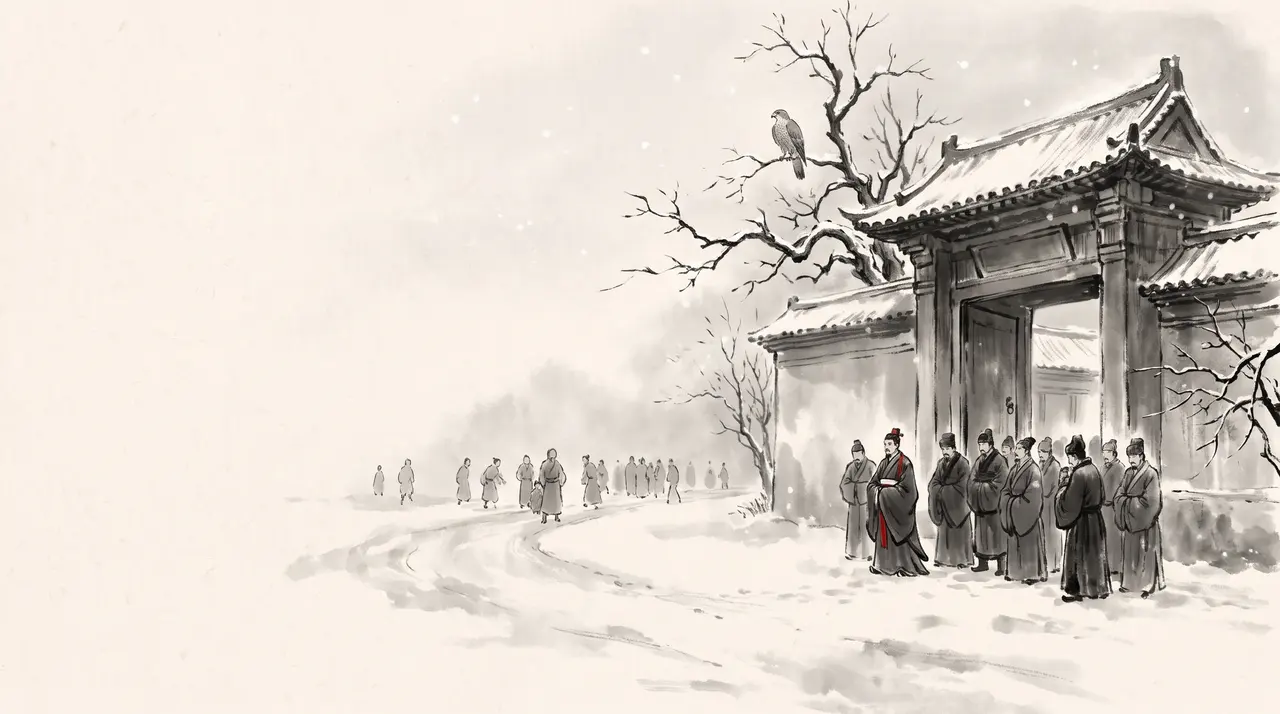
The stories of officials who held the people down with harsh punishments under Emperors Jing and Wu. Sima Qian begins with words of Confucius and Laozi: laws are tools of government, not the source of a clean or a corrupt age. In the early Han, he says, the net of the law was so loose that even a fish big enough to swallow a boat could slip through, and yet the land was well governed. Zhi Du spared neither princes nor ministers and was called "the Grey Hawk". Ning Cheng held his subordinates as tight as a bundle of wet firewood, and men said: "Better to meet a tigress with cubs than Ning Cheng's anger." As a boy, Zhang Tang caught a rat that had stolen meat and put it on trial, to his father's amazement; he rose to great power as Emperor Wu's grand secretary, but was framed and killed himself, leaving less than five hundred gold. Yi Zong had over four hundred people executed in a single day, so that the whole commandery trembled without cold, and Wang Wenshu, when spring came and executions had to stop, sighed: "If only winter were one month longer!" Du Zhou judged as the emperor wished, saying that law was simply what the ruler approved. Yet Sima Qian also says that in their harsh way these men did their jobs.
This page has the scene "Trembling Without Cold" from this volume, not the whole volume.
Audio
The audio is synthetic speech.
Video
Passage 1
Original
孔子曰:「導之以政,齊之以刑,民免而無恥。導之以德,齊之以禮,有恥且格。」老氏稱:「上德不德,是以有德;下德不失德,是以無德。法令滋章,盜賊多有。」太史公曰:信哉是言也!法令者治之具,而非制治淸濁之源也。昔天下之網嘗密矣,然姦偽萌起,其極也,上下相遁,至於不振。當是之時,吏治若救火揚沸,非武健嚴酷,惡能勝其任而愉快乎!言道德者,溺其職矣。故曰「聽訟,吾猶人也,必也使無訟乎」。「下士聞道大笑之」。非虚言也。漢興,破觚而爲圜,斲雕而爲樸,網漏於呑舟之魚,而吏治烝烝,不至於姦,黎民艾安。由是觀之,在彼不在此。
Kundoku (Japanese reading)
孔子曰く、「之を導くに政を以てし、之を斉うるに刑を以てすれば、民免れて恥無し。之を導くに徳を以てし、之を斉うるに礼を以てすれば、恥有りて且つ格る」と。老氏称す、「上徳は徳とせず、是を以て徳有り。下徳は徳を失わず、是を以て徳無し。法令滋々章らかにして、盗賊多く有り」と。太史公曰く、信なるかな是の言や。法令は治の具にして、治の清濁を制するの源に非ざるなり。昔天下の網嘗て密なりき。然れども姦偽萌し起こり、其の極まるや、上下相遁れ、振わざるに至る。是の時に当たり、吏の治は火を救い沸くを揚ぐるが若し。武健厳酷に非ずんば、悪んぞ能く其の任に勝えて愉快ならんや。道徳を言う者は、其の職に溺れん。故に曰く「訟えを聴くは、吾猶お人のごときなり。必ずや訟え無からしめんか」と。「下士は道を聞きて大いに之を笑う」と。虚言に非ざるなり。漢興り、觚を破りて圜と為し、雕を斲りて樸と為す。網は呑舟の魚を漏らす。而して吏の治烝烝として、姦に至らず、黎民艾安す。是に由りて之を観れば、彼に在りて此に在らず。
Japanese
孔子は言った。「政令で民を導き、刑罰で民をそろえようとすると、民は罰を逃れようとするだけで、恥を知らなくなる。徳で民を導き、礼で民をそろえれば、民は恥を知り、そのうえ正しくなる」。老子は言った。「最高の徳は徳を意識しないので徳がある。低い徳は徳を失うまいとするので徳がない。法令がますます細かくなるほど、盗賊は多くなる」。太史公は言う。まことにこれらの言葉のとおりだ。法令は政治の道具であって、世の中が清らかか濁っているかを決める源ではない。むかし(秦の時代)、天下の法の網はたいへん細かかった。それでも悪事やいつわりが芽生えて起こり、それがきわまると、上の者も下の者も互いに責任を逃れて、どうにもならなくなった。そのころの役人の政治は、燃えさかる火を消し、煮えたぎる湯をかき回してさますようなもので、強く厳しく容赦のない者でなければ、どうして職務に耐えて満足に果たせたろうか。道徳を説く者は、職務の中でおぼれてしまっただろう。だから孔子は「訴えを裁くことにかけては、わたしも人と同じだ。大切なのは、訴えそのものをなくすことだ」と言い、老子は「つまらない者は道を聞くと大笑いする」と言ったのである。これらはうそではない。漢がおこると、とがった角をこわして丸くし、彫り飾りを削って素朴にした。法の網は、舟を飲みこむほどの大魚さえ漏らすほど粗かった。それでも役人の政治は誠実で、悪事に走ることもなく、民は安らかに暮らした。これから見れば、国がよく治まるかどうかは、徳にあって、法令にあるのではない。
English
Confucius said: "Lead them with government and keep them in line with punishments, and the people will try to escape them and have no sense of shame. Lead them with virtue and keep them in line with ritual, and they will have a sense of shame and come to be good." Laozi said: "The highest virtue does not think of itself as virtue, and so it has virtue. The lowest virtue never lets go of virtue, and so it has no virtue. The more laws and orders there are, the more thieves and robbers there will be." The Grand Historian says: How true these words are! Laws and orders are tools of government, but they are not the source that makes an age clean or corrupt. Once, the net of the law was spread very fine over the realm. Yet crime and deceit sprang up, and in the end, high and low alike evaded their duties, until things could not be put right. At that time the officials governed as if putting out a fire or stirring a pot to stop it boiling over. Only the tough, the stern and the merciless could bear the work and do it to their satisfaction. Anyone who talked of virtue would have drowned in his duties. So Confucius said: "In hearing lawsuits, I am no better than anyone else. What matters is to bring it about that there are no lawsuits." And Laozi said: "When a lesser man hears of the Way, he laughs out loud." These are not empty words. When the Han arose, it broke off the sharp corners and made them round, and planed away the carving to leave plain wood. The net of the law was so loose that even a fish big enough to swallow a boat could slip through. Yet the officials governed with honest care, did not turn to wrongdoing, and the common people lived in peace. Seen in this way, good government lies in the one, and not in the other.
Notes (JA)
- 導之以政…有恥且格: 『論語』為政篇の言葉。
- 上德不德…盜賊多有: 『老子』の言葉。
- 昔天下之網嘗密: 秦の時代のこと。秦は厳しい法で治めたが、すぐに滅んだ。
- 網漏於吞舟之魚: 法の網が粗く、舟を飲みこむほどの大魚(大悪人)さえ漏らすこと。漢のはじめの寛大な政治をいう。
Notes (EN)
- "Lead them with government…": from the Analects.
- "The highest virtue…": from the Laozi.
- The fine net: the harsh laws of Qin, which fell quickly.
- A fish big enough to swallow a boat (吞舟之魚): the loose net of early Han law, which let even great offenders slip through.
Idioms from this passage: A fish big enough to swallow a boat 呑舟の魚
Word notes
- corrupt/kəˈrʌpt/adjective
dishonest, especially taking money unfairly
In the text: “clean or corrupt”
Similar words: crooked — dishonest · venal — open to bribes
- merciless/ˈmɜrsɪləs/adjective
showing no kindness or pity
In the text: “the merciless”
Similar words: ruthless — without pity · pitiless — cruel
Passage 2
Original
郅都者,楊人也。以郎事孝文帝。孝景時,都爲中郎將,敢直諫,面折大臣於朝。嘗從入上林,賈姬如廁,野彘卒入廁。上目都,都不行。上欲自持兵救賈姬,都伏上前曰:「亡一姬復一姬進,天下所少寧賈姬等乎?陛下縱自輕,柰宗廟太后何!」上還,彘亦去。太后聞之,賜都金百斤,由此重郅都。
Kundoku (Japanese reading)
郅都は、楊の人なり。郎を以て孝文帝に事う。孝景の時、都中郎将と為り、敢えて直諫し、大臣を朝に面折す。嘗て従いて上林に入る。賈姫廁に如く。野彘卒かに廁に入る。上都を目す。都行かず。上自ら兵を持ちて賈姫を救わんと欲す。都上の前に伏して曰く、「一姫を亡わば復た一姫進まん。天下に少き所は寧ぞ賈姫等ならんや。陛下縦い自ら軽んずるも、宗廟・太后を柰何せん」と。上還る。彘も亦た去る。太后之を聞き、都に金百斤を賜う。此れに由りて郅都を重んず。
Japanese
郅都は楊の人である。郎として孝文帝に仕えた。孝景帝のとき、郅都は中郎将となり、恐れずにまっすぐにいさめ、朝廷で大臣を面と向かってやりこめた。あるとき帝に従って上林苑に入ると、賈姫が厠に行ったところへ、野生のいのししが急に入っていった。帝は目で郅都に行けと合図したが、郅都は行かなかった。帝が自分で武器を取って賈姫を救いに行こうとすると、郅都は帝の前にひれ伏して言った。「姫を一人失っても、また別の姫が召し出されるだけです。天下に足りないのは、賈姫のような女でしょうか。陛下はご自分の身を軽んじられても、宗廟や太后はどうなさるのですか」。帝は引き返し、いのししも去っていった。太后はこれを聞いて郅都に黄金百斤を与え、これ以来郅都を重んじた。
English
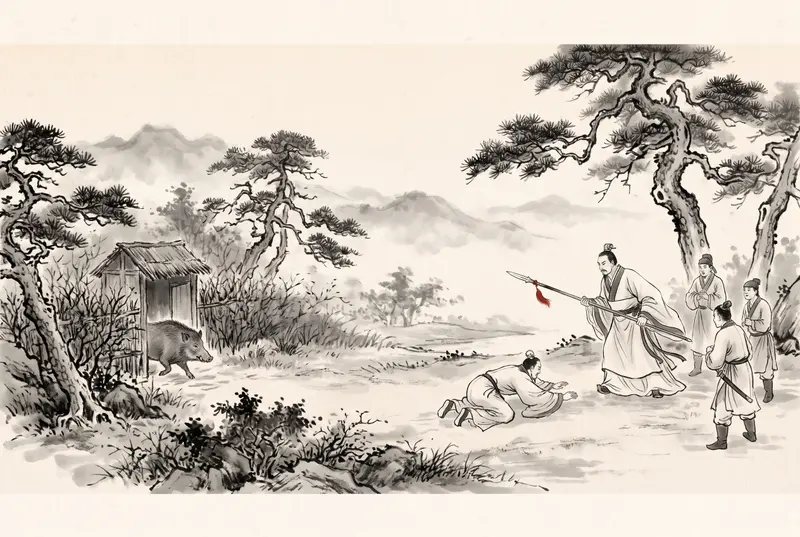
Zhi Du was a man of Yang. He served Emperor Wen as a palace gentleman. Under Emperor Jing he became a general of the palace gentlemen. He dared to speak his mind, and would rebuke great ministers to their faces at court. Once he went with the emperor into the Shanglin park. Lady Jia went to the privy, and a wild boar suddenly charged into it. The emperor looked at Zhi Du, but Zhi Du did not move. The emperor was about to take up a weapon and save Lady Jia himself, when Zhi Du threw himself down before him and said: "Lose one lady, and another will be presented. Is the realm short of ladies like Lady Jia? Even if Your Majesty thinks little of your own life, what of the ancestral temples and the empress dowager?" The emperor turned back, and the boar went away too. When the empress dowager heard of it, she gave Zhi Du a hundred catties of gold, and from then on she thought highly of him.
Notes (JA)
- 上林: 長安の西にあった皇帝の広大な狩り場の苑。
- 賈姫: 景帝の側室。中山靖王劉勝の母。
- 郅都は女の命より皇帝の身を重んじた。冷たいほどの忠実さが、のちの「酷吏」につながる。
Notes (EN)
- The Shanglin park (上林): the vast imperial hunting park west of Chang'an.
- Lady Jia (賈姬): a consort of Emperor Jing.
- Zhi Du put the emperor's life above a woman's: a cold loyalty that foreshadows the harsh official.
Word notes
- privy/ˈprɪvi/noun
an old word for a toilet
In the text: “Lady Jia went to the privy”
Similar words: latrine — simple toilet · lavatory — toilet
- rebuke/rɪˈbjuk/verb
to speak sharply to someone who has done wrong
In the text: “would rebuke great ministers to their faces”
Similar words: reprimand — criticise formally · scold — speak angrily to
Passage 3
Original
濟南瞯氏宗人三百餘家,豪猾,二千石莫能制,於是景帝乃拜都爲濟南太守。至則族瞯氏首惡,餘皆股栗。居歳餘,郡中不拾遺。旁十餘郡守畏都如大府。都爲人勇,有氣力,公廉,不發私書,問遺無所受,請寄無所聽。常自稱曰:「已倍親而仕,身固當奉職死節官下,終不顧妻子矣。」郅都遷爲中尉。丞相條侯至貴倨也,而都揖丞相。是時民樸,畏罪自重,而都獨先嚴酷,致行法不避貴戚,列侯宗室見都側目而視,號曰「蒼鷹」。
Kundoku (Japanese reading)
済南の瞯氏の宗人三百余家、豪猾にして、二千石能く制する莫し。是に於いて景帝乃ち都を拝して済南の太守と為す。至れば則ち瞯氏の首悪を族し、余は皆股栗す。居ること歳余にして、郡中遺ちたるを拾わず。旁の十余郡の守都を畏るること大府の如し。都人と為り勇にして、気力有り、公廉にして、私書を発かず、問遺も受くる所無く、請寄も聴く所無し。常に自ら称して曰く、「已に親に倍きて仕う。身固より当に職を奉じ節に官下に死すべし。終に妻子を顧みず」と。郅都遷りて中尉と為る。丞相条侯至って貴倨なり。而るに都丞相に揖す。是の時民樸にして、罪を畏れて自ら重んず。而るに都独り厳酷を先にし、法を行うを致すに貴戚を避けず。列侯宗室都を見れば目を側めて視、号して「蒼鷹」と曰う。
Japanese
済南の瞯氏の一族は三百あまりの家があり、勢いが強くずる賢くて、二千石の太守も押さえることができなかった。そこで景帝は郅都を済南の太守に任じた。郅都は着任すると、瞯氏の悪事のかしらの一族を皆殺しにしたので、ほかの者は皆足がふるえるほど恐れた。一年あまりたつと、郡の中では道に落ちた物を拾う者もいなくなった。近くの十あまりの郡の太守は、郅都を都の上級の役所のように恐れた。郅都は勇敢で気力があり、公正で清廉だった。私的な手紙は開かず、贈り物も受け取らず、頼みごとも聞かなかった。いつも自分でこう言っていた。「わたしはすでに親のもとを離れて仕えている。この身は職務を守り、官職のもとで節義に殉じて死ぬべきなのだ。妻や子のことなど顧みない」。郅都は中尉に移った。丞相の条侯(周亜夫)はこの上なく身分が高く傲慢だったが、郅都は丞相に会っても軽く会釈するだけだった。このころの民は素朴で、罪を恐れて身をつつしんでいたが、郅都だけは厳しさをまず第一にし、法を行うときには皇帝の親族でも容赦しなかった。列侯や皇族は郅都を見ると目をそらして横目で見るほどで、「蒼鷹(青いたか)」とあだ名した。
English
In Jinan the Xian clan numbered more than three hundred households. They were powerful and lawless, and no governor could control them. So Emperor Jing made Zhi Du governor of Jinan. As soon as he arrived, he wiped out the families of the Xian clan's worst offenders, and all the rest trembled at the knees. After a year or so, no one in the commandery would pick up what had been dropped on the road, and the governors of more than ten neighbouring commanderies feared Zhi Du as if he were the high court itself. Zhi Du was brave and forceful, fair and honest. He would not open private letters, accepted no gifts, and listened to no requests for favours. He would often say of himself: "Since I left my parents to take office, I must keep to my duty and die for my principles at my post. I will never think of my wife and children." He was promoted to capital commandant. The chancellor, the Marquis of Tiao, was extremely high and haughty, yet Zhi Du only bowed to him with his hands clasped. In those days the people were simple, feared the law and kept themselves in check. But Zhi Du alone put severity first, and in enforcing the law did not spare even the emperor's in-laws. When the marquises and the imperial clan saw him, they would look at him sideways, and they called him "the Grey Hawk".
Notes (JA)
- 股栗: 足がふるえるほど恐れること。
- 揖: 両手を胸の前で組んで軽く礼をすること。丞相にはふつうもっと丁寧な礼をした。
- 條侯: 周亜夫。呉楚七国の乱を平定した将軍(057-zhou-bo の章)。
- 蒼鷹: 青い鷹。獲物を容赦なく襲うことから、厳しい役人のたとえ。郅都はのちに、臨江王に筆と刀を与えなかったことで竇太后の恨みを買い、斬られた(ここでは省く)。
Notes (EN)
- Trembled at the knees (股栗): shook with fear.
- Bowed with his hands clasped (揖): a light courtesy, where a chancellor would expect much more.
- The Marquis of Tiao: Zhou Yafu, who crushed the Rebellion of the Seven States (chapter 057).
- The Grey Hawk (蒼鷹): a bird that strikes without mercy. Zhi Du was later executed after offending Empress Dowager Dou (left out here).
Idioms from this passage: No one picks up what is dropped on the road 道に遺ちたるを拾わず
Word notes
- lawless/ˈlɔləs/adjective
not obeying the law
In the text: “powerful and lawless”
Similar words: unruly — hard to control · wild — out of control
- principle/ˈprɪnsəpəl/noun
a belief about what is right that guides you
In the text: “die for my principles at my post”
Similar words: value — belief · standard — rule of conduct
Passage 4
Original
寧成者,穰人也。以郎謁者事景帝。好氣,爲人小吏,必陵其長吏;爲人上,操下如束濕薪。滑賊任威。稍遷至濟南都尉,而郅都爲守。始前數都尉皆歩入府,因吏謁守如縣令,其畏郅都如此。及成往,直陵都出其上。都素聞其聲,於是善遇,與結驩。久之,郅都死,後長安左右宗室多暴犯法,於是上召寧成爲中尉。其治效郅都,其廉弗如,然宗室豪桀皆人人惴恐。
Kundoku (Japanese reading)
寧成は、穣の人なり。郎謁者を以て景帝に事う。気を好み、人の小吏と為れば、必ず其の長吏を陵ぎ、人の上と為れば、下を操ること湿薪を束ぬるが如し。滑賊にして威を任ず。稍く遷りて済南の都尉に至る。而して郅都守為り。始め前の数都尉は皆歩みて府に入り、吏に因りて守に謁すること県令の如し。其の郅都を畏るること此くの如し。成往くに及び、直ちに都を陵ぎて其の上に出づ。都素より其の声を聞く。是に於いて善く遇し、与に驩を結ぶ。之を久しくして、郅都死す。後に長安の左右の宗室多く暴にして法を犯す。是に於いて上寧成を召して中尉と為す。其の治は郅都に效うも、其の廉は如かず。然れども宗室豪桀皆人人惴恐す。
Japanese
寧成は穣の人である。郎・謁者として景帝に仕えた。気性が強く、人の下役になれば必ず上役をしのぎ、人の上に立てば、部下を湿った薪を束ねるようにきつく締めつけた。ずる賢く残忍で、威勢をふるった。だんだん昇進して済南の都尉になったが、そのとき郅都が済南の太守だった。それまでの何人かの都尉は、皆歩いて太守の役所に入り、県令のように役人を通して太守にお目通りしていた。それほど郅都を恐れていたのである。ところが寧成は着任すると、いきなり郅都をしのいで、その上に立とうとした。郅都はかねて寧成の評判を聞いていたので、寧成を厚く遇し、親しくつきあった。しばらくして郅都が死んだ。その後、長安の近くにいる皇族の多くが乱暴をはたらいて法を犯したので、帝は寧成を呼んで中尉にした。寧成の政治は郅都をまねたものだったが、清廉さでは郅都に及ばなかった。それでも皇族や豪傑は皆、一人一人がふるえあがった。
English
Ning Cheng was a man of Rang. He served Emperor Jing as a palace gentleman and usher. He was hot-tempered: when he was someone's junior officer, he would always bully his superior, and when he was over others, he held his subordinates as tight as a bundle of wet firewood. He was sly and cruel, and ruled by fear. He rose by degrees to be military commandant of Jinan, while Zhi Du was its governor. The commandants before him had all walked into the governor's office on foot and asked the clerks to see the governor, as if they were county magistrates, so much did they fear Zhi Du. But when Ning Cheng arrived, he went straight over Zhi Du's head and put himself above him. Zhi Du had long heard of his reputation, so he treated him well and made friends with him. Some time later Zhi Du died. Afterwards many members of the imperial clan around Chang'an behaved violently and broke the law, so the emperor called Ning Cheng to be capital commandant. He governed in Zhi Du's way, but was not as honest. Even so, the imperial clan and the powerful families trembled, every one of them.
Notes (JA)
- 束濕薪: 湿った薪を束ねる。湿った薪は束ねにくいので、きつく縛り上げる。部下を厳しく締めつけるたとえ。
- 滑賊: ずる賢く、残忍なこと。
- 寧成は「酷」であっても「廉」ではなかった。司馬遷は酷吏一人一人の清廉さも見ている。
Notes (EN)
- A bundle of wet firewood (束濕薪): wet wood must be tied very tight; so he squeezed his men.
- Unlike Zhi Du, Ning Cheng was harsh but not honest; Sima Qian weighs each man's honesty as well as his cruelty.
Word notes
- bully/ˈbʊli/verb
to hurt or frighten someone weaker
In the text: “he would always bully his superior”
Similar words: intimidate — frighten · push around — treat roughly
- sly/slaɪ/adjective
clever in a secret, dishonest way
In the text: “He was sly and cruel”
Similar words: cunning — clever and tricky · crafty — sly
Passage 5
Original
張湯者,杜人也。其父爲長安丞,出,湯爲兒守舍。還而鼠盜肉,其父怒,笞湯。湯掘窟得盜鼠及餘肉,劾鼠掠治,傳爰書,訊鞫論報,并取鼠與肉,具獄磔堂下。其父見之,視其文辭如老獄吏,大驚,遂使書獄。父死後,湯爲長安吏,久之。
Kundoku (Japanese reading)
張湯は、杜の人なり。其の父長安の丞と為る。出づるに、湯児為りて舎を守る。還るに鼠肉を盗む。其の父怒り、湯を笞つ。湯窟を掘りて盗鼠及び余肉を得、鼠を劾して掠治し、爰書を伝え、訊鞫論報し、并びに鼠と肉とを取り、獄を具えて堂下に磔す。其の父之を見、其の文辞を視るに老獄吏の如し。大いに驚き、遂に獄を書かしむ。父死する後、湯長安の吏と為ること、之を久しくす。
Japanese
張湯は杜の人である。父は長安の丞だった。父が出かけると、子どもの張湯が留守番をした。父が帰ってくると、ねずみが肉を盗んでいたので、父は怒って張湯をむちで打った。張湯は穴を掘って、肉を盗んだねずみと食べ残しの肉を見つけ出した。そしてねずみを訴えて拷問にかけ、供述書を作って回し、取り調べて判決を下し、上に報告した。さらにねずみと肉を取り出して証拠をそろえ、裁判の手続きをすべて整えて、広間の下ではりつけにした。父はそれを見て、その書類の文章が年季の入った獄吏のようだったので大いに驚き、張湯に裁判の文書を書かせることにした。父が死んだあと、張湯は長く長安の役人を務めた。
English
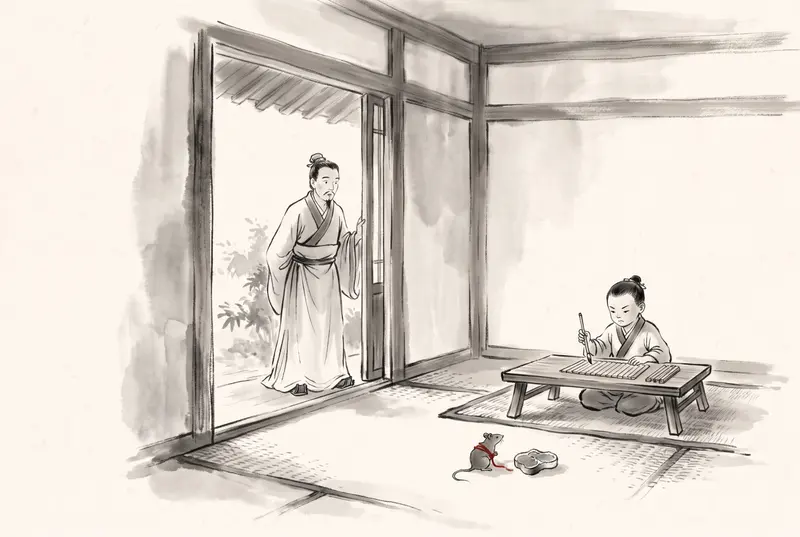
Zhang Tang was a man of Du. His father was an assistant magistrate of Chang'an. Once, when his father went out, the boy Zhang Tang was left to mind the house. When his father came back, a rat had stolen some meat. His father was angry and beat Zhang Tang. Zhang Tang dug into the rat's hole and found the thieving rat and what was left of the meat. He charged the rat and had it beaten under questioning, wrote out its statement and sent it on, examined it, passed judgement and reported it; then he took the rat and the meat, completed the whole case, and tore the rat apart below the hall. When his father saw it and read the documents, the wording was like that of a seasoned prison officer. He was astonished, and from then on he had Zhang Tang write up legal cases. After his father died, Zhang Tang served for a long time as an official in Chang'an.
Notes (JA)
- 張湯: 武帝の御史大夫。法律にくわしく、武帝の意向に合わせて厳しい裁判を行った。
- 爰書: 供述書。ほかに「劾(訴え)」「掠治(拷問による取り調べ)」「訊鞫(取り調べ)」「論報(判決と報告)」と、実際の裁判の手続きを正確に踏んでいる。
- 磔: はりつけ。体を引き裂く刑。
Notes (EN)
- Zhang Tang (張湯): Emperor Wu's grand secretary, a master of the law who judged as the emperor wished.
- The boy followed every step of a real trial: charge, interrogation, written statement, examination, judgement and report.
- Tore it apart (磔): the punishment of dismemberment.
Word notes
- seasoned/ˈsizənd/adjective
having a lot of experience
In the text: “a seasoned prison officer”
Similar words: experienced — with long practice · veteran — long-serving
- judgement/ˈdʒʌdʒmənt/noun
a decision made by a judge
In the text: “passed judgement”
Similar words: verdict — decision in a trial · ruling — official decision
British spelling: judgement (US: judgment).
Passage 6
Original
湯死,家産直不過五百金,皆所得奉賜,無他業。昆弟諸子欲厚葬湯,湯母曰:「湯爲天子大臣,被汙惡言而死,何厚葬乎!」載以牛車,有棺無槨。天子聞之,曰:「非此母不能生此子。」乃盡案誅三長史。丞相靑翟自殺。出田信。上惜湯。稍遷其子安世。
Kundoku (Japanese reading)
湯死し、家産直五百金に過ぎず。皆得たる所の奉賜にして、他の業無し。昆弟諸子湯を厚く葬らんと欲す。湯の母曰く、「湯は天子の大臣為り。汙れたる悪言を被りて死す。何ぞ厚く葬らんや」と。載するに牛車を以てし、棺有りて槨無し。天子之を聞きて、曰く、「此の母に非ずんば此の子を生む能わず」と。乃ち尽く案じて三長史を誅す。丞相青翟自殺す。田信を出だす。上湯を惜しむ。稍く其の子安世を遷す。
Japanese
(張湯は武帝の御史大夫として大きな力をもったが、丞相の部下の三人の長史にうらまれ、商人の田信と結んで不正をしたと訴えられた。武帝に問いつめられた張湯は、「わたしを陥れたのは三長史です」という書を残して自殺した。)張湯が死んだとき、家の財産は五百金にも満たなかった。それは皆、俸禄や帝からの賜り物で、ほかに財産を作る仕事はしていなかった。兄弟や子どもたちは張湯を手厚く葬ろうとしたが、張湯の母は言った。「湯は天子の大臣でありながら、汚らわしい悪口を受けて死んだのです。どうして手厚く葬ることがありましょう」。そして遺体を牛車に乗せ、棺だけで外棺もなしに葬った。天子はこれを聞いて言った。「この母でなければ、この子は生まれなかっただろう」。そこで事件を調べ直して三人の長史を皆処刑し、丞相の荘青翟は自殺した。田信は釈放された。帝は張湯を惜しみ、その子の張安世をだんだんと昇進させた。
English
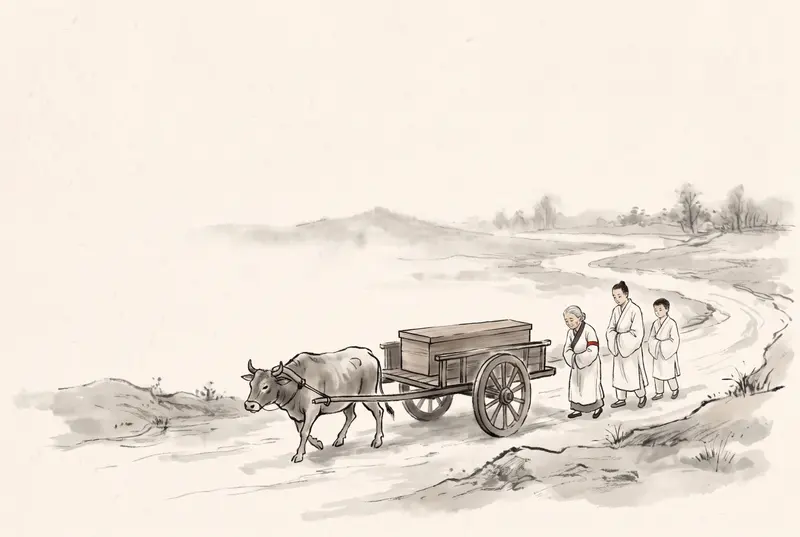
When Zhang Tang died, his whole estate was worth no more than five hundred gold, all of it from his salary and the gifts he had received, with no other business. His brothers and sons wanted to give him a grand funeral, but his mother said: "Tang was a great minister of the Son of Heaven, and he died under a foul slander. Why should he have a grand funeral?" They carried him on an ox cart, in a coffin with no outer coffin. When the emperor heard of it, he said: "Only such a mother could have borne such a son." He had the case fully investigated, and the three chief clerks were all executed. The chancellor, Qingdi, killed himself. Tian Xin was released. The emperor mourned Zhang Tang, and little by little promoted his son Anshi.
Notes (JA)
- 三長史: 丞相の部下の朱買臣・王朝・辺通。張湯にはずかしめられたことをうらんでいた。
- 槨: 棺の外側をおおう外棺。身分の高い人は棺と槨で葬られた。
- 張安世: 張湯の子。のちに宣帝の大司馬となり、張氏は前漢の終わりまで栄えた。
- 酷吏とされる張湯が、財産を残さない清廉な人だったことを、司馬遷は書きとめている。
Notes (EN)
- The three chief clerks (三長史): Zhu Maichen, Wang Chao and Bian Tong, who hated Zhang Tang for humiliating them.
- Outer coffin (槨): a person of high rank was buried in a coffin within an outer coffin.
- Zhang Anshi (張安世): later a grand marshal under Emperor Xuan; the family flourished until the end of the Former Han.
Word notes
- estate/ɪˈsteɪt/noun
all the money and property someone owns
In the text: “his whole estate was worth”
Similar words: property — what you own · fortune — wealth
- slander/ˈslændər/noun
a false statement that damages someone's reputation
In the text: “a foul slander”
Similar words: defamation — harming a good name · smear — false attack
Passage 7
Original
寧成家居,上欲以爲郡守。御史大夫弘曰:「臣居山東爲小吏時,寧成爲濟南都尉,其治如狼牧羊。成不可使治民。」上乃拜成爲關都尉。歳餘,關東吏隸郡國出入關者,號曰「寧見乳虎,無値寧成之怒」。義縱自河内遷爲南陽太守,聞寧成家居南陽,及縱至關,寧成側行送迎,然縱氣盛,弗爲禮。至郡,遂案寧氏,盡破碎其家。成坐有罪,及孔、暴之屬皆奔亡,南陽吏民重足一跡。而平氏朱彊、杜衍、杜周爲縱牙爪之吏,任用,遷爲廷史。軍數出定襄,定襄吏民亂敗,於是徙縱爲定襄太守。縱至,掩定襄獄中重罪輕繋二百餘人,及賓客昆弟私入相視亦二百餘人。縱一捕鞠,曰「爲死罪解脱」。是日皆報殺四百餘人。其後郡中不寒而栗,猾民佐吏爲治。
Kundoku (Japanese reading)
寧成家居す。上以て郡守と為さんと欲す。御史大夫弘曰く、「臣山東に居りて小吏為りし時、寧成済南の都尉為り。其の治は狼の羊を牧するが如し。成は民を治めしむべからず」と。上乃ち成を拝して関都尉と為す。歳余にして、関東の吏の郡国に隷して関を出入する者、号して曰く、「寧ろ乳虎に見ゆとも、寧成の怒りに値うこと無かれ」と。義縦河内より遷りて南陽の太守と為る。寧成の南陽に家居するを聞く。縦の関に至るに及び、寧成側行して送迎す。然れども縦気盛んにして、礼を為さず。郡に至り、遂に寧氏を案じ、尽く其の家を破砕す。成罪有るに坐し、孔・暴の属に及ぶまで皆奔亡し、南陽の吏民足を重ねて跡を一にす。而して平氏の朱彊、杜衍の杜周縦の牙爪の吏と為り、任用せられ、遷りて廷史と為る。軍数々定襄より出で、定襄の吏民乱敗す。是に於いて縦を徙して定襄の太守と為す。縦至り、定襄の獄中の重罪の軽く繫がるる二百余人、及び賓客昆弟の私かに入りて相視る者亦た二百余人を掩う。縦一に捕えて鞠し、曰く「死罪の為に解脱す」と。是の日皆報じて四百余人を殺す。其の後郡中寒からずして栗る。猾民吏を佐けて治を為す。
Japanese
寧成は官をやめて家にいたが、帝は郡の太守にしようとした。御史大夫の公孫弘は言った。「わたしが山東で下役人をしていたころ、寧成は済南の都尉でしたが、その政治は狼に羊の番をさせるようなものでした。寧成に民を治めさせてはなりません」。そこで帝は寧成を関所の都尉にした。一年あまりたつと、関東の郡や国に属し、関所を出入りする役人たちは「乳飲み子をかかえた虎に出会っても、寧成の怒りには触れるな」と言いあった。義縦は河内から南陽の太守に移った。義縦は寧成が南陽の自宅にいると聞いていた。義縦が関所まで来ると、寧成は道をよけて横歩きし、ていねいに送り迎えをしたが、義縦は意気さかんで、礼を返さなかった。郡に着くと、義縦は寧氏を取り調べ、その家をすっかり打ちくだいた。寧成も罪を問われた。孔氏や暴氏などの豪族も皆逃げ出し、南陽の役人や民は、恐ろしさに足を重ねて、ほかの人の足跡の上だけを歩くほどだった。平氏の朱彊や杜衍の杜周は義縦の手先の役人となって用いられ、廷史に昇進した。軍がたびたび定襄から出撃したので、定襄の役人や民は乱れてしまった。そこで義縦を定襄の太守に移した。義縦は着任すると、定襄の獄の中で、重い罪なのに軽く扱われている者二百人あまりと、その客や兄弟でひそかに獄に入って面会していた者二百人あまりを、不意をついて捕らえた。義縦はまとめて捕らえて取り調べ、「死罪の者を逃がそうとした」と言った。その日のうちに皆に判決を下し、四百人あまりを殺した。それからは郡の人々は寒くもないのにふるえあがり、ずる賢い者たちまで役人を助けて治安を守るようになった。
English
Ning Cheng was living at home, and the emperor wanted to make him governor of a commandery. The grand secretary, Gongsun Hong, said: "When I was a junior official east of the mountains, Ning Cheng was military commandant of Jinan. He governed like a wolf herding sheep. He must not be allowed to govern the people." So the emperor made him commandant of the pass instead. After a year or so, the officials of the commanderies and kingdoms east of the pass who went in and out through it were saying: "Better to meet a tigress with her cubs than to run into Ning Cheng's anger." Yi Zong was moved from Henei to be governor of Nanyang. He had heard that Ning Cheng was living at home in Nanyang. When Yi Zong reached the pass, Ning Cheng stepped aside to see him off and welcome him with great respect, but Yi Zong was full of himself and did not return the courtesy. As soon as he reached his commandery, he investigated the Ning family and broke it to pieces. Ning Cheng was found guilty, and the Kong and Bao families and their like all fled. The officials and people of Nanyang were so afraid that they put one foot behind the other and walked in each other's footprints. Zhu Qiang of Pingshi and Du Zhou of Duyan became Yi Zong's claws and teeth; they were given office and promoted to the court of justice. The army kept setting out from Dingxiang, and its officials and people fell into disorder. So Yi Zong was moved to be governor of Dingxiang. As soon as he arrived, he swooped on more than two hundred men in the jails of Dingxiang who were guilty of serious crimes but had been lightly held, and more than two hundred of their friends and brothers who had slipped into the jails to visit them. He arrested and questioned them all together, and declared that they had been trying to free men condemned to death. That same day, all were sentenced, and more than four hundred people were killed. After that, the whole commandery trembled without cold, and even the cunning ones helped the officials keep order.
Notes (JA)
- 狼牧羊: 狼に羊の番をさせる。民を守るはずの者が民を食いものにするたとえ。
- 寧見乳虎,無值寧成之怒: 子を育てている虎はとくに気が荒い。その虎に出会うほうが、寧成を怒らせるよりまだましだということ。
- 重足一跡: 足を重ね、人の足跡の上だけを歩く。ひどく恐れて身をすくめるさま。
- 不寒而栗: 寒くもないのにふるえる。ひどく恐れおののくことのたとえ。この話が出典。
Notes (EN)
- A wolf herding sheep (狼牧羊): a guardian who preys on those he should protect.
- A tigress with her cubs (乳虎): the fiercest of tigers.
- Walking in each other's footprints (重足一跡): shrinking with fear.
- Trembling without cold (不寒而栗): the origin of the idiom for dread.
Idioms from this passage: Trembling without cold 寒からずして栗る
Word notes
- swoop/swup/verb
to attack suddenly, like a bird from the sky
In the text: “he swooped on more than two hundred men”
Similar words: pounce — jump on suddenly · raid — attack quickly
- cunning/ˈkʌnɪŋ/adjective
clever at tricking people
In the text: “even the cunning ones”
Similar words: crafty — sly · wily — full of tricks
Passage 8
Original
素居廣平時,皆知河内豪姦之家,及往,九月而至。令郡具私馬五十匹,爲驛自河内至長安,部吏如居廣平時方略,捕郡中豪猾,郡中豪猾相連坐千餘家。上書請,大者至族,小者乃死,家盡沒入償臧。奏行不過二三日,得可事。論報,至流血十餘里。河内皆怪其奏,以爲神速。盡十二月,郡中毋聲,毋敢夜行,野無犬吠之盜。其頗不得,失之旁郡國,黎來,會春,温舒頓足嘆曰:「嗟乎,令冬月益展一月,足吾事矣!」其好殺伐行威不愛人如此。天子聞之,以爲能,遷爲中尉。其治復放河内,徙諸名禍猾吏與從事,河内則楊皆、麻戊,關中楊贛、成信等。義縱爲内史,憚未敢恣治。及縱死,張湯敗後,徙爲廷尉,而尹齊爲中尉。
Kundoku (Japanese reading)
素より広平に居りし時、皆河内の豪姦の家を知る。往くに及び、九月にして至る。郡をして私馬五十匹を具えしめ、駅を為して河内より長安に至る。吏を部すること広平に居りし時の方略の如し。郡中の豪猾を捕え、郡中の豪猾相連坐する者千余家。書を上りて請う。大なる者は族に至り、小なる者は乃ち死し、家は尽く没入して臧を償わしむ。奏行くこと二三日に過ぎずして、可とせらるる事を得たり。論報して、流血十余里に至る。河内皆其の奏を怪しみ、以て神速と為す。十二月を尽くすまで、郡中声毋く、敢えて夜行く毋く、野に犬の吠ゆるの盗無し。其の頗る得ざるもの、旁の郡国に失う。黎来して、会々春なり。温舒足を頓して嘆じて曰く、「嗟乎、冬月をして益々一月を展ばさしめば、吾が事足らん」と。其の殺伐を好み威を行いて人を愛せざること此くの如し。天子之を聞き、以て能と為し、遷して中尉と為す。
Japanese
(王温舒は若いころは墓あばきなどの悪事をはたらいたが、役人となって張湯に仕え、広平の都尉として盗賊を厳しく取りしまって名をあげ、河内の太守に移った。)王温舒は、広平にいたときから、河内の豪族や悪人の家を皆知っていた。河内へは九月に着任した。郡に私有の馬五十頭を用意させ、河内から長安までの早馬の中継所を作った。部下の役人の使い方は、広平にいたときのやり方と同じだった。郡の中の豪族や悪人を捕らえると、連座した者は千家あまりにのぼった。王温舒は上書して、罪の重い者は一族皆殺しに、軽い者も死刑にし、家の財産は皆取り上げて盗んだ物の償いにしたいと願い出た。上奏は二、三日もしないうちに許しが届いた。判決を下して処刑すると、流れた血は十里あまりにも及んだ。河内の人々は皆、上奏の返事が早いのをあやしみ、神わざのような速さだと思った。十二月が終わるまで、郡の中は声ひとつなく、夜に出歩く者もなく、野には犬にほえられるような盗賊もいなくなった。捕らえそこねた者は、近くの郡や国に逃げてしまった。それを追って連れ戻すころには、ちょうど春になっていた。王温舒は足をふみ鳴らして嘆いた。「ああ、冬がもう一月長ければ、わしの仕事は片づいたのに」。王温舒は、このように人を殺して威勢をふるうことを好み、人をいつくしまなかった。天子はこれを聞いて有能だと考え、中尉に昇進させた。
English
While he was at Guangping, he had come to know all the powerful and wicked families of Henei. He took up his post there in the ninth month. He had the commandery provide fifty private horses and set up a relay from Henei to Chang'an. He organised his officers the same way he had at Guangping. He arrested the powerful and lawless men of the commandery, and more than a thousand families were caught up with them. He sent up a letter asking that for the worst offenders the whole clan be put to death, and for the lesser ones the offenders themselves, and that all their property be seized to pay back what they had stolen. His reports went to the capital and came back approved in no more than two or three days. When the sentences were carried out, the blood flowed for more than ten li. All Henei was amazed at how quickly his reports were answered, and thought it was the work of a god. By the end of the twelfth month, not a sound was heard in the commandery; no one dared to go out at night, and there were no thieves in the countryside to set the dogs barking. Those he had failed to catch had fled to neighbouring commanderies and kingdoms, and by the time they were hunted down and brought back, it was spring. Wang Wenshu stamped his foot and sighed: "Ah! If only winter could be made one month longer, I could finish my work!" That was how much he loved to kill and to rule by fear, with no love for people. When the emperor heard of it, he thought him able, and promoted him to capital commandant.
Notes (JA)
- 王溫舒: 武帝の酷吏。張湯に仕えて出世した。
- 漢では、死刑は秋と冬に行い、万物が生まれ育つ春と夏には行わない決まりだった。そのため王温舒は「冬がもう一月長ければ」と嘆いた。
- 流血十餘里: 血が十里あまりも流れる。大勢の人が処刑されたことの誇張した表現。
Notes (EN)
- Wang Wenshu (王溫舒): one of Emperor Wu's harsh officials, who rose under Zhang Tang.
- In Han, executions were carried out only in autumn and winter, never in spring and summer, the seasons of life and growth; hence his wish for a longer winter.
- Blood flowing for ten li: an exaggeration for mass executions.
Word notes
- relay/ˈriˌleɪ/noun
a system of fresh horses or people passing something on
In the text: “set up a relay from Henei to Chang'an”
Similar words: chain — series of links · post — messenger system
Passage 9
Original
其治與宣相放,然重遲,外寬,内深次骨。宣爲左内史,周爲廷尉,其治大放張湯而善候伺。上所欲擠者,因而陷之;上所欲釋者,久繫待問而微見其冤狀。客有讓周曰:「君爲天子決平,不循三尺法,專以人主意指爲獄。獄者固如是乎?」周曰:「三尺安出哉?前主所是著爲律,後主所是疎爲令,當時爲是,何古之法乎!」
Kundoku (Japanese reading)
其の治は宣と相放い、然れども重遅にして、外は寛にして、内は深く骨に次る。宣左内史と為り、周廷尉と為る。其の治は大いに張湯に放いて、善く候伺す。上の擠さんと欲する所の者は、因りて之を陥る。上の釈かんと欲する所の者は、久しく繫ぎて問わるるを待ち、微かに其の冤状を見す。客に周を讓むる者有りて曰く、「君天子の為に平を決す。三尺の法に循わずして、専ら人主の意指を以て獄を為す。獄とは固より是くの如きか」と。周曰く、「三尺安くより出でんや。前主の是とする所は著して律と為し、後主の是とする所は疏して令と為す。時に当たりて是と為す。何ぞ古の法ならんや」と。
Japanese
(杜周は南陽の人で、義縦に用いられ、張湯に仕えて、廷尉になった。)杜周の政治は減宣とよく似ていたが、慎重で動きが遅く、外見は寛大でも、内側は骨にまで食いこむほど厳しかった。減宣が左内史となり、杜周が廷尉となった。杜周の政治は張湯を大いにまねたもので、帝の顔色をうかがうのがうまかった。帝が陥れたいと思っている者は、それに合わせて罪に落とした。帝が許したいと思っている者は、長く獄につないで取り調べを待たせ、それとなく無実のようすを見せた。ある客が杜周を責めて言った。「あなたは天子のために公平な裁判をする役目なのに、三尺の法に従わずに、もっぱら君主の考えに合わせて裁いている。裁判とは本来そういうものですか」。杜周は言った。「三尺の法はどこから出てきたのか。前の君主がよいとしたことを書き表したのが律であり、後の君主がよいとしたことを書き記したのが令なのだ。その時々の君主がよいとしたことが正しいのだ。どうして昔の法などに従う必要があろう」。
English
His way of governing was much like Jian Xuan's, but he was slow and deliberate; lenient on the outside, he was harsh within, cutting to the bone. Jian Xuan became prefect of the left, and Du Zhou chief justice. Du Zhou followed Zhang Tang's methods closely, and was good at watching which way the wind blew. Anyone the emperor wanted to push down, he would trap; anyone the emperor wanted to set free, he would keep in prison a long time awaiting trial, and quietly let it be seen that the man was innocent. A visitor reproached him: "You judge cases fairly for the Son of Heaven. Yet you do not follow the three-foot law, but judge only by what the ruler wants. Is that what justice is meant to be?" Du Zhou said: "And where did the three-foot law come from? What earlier rulers approved was written down as statutes; what later rulers approved was recorded as ordinances. Whatever is approved at the time is right. Why bother with the laws of the past?"
Notes (JA)
- 減宣: 武帝の酷吏の一人。細かく厳しい取り調べで知られた。
- 三尺法: 三尺の竹簡に書かれた法律。法律そのもののこと。
- 律・令: 律は基本の法、令は皇帝がそのつど出す命令をまとめたもの。杜周の言葉は、法を君主の意志そのものと見る考えを示している。
Notes (EN)
- Jian Xuan (減宣): another of Emperor Wu's harsh officials.
- The three-foot law (三尺法): the law, written on bamboo slips three feet long.
- Statutes and ordinances (律・令): Du Zhou treats the law as nothing more than the ruler's will.
Word notes
- deliberate/dɪˈlɪbərət/adjective
slow and careful
In the text: “slow and deliberate”
Similar words: measured — careful and slow · unhurried — not rushed
- reproach/rɪˈproʊtʃ/verb
to tell someone you are unhappy with what they did
In the text: “A visitor reproached him”
Similar words: criticise — find fault · blame — say it is their fault
Passage 10
Original
太史公曰:自郅都、杜周十人者,此皆以酷烈爲聲。然郅都伉直,引是非,爭天下大體。張湯以知陰陽,人主與倶上下,時數辯當否,國家賴其便。趙禹時據法守正。杜周從諛,以少言爲重。自張湯死後,網密,多詆嚴,官事寖以秏廢。
Kundoku (Japanese reading)
太史公曰く、郅都・杜周より十人の者は、此れ皆酷烈を以て声を為す。然れども郅都は伉直にして、是非を引き、天下の大体を争う。張湯は陰陽を知るを以て、人主与に倶に上下し、時に数々当否を辯じ、国家其の便に頼る。趙禹は時に法に拠りて正を守る。杜周は従諛し、少言を以て重しと為す。張湯死してより後、網密にして、多く詆厳し、官事寖く以て秏廃す。
Japanese
太史公は言う。郅都から杜周までの十人は、皆厳しく激しいことで名を知られた。しかし郅都は剛直で、是非をはっきりさせ、天下の大きな筋道のために争った。張湯は帝の心の動きを読み取って、帝とともに浮き沈みし、ときには何度も是非を論じて、国家はその便利さに頼った。趙禹はときに法によって正しさを守った。杜周は帝にへつらい、口数の少ないことで重んじられた。張湯が死んでからは、法の網は細かくなり、厳しく罪に問うことが多くなって、役所の仕事はしだいにすりへって廃れていった。
English
The Grand Historian says: All ten of these men, from Zhi Du to Du Zhou, were famous for their severity. Yet Zhi Du was upright and unbending; he stood for right against wrong, and fought for the great principles of the realm. Zhang Tang knew how to read the ruler's moods and rose and fell with him; at times he argued over what was right and wrong, and the state relied on his usefulness. Zhao Yu at times held to the law and kept to what was right. Du Zhou flattered, and was valued for saying little. After Zhang Tang died, the net grew fine, there was much harsh condemnation, and the work of government slowly wore away and fell into neglect.
Notes (JA)
- 十人: 郅都・寧成・周陽由・趙禹・張湯・義縦・王温舒・尹斉・楊僕・減宣・杜周。数え方によって十人とも十一人ともなる。
- 網密: 序で述べた漢のはじめの「網漏於呑舟之魚」と対になる言葉。
- 司馬遷はこのあと、彼らは厳しかったが職責に見合っていたと述べ、もっとひどい小役人たちの名を挙げて「何ぞ数うるに足らんや」と結ぶ(ここでは省く)。
Notes (EN)
- Ten men: the count varies, depending on whether eleven names are counted as ten.
- The net grew fine (網密): the opposite of the loose net of the early Han in the preface.
- Sima Qian goes on to say that, harsh as they were, they suited their posts, and lists far worse petty officials "not worth counting" (left out here).
Word notes
- neglect/nɪˈɡlɛkt/noun
a lack of proper care
In the text: “fell into neglect”
Similar words: disregard — not paying attention · decay — falling into ruin