列伝 · 巻 86
刺客列伝 刺客列傳
荊軻、秦王を刺す 荊軻刺秦王
燕の太子丹の願いを受けた荊軻が、毒を塗った匕首を地図に巻きこみ、秦王政(のちの始皇帝)に近づく。易水での別れの歌、咸陽宮での一瞬の攻防、そして失敗。刺客たちの物語のなかで、最もよく知られた場面。
この巻のうち「荊軻、秦王を刺す」の場面を載せています。巻の全文ではありません。
音声
音声は合成音声です。
動画
節 1
原文
於是太子豫求天下之利匕首,得趙人徐夫人匕首,取之百金,使工以藥焠之,以試人,血濡縷,人無不立死者。乃裝爲遣荊卿。燕國有勇士秦舞陽,年十三,殺人,人不敢忤視。乃令秦舞陽爲副。荊軻有所待,欲與倶;其人居遠未來,而爲治行。頃之,未發,太子遲之,疑其改悔,乃復請曰:「日已盡矣,荊卿豈有意哉?丹請得先遣秦舞陽。」荊軻怒,叱太子曰:「何太子之遣?往而不返者,豎子也!且提一匕首入不測之彊秦,仆所以留者,待吾客與倶。今太子遲之,請辭決矣!」遂發。
書き下し文
是に於いて太子豫め天下の利き匕首を求め、趙人徐夫人の匕首を得、之を百金に取る。工をして薬を以て之を焠がしめ、以て人に試むるに、血縷を濡らせば、人立ちどころに死せざる者無し。乃ち装して為に荊卿を遣わさんとす。燕国に勇士秦舞陽有り。年十三にして、人を殺す。人敢えて忤視せず。乃ち秦舞陽をして副たらしむ。荊軻待つ所有り、与に倶にせんと欲す。其の人遠きに居りて未だ来たらず、而して為に行を治む。之を頃くして、未だ発せず。太子之を遅しとし、其の改悔するを疑い、乃ち復た請いて曰く、「日已に尽きぬ。荊卿豈に意有らんや。丹請う、先ず秦舞陽を遣わすを得ん」と。荊軻怒り、太子を叱りて曰く、「何ぞ太子の遣わすや。往きて返らざる者は、豎子なり。且つ一匕首を提げて不測の彊秦に入る。僕の留まる所以の者は、吾が客を待ちて与に倶にせんとすればなり。今太子之を遅しとす。請う、辞決せん」と。遂に発す。
現代語訳
そこで太子は前もって天下に名だたる鋭い匕首(あいくち)を探し、趙の徐夫人という人の匕首を百金で買い取った。職人に毒薬で焼き入れをさせ、人で試してみると、糸すじほどの血がにじむだけで、たちまち死なない者はいなかった。こうして支度を整え、荊卿(荊軻)を送り出すことにした。燕の国には秦舞陽という勇士がいた。十三歳で人を殺し、人々はまともに目を合わせることもできなかった。そこで秦舞陽を副使にした。荊軻には待っている人がいて、その人と一緒に行きたいと思っていたが、その人は遠くに住んでいてまだ来ておらず、荊軻はその人の分の旅支度も整えていた。しばらくたっても出発しないので、太子は遅いと思い、荊軻が心変わりしたのではないかと疑って、もう一度頼んだ。「もう日がありません。荊卿にはまだ行くお気持ちがありますか。私(丹)は、秦舞陽を先に送り出したいと思うのですが。」荊軻は怒り、太子をしかりつけた。「太子は何を送り出そうというのですか。行ったきり役目を果たして帰ってこられないのは、青二才です。それに、匕首一本を手に、何が起こるか分からない強国秦へ乗り込むのです。私がとどまっていたのは、連れの客を待って一緒に行くためでした。いま太子が遅いとおっしゃるなら、これでおいとまいたしましょう。」こうして出発した。
英訳
Prince Dan had already searched the world for the sharpest dagger, and had bought one made by Xu Furen of Zhao for a hundred pieces of gold. He had craftsmen temper it in poison and tried it on men: if it drew no more than a thread of blood, everyone it touched died on the spot. Then he made ready to send off Jing Qing. In Yan there was a brave man named Qin Wuyang, who had killed a man at thirteen; no one dared to look him in the eye. Qin Wuyang was made his deputy. Jing Ke was waiting for someone he wanted to take with him, but that man lived far away and had not yet come, and Jing Ke had readied the baggage for him too. Time passed and still they did not set out. The prince thought him slow and suspected he had changed his mind. So he asked again: "The days are running out. Do you still mean to go, Jing Qing? I, Dan, would like to send Qin Wuyang on ahead." Jing Ke was angry and rebuked the prince: "What would the prince be sending? Whoever goes and cannot come back with the task done is a fool. Besides, I am to carry a single dagger into mighty Qin, where anything may happen. I have stayed only to wait for my friend to go with me. But since the prince finds me slow, let me take my leave now." And so he set out.
解説(日)
- 太子: 燕の太子丹。かつて人質として秦にいたとき冷遇され、秦王政をうらんでいた(この場面より前の部分に書かれている)。
- 徐夫人: 人名。古注では男性とされる。
- 荊卿: 荊軻への敬称。「卿」は人を敬って呼ぶ語。
- 秦舞陽: 燕の勇士。副使となるが、のちに秦の宮殿で顔色を変える(第4節)。
- 豎子: 青二才。秦舞陽のような者を送っても、行ったきりで使命を果たせない、と言っていると読まれる。
- 待つ所有り: 荊軻が待っていた人物がだれかは、書かれていない。
解説(英)
- The prince: Prince Dan of Yan. He had been badly treated as a hostage in Qin and hated King Zheng (told earlier in the chapter).
- Xu Furen: a personal name. Old commentaries say Xu Furen was a man.
- Jing Qing (荊卿): a respectful way of addressing Jing Ke. 卿 is an honorific.
- Qin Wuyang: a brave man of Yan, made deputy. Later he turns pale in the Qin palace (passage 4).
- 豎子 ("a fool"): Jing Ke is usually taken to mean that a man like Qin Wuyang would go and never come back with the task done.
- The person Jing Ke was waiting for is never named.
英語の語注
- dagger/ˈdæɡər/noun
a short pointed knife used as a weapon
本文では: “the sharpest dagger”
似た語と違い: knife — any cutting tool with a blade · blade — the sharp metal part
- temper/ˈtɛmpər/verb
to harden or treat metal, for example by heating and cooling it
本文では: “temper it in poison”
似た語と違い: harden — make hard · treat — put something through a process
As a noun, temper means mood: "lose your temper".
- deputy/ˈdɛpjəti/noun
a person who helps and can act for a leader
本文では: “Qin Wuyang was made his deputy.”
似た語と違い: assistant — someone who helps · second-in-command — the person next in rank
- suspect/səˈspɛkt/verb
to think that something bad is probably true
本文では: “suspected he had changed his mind”
似た語と違い: doubt — feel unsure about · distrust — not trust
As a noun (a person thought guilty) it is stressed on the first syllable.
- rebuke/rɪˈbjuːk/verb
to speak angrily to someone because they have done wrong
本文では: “rebuked the prince”
似た語と違い: scold — speak angrily, often to a child · reprimand — formal; officially criticize
節 2
原文
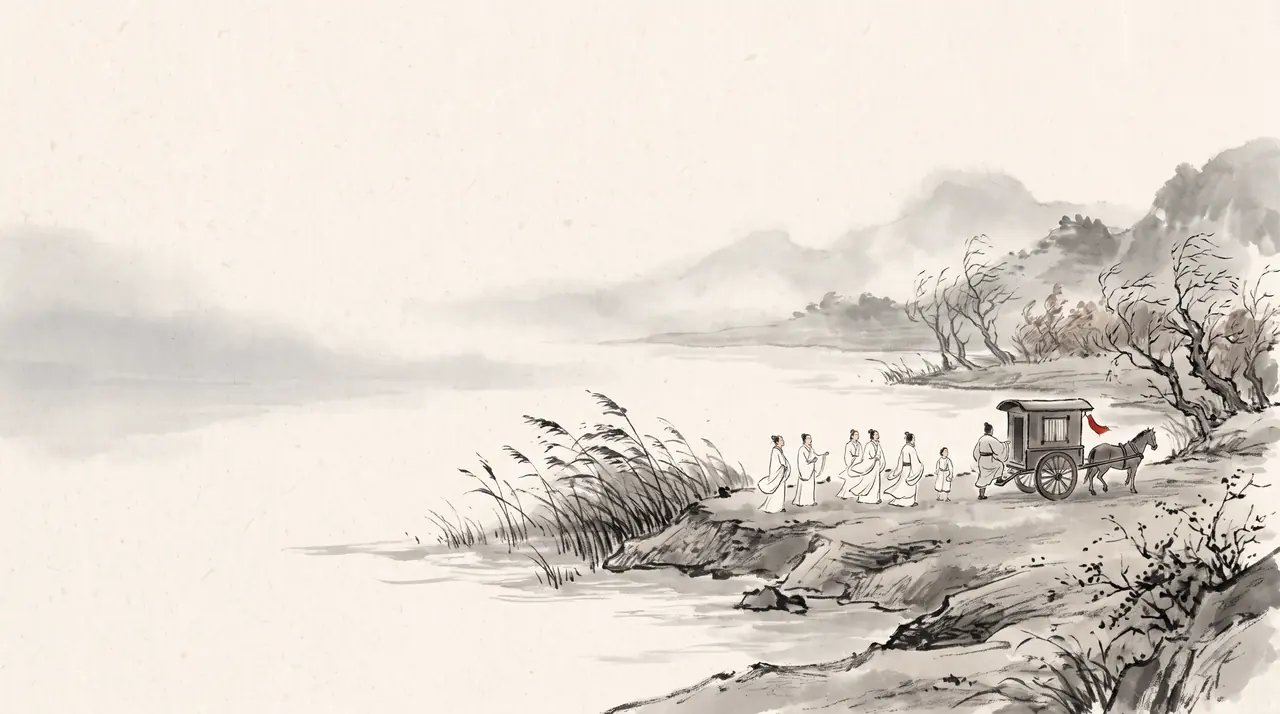
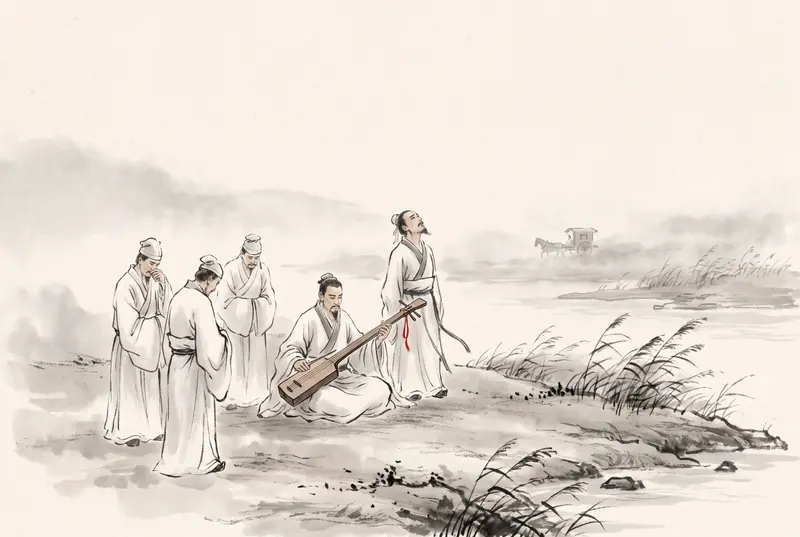
太子及賓客知其事者,皆白衣冠以送之。至易水之上,既祖,取道,髙漸離撃筑,荊軻和而歌,爲變徴之聲,士皆垂涙涕泣。又前而爲歌曰:「風蕭蕭兮易水寒,壯士一去兮不復還!」復爲羽聲慨,士皆瞋目,發盡上指冠。於是荊軻就車而去,終已不顧。
書き下し文
太子及び賓客の其の事を知る者、皆白衣冠して以て之を送る。易水の上に至り、既に祖して、道を取る。高漸離筑を撃ち、荊軻和して歌い、変徴の声を為す。士皆涙を垂れて涕泣す。又た前みて歌を為りて曰く、「風蕭蕭として易水寒し、壮士一たび去りて復た還らず」と。復た羽声を為して慨す。士皆目を瞋らし、髪尽く上りて冠を指す。是に於いて荊軻車に就きて去り、終に已に顧みず。
現代語訳
太子と、事情を知る客たちは、みな白い衣と冠を身につけて見送った。易水のほとりに着き、旅の安全を祈る祭りを終えて、いよいよ出発するとき、高漸離が筑を打ち鳴らし、荊軻がそれに合わせて歌った。その調べは変徴の悲しい音で、居並ぶ人々はみな涙を流して泣いた。荊軻はさらに進み出て、歌った。「風は蕭蕭と吹き、易水は寒い。壮士はひとたび去れば、もう二度と帰らない。」続いて羽の音の激しい調べで歌うと、人々はみな目を見開き、髪は逆立って冠を突き上げた。こうして荊軻は車に乗って去り、最後まで一度も振り返らなかった。
英訳
The prince and those of his guests who knew of the plan all saw him off dressed in white robes and caps. When they reached the bank of the Yi River and had made the offering to the god of the road, they set off. Gao Jianli struck his zhu, and Jing Ke sang to it in the mournful bianzhi mode, and all the men wept and shed tears. Then Jing Ke stepped forward and sang: "The wind sighs and sighs, the Yi River is cold; the brave man departs and will never come home!" Then he sang again in the stirring yu mode, and all the men glared wide-eyed, their hair standing up against their caps. With that Jing Ke mounted his carriage and left, and never once looked back.
解説(日)
- 白衣冠: 白は喪の色。生きて帰らないことを覚悟した見送り。
- 易水: 燕の南を流れる川(今の河北省易県のあたり)。
- 祖: 旅立ちの前に道の神を祭る儀式。
- 高漸離: 荊軻の親友で、筑の名手。のちに始皇帝を筑で打とうとして殺される。
- 筑: 竹の棒で弦を打って鳴らす弦楽器。
- 変徴・羽: 中国の音階の音の名。変徴は悲しい調べ、羽は激しい調べとされる。
- 風蕭蕭兮易水寒: 「易水の歌」として後世まで広く知られる。
解説(英)
- White robes: white is the color of mourning. They see him off as a man who will not return.
- The Yi River: a river in the south of Yan, near present-day Yi County in Hebei.
- 祖: a sacrifice to the god of the road before a journey.
- Gao Jianli: Jing Ke's close friend and a master of the zhu. He later tried to strike the First Emperor with his zhu and was killed.
- The zhu (筑): a stringed instrument played by striking the strings with a bamboo stick.
- Bianzhi and yu: notes of the Chinese scale. Music in bianzhi is said to sound sad, in yu stirring.
- "The wind sighs and sighs...": the "Song of the Yi River", famous ever since.
この節から生まれた言葉: 風蕭蕭として易水寒し
英語の語注
- mournful/ˈmɔrnfəl/adjective
very sad
本文では: “in the mournful bianzhi mode”
似た語と違い: sorrowful — full of sorrow · gloomy — dark and sad
- depart/dɪˈpɑrt/verb
to leave, especially on a journey
本文では: “the brave man departs and will never come home”
似た語と違い: leave — the everyday word · set off — start a journey
- glare/ɡlɛr/verb
to look at someone with an angry, fixed stare
本文では: “all the men glared wide-eyed”
似た語と違い: stare — look for a long time; not always angry · scowl — make an angry face
節 3
原文
遂至秦,持千金之資幣物,厚遺秦王寵臣中庶子蒙嘉。嘉爲先言於秦王曰:「燕王誠振怖大王之威,不敢舉兵以逆軍吏,願舉國爲内臣,比諸侯之列,給貢職如郡縣,而得奉守先王之宗廟。恐懼不敢自陳,謹斬樊於期之頭,及獻燕督亢之地圖,函封,燕王拜送于庭,使使以聞大王,唯大王命之。」
書き下し文
遂に秦に至り、千金の資の幣物を持ちて、厚く秦王の寵臣中庶子蒙嘉に遺る。嘉為に先ず秦王に言いて曰く、「燕王誠に大王の威に振怖し、敢えて兵を挙げて以て軍吏に逆らわず。願わくは国を挙げて内臣と為り、諸侯の列に比し、貢職を給すること郡県の如くして、先王の宗廟を奉守するを得ん。恐懼して敢えて自ら陳べず。謹んで樊於期の頭を斬り、及び燕の督亢の地図を献じ、函封して、燕王庭に拝送し、使いをして以て大王に聞せしむ。唯だ大王之に命ぜよ」と。
現代語訳
こうして秦に着くと、千金にもなる贈り物を持って、秦王のお気に入りの臣下である中庶子の蒙嘉に手厚く贈った。蒙嘉は荊軻のために、先に秦王に申し上げた。「燕王は大王の威光をまことに恐れおののき、兵を挙げて大王の軍に逆らおうなどとはいたしません。国をあげて臣下となり、諸侯と同じ列に加わり、郡や県と同じように貢ぎ物を納め、先代の王たちの宗廟を守り続けることを願っております。恐れて自分から申し上げることもできず、謹んで樊於期の首を斬り、燕の督亢の地図とあわせて箱に封じ、燕王みずから朝廷で拝礼して送り出し、使者をよこして大王にお伝えするものです。どうぞ大王のご命令を。」
英訳
So they reached Qin. Carrying gifts worth a thousand pieces of gold, Jing Ke gave them generously to Meng Jia, a palace official and a favorite of the King of Qin. Meng Jia spoke to the king for him in advance: "The King of Yan truly trembles before Your Majesty's might. He does not dare to raise troops against your officers. He wishes to make his whole state your subject, to take his place among your lords, to pay tribute like one of your commanderies or counties, and so be allowed to keep up the shrines of his ancestors. Too afraid to speak for himself, he has respectfully cut off the head of Fan Wuqi and offers a map of Dukang in Yan, sealed in boxes. The King of Yan bowed in his court as he sent them off, and has sent envoys to report to Your Majesty. Your Majesty has only to give the word."
解説(日)
- 中庶子: 宮中の役職名。
- 内臣: 国内の臣下。独立国であることをやめて秦に従う、という申し出。
- 樊於期: 秦から燕へ逃げてきた将軍。秦王に恨まれ、首に賞金がかかっていた。荊軻の頼みを聞き入れ、自ら命を絶った(この場面より前)。
- 督亢: 燕の肥えた土地。その地図を献じるのは、土地を差し出すという意味になる。
- 函封: 箱に入れて封をする。
解説(英)
- 中庶子: a palace office.
- 內臣 ("inner subject"): a subject within the realm. Yan offers to give up its independence.
- Fan Wuqi: a Qin general who had fled to Yan, with a price on his head from the King of Qin. At Jing Ke's request he took his own life (earlier in the chapter).
- Dukang: a fertile district of Yan. Presenting its map meant handing over the land.
- 函封: sealed in boxes.
英語の語注
- favorite/ˈfeɪvərɪt/noun
a person a ruler likes and trusts more than others
本文では: “a favorite of the King of Qin”
似た語と違い: confidant — someone trusted with secrets · darling — someone loved and spoiled
- tremble/ˈtrɛmbəl/verb
to shake because of fear or cold
本文では: “truly trembles before Your Majesty's might”
似た語と違い: shake — the general word · quiver — shake slightly and quickly
- tribute/ˈtrɪbjuːt/noun
payment made by a weaker state or ruler to a stronger one
本文では: “to pay tribute like one of your commanderies”
似た語と違い: payment — money given for something · offering — something given as a gift or duty
Tribute also means words or acts that show respect: "pay tribute to a hero".
節 4
原文
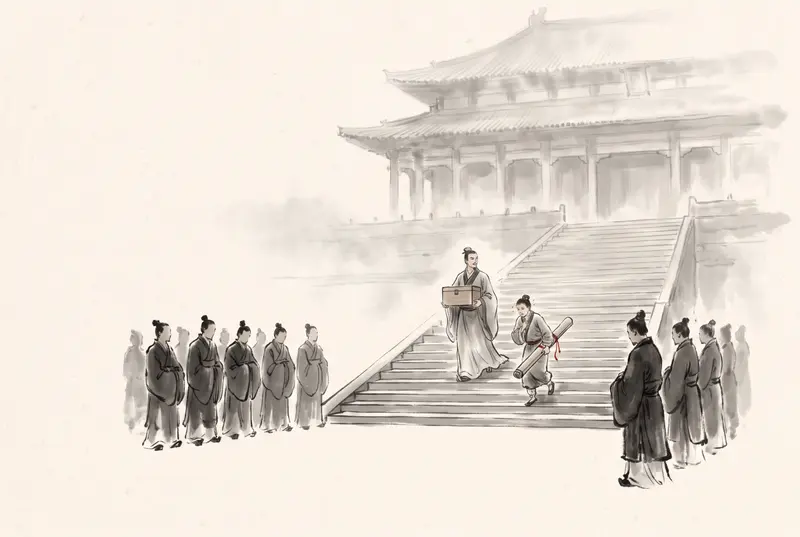
秦王聞之,大喜,乃朝服,設九賓,見燕使者咸陽宮。荊軻奉樊於期頭函,而秦舞陽奉地圖柙,以次進。至陛,秦舞陽色變振恐,群臣怪之。荊軻顧笑舞陽,前謝曰:「北蕃蠻夷之鄙人,未嘗見天子,故振慴。願大王少假借之,使得畢使於前。」
書き下し文
秦王之を聞きて大いに喜び、乃ち朝服して九賓を設け、燕の使者を咸陽宮に見る。荊軻は樊於期の頭の函を奉じ、秦舞陽は地図の柙を奉じ、次を以て進む。陛に至り、秦舞陽色変じて振恐す。群臣之を怪しむ。荊軻顧みて舞陽を笑い、前みて謝して曰く、「北蕃蛮夷の鄙人、未だ嘗て天子を見ず。故に振慴す。願わくは大王少しく之を仮借し、使いを前に畢うるを得しめよ」と。
現代語訳
秦王はこれを聞いて大いに喜び、朝廷の礼服を着て九賓の礼を整え、咸陽宮で燕の使者に会った。荊軻は樊於期の首を入れた箱を捧げ持ち、秦舞陽は地図を入れた箱を捧げ持って、順に進んだ。玉座へのぼる階段まで来たとき、秦舞陽は顔色が変わり、震えおののいたので、群臣は不審に思った。荊軻は振り返って舞陽を笑い、進み出て詫びた。「北の果ての田舎者で、天子にお目にかかったことがございませんので、震えているのです。どうか大王、少しお許しいただき、御前で使いの務めを果たさせてください。」
英訳
When the King of Qin heard this, he was delighted. He put on his court robes, arranged the ceremony of the Nine Guests, and received the envoys of Yan in the Xianyang Palace. Jing Ke carried the box with Fan Wuqi's head, and Qin Wuyang carried the case with the map, and they advanced one after the other. When they reached the steps to the throne, Qin Wuyang turned pale and shook with fear, and the ministers found this strange. Jing Ke turned, laughed at Wuyang, and stepped forward to apologize: "He is a rustic from the barbarian lands of the north and has never seen the Son of Heaven, so he is trembling. I beg Your Majesty to bear with him a little and let us finish our mission before you."
解説(日)
- 九賓: 外国の使者を迎える最も丁重な儀礼とされる。「完璧帰趙」にも出てくる。
- 咸陽宮: 秦の都・咸陽の宮殿。
- 柙: 箱。
- 陛: 王の座へのぼる階段。
- 秦舞陽: 第1節では、誰も目を合わせられない勇士とされていた。その人物が王の前で震える、という対比。
- 荊軻の機転: 笑ってみせ、舞陽を「田舎者」と言って場を取りつくろう。
解説(英)
- The Nine Guests: said to be the most formal ceremony for receiving foreign envoys. It also appears in "Returning the Jade Intact to Zhao".
- Xianyang Palace: the palace in Xianyang, the Qin capital.
- 柙: a case or box.
- 陛: the steps leading up to the throne.
- Qin Wuyang: in passage 1 he was a man no one dared to look in the eye. Now he trembles before the king.
- Jing Ke's quick wit: he laughs it off and covers for Wuyang by calling him a country bumpkin.
英語の語注
- advance/ədˈvæns/verb
to move forward
本文では: “they advanced one after the other”
似た語と違い: approach — come nearer · proceed — formal; go on
- rustic/ˈrʌstɪk/noun
a simple person from the countryside
本文では: “He is a rustic from the barbarian lands of the north”
似た語と違い: peasant — a poor farmer · country bumpkin — informal and rude
- barbarian/bɑrˈbɛriən/adjective
belonging to peoples seen as uncivilized by the speaker
本文では: “He is a rustic from the barbarian lands of the north”
似た語と違い: uncivilized — without the ways of a developed society · savage — wild and fierce
The word shows the speaker's point of view and is not neutral.
節 5
原文
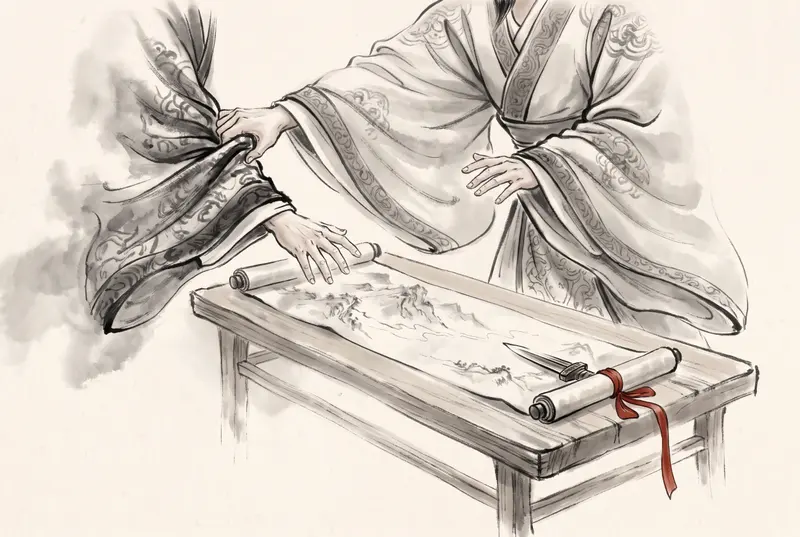
秦王謂軻曰:「取舞陽所持地圖。」軻既取圖奏之,秦王發圖,圖窮而匕首見。因左手把秦王之袖,而右手持匕首揕之。未至身,秦王驚,自引而起,袖絶。拔劍,劍長,操其室。時惶急,劍堅,故不可立拔。荊軻逐秦王,秦王環柱而走。
書き下し文
秦王軻に謂いて曰く、「舞陽の持つ所の地図を取れ」と。軻既に図を取りて之を奏す。秦王図を発く。図窮まりて匕首見わる。因りて左手もて秦王の袖を把り、右手もて匕首を持ちて之を揕す。未だ身に至らず。秦王驚き、自ら引きて起つ。袖絶ゆ。剣を抜かんとするも、剣長し。其の室を操る。時に惶急し、剣堅し。故に立ちどころに抜くべからず。荊軻秦王を逐う。秦王柱を環りて走る。
現代語訳
秦王は荊軻に言った。「舞陽の持っている地図を取ってこい。」荊軻は地図を受け取って差し出した。秦王が地図を開いていくと、開ききったところで匕首が現れた。荊軻はすかさず左手で秦王の袖をつかみ、右手で匕首を握って突き刺そうとした。だが刃は体に届かなかった。秦王は驚いて身を引いて立ち上がり、袖がちぎれた。剣を抜こうとしたが、剣が長く、鞘をつかむばかりだった。あわてていたうえ、剣が鞘にきつく収まっていたので、すぐには抜けなかった。荊軻は秦王を追い、秦王は柱をめぐって逃げた。
英訳
The King of Qin said to Jing Ke, "Bring me the map that Wuyang is holding." Jing Ke took the map and presented it. The king unrolled it, and when it was fully unrolled, the dagger appeared. At once Jing Ke seized the king's sleeve with his left hand, and with the dagger in his right hand he stabbed at him. The blade did not reach him. Startled, the king pulled back and leapt up, and his sleeve tore off. He tried to draw his sword, but it was long, and he could only grab the scabbard. In his panic, and with the sword stuck fast, he could not draw it at once. Jing Ke chased the king, and the king ran around a pillar.
解説(日)
- 図窮而匕首見: 地図を最後まで広げると、巻きこんであった匕首が現れる。「図窮まりて匕首見わる」は、隠していたたくらみが最後に現れることのたとえになった。
- 揕: 突き刺す。
- 室: 剣の鞘。
- 秦王: 秦王政。のちの始皇帝。
解説(英)
- 圖窮而匕首見 ("the map ran out and the dagger appeared"): the dagger was rolled up inside the map. The phrase became a figure for a hidden plot finally revealed.
- 揕: to stab.
- 室: the scabbard of a sword.
- The King of Qin: King Zheng, later the First Emperor.
この節から生まれた言葉: 図窮まりて匕首見わる
英語の語注
- unroll/ʌnˈroʊl/verb
to open something that was rolled up
本文では: “The king unrolled it”
似た語と違い: unfold — open something folded · spread out — lay something flat
- seize/siːz/verb
to take hold of something suddenly and firmly
本文では: “seized the king's sleeve”
似た語と違い: grab — take quickly and roughly · grip — hold tightly
- scabbard/ˈskæbərd/noun
a cover for the blade of a sword
本文では: “he could only grab the scabbard”
似た語と違い: sheath — a close-fitting cover for a blade · case — a box or cover
節 6
原文
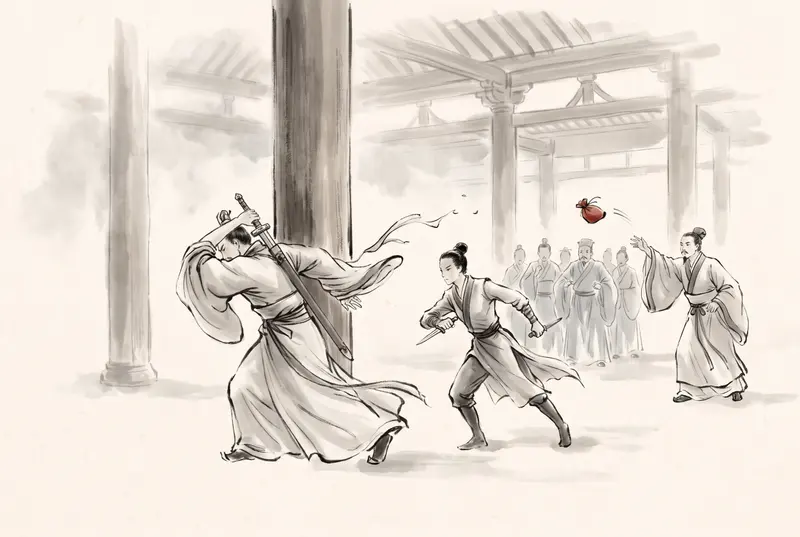
群臣皆愕,卒起不意,盡失其度。而秦法,群臣侍殿上者不得持尺寸之兵;諸郎中執兵皆陳殿下,非有詔召不得上。方急時,不及召下兵,以故荊軻乃逐秦王。而卒惶急,無以撃軻,而以手共搏之。是時侍醫夏無且以其所奉藥囊提荊軻也。秦王方環柱走,卒惶急,不知所爲,左右乃曰:「王負劍!」負劍,遂拔以撃荊軻,斷其左股。
書き下し文
群臣皆愕き、卒かに不意に起こり、尽く其の度を失う。而して秦の法、群臣の殿上に侍する者は尺寸の兵を持するを得ず。諸郎中の兵を執る者は皆殿下に陳なり、詔召有るに非ざれば上るを得ず。急なる時に方たりて、下の兵を召すに及ばず。故を以て荊軻乃ち秦王を逐う。而して卒かに惶急し、以て軻を撃つ無く、而して手を以て共に之を搏つ。是の時侍医夏無且、其の奉ずる所の薬嚢を以て荊軻に提つ。秦王方に柱を環りて走り、卒かに惶急して、為す所を知らず。左右乃ち曰く、「王剣を負え」と。剣を負い、遂に抜きて以て荊軻を撃ち、其の左股を断つ。
現代語訳
群臣はみな仰天した。思いもよらない出来事が突然起こったので、だれもがうろたえてしまった。そのうえ秦の法では、宮殿の上で王に仕える臣下は、わずかな武器も持ってはならないことになっていた。武器を持つ郎中(護衛)たちはみな宮殿の下に並んでおり、王のお召しがなければ上がれなかった。急な事態で、下の兵を呼ぶ暇もなかったので、荊軻は秦王を追いまわすことができたのである。臣下たちは突然のことであわてふためき、荊軻に打ちかかる武器もなく、素手でいっしょに荊軻につかみかかった。このとき侍医の夏無且が、手にしていた薬袋を荊軻に投げつけた。秦王は柱のまわりを逃げまわり、あわてるばかりで、どうしてよいか分からなかった。そこで側近が叫んだ。「王よ、剣を背負われませ!」秦王が剣を背中へ回すと、ようやく抜くことができ、荊軻に斬りつけて、その左のももを断ち切った。
英訳
The ministers were all aghast. It had happened so suddenly and unexpectedly that they lost all composure. Besides, by Qin law the ministers attending in the hall could not carry the smallest weapon, and the guards who bore arms were all lined up below the hall and could not come up unless summoned. In the crisis there was no time to call the soldiers below, and so Jing Ke was able to chase the king. In their sudden panic the ministers had nothing to strike Jing Ke with, and grappled with him with their bare hands. At this moment the court physician Xia Wuju threw the bag of medicines he was carrying at Jing Ke. The king was still running around the pillar, panicking and not knowing what to do, when his attendants cried, "Push your sword onto your back, Your Majesty!" He pushed the sword behind him, drew it at last and struck Jing Ke, cutting through his left thigh.
解説(日)
- 卒: 「猝」と同じで、にわかに、突然。
- 郎中: 宮中の護衛の役人。
- 夏無且: 秦王の侍医。この一投が秦王を救ったと評価される(第7節)。
- 提: 投げつける(一説に、打つ)。
- 王負剣: 長い剣を背に回すと柄が肩の上に来て抜きやすくなる、という意味に取る説が一般的。
- 秦の法: 宮殿の上では武器を持たせない決まりが、かえって王を危うくした。
解説(英)
- 卒: the same as 猝, "suddenly".
- 郎中: palace guards.
- Xia Wuju: the king's physician. His throw is credited with saving the king (passage 7).
- 提: to throw at (some say to strike).
- "Push your sword onto your back": usually taken to mean that with the long sword slung behind, the hilt comes over the shoulder and can be drawn.
- The law of Qin: the rule that no one in the hall could be armed nearly cost the king his life.
英語の語注
- aghast/əˈɡæst/adjective
shocked and horrified
本文では: “The ministers were all aghast.”
似た語と違い: horrified — very shocked and upset · stunned — too shocked to react
- composure/kəmˈpoʊʒər/noun
a calm state of mind
本文では: “they lost all composure”
似た語と違い: calm — freedom from worry · self-control — control over your feelings
- physician/fɪˈzɪʃən/noun
a doctor of medicine
本文では: “the court physician Xia Wuju”
似た語と違い: doctor — the everyday word · healer — someone who cures, often traditionally
節 7
原文
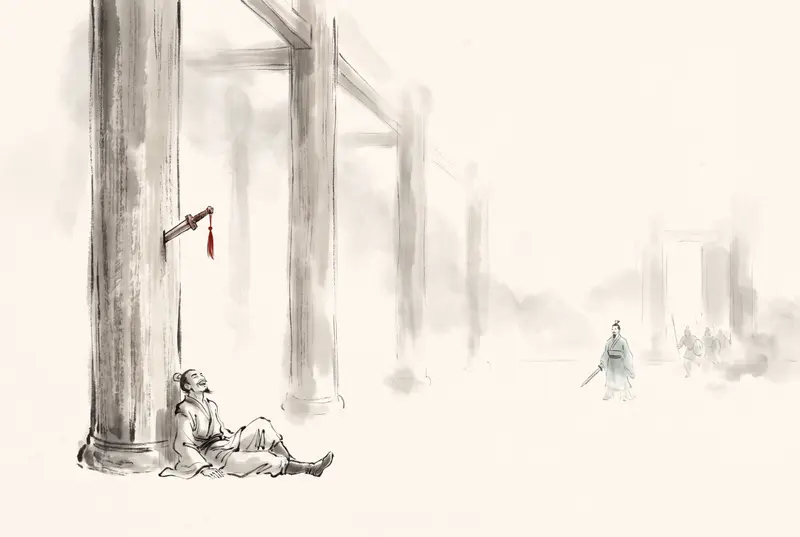
荊軻廢,乃引其匕首以擿秦王,不中,中桐柱。秦王復撃軻,軻被八創。軻自知事不就,倚柱而笑,箕踞以罵曰:「事所以不成者,以欲生劫之,必得約契以報太子也。」於是左右既前殺軻,秦王不怡者良久。已而論功,賞群臣及當坐者各有差,而賜夏無且黃金二百溢,曰:「無且愛我,乃以藥囊提荊軻也。」
書き下し文
荊軻廃れ、乃ち其の匕首を引きて以て秦王に擿つ。中らず、桐柱に中る。秦王復た軻を撃つ。軻八創を被る。軻自ら事の就らざるを知り、柱に倚りて笑い、箕踞して以て罵りて曰く、「事の成らざりし所以の者は、生きながら之を劫かし、必ず約契を得て以て太子に報ぜんと欲せしを以てなり」と。是に於いて左右既に前みて軻を殺す。秦王怡ばざる者良久し。已にして功を論じ、群臣及び坐に当たる者を賞すること各おの差有り。而して夏無且に黄金二百溢を賜いて曰く、「無且我を愛す。乃ち薬嚢を以て荊軻に提てり」と。
現代語訳
荊軻は倒れて動けなくなると、匕首を振りかぶって秦王めがけて投げつけたが、当たらず、桐の柱に突き刺さった。秦王はさらに荊軻に斬りつけ、荊軻は八か所の傷を負った。荊軻は、事が成らなかったことを悟ると、柱に寄りかかって笑い、両足を投げ出して座り、ののしった。「事が成らなかったのは、生かしたまま脅して、必ず約束の証文を取り、太子に報告しようとしたからだ。」そこで側近たちが進み出て、荊軻を殺した。秦王は長いあいだ不機嫌だった。やがて功績を論じ、群臣と処罰すべき者にそれぞれ差をつけて賞罰を行った。そして夏無且には黄金二百溢を与えて言った。「無且はわしを大事に思えばこそ、薬袋を荊軻に投げつけたのだ。」
英訳
Crippled, Jing Ke hurled his dagger at the king. It missed and struck a pillar of paulownia wood. The king struck at him again, and Jing Ke received eight wounds. Knowing that he had failed, Jing Ke leaned against the pillar and laughed. Sprawling with his legs spread out, he cursed the king: "I failed only because I wanted to take you alive, force a pledge out of you, and bring it back to the prince!" Then the attendants came forward and killed him. For a long time the king was not himself. Afterward he weighed up everyone's conduct, rewarding the ministers and dealing with those at fault, each according to his part. He gave Xia Wuju two hundred yi of gold, saying, "Wuju cared for me. That is why he threw his bag of medicines at Jing Ke."
解説(日)
- 廃: 体が利かなくなる。
- 擿: 投げつける(「擲」と同じ)。
- 箕踞: 両足を投げ出して座る、無礼な座り方。最期まで屈しない態度を示す。
- 生劫之: 生かしたまま脅し、奪った土地を諸侯に返す約束をさせようとした、とされる。荊軻の目的が殺すことだけではなかったことを示す一言。
- 当坐者: 罪に問われるべき者。「賞す」とあるが、罰も含めた処分と解される。
- 溢: 重さの単位(「鎰」と同じ)。
- その後: 秦は燕を攻め、紀元前222年に燕は滅び、翌年、秦が天下を統一する。
解説(英)
- 廢: crippled, unable to move.
- 擿: to hurl (the same as 擲).
- 箕踞: sitting with the legs spread out, a rude posture. He stays defiant to the end.
- 生劫之: to hold the king alive and force him to promise to return the lands he had seized. This shows that Jing Ke's aim was not only to kill.
- 當坐者: those who deserved punishment. The text says "rewarding", but it is taken to cover punishments too.
- 溢: a unit of weight (the same as 鎰).
- Afterward: Qin attacked Yan, which fell in 222 BCE, and the next year Qin unified the realm.
英語の語注
- hurl/hɜrl/verb
to throw something with great force
本文では: “hurled his dagger at the king”
似た語と違い: throw — the general word · fling — throw carelessly or wildly
- pledge/plɛdʒ/noun
a serious promise
本文では: “force a pledge out of you”
似た語と違い: promise — the everyday word · vow — a solemn promise, often religious
- reward/rɪˈwɔrd/verb
to give someone something for good work or service
本文では: “rewarding the ministers”
似た語と違い: repay — give back in return · honor — show public respect