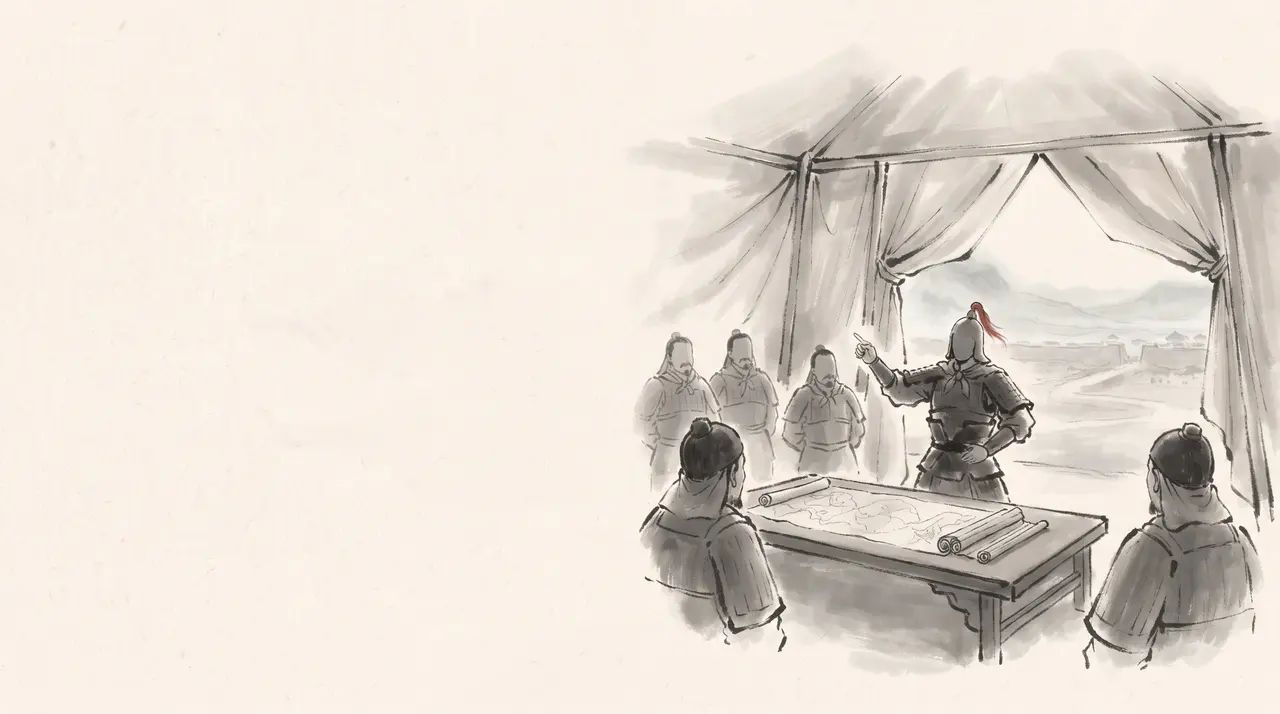
列伝 · 巻 81
廉頗藺相如列伝 廉頗藺相如列傳
趙括と李牧(膠柱鼓瑟) 膠柱鼓瑟
趙の将軍趙奢は、閼与で秦軍を破って名を上げる。その子の趙括は兵法を論じれば父も言い負かすほどだったが、父は「趙を破るのは括だ」と心配した。長平の戦いで、秦の離間策にのった趙王は廉頗に代えて趙括を将軍にし、趙括は白起の策にはまって四十万の兵を失う。廉頗は晩年に国を追われ、北の守りの名将李牧も秦の離間策で殺されて、趙は滅びる。
この巻のうち「趙括と李牧(膠柱鼓瑟)」の場面を載せています。巻の全文ではありません。
音声
音声は合成音声です。
動画
節 1
原文
秦伐韓,軍於閼與。王召廉頗而問曰:「可救不?」對曰:「道遠險狹,難救。」又召樂乘而問焉,樂乘對如廉頗言。又召問趙奢,奢對曰:「其道遠險狹,譬之猶兩鼠鬥於穴中,將勇者勝。」王乃令趙奢將,救之。
書き下し文
秦韓を伐ち、閼与に軍す。王廉頗を召して問いて曰く、「救うべきや不や」と。対えて曰く、「道遠く険狭なり。救い難し」と。又楽乗を召して問う。楽乗の対うること廉頗の言の如し。又召して趙奢に問う。奢対えて曰く、「其の道遠く険狭なるは、之を譬うれば猶お両鼠の穴中に闘うがごとし。将の勇なる者勝たん」と。王乃ち趙奢をして将として、之を救わしむ。
現代語訳
秦が韓を攻め、閼与に陣を構えた。趙王は廉頗を呼んでたずねた。「救えるか」。廉頗は答えた。「道は遠く、険しく狭いので、救うのは難しいでしょう」。次に楽乗を呼んでたずねると、楽乗も廉頗と同じように答えた。さらに趙奢を呼んでたずねると、趙奢は答えた。「道が遠く、険しく狭いというのは、たとえて言えば、二匹のねずみが穴の中で戦うようなものです。将軍の勇ましいほうが勝ちます」。そこで王は趙奢を将軍にして、救いに向かわせた。
英訳
Qin attacked Hann and encamped at Eyu. The king summoned Lian Po and asked, "Can we save it?" Lian Po answered, "The road is long, steep and narrow. It will be hard." He summoned Yue Cheng and asked him, and Yue Cheng answered as Lian Po had. Then he summoned Zhao She and asked him. Zhao She answered, "The road is long, steep and narrow, which is like two rats fighting in a hole: the braver general will win." So the king made Zhao She general and sent him to the rescue.
解説(日)
- 王: 趙の恵文王。前270年ごろのこと。
- 閼與: 韓(のちに趙)の地。今の山西省和順県のあたり。
- 樂乘: 趙の将軍。
- 趙奢: 趙の将軍。もとは租税を取り立てる役人で、平原君の家の者でも法に従って処罰したことで知られる。
- 兩鼠鬥於穴中: 二匹のねずみが穴の中で戦う。狭い場所では、勇気のあるほうが勝つというたとえ。
解説(英)
- The king: King Huiwen of Zhao, around 270 BCE.
- Eyu: a place in Hann (later Zhao), near present-day Heshun in Shanxi.
- Yue Cheng: a general of Zhao.
- Zhao She: a general of Zhao. He began as a tax officer, known for punishing even Lord Pingyuan's household by the law.
- 兩鼠鬥於穴中 ("two rats fighting in a hole"): in a narrow place the braver side wins.
英語の語注
- summon/ˈsʌmən/verb
to order someone to come to you
本文では: “Then he summoned Zhao She”
似た語と違い: call for — ask someone to come · send for — ask someone to come to you
- rescue/ˈrɛskjuː/noun
the act of saving someone from danger
本文では: “sent him to the rescue”
似た語と違い: relief — help for people in danger · aid — help
節 2
原文
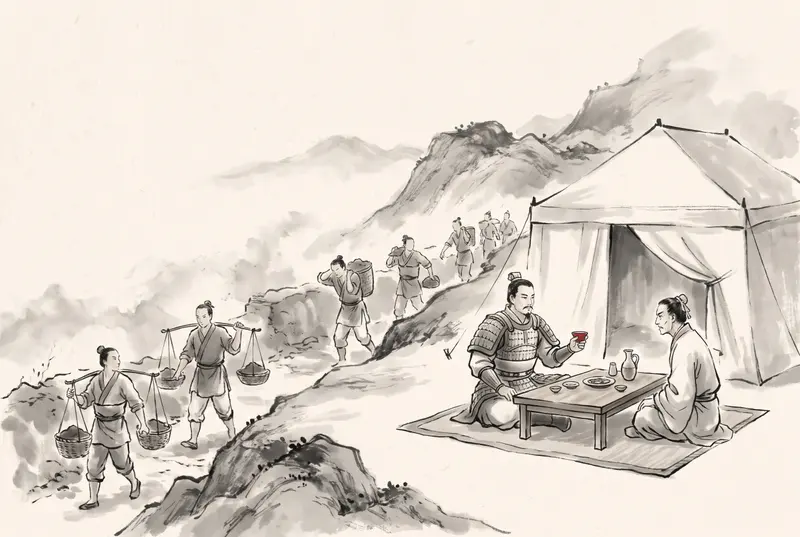
兵去邯鄲三十里,而令軍中曰:「有以軍事諫者死。」秦軍軍武安西,秦軍鼓譟勒兵,武安屋瓦盡振。軍中候有一人言急救武安,趙奢立斬之。堅壁,留二十八日不行,復益增壘。秦間來入,趙奢善食而遣之。間以報秦將,秦將大喜曰:「夫去國三十里而軍不行,乃增壘,閼與非趙地也。」趙奢既已遣秦間,巻甲而趨之,二日一夜至,今善射者去閼與五十裏而軍。軍壘成,秦人聞之,悉甲而至。軍士許暦請以軍事諫,趙奢曰:「内之。」許暦曰:「秦人不意趙師至此,其來氣盛,將軍必厚集其陣以待之。不然,必敗。」趙奢曰:「請受令。」許暦曰:「請就鈇質之誅。」趙奢曰:「胥後令邯鄲。」許暦復請諫,曰:「先據北山上者勝,後至者敗。」趙奢許諾,即發萬人趨之。秦兵後至,爭山不得上,趙奢縱兵撃之,大破秦軍。秦軍解而走,遂解閼與之圍而歸。
書き下し文
兵邯鄲を去ること三十里にして、軍中に令して曰く、「軍事を以て諫むる者有らば死せん」と。秦軍武安の西に軍し、秦軍鼓譟して兵を勒す。武安の屋瓦尽く振う。軍中の候に一人の武安を急に救えと言う有り。趙奢立ちどころに之を斬る。壁を堅くし、留まること二十八日行かず、復た益ます塁を増す。秦の間来たり入る。趙奢善く食わしめて之を遣る。間以て秦将に報ず。秦将大いに喜びて曰く、「夫れ国を去ること三十里にして軍行かず、乃ち塁を増す。閼与は趙の地に非ざるなり」と。趙奢既已に秦の間を遣り、甲を巻きて之に趨り、二日一夜にして至る。善く射る者をして閼与を去ること五十里にして軍せしむ。軍塁成る。秦人之を聞き、甲を悉くして至る。軍士許暦軍事を以て諫めんことを請う。趙奢曰く、「之を内れよ」と。許暦曰く、「秦人趙の師の此に至るを意わず。其の来たること気盛んなり。将軍必ず厚く其の陣を集めて以て之を待て。然らずんば、必ず敗れん」と。趙奢曰く、「請う令を受けん」と。許暦曰く、「請う鈇質の誅に就かん」と。趙奢曰く、「胥ちて後に邯鄲に令せん」と。許暦復た諫めんことを請いて曰く、「先に北山の上に拠る者は勝ち、後れて至る者は敗れん」と。趙奢許諾し、即ち万人を発して之に趨らしむ。秦兵後れて至り、山を争いて上るを得ず。趙奢兵を縦ちて之を撃ち、大いに秦軍を破る。秦軍解けて走り、遂に閼与の囲みを解きて帰る。
現代語訳
趙奢の軍は邯鄲から三十里のところまで来ると、軍中に命令を出した。「軍のことで意見を言う者は死罪とする」。秦軍は武安の西に陣を構え、太鼓を打ち鳴らし、ときの声をあげて兵を整えたので、武安の屋根瓦がすっかり震えた。軍中の物見の一人が「急いで武安を救うべきです」と言うと、趙奢はその場で斬った。そして陣を固め、二十八日のあいだ動かずにとどまり、さらに塁を高くした。秦の間者が入りこんでくると、趙奢はごちそうをして帰した。間者がそれを秦の将軍に報告すると、秦の将軍は大喜びして言った。「都から三十里のところで軍を止め、塁を高くしている。閼与はもう趙のものではない」。趙奢は秦の間者を帰すとすぐに、よろいを巻いて身軽になって急行し、二日一晩で着いて、弓の名手を閼与から五十里のところに陣取らせた。陣地ができあがったころ、秦軍はそれを聞いて、全軍で押し寄せてきた。兵士の許暦が軍のことで意見を言いたいと願い出ると、趙奢は「入れよ」と言った。許暦は言った。「秦は趙軍がここまで来るとは思っていなかったので、勢いこんで攻めてきます。将軍はかならず陣を厚く固めて待ち受けてください。そうしなければ、かならず負けます」。趙奢は「その意見を受けよう」と言った。許暦は「では、死罪をお受けします」と言った。趙奢は「邯鄲に戻ってからの命令を待て」と言った。許暦は重ねて意見を述べた。「先に北の山の上を押さえたほうが勝ち、遅れたほうが負けます」。趙奢はそれを聞き入れて、すぐに一万の兵を山へ急がせた。秦軍は遅れて着き、山を奪おうとしたが登れなかった。趙奢は兵を放って攻めかかり、秦軍を大いに破った。秦軍は包囲を解いて逃げ、趙奢は閼与の囲みを解いて帰った。
英訳
Thirty li out of Handan, Zhao She halted and gave an order to the army: "Anyone who gives advice on military matters will die." The Qin army was encamped west of Wu'an, beating its drums and drilling its troops so loudly that every roof tile in Wu'an shook. One of the scouts said they should hurry to save Wu'an, and Zhao She had him beheaded on the spot. He strengthened his camp and stayed there for twenty-eight days without moving, building his walls higher still. When a Qin spy got in, Zhao She fed him well and sent him away. The spy reported to the Qin general, who was delighted: "Thirty li from his own capital and his army will not move, but only builds walls. Eyu is no longer Zhao's land." As soon as the spy had gone, Zhao She had his men roll up their armor and hurry forward. In two days and a night they arrived, and he had his best archers camp fifty li from Eyu. When the camp was finished, Qin heard of it and came at them with its whole army. A soldier named Xu Li asked to give advice on military matters. "Let him in," said Zhao She. Xu Li said, "Qin never expected the Zhao army to come this far, and its men arrive full of spirit. You must mass your ranks deep to receive them, General. Otherwise you will surely lose." "I accept your advice," said Zhao She. Xu Li said, "Then let me go to the axe and block." Zhao She said, "Wait for my orders back in Handan." Xu Li spoke again: "Whoever takes the northern hill first will win; whoever comes late will lose." Zhao She agreed and at once sent ten thousand men racing to it. The Qin troops came late and could not fight their way up the hill. Zhao She let loose his army, struck them and crushed them. The Qin army broke and fled, and so he lifted the siege of Eyu and went home.
解説(日)
- 武安: 今の河北省武安市。邯鄲の西。
- 鼓譟: 太鼓を打ち、大声をあげる。
- 堅壁: 陣地を固めて守る。
- 秦間: 秦の間者(スパイ)。趙奢はわざとごちそうして帰し、動く気がないと思わせた。
- 巻甲而趨之: よろいを巻いて(脱いで)身軽になり、急いで進む。
- 許暦: 趙の兵士。のちに国尉(軍の長官)となる。
- 鈇質之誅: おのと台で斬られる刑。命令を破って意見を言ったので、死罪を受けるという意味。
- 胥後令邯鄲: 邯鄲に戻ってからの命令を待て。罪を問わないという意味とされる(読みには諸説ある)。
解説(英)
- Wu'an: present-day Wu'an in Hebei, west of Handan.
- 鼓譟: beating drums and shouting.
- 堅壁: to strengthen a camp and hold it.
- The Qin spy: Zhao She feasted him on purpose so Qin would think he meant to stay put.
- 巻甲而趨之: rolling up their armor to travel light, they hurried forward.
- Xu Li: a soldier of Zhao, later made commander of the army.
- 鈇質之誅 ("the axe and block"): execution, since he had broken the order against giving advice.
- 胥後令邯鄲 ("wait for my orders back in Handan"): taken to mean he would not be punished (the reading is debated).
英語の語注
- spy/spaɪ/noun
a person who secretly gathers information about an enemy
本文では: “When a Qin spy got in”
似た語と違い: agent — a person who works secretly for a government · scout — a soldier sent ahead to look
- on the spot/ɑn ðə spɑt/idiom
immediately, at the place where something happens
本文では: “had him beheaded on the spot”
似た語と違い: at once — immediately · then and there — right away
- mass/mæs/verb
to gather many people together in one place
本文では: “You must mass your ranks deep”
似た語と違い: gather — bring together · concentrate — bring into one place
- siege/siːdʒ/noun
surrounding a town with an army to force it to surrender
本文では: “he lifted the siege of Eyu”
似た語と違い: blockade — stopping people and goods getting in · encirclement — surrounding completely
節 3
原文
趙惠文王賜奢號爲馬服君,以許暦爲國尉。趙奢於是與廉頗、藺相如同位。後四年,趙惠文王卒,子孝成王立。七年,秦與趙兵相距長平,時趙奢已死,而藺相如病篤,趙使廉頗將攻秦,秦數敗趙軍,趙軍固壁不戰。秦數挑戰,廉頗不肯。趙王信秦之間。秦之間言曰:「秦之所惡,獨畏馬服君趙奢之子趙括爲將耳。」趙王因以括爲將,代廉頗。藺相如曰:「王以名使括,若膠柱而鼓瑟耳。括徒能讀其父書傳,不知合變也。」趙王不聽,遂將之。
書き下し文
趙の恵文王奢に号を賜いて馬服君と為し、許暦を以て国尉と為す。趙奢是に於いて廉頗・藺相如と位を同じくす。後四年、趙の恵文王卒し、子孝成王立つ。七年、秦と趙と兵長平に相距ぐ。時に趙奢已に死し、而して藺相如病篤し。趙廉頗をして将として秦を攻めしむ。秦数しば趙軍を敗る。趙軍壁を固くして戦わず。秦数しば戦いを挑むも、廉頗肯んぜず。趙王秦の間を信ず。秦の間言いて曰く、「秦の悪む所は、独り馬服君趙奢の子趙括の将と為るを畏るるのみ」と。趙王因りて括を以て将と為し、廉頗に代う。藺相如曰く、「王名を以て括を使うは、柱に膠して瑟を鼓するが若きのみ。括は徒だ能く其の父の書伝を読むのみにして、変に合わすを知らざるなり」と。趙王聴かず、遂に之を将とす。
現代語訳
趙の恵文王は趙奢に馬服君の称号を与え、許暦を国尉(軍の長官)にした。こうして趙奢は、廉頗や藺相如と同じ位に並んだ。その四年後、恵文王が亡くなり、子の孝成王が位についた。孝成王の七年、秦と趙の軍は長平で向かい合った。そのとき趙奢はすでに死んでおり、藺相如は重い病にかかっていた。趙は廉頗を将軍にして秦と戦わせたが、秦はたびたび趙軍を破り、趙軍は陣を固めて戦わなかった。秦が何度戦いを挑んでも、廉頗は応じなかった。趙王は秦の間者の言葉を信じた。秦の間者はこう言いふらしていた。「秦が恐れているのは、馬服君趙奢の子の趙括が将軍になることだけだ」。趙王はそこで趙括を将軍にして、廉頗と代えた。藺相如は言った。「王が名前だけで括をお使いになるのは、琴柱を膠で固めて瑟を弾くようなものです。括は父の兵法書を読んでいるだけで、状況に応じて変えることを知りません」。趙王は聞き入れず、とうとう趙括を将軍にした。
英訳
King Huiwen of Zhao gave Zhao She the title Lord of Mafu and made Xu Li commander of the army. Zhao She now stood on a level with Lian Po and Lin Xiangru. Four years later King Huiwen died, and his son King Xiaocheng came to the throne. In his seventh year, the armies of Qin and Zhao faced each other at Changping. Zhao She was dead by then, and Lin Xiangru was gravely ill. Zhao sent Lian Po as general against Qin. Qin defeated the Zhao army several times, and the Zhao army held fast behind its walls and would not fight. Qin challenged it to battle again and again, but Lian Po refused. Then the King of Zhao believed Qin's agents, who said, "The only thing Qin fears is that Zhao Kuo, son of Zhao She the Lord of Mafu, might be made general." So the King of Zhao made Kuo general in place of Lian Po. Lin Xiangru said, "Your Majesty is using Kuo for his name. That is like gluing the pegs of a zither and then trying to play it. Kuo can only read his father's books; he does not know how to adapt to change." The King of Zhao would not listen and made him general.
解説(日)
- 馬服君: 趙奢の称号。のちに子孫は「馬」の姓を名のったと伝えられる。
- 國尉: 軍の長官。
- 七年: 孝成王の七年(前260年)。長平の戦い(巻73の章も参照)。
- 秦之間: 秦の間者。秦の宰相范雎の策(巻73・巻79の章を参照)。
- 膠柱而鼓瑟: 琴柱(弦を支える駒)を膠で固めたまま瑟を弾く。融通のきかないことのたとえ。「膠柱鼓瑟」の言葉のもと。
- 合變: 変化に合わせる。臨機応変。
解説(英)
- Lord of Mafu (馬服君): Zhao She's title. His descendants are said to have taken the surname Ma.
- 國尉: commander of the army.
- The seventh year: of King Xiaocheng, 260 BCE, the battle of Changping (see also Volume 73).
- Qin's agents: part of a plan by Qin's chancellor Fan Ju (see Volumes 73 and 79).
- 膠柱而鼓瑟 ("gluing the pegs of a zither"): the movable bridges of a zither must be shifted to tune it; gluing them down means being unable to adapt.
- 合變: adapting to change.
この節から生まれた言葉: 膠柱鼓瑟
英語の語注
- agent/ˈeɪdʒənt/noun
a person who works secretly for another state
本文では: “believed Qin's agents”
似た語と違い: spy — a person who gathers secrets · operative — a secret agent
- adapt/əˈdæpt/verb
to change your behavior to fit a new situation
本文では: “how to adapt to change”
似た語と違い: adjust — change slightly to fit · improvise — act without planning, as needed
節 4
原文
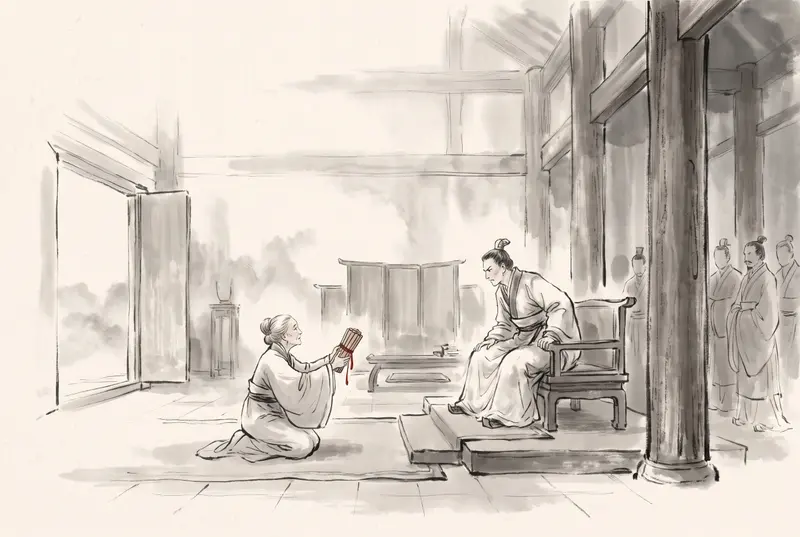
趙括自少時學兵法,言兵事,以天下莫能當。嘗與其父奢言兵事,奢不能難,然不謂善。括母問奢其故,奢曰:「兵,死地也,而括易言之。使趙不將括即已,若必將之,破趙軍者必括也。」及括將行,其母上書言於王曰:「括不可使將。」王曰:「何以?」對曰:「始妾事其父,時爲將,身所奉飯飲而進食者以十數,所友者以百數,大王及宗室所賞賜者盡以予軍吏士大夫,受命之日,不問家事。今括一旦爲將,東向而朝,軍吏無敢仰視之者,王所賜金帛,歸藏於家,而日視便利田宅可買者買之。王以爲何如其父?父子異心,原王勿遣。」王曰:「母置之,吾已決矣。」括母因曰:「王終遣之,即有如不稱,妾得無隨坐乎?」王許諾。
書き下し文
趙括少き時より兵法を学び、兵事を言いて、以為えらく天下能く当たる莫しと。嘗て其の父奢と兵事を言う。奢難ずる能わず。然れども善しと謂わず。括の母奢に其の故を問う。奢曰く、「兵は死地なり。而るに括は易く之を言う。趙をして括を将とせざらしめば即ち已まん。若し必ず之を将とせば、趙軍を破る者は必ず括ならん」と。括の将に行かんとするに及び、其の母書を上りて王に言いて曰く、「括は将たらしむべからず」と。王曰く、「何を以てか」と。対えて曰く、「始め妾其の父に事う。時に将為り。身ずから飯飲を奉じて食を進むる所の者十を以て数え、友とする所の者百を以て数う。大王及び宗室の賞賜する所の者は尽く以て軍吏士大夫に予う。命を受くるの日、家事を問わず。今括一旦将と為り、東向して朝す。軍吏敢えて之を仰ぎ視る者無し。王の賜う所の金帛は、帰りて家に蔵し、而して日に便利なる田宅の買うべき者を視て之を買う。王以為えらく其の父に何如と。父子心を異にす。願わくは王遣わすこと勿かれ」と。王曰く、「母之を置け。吾已に決せり」と。括の母因りて曰く、「王終に之を遣わさば、即し如し称わざること有らば、妾随坐すること無きを得んや」と。王許諾す。
現代語訳
趙括は若いころから兵法を学び、戦のことを語らせれば、天下にかなう者はいないと思っていた。あるとき父の趙奢と兵法について議論したが、趙奢も言い負かすことができなかった。しかし趙奢は、息子をほめなかった。括の母がそのわけをたずねると、趙奢は言った。「戦は命をかける場所だ。それなのに括はたやすく口にする。趙が括を将軍にしなければそれでよいが、もし将軍にすれば、趙の軍を破滅させるのはかならず括だろう」。括が出陣しようとするとき、その母は王に手紙を書いて言った。「括を将軍にしてはなりません」。王が「なぜか」とたずねると、母は答えた。「わたしが括の父に仕えていたころ、夫は将軍でしたが、自分で食事を勧めてもてなした者は十人単位、友とした者は百人単位でおりました。大王や王族からいただいた褒美は、すべて軍の役人や士官に分け与えました。出陣の命令を受けた日からは、家のことは何もたずねませんでした。ところが括は、将軍になったとたん、東を向いて座って部下にあいさつを受け、軍の役人で顔を上げて見る者もいません。王からいただいた金や絹は家にしまいこみ、毎日、手ごろな田畑や屋敷を見ては買っています。王は、括が父と比べてどうだとお思いですか。父と子は心がまったく違います。どうか括を行かせないでください」。王は言った。「母よ、もうやめよ。わたしはもう決めたのだ」。そこで括の母は言った。「王がどうしても括を行かせるのでしたら、もしあの子が務めを果たせなかったとき、わたしが巻き添えで罰を受けずにすむようにしていただけますか」。王は承知した。
英訳
From his youth Zhao Kuo had studied the art of war, and when he spoke of military matters he believed no one in the world could match him. Once he debated military matters with his father, Zhao She, and his father could not refute him, yet he did not praise him. When Kuo's mother asked why, Zhao She said, "War is a place of death, and Kuo speaks of it lightly. If Zhao never makes him general, all will be well. But if it ever does, it will be Kuo who destroys the army of Zhao." When Kuo was about to set out, his mother sent a letter to the king: "Kuo must not be made general." "Why?" asked the king. She answered, "When I served his father, he was a general. There were dozens of men he served food and drink to with his own hands, and hundreds he counted as friends. Every reward Your Majesty and the royal clan gave him, he handed out to his officers and men. From the day he received his orders, he never asked about family affairs. Now Kuo, the moment he becomes general, sits facing east to receive his officers, and not one of them dares to look up at him. The gold and silk Your Majesty gives him he takes home and stores away, and every day he looks for good fields and houses to buy. How does Your Majesty think he compares with his father? Father and son are of different hearts. I beg Your Majesty not to send him." The king said, "Leave it, mother. I have decided." Then Kuo's mother said, "If Your Majesty sends him after all, and he fails in his charge, may I be spared from punishment with him?" The king agreed.
解説(日)
- 奢不能難: 趙奢も言い負かせなかった。
- 兵,死地也: 戦は命をかける場所である。
- 以十數・以百數: 十人単位、百人単位で数える。それほど多くの者と親しくしたということ。
- 東向而朝: 東を向いて座り、部下のあいさつを受ける。上座に座って威張ることを表す。
- 原: 「願」と同じ。
- 隨坐: 罪人の家族として、巻き添えで罰せられること。
解説(英)
- 奢不能難: even Zhao She could not refute him.
- 兵,死地也 ("war is a place of death").
- 以十數・以百數 ("by the dozen, by the hundred"): how many men he treated as equals and friends.
- 東向而朝: sitting in the seat of honor, facing east, to receive his officers; a sign of arrogance.
- 原: here the same as 願, "I beg."
- 隨坐: being punished along with a guilty family member.
英語の語注
- refute/rɪˈfjuːt/verb
to prove that an argument is wrong
本文では: “his father could not refute him”
似た語と違い: disprove — show to be false · rebut — argue against
- lightly/ˈlaɪtli/adverb
without serious thought
本文では: “Kuo speaks of it lightly”
似た語と違い: carelessly — without care · casually — in a relaxed way
- compare/kəmˈpɛr/verb
to look at how two things are alike or different
本文では: “he compares with his father”
似た語と違い: measure up — be as good as · contrast — show differences
- spare/spɛr/verb
to save someone from something bad
本文では: “may I be spared from punishment with him”
似た語と違い: excuse — free from a duty or penalty · exempt — free from a rule
節 5
原文
趙括既代廉頗,悉更約束,易置軍吏。秦將白起聞之,縱奇兵,詳敗走,而絶其糧道,分斷其軍爲二,士卒離心。四十餘日,軍餓,趙括出鋭卒自博戰,秦軍射殺趙括。括軍敗,數十萬之衆遂降秦,秦悉阬之。趙前後所亡凡四十五萬。明年,秦兵遂圍邯鄲,歳餘,幾不得脱。賴楚、魏諸侯來救,乃得解邯鄲之圍。趙王亦以括母先言,竟不誅也。
書き下し文
趙括既に廉頗に代わり、悉く約束を更め、軍吏を易え置く。秦の将白起之を聞き、奇兵を縦ち、詳りて敗走し、而して其の糧道を絶ち、其の軍を分断して二と為す。士卒心を離す。四十余日、軍餓う。趙括鋭卒を出だして自ら博戦す。秦軍趙括を射殺す。括の軍敗れ、数十万の衆遂に秦に降る。秦悉く之を阬にす。趙の前後に亡う所凡そ四十五万。明年、秦兵遂に邯鄲を囲む。歳余、幾ど脱するを得ず。楚・魏の諸侯の来たり救うに頼りて、乃ち邯鄲の囲みを解くを得たり。趙王も亦た括の母の先言を以て、竟に誅せざるなり。
現代語訳
趙括は廉頗に代わると、軍の決まりをすべて改め、軍の役人も入れ替えた。秦の将軍白起はそれを聞くと、奇襲部隊を放ち、わざと負けて逃げるふりをして、趙軍の食糧の道を断ち、趙軍を二つに分断した。兵士たちの心は離れていった。四十日あまりたつと、趙軍は飢えた。趙括は精鋭の兵を率いて自ら打って出て戦ったが、秦軍に射殺された。括の軍は敗れ、数十万の兵が秦に降伏したが、秦はそれをすべて穴埋めにした。趙が前後に失った兵は、全部で四十五万にのぼった。翌年、秦軍はとうとう邯鄲を包囲した。一年あまりのあいだ、ほとんど逃れられないありさまだったが、楚や魏の諸侯が救いに来てくれたおかげで、ようやく邯鄲の囲みは解けた。趙王も、括の母が前もって言っていたことを理由に、母を罰しなかった。
英訳
Once Zhao Kuo had replaced Lian Po, he changed all the regulations and replaced the officers. When the Qin general Bai Qi heard this, he sent out a surprise force, pretended to be beaten and fled, then cut the Zhao army's supply line and split the army in two. The soldiers lost heart. After more than forty days the army was starving. Zhao Kuo led out his best troops to fight hand to hand himself, and the Qin army shot him dead. Kuo's army was defeated, and several hundred thousand men surrendered to Qin, which buried them all alive. In all, Zhao lost four hundred and fifty thousand men. The next year Qin's army besieged Handan, and for more than a year the city could hardly escape. Only because the lords of Chu and Wei came to its rescue was the siege of Handan lifted. And because of what Kuo's mother had said beforehand, the King of Zhao did not punish her.
解説(日)
- 約束: 軍の決まり。
- 縱奇兵: 奇襲部隊を放つ。
- 詳: いつわる、ふりをする。
- 博戰: 白兵戦(博は「搏」に通じ、打ち合うこと)。
- 阬: 穴埋めにして殺す。長平の戦いの詳細は巻73の章を参照。
- 明年,秦兵遂圍邯鄲: 前259〜前257年の邯鄲の包囲。平原君・信陵君・魯仲連の章を参照。
解説(英)
- 約束: military regulations.
- 縱奇兵: to send out a surprise force.
- 詳: to pretend.
- 博戰: hand-to-hand fighting (博 here is the same as 搏).
- 阬: to bury alive. For details of Changping, see Volume 73.
- The siege of Handan (259–257 BCE): see the chapters on Lord Pingyuan, Lord Xinling and Lu Zhonglian.
英語の語注
- regulation/ˌrɛɡjəˈleɪʃən/noun
an official rule
本文では: “he changed all the regulations”
似た語と違い: rule — what must be done · order — an official command
- starve/stɑrv/verb
to suffer or die from lack of food
本文では: “the army was starving”
似た語と違い: go hungry — not have enough to eat · famish — old; to starve
節 6
原文
自邯鄲圍解五年,而燕用栗腹之謀,曰「趙壯者盡於長平,其孤未壯」,舉兵撃趙。趙使廉頗將,撃,大破燕軍於鄗,殺栗腹,遂圍燕。燕割五城請和,乃聽之。趙以尉文封廉頗爲信平君,爲假相國。廉頗之免長平歸也,失勢之時,故客盡去。及復用爲將,客又復至。廉頗曰:「客退矣!」客曰:「籲!君何見之晩也?夫天下以市道交,君有勢,我則從君,君無勢則去,此固其理也,有何怨乎?」居六年,趙使廉頗伐魏之繁陽,拔之。
書き下し文
邯鄲の囲み解けてより五年、燕栗腹の謀を用い、「趙の壮者は長平に尽き、其の孤は未だ壮ならず」と曰いて、兵を挙げて趙を撃つ。趙廉頗をして将として撃たしめ、大いに燕軍を鄗に破り、栗腹を殺し、遂に燕を囲む。燕五城を割きて和を請う。乃ち之を聴す。趙尉文を以て廉頗を封じて信平君と為し、仮相国と為す。廉頗の長平を免ぜられて帰るや、勢を失うの時、故の客尽く去る。復た用いられて将と為るに及び、客又復た至る。廉頗曰く、「客退け」と。客曰く、「吁、君何ぞ見ることの晩きや。夫れ天下は市道を以て交わる。君勢有らば、我則ち君に従い、君勢無ければ則ち去る。此れ固より其の理なり。何の怨むことか有らん」と。居ること六年、趙廉頗をして魏の繁陽を伐たしめ、之を抜く。
現代語訳
邯鄲の包囲が解けて五年後、燕は宰相栗腹の「趙の働き盛りの男は長平の戦いで死に尽くし、その遺児たちはまだ大人になっていない」という意見を用いて、兵を挙げて趙を攻めた。趙は廉頗を将軍にして迎え撃たせ、廉頗は鄗で燕軍を大いに破って栗腹を殺し、そのまま燕の都を包囲した。燕は五つの城を差し出して和睦を求め、趙はそれを受け入れた。趙は尉文の地を領地として与えて廉頗を信平君とし、宰相の代理とした。かつて廉頗が長平で将軍を解かれて帰ってきたとき、勢いを失ったので、それまでの食客はみな去ってしまった。ところが再び将軍に用いられると、食客たちはまた戻ってきた。廉頗が「おまえたちは帰れ」と言うと、食客は言った。「ああ、あなたはなんと気づくのが遅いのでしょう。世の中の人づきあいは、市場の商売のやり方と同じです。あなたに力があればわたしたちはついて行き、力がなくなれば去る。それが当たり前の道理です。何を恨むことがありましょう」。その六年後、趙は廉頗に魏の繁陽を攻めさせ、廉頗はそれを落とした。
英訳
Five years after the siege of Handan was lifted, Yan followed the advice of Li Fu, who said, "Zhao's grown men all died at Changping, and their orphans have not yet grown up," and sent an army against Zhao. Zhao sent Lian Po as general to meet it. He crushed the Yan army at Hao, killed Li Fu and laid siege to the Yan capital. Yan ceded five cities to sue for peace, and Zhao accepted. Zhao gave Lian Po Weiwen as his fief, made him Lord of Xinping and acting chancellor. When Lian Po had been dismissed after Changping and come home, out of power, all his old retainers had left him. When he was given command again, they came back. "Go away, all of you!" said Lian Po. One of them said, "Ah, how slow you are to see it, my lord! The world deals with one another the way the market does. When you have power, we follow you; when you have none, we leave. That is simply how it is. What is there to resent?" Six years later, Zhao sent Lian Po to attack Fanyang in Wei, and he took it.
解説(日)
- 栗腹: 燕の宰相。前251年、趙を攻めて敗れた。
- 其孤未壯: 戦死者の遺児はまだ大人になっていない。
- 鄗: 今の河北省柏郷県のあたり。
- 信平君: 廉頗の称号。
- 假相國: 宰相の代理。
- 籲: 通行本では「吁」。ため息の声。
- 以市道交: 市場の商売のやり方で人とつきあう。利益があれば近づき、なければ離れる。孟嘗君の章で馮驩が語った「市場」の話と同じ考え。
- 繁陽: 魏の地。今の河南省内黄県のあたり。
解説(英)
- Li Fu: chancellor of Yan, who attacked Zhao in 251 BCE and was defeated.
- 其孤未壯: the orphans of the dead are not yet grown.
- Hao: near present-day Boxiang in Hebei.
- Lord of Xinping: Lian Po's title.
- 假相國: acting chancellor.
- 籲: written 吁 in most editions; a sigh.
- 以市道交 ("the way the market does"): people come when there is profit and leave when there is none; compare Feng Huan's market in Volume 75.
- Fanyang: in Wei, near present-day Neihuang in Henan.
英語の語注
- retainer/rɪˈteɪnər/noun
a person who lives in a lord's house and serves him
本文では: “all his old retainers had left him”
似た語と違い: follower — a person who serves a leader · hanger-on — informal; someone who stays near the powerful for gain
- resent/rɪˈzɛnt/verb
to feel angry because you think you were treated unfairly
本文では: “What is there to resent?”
似た語と違い: begrudge — feel unhappy about · bear a grudge — keep feeling angry
節 7
原文
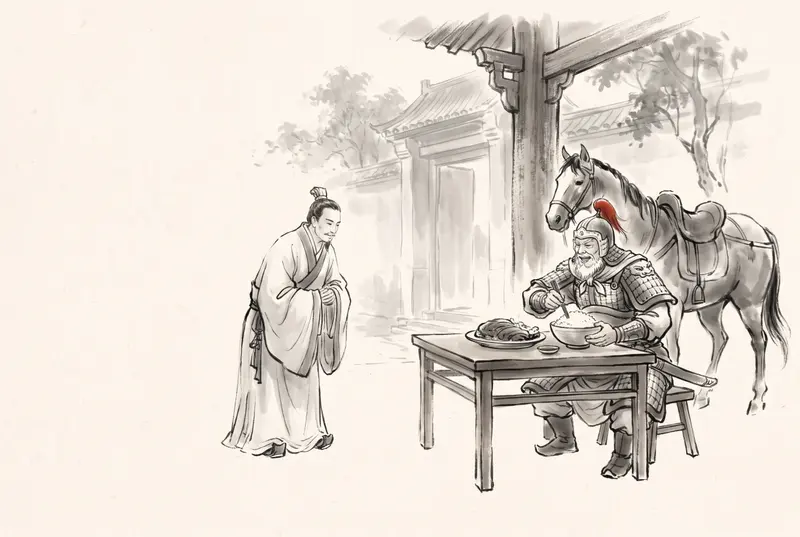
趙孝成王卒,子悼襄王立,使樂乘代廉頗。廉頗怒,攻樂乘,樂乘走。廉頗遂奔魏之大梁。廉頗居梁久之,魏不能信用。趙以數困於秦兵,趙王思復得廉頗,廉頗亦思復用於趙。趙王使使者視廉頗尚可用否。廉頗之仇郭開多與使者金,令毀之。趙使者既見廉頗,廉頗爲之一飯斗米,肉十斤,被甲上馬,以示尚可用。趙使還報王曰:「廉將軍雖老,尚善飯,然與臣坐,頃之三遺矢矣。」趙王以爲老,遂不召。楚聞廉頗在魏,陰使人迎之。廉頗一爲楚將,無功,曰:「我思用趙人。」廉頗卒死於壽春。
書き下し文
趙の孝成王卒し、子悼襄王立ち、楽乗をして廉頗に代わらしむ。廉頗怒りて楽乗を攻む。楽乗走る。廉頗遂に魏の大梁に奔る。廉頗梁に居ること之を久しくするも、魏信用する能わず。趙数しば秦の兵に困しむを以て、趙王復た廉頗を得んことを思い、廉頗も亦た復た趙に用いられんことを思う。趙王使者をして廉頗の尚お用うべきや否やを視しむ。廉頗の仇郭開多く使者に金を与え、之を毀らしむ。趙の使者既に廉頗に見ゆ。廉頗之が為に一飯に斗米、肉十斤、甲を被て馬に上り、以て尚お用うべきを示す。趙の使い還りて王に報じて曰く、「廉将軍老いたりと雖も、尚お善く飯す。然れども臣と坐すること、頃之にして三たび矢を遺せり」と。趙王以て老いたりと為し、遂に召さず。楚廉頗の魏に在るを聞き、陰かに人をして之を迎えしむ。廉頗一たび楚の将と為るも功無し。曰く、「我趙人を用いんことを思う」と。廉頗卒に寿春に死す。
現代語訳
趙の孝成王が亡くなり、子の悼襄王が位につくと、楽乗を廉頗の代わりの将軍にした。廉頗は怒って楽乗を攻め、楽乗は逃げた。廉頗はそのまま魏の大梁へ亡命した。廉頗は大梁に長くいたが、魏は彼を信用して用いることができなかった。趙はたびたび秦の兵に苦しめられたので、趙王はもう一度廉頗を呼び戻したいと思い、廉頗もまた趙で用いられたいと思っていた。趙王は使者を送って、廉頗がまだ役に立つかどうかを見させた。廉頗と仲の悪い郭開は、使者にたくさんの金を渡して、廉頗の悪口を言わせた。趙の使者が廉頗に会うと、廉頗は使者の前で、一度の食事に米一斗と肉十斤を平らげ、よろいを着て馬に乗り、まだ役に立つことを示した。ところが使者は帰って王に報告した。「廉将軍は年をとっていますが、まだよく食べます。けれども、わたしと座っているあいだに、三度も便をもらしました」。趙王は廉頗が年をとりすぎたと思い、とうとう呼び戻さなかった。楚は廉頗が魏にいると聞いて、ひそかに人をやって迎えた。廉頗は楚の将軍になったが、手柄を立てられず、「趙の兵を率いたいものだ」と言った。廉頗は最後に寿春で亡くなった。
英訳
When King Xiaocheng of Zhao died and his son King Daoxiang came to the throne, he had Yue Cheng replace Lian Po. Lian Po, furious, attacked Yue Cheng, who fled, and Lian Po fled to Daliang in Wei. He stayed in Daliang a long time, but Wei could not bring itself to trust and use him. Because Zhao was hard pressed by Qin again and again, the King of Zhao wanted Lian Po back, and Lian Po too wanted to serve Zhao again. The King of Zhao sent an envoy to see whether Lian Po was still fit for service. Lian Po's enemy Guo Kai gave the envoy a great deal of gold to speak ill of him. When the envoy met him, Lian Po ate a dou of rice and ten catties of meat at a single meal in front of him, then put on his armor and mounted his horse to show that he was still fit. But the envoy went back and reported to the king: "General Lian is old, but he still eats well. However, while he sat with me, he had to go and relieve himself three times." The King of Zhao concluded that he was too old and did not send for him. When Chu heard that Lian Po was in Wei, it secretly sent men to bring him over. Lian Po became a general of Chu, but won nothing. "I wish I could command men of Zhao," he said. In the end Lian Po died in Shouchun.
解説(日)
- 悼襄王: 趙の王(在位前244〜前236年)。
- 樂乘: 趙の将軍。p1にも出てくる。
- 郭開: 趙王の寵臣。のちに李牧も讒言で死なせる(p10)。
- 一飯斗米,肉十斤: 一度の食事に米一斗、肉十斤。まだ元気なことを見せた。「廉頗尚お善く飯す」として、年をとっても元気なことのたとえに使われる。
- 三遺矢: 三度便をもらした(矢は「屎」に通じる)。使者のうその報告。
- 壽春: 楚の最後の都。今の安徽省寿県。
解説(英)
- King Daoxiang: king of Zhao, 244–236 BCE.
- Yue Cheng: the general of Zhao who also appears in p1.
- Guo Kai: a favorite of the King of Zhao, who will later bring down Li Mu too (p10).
- 一飯斗米,肉十斤 ("a dou of rice and ten catties of meat at one meal"): "Lian Po still eats well" became a saying for vigor in old age.
- 三遺矢 ("relieved himself three times"; 矢 here is the same as 屎): the envoy's lie.
- Shouchun: the last capital of Chu, present-day Shou County in Anhui.
この節から生まれた言葉: 廉将軍老いたりと雖も、尚お善く飯す
英語の語注
- fit/fɪt/adjective
healthy and strong enough to do something
本文では: “to show that he was still fit”
似た語と違い: able-bodied — physically strong · vigorous — full of energy
- conclude/kənˈkluːd/verb
to decide that something is true after thinking about it
本文では: “concluded that he was too old”
似た語と違い: decide — make up one's mind · judge — form an opinion
- secretly/ˈsiːkrɪtli/adverb
without others knowing
本文では: “it secretly sent men to bring him over”
似た語と違い: in secret — hidden from others · covertly — formal; secretly
- command/kəˈmænd/verb
to be in charge of soldiers
本文では: “I wish I could command men of Zhao”
似た語と違い: lead — be at the head of · head — be in charge of
節 8
原文
李牧者,趙之北邊良將也。常居代鴈門,備匈奴。以便宜置吏,市租皆輸入莫府,爲士卒費。日撃數牛饗士,習射騎,謹烽火,多間諜,厚遇戰士。爲約曰:「匈奴即入盜,急入收保,有敢捕虜者斬。」匈奴毎入,烽火謹,輒入收保,不敢戰。如是數歳,亦不亡失。然匈奴以李牧爲怯,雖趙邊兵亦以爲吾將怯。趙王讓李牧,李牧如故。趙王怒,召之,使他人代將。歳餘,匈奴毎來,出戰。出戰,數不利,失亡多,邊不得田畜。復請李牧。牧杜門不出,固稱疾。趙王乃復彊起使將兵。牧曰:「王必用臣,臣如前,乃敢奉令。」王許之。
書き下し文
李牧なる者は、趙の北辺の良将なり。常に代の鴈門に居りて、匈奴に備う。便宜を以て吏を置き、市租は皆莫府に輸入して、士卒の費と為す。日に数牛を撃ちて士を饗し、射騎を習わし、烽火を謹み、間諜を多くし、戦士を厚遇す。約を為りて曰く、「匈奴即し入りて盗まば、急ぎ入りて収保せよ。敢えて虜を捕うる者有らば斬らん」と。匈奴入る毎に、烽火謹み、輒ち入りて収保し、敢えて戦わず。是くの如きこと数歳、亦た亡失せず。然れども匈奴李牧を以て怯なりと為し、趙の辺兵と雖も亦た以為えらく吾が将は怯なりと。趙王李牧を譲む。李牧故の如し。趙王怒りて之を召し、他人をして代わりて将たらしむ。歳余、匈奴来たる毎に出でて戦う。出でて戦うも数しば利あらず、失亡多く、辺田畜するを得ず。復た李牧を請う。牧門を杜ざして出でず、固く疾と称す。趙王乃ち復た彊いて起たしめて兵に将たらしむ。牧曰く、「王必ず臣を用いんとせば、臣前の如くにして、乃ち敢えて令を奉ぜん」と。王之を許す。
現代語訳
李牧は、趙の北の国境を守るすぐれた将軍だった。いつも代の雁門にいて、匈奴に備えていた。自分の判断で役人を置き、市場の税はすべて将軍の本営に納めさせて兵士の費用にあてた。毎日何頭も牛を殺して兵士にごちそうし、騎馬で弓を射る訓練をさせ、のろしの番を厳しくし、間者を多く放ち、兵士を手厚くもてなした。そして決まりを作った。「匈奴が攻めこんで略奪しに来たら、急いで城砦に逃げこみ、家畜も人も中に収めて守れ。あえて敵を捕らえようとする者は斬る」。匈奴が攻めこんでくるたびに、のろしがきちんと上がり、そのつど城砦に入って守り、戦わなかった。こうして数年たっても、失ったものはなかった。しかし匈奴は李牧を臆病者だと思い、趙の国境の兵たちでさえ、自分たちの将軍は臆病だと思った。趙王が李牧を責めても、李牧はやり方を変えなかった。趙王は怒って李牧を呼び戻し、別の者を将軍にした。それから一年あまり、匈奴が来るたびに打って出て戦ったが、何度も負けて多くを失い、国境地帯では田畑を耕すことも家畜を飼うこともできなくなった。そこで再び李牧に頼んだ。李牧は門を閉ざして出てこず、病気だと言い張った。趙王はむりやり李牧を起こして将軍にした。李牧は言った。「王がどうしてもわたしを用いるというのなら、前と同じやり方でやらせてください。そうしてはじめて命令をお受けします」。王はそれを許した。
英訳
Li Mu was a fine general who guarded the northern frontier of Zhao. He was always stationed at Yanmen in Dai, on guard against the Xiongnu. He appointed officials as he saw fit, and the market taxes all went to his headquarters to pay for his soldiers. Every day he had several oxen slaughtered to feast his men. He trained them in mounted archery, kept careful watch over the beacon fires, sent out many spies and treated his fighting men generously. He made a rule: "If the Xiongnu come raiding, hurry inside the forts and gather everything in. Anyone who dares to try to capture the enemy will be beheaded." Every time the Xiongnu came, the beacons were lit promptly, and the people went inside the forts and did not dare to fight. This went on for several years, and nothing was lost. But the Xiongnu thought Li Mu a coward, and even Zhao's frontier troops thought their general a coward. The King of Zhao rebuked Li Mu, but Li Mu went on as before. The king was angry, called him back and put someone else in command. For more than a year, whenever the Xiongnu came, the army went out to fight. It lost again and again, many men and animals were lost, and the frontier people could no longer farm or raise livestock. So the king asked Li Mu again. Li Mu shut his gate and would not come out, insisting that he was ill. The king forced him to take command. Li Mu said, "If Your Majesty must use me, let me do as I did before. Only then will I accept your orders." The king agreed.
解説(日)
- 代鴈門: 趙の北の代郡・雁門郡。今の山西省北部。
- 匈奴: 北方の遊牧民。
- 便宜: 自分の判断で、状況に合わせて。
- 莫府: 将軍の本営(幕府)。
- 烽火: のろし。
- 收保: 城砦に人や家畜を収めて守る。
- 讓: 責める。
解説(英)
- Yanmen in Dai: the northern commanderies of Zhao, in present-day northern Shanxi.
- The Xiongnu: the nomads of the northern steppe.
- 便宜: as he saw fit.
- 莫府: a general's headquarters.
- 烽火: beacon fires.
- 收保: to bring people and animals inside the forts.
- 讓: to rebuke.
英語の語注
- frontier/frʌnˈtɪr/noun
the border between two countries or peoples
本文では: “guarded the northern frontier of Zhao”
似た語と違い: border — the line between countries · borderland — land near a border
- coward/ˈkaʊərd/noun
a person who is not brave
本文では: “thought Li Mu a coward”
似た語と違い: weakling — a person without strength · chicken — informal; a coward
節 9
原文
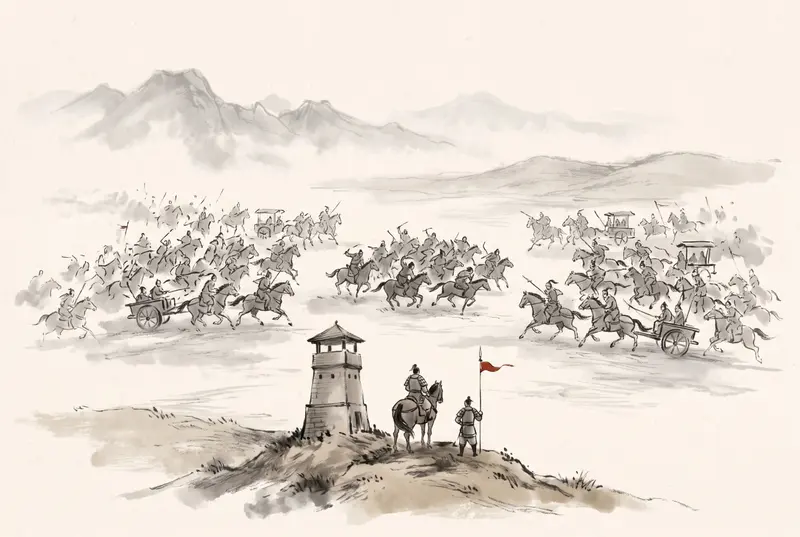
李牧至,如故約。匈奴數歳無所得。終以爲怯。邊士日得賞賜而不用,皆原一戰。於是乃具選車得千三百乘,選騎得萬三千匹,百金之士五萬人,彀者十萬人,悉勒習戰。大縱畜牧,人民滿野。匈奴小入,詳北不勝,以數千人委之。單于聞之,大率衆來入。李牧多爲奇陳,張左右翼撃之,大破殺匈奴十餘萬騎。滅襜襤,破東胡,降林胡,單于奔走。其後十餘歳,匈奴不敢近趙邊城。
書き下し文
李牧至り、故の約の如くす。匈奴数歳得る所無し。終に以て怯なりと為す。辺士日に賞賜を得るも用いられず、皆一戦せんことを願う。是に於いて乃ち具に車を選びて千三百乗を得、騎を選びて万三千匹を得、百金の士五万人、彀者十万人、悉く勒して戦いを習わしむ。大いに畜牧を縦ち、人民野に満つ。匈奴小しく入る。詳りて北げて勝たず、数千人を以て之に委ぬ。単于之を聞き、大いに衆を率いて来たり入る。李牧多く奇陳を為り、左右の翼を張りて之を撃ち、大いに匈奴十余万騎を破り殺す。襜襤を滅ぼし、東胡を破り、林胡を降す。単于奔走す。其の後十余歳、匈奴敢えて趙の辺城に近づかず。
現代語訳
李牧は戻ると、前の決まりどおりにした。匈奴は数年のあいだ何も奪えなかったが、それでも李牧を臆病者だと思っていた。国境の兵士たちは、毎日褒美をもらいながら戦いに使われないので、みな一度戦いたいと願うようになった。そこで李牧は、選りすぐりの戦車千三百台、選りすぐりの騎馬一万三千、百金の褒美に値する勇士五万人、弓の射手十万人をそろえ、すべてに戦いの訓練をさせた。そして家畜を大いに放牧させたので、人々が野に満ちあふれた。匈奴が少し攻めこんでくると、わざと負けて逃げ、数千人を置き去りにした。匈奴の王の単于はそれを聞くと、大軍を率いて攻めこんできた。李牧はさまざまな奇抜な陣を敷き、左右の翼を広げて攻撃し、匈奴の騎兵十万あまりを打ち破って殺した。さらに襜襤を滅ぼし、東胡を破り、林胡を降伏させたので、単于は逃げ去った。それから十年あまり、匈奴は趙の国境の城に近づこうとしなかった。
英訳
Li Mu returned and kept to his old rule. For several years the Xiongnu took nothing, yet they still thought him a coward. The frontier soldiers, who received rewards every day without ever being used, all longed for a fight. So Li Mu picked out thirteen hundred chariots, thirteen thousand horsemen, fifty thousand brave men worthy of a hundred gold, and a hundred thousand archers, and drilled them all for battle. Then he let the herds out to graze far and wide, and the fields filled with people. When a small party of Xiongnu came in, he pretended to be beaten and fled, leaving several thousand people to them. When the Chanyu heard of it, he came in at the head of a great host. Li Mu set many surprise formations, spread out his left and right wings and attacked, crushing and killing more than a hundred thousand Xiongnu horsemen. He destroyed the Danlan, broke the Eastern Hu and made the Linhu surrender, and the Chanyu fled. For more than ten years after that, the Xiongnu did not dare to come near the frontier towns of Zhao.
解説(日)
- 百金之士: 百金の褒美に値する勇士。
- 彀者: 弓を引きしぼる者。射手。
- 詳北: わざと負けて逃げる。北は「敗れて逃げる」の意。
- 委之: 置き去りにして与える。おとり。
- 單于: 匈奴の王の称号。
- 奇陳: 奇抜な陣形(陳は「陣」)。
- 襜襤・東胡・林胡: 北方の民族の名。
解説(英)
- 百金之士: brave men worth a reward of a hundred gold.
- 彀者: archers (men who draw the bow).
- 詳北: pretending to be beaten and flee.
- 委之: to leave as bait.
- The Chanyu: the title of the Xiongnu ruler.
- 奇陳: surprise formations (陳 is the same as 陣).
- The Danlan, the Eastern Hu, the Linhu: peoples of the north.
英語の語注
- drill/drɪl/verb
to train soldiers by making them practice
本文では: “drilled them all for battle”
似た語と違い: train — teach skills · exercise — practice
- graze/ɡreɪz/verb
(of animals) to eat grass in a field
本文では: “let the herds out to graze”
似た語と違い: feed — eat · pasture — put animals in a field to eat
節 10
原文
趙王遷七年,秦使王翦攻趙,趙使李牧、司馬尚禦之。秦多與趙王寵臣郭開金,爲反間,言李牧、司馬尚欲反。趙王乃使趙蔥及齊將顏聚代李牧。李牧不受命,趙使人微捕得李牧,斬之。廢司馬尚。後三月,王翦因急撃趙,大破殺趙蔥,虜趙王遷及其將顏聚,遂滅趙。
書き下し文
趙王遷の七年、秦王翦をして趙を攻めしむ。趙李牧・司馬尚をして之を禦がしむ。秦多く趙王の寵臣郭開に金を与えて反間を為し、李牧・司馬尚反せんと欲すと言わしむ。趙王乃ち趙蔥及び斉の将顔聚をして李牧に代わらしむ。李牧命を受けず。趙人をして微かに李牧を捕え得て、之を斬らしむ。司馬尚を廃す。後三月、王翦因りて急に趙を撃ち、大いに破りて趙蔥を殺し、趙王遷及び其の将顔聚を虜にし、遂に趙を滅ぼす。
現代語訳
趙王遷の七年、秦は王翦に趙を攻めさせ、趙は李牧と司馬尚にこれを防がせた。秦は趙王のお気に入りの家臣の郭開にたくさんの金を贈って裏切らせ、「李牧と司馬尚が反乱を企てている」と言わせた。趙王はそこで趙蔥と斉から来た将軍の顔聚を李牧に代えようとした。李牧が命令を受けなかったので、趙は人をやってひそかに李牧を捕らえ、斬った。司馬尚も職を解かれた。三か月後、王翦は一気に趙を攻めて大いに破り、趙蔥を殺し、趙王遷と将軍の顔聚を捕虜にして、とうとう趙を滅ぼした。
英訳
In the seventh year of Qian, King of Zhao, Qin sent Wang Jian to attack Zhao, and Zhao sent Li Mu and Sima Shang to hold him off. Qin gave a great deal of gold to Guo Kai, the King of Zhao's favorite, to turn traitor and spread word that Li Mu and Sima Shang meant to rebel. So the King of Zhao sent Zhao Cong and Yan Ju, a general from Qi, to replace Li Mu. When Li Mu would not accept the order, Zhao sent men who seized him by stealth and beheaded him, and Sima Shang was dismissed. Three months later, Wang Jian struck Zhao hard, crushed its army, killed Zhao Cong, captured Qian, King of Zhao, and his general Yan Ju, and so destroyed Zhao.
解説(日)
- 趙王遷: 趙の最後の王(在位前235〜前228年)。七年は前229年。
- 王翦: 秦の将軍。巻73の章を参照。
- 反間: 敵の中に裏切り者を作る策。
- 微捕: ひそかに捕らえる。
- 遂滅趙: 前228年。趙の公子嘉は代に逃れて王となったが、前222年に滅んだ。
解説(英)
- Qian, King of Zhao: the last king of Zhao (235–228 BCE); his seventh year was 229 BCE.
- Wang Jian: a general of Qin (see Volume 73).
- 反間: turning someone in the enemy's camp into a traitor.
- 微捕: seized by stealth.
- Zhao destroyed: in 228 BCE. Prince Jia of Zhao fled to Dai and ruled there until 222 BCE.
英語の語注
- traitor/ˈtreɪtər/noun
a person who betrays their country or friends
本文では: “to turn traitor”
似た語と違い: betrayer — one who betrays · turncoat — someone who changes sides
- by stealth/baɪ stɛlθ/phrase
secretly and quietly, so no one notices
本文では: “seized him by stealth”
似た語と違い: stealthily — quietly and secretly · on the sly — informal; secretly
節 11
原文
太史公曰:知死必勇,非死者難也,處死者難。方藺相如引璧睨柱,及叱秦王左右,勢不過誅,然士或怯懦而不敢發。相如一奮其氣,威信敵國,退而讓頗,名重太山,其處智勇,可謂兼之矣!
書き下し文
太史公曰く、死を知れば必ず勇なり。死する者難きに非ず、死に処すること難し。方に藺相如の璧を引きて柱を睨み、及び秦王の左右を叱するや、勢誅せらるるに過ぎず。然れども士或いは怯懦にして敢えて発せず。相如一たび其の気を奮いて、威敵国に信び、退きて頗に譲り、名太山より重し。其の智勇に処すること、之を兼ぬと謂うべし。
現代語訳
太史公(司馬遷)は言う。死ぬと覚悟すれば、人はかならず勇気が出る。死ぬことそのものが難しいのではない。死に向き合ってどう身を処するかが難しいのである。藺相如が璧を手に柱をにらみつけたとき、また秦王の側近たちをしかりつけたとき、最悪でも殺されるだけのことだった。それでも、臆病で踏み出せない者もいる。相如はひとたび気力をふるって敵国に威光を示し、退いては廉頗に譲り、その名は泰山よりも重くなった。知恵と勇気の使い方において、相如は両方を兼ねそなえていたといえる。
英訳
The Grand Historian says: one who knows he must die will surely be brave. Dying is not the hard part; how one faces death is. When Lin Xiangru held the jade and glared at the pillar, and when he shouted down the King of Qin's attendants, the worst that could happen to him was death. Yet there are men too timid to dare it. Xiangru summoned his spirit once and made his power felt in an enemy state, then stepped back and yielded to Lian Po, and his name became weightier than Mount Tai. In the use of wisdom and courage, he can be said to have had both.
解説(日)
- 引璧睨柱: 璧を手にして柱をにらむ。「完璧帰趙」の場面(081-wanbiの章)。
- 叱秦王左右: 秦王の側近をしかりつける。澠池の会の場面(081-wenjingの章)。
- 退而讓頗: 退いて廉頗に譲る。「刎頸の交わり」の場面。
- 名重太山: 名声が泰山よりも重い。
- この評は藺相如をたたえたもので、巻81全体の結びにあたる。
解説(英)
- 引璧睨柱 ("held the jade and glared at the pillar"): the scene in "The Jade Returned Intact."
- 叱秦王左右 ("shouted down the King of Qin's attendants"): the meeting at Mianchi.
- 退而讓頗 ("stepped back and yielded to Lian Po"): "Friends unto Death."
- 名重太山: a name weightier than Mount Tai.
- This judgment praises Lin Xiangru and closes the whole of Volume 81.
英語の語注
- timid/ˈtɪmɪd/adjective
shy and easily frightened
本文では: “there are men too timid to dare it”
似た語と違い: fearful — afraid · faint-hearted — lacking courage
- yield/jiːld/verb
to give way to someone, letting them go first
本文では: “then stepped back and yielded to Lian Po”
似た語と違い: give way — let another go first · defer — accept another's rank