本紀 · 巻 7
項羽本紀 項羽本紀
項羽の登場(鉅鹿の戦い) 鉅鹿之戰
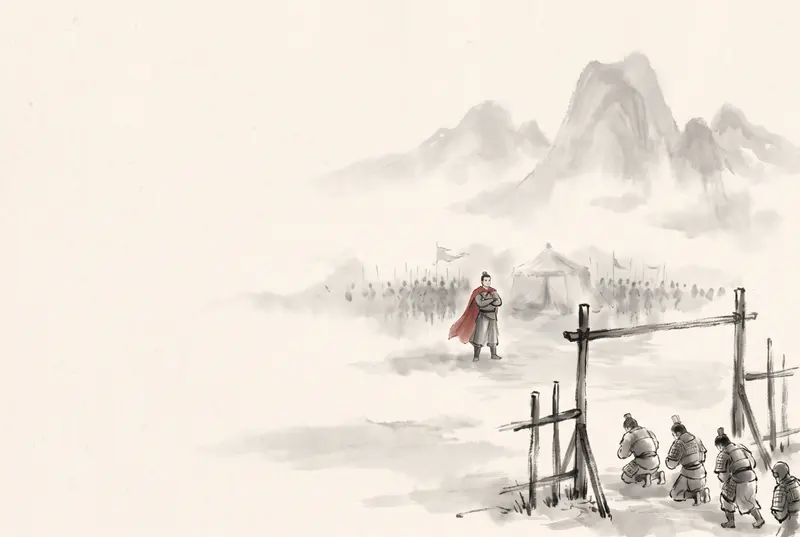
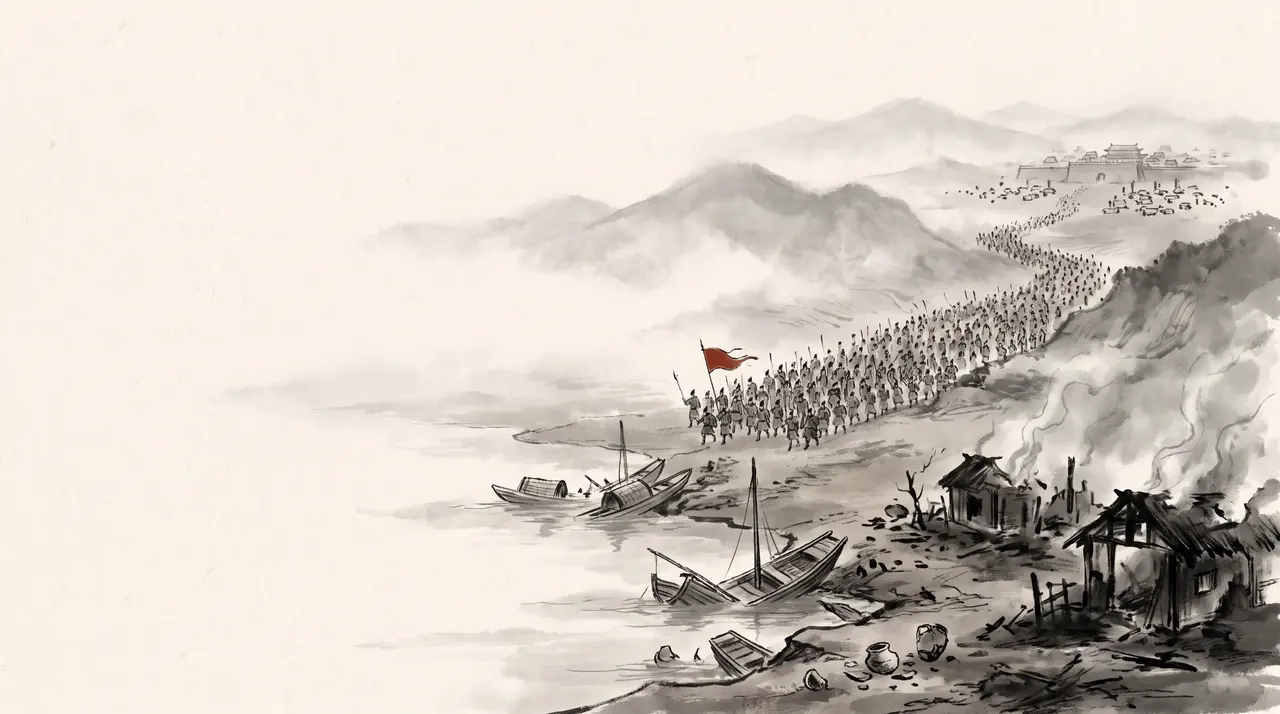
若き項羽は、始皇帝の行列を見て「彼取って代わるべし」と言い放つ。陳勝の乱に続いて叔父の項梁と会稽で兵を挙げ、項梁の死後には、進もうとしない上将軍の宋義を斬って軍を握る。鉅鹿では船を沈め釜を壊して退路を断ち(破釜沈舟)、秦の大軍を打ち破る。諸侯の将たちは、膝で這って項羽の前に進み出た。鴻門の会の前の、項羽の台頭の物語。
この巻のうち「項羽の登場(鉅鹿の戦い)」の場面を載せています。巻の全文ではありません。
音声
音声は合成音声です。
動画
節 1
原文
項籍者,下相人也,字羽。初起時,年二十四。其季父項梁,梁父即楚將項燕,為秦將王翦所戮者也。項氏世世為楚將,封於項,故姓項氏。
書き下し文
項籍なる者は、下相の人なり、字は羽。初めて起こりし時、年二十四。其の季父は項梁、梁の父は即ち楚の将項燕にして、秦の将王翦の戮する所と為りし者なり。項氏は世世楚の将為り、項に封ぜらる。故に項氏を姓とす。
現代語訳
項籍は下相の人で、字を羽という。初めて兵を挙げたとき、二十四歳であった。叔父は項梁で、項梁の父は楚の将軍の項燕である。項燕は、秦の将軍王翦に殺された人である。項氏は代々楚の将軍の家柄で、項の地に封じられたので、項を姓としている。
英訳
Xiang Ji was a man of Xiaxiang; his courtesy name was Yu. When he first rose in arms, he was twenty-four. His youngest uncle was Xiang Liang, and Xiang Liang's father was Xiang Yan, the general of Chu who was killed by the Qin general Wang Jian. The Xiang family had been generals of Chu for generations and had been given a fief at Xiang, so they took Xiang as their surname.
解説(日)
- 項籍・項羽: 名は籍、字(あざな)は羽。ふつう「項羽」の名で知られる。
- 下相: 今の江蘇省宿遷市のあたり。
- 季父: 父のいちばん下の弟(叔父)。
- 項燕: 楚の名将。前223年、秦の王翦に敗れて死んだ。陳勝が蜂起のときにその名を借りた(巻48の章を参照)。
- 王翦: 始皇帝の天下統一を支えた秦の名将。
- 年二十四: 前209年のこと。項羽は前232年の生まれとされる。
解説(英)
- Xiang Ji / Xiang Yu: his personal name was Ji and his courtesy name Yu; he is usually called Xiang Yu.
- Xiaxiang (下相): near Suqian in present-day Jiangsu.
- 季父: the youngest of one's father's brothers.
- Xiang Yan: the great general of Chu. Chen Sheng used his name when he rose (see Volume 48).
- Wang Jian: the Qin general who conquered Chu for the First Emperor.
- Twenty-four: in 209 BCE; Xiang Yu is said to have been born in 232 BCE.
英語の語注
- courtesy name/ˈkɜrtəsi ˌneɪm/noun
in old China, a second name taken by an adult and used by friends and equals
本文では: “his courtesy name was Yu”
似た語と違い: style — the term used in many history books · nickname — informal; not the same thing
- fief/fiːf/noun
land given by a ruler to a noble, who rules it and receives its income
本文では: “had been given a fief at Xiang”
似た語と違い: estate — a large area of land owned by one person · domain — the land someone rules
節 2
原文
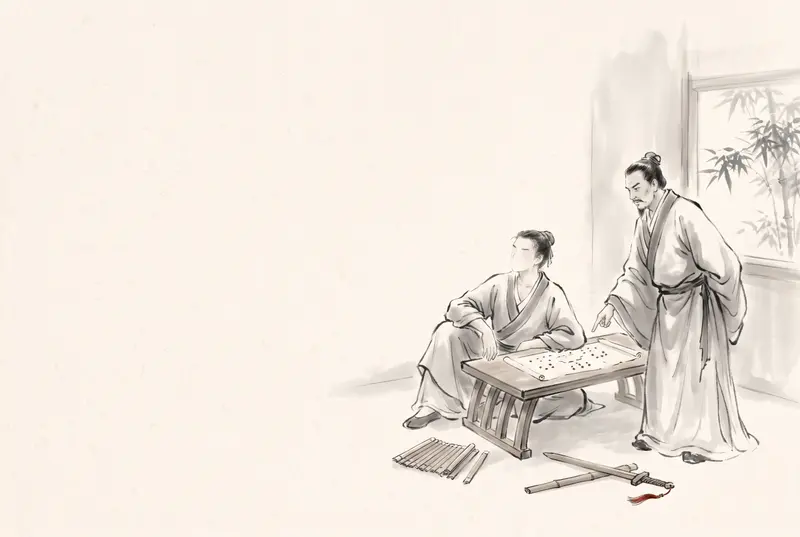
項籍少時,學書不成,去,學劍,又不成。項梁怒之。籍曰:「書足以記名姓而已。劍一人敵,不足學,學萬人敵!」於是項梁乃教籍兵法,籍大喜,略知其意,又不肯竟學。
書き下し文
項籍少き時、書を学びて成らず、去りて剣を学び、又た成らず。項梁之を怒る。籍曰く、「書は以て名姓を記すに足るのみ。剣は一人の敵、学ぶに足らず。万人の敵を学ばん」と。是に於いて項梁乃ち籍に兵法を教う。籍大いに喜び、略ぼ其の意を知るも、又た竟に学ぶを肯んぜず。
現代語訳
項籍は若いころ、文字を学んだがものにならず、やめて剣術を学んだが、これもものにならなかった。項梁が怒ると、項籍は言った。「文字は名前が書ければ十分です。剣は一人を相手にするもので、学ぶほどの値打ちはありません。わたしは一万人を相手にするものを学びたい」。そこで項梁は項籍に兵法を教えた。項籍は大喜びしたが、おおよその意味をつかむと、それ以上は最後まで学ぼうとしなかった。
英訳
When Xiang Ji was young, he studied writing and gave it up unfinished; he left it to study swordsmanship, and gave that up too. Xiang Liang was angry with him. Ji said, "Writing is good for recording names, and no more. The sword can only fight one man; it is not worth learning. I want to learn how to fight ten thousand!" So Xiang Liang taught him the art of war. Ji was delighted, but once he had a rough idea of it, he would not study it to the end.
解説(日)
- 書: 文字、読み書き。
- 萬人敵: 一万人を相手にする術、つまり兵法。
- 略知其意、又不肯竟學: おおよそを理解すると、最後まで学ぼうとしない。何事もやり通さない項羽の性格を表すとして、よく引かれる。
解説(英)
- 書: writing, reading and writing.
- 萬人敵 ("an enemy of ten thousand"): the art of commanding armies.
- 略知其意,又不肯竟學: once he had the general idea, he would not finish. Often read as a sign of his character: he never saw things through.
英語の語注
- swordsmanship/ˈsɔrdzmənˌʃɪp/noun
skill in fighting with a sword
本文では: “he left it to study swordsmanship”
似た語と違い: swordplay — fighting with swords · fencing — sword fighting as a sport
- rough/rʌf/adjective
not exact or detailed; general
本文では: “once he had a rough idea of it”
似た語と違い: general — covering the main points only · approximate — close but not exact
Rough also means "not smooth" or "violent".
節 3
原文
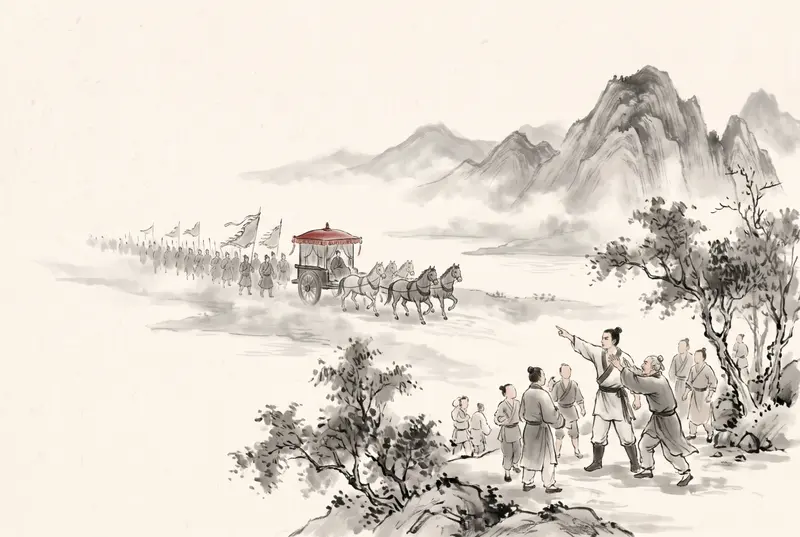
秦始皇帝游會稽,渡浙江,梁與籍俱觀。籍曰:「彼可取而代也。」梁掩其口,曰:「毋妄言,族矣!」梁以此奇籍。籍長八尺餘,力能扛鼎,才氣過人,雖吳中子弟皆已憚籍矣。
書き下し文
秦の始皇帝会稽に游び、浙江を渡る。梁、籍と倶に観る。籍曰く、「彼取りて代わるべきなり」と。梁其の口を掩いて曰く、「妄言すること毋かれ、族せられん」と。梁此を以て籍を奇とす。籍は長八尺余、力は能く鼎を扛げ、才気人に過ぐ。呉中の子弟と雖も皆已に籍を憚る。
現代語訳
秦の始皇帝が会稽に巡行し、浙江を渡ったとき、項梁と項籍は一緒にその行列を見物した。項籍は言った。「あいつに取って代わってやれる」。項梁はあわてて項籍の口をふさいで言った。「めったなことを言うな。一族皆殺しにされるぞ」。項梁は、このことで項籍をただ者ではないと思った。項籍は身の丈が八尺あまり、鼎を持ち上げるほどの力があり、才気も人並み外れていた。呉の若者たちも、みな項籍には一目置いていた。
英訳
When the First Emperor of Qin toured Kuaiji and crossed the Zhe River, Liang and Ji went to watch together. Ji said, "That man could be pushed aside and replaced." Liang clapped his hand over Ji's mouth and said, "Don't talk wildly, or our whole clan will be wiped out!" But from then on Liang thought Ji was no ordinary man. Ji was more than eight feet tall, strong enough to lift a bronze cauldron, and beyond other men in talent and spirit. Even the young men of Wu were already in awe of him.
解説(日)
- 游會稽: 始皇帝の最後の巡行(前210年)。巻6の章で、このあと始皇帝は沙丘で亡くなる。
- 浙江: 今の銭塘江。
- 彼可取而代也: 「彼取りて代わるべし」。同じころ始皇帝の行列を見た劉邦は「大丈夫当に此くの如くなるべし(男ならこうなりたいものだ)」と言ったと高祖本紀にあり、二人の気質の違いとしてよく比べられる。
- 族: 一族を皆殺しにする刑。
- 八尺: 秦漢の一尺は約23センチで、八尺は約1.85メートル。
- 扛鼎: 青銅の鼎を持ち上げる。怪力のたとえ。
- 吳中: 呉の地、今の江蘇省蘇州市のあたり。項梁と項籍は、人を殺して仇を避け、ここに住んでいた(この章では省いた部分)。
解説(英)
- Touring Kuaiji: the First Emperor's last tour (210 BCE). Later on this journey he died at Shaqiu (see Volume 6).
- The Zhe River: the present-day Qiantang River.
- 彼可取而代也 ("he could be taken and replaced"): a famous line. Liu Bang, seeing the emperor's procession, is said to have said, "That is how a real man should be" (Volume 8). The two remarks are often compared.
- 族: to wipe out a whole clan as punishment.
- Eight feet: a Qin-Han foot was about 23 cm, so about 1.85 m.
- 扛鼎: lifting a bronze cauldron, a sign of huge strength.
- Wu: around present-day Suzhou in Jiangsu, where Xiang Liang and Xiang Ji were living after Liang killed a man (left out here).
英語の語注
- clap/klæp/verb
to put something somewhere quickly and firmly
本文では: “Liang clapped his hand over Ji's mouth”
似た語と違い: slap — hit with an open hand · cover — put something over
Clap usually means hitting your hands together to applaud.
- wildly/ˈwaɪldli/adverb
in a careless, uncontrolled way
本文では: “Don't talk wildly”
似た語と違い: recklessly — without thinking of danger · carelessly — without enough care
- cauldron/ˈkɔldrən/noun
a large metal pot; in ancient China, bronze ding vessels were also symbols of power
本文では: “strong enough to lift a bronze cauldron”
似た語と違い: pot — any deep cooking container · vessel — a container, often a ceremonial one
- in awe of/ɪn ˈɔ əv/phrase
feeling great respect mixed with fear for someone
本文では: “were already in awe of him”
似た語と違い: respect — think highly of · fear — be afraid of
節 4
原文
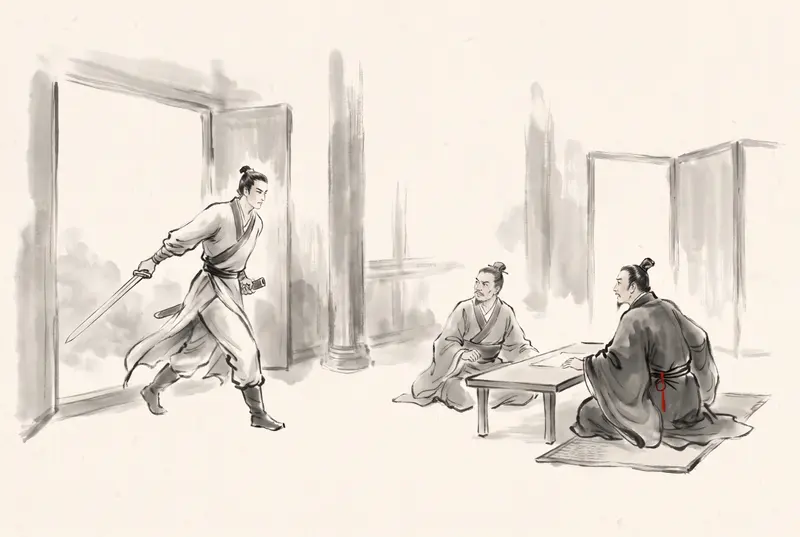
秦二世元年七月,陳涉等起大澤中。其九月,會稽守通謂梁曰:「江西皆反,此亦天亡秦之時也。吾聞先即制人,後則為人所制。吾欲發兵,使公及桓楚將。」是時桓楚亡在澤中。梁曰:「桓楚亡,人莫知其處,獨籍知之耳。」梁乃出,誡籍持劍居外待。梁復入,與守坐,曰:「請召籍,使受命召桓楚。」守曰:「諾。」梁召籍入。須臾,梁眴籍曰:「可行矣!」於是籍遂拔劍斬守頭。
書き下し文
秦の二世元年七月、陳渉等大沢の中に起こる。其の九月、会稽の守通、梁に謂いて曰く、「江西皆反す。此れ亦た天の秦を亡ぼすの時なり。吾聞く、先んずれば即ち人を制し、後るれば則ち人の制する所と為ると。吾兵を発し、公及び桓楚をして将たらしめんと欲す」と。是の時桓楚亡げて沢中に在り。梁曰く、「桓楚亡げて、人其の処を知る莫し。独り籍のみ之を知るのみ」と。梁乃ち出でて、籍を誡めて剣を持して外に居て待たしむ。梁復た入り、守と坐して曰く、「請う籍を召し、命を受けて桓楚を召さしめん」と。守曰く、「諾」と。梁籍を召して入らしむ。須臾にして、梁籍に眴して曰く、「行うべし」と。是に於いて籍遂に剣を抜きて守の頭を斬る。
現代語訳
秦の二世皇帝の元年(前209年)七月、陳渉らが大沢郷で兵を挙げた。その九月、会稽郡の長官の殷通が項梁に言った。「長江の西では、みな反乱を起こしている。これも、天が秦を滅ぼそうとしている時なのだ。『先んずれば人を制し、後るれば人に制せらる』と聞く。わたしは兵を起こし、あなたと桓楚に将軍を任せたい」。このとき桓楚は逃げて沢地に隠れていた。項梁は言った。「桓楚は逃げていて、居場所を知る者はいません。籍だけが知っています」。項梁はいったん外に出て、項籍に、剣を持って外で待つよう言いつけた。また中に入り、長官と向かい合って座ると、「籍を呼んで、桓楚を呼びに行く命令を受けさせてください」と言った。長官は「よかろう」と答えた。項梁は項籍を呼び入れた。しばらくして、項梁は項籍に目くばせして言った。「やれ」。そこで項籍は剣を抜いて、長官の首を斬った。
英訳
In the seventh month of the first year of the Second Emperor of Qin, Chen She and others rose in revolt at Dazexiang. In the ninth month, Tong, the governor of Kuaiji, said to Liang, "West of the Yangtze everyone has revolted. This too shows that Heaven is destroying Qin. I have heard that whoever moves first controls others, and whoever moves late is controlled by them. I want to raise troops and make you and Huan Chu my generals." At that time Huan Chu was a fugitive in the marshes. Liang said, "Huan Chu is in hiding, and no one knows where he is. Only Ji knows." Liang went out and told Ji to wait outside with his sword. Then he went back in, sat down with the governor and said, "Please call Ji in, so that he can receive your order to summon Huan Chu." "Very well," said the governor. Liang called Ji in. A moment later Liang gave Ji a look and said, "Now!" At that Ji drew his sword and cut off the governor's head.
解説(日)
- 二世元年七月: 前209年。陳渉(陳勝)が大沢郷で蜂起した(巻48の章を参照)。
- 會稽守通: 会稽郡の長官の殷通。会稽郡の役所は呉(今の蘇州)にあった。
- 江西: 長江の西(下流では北)側。
- 先即制人: 「先んずれば人を制す」という成語のもと。そう言った長官自身が、先に動いた項梁に討たれる。
- 桓楚: 楚の人。のち項羽の将となる。
- 眴: 目くばせ。
解説(英)
- First year of the Second Emperor: 209 BCE, when Chen She (Chen Sheng) rose at Dazexiang (see Volume 48).
- Tong, the governor: Yin Tong, governor of Kuaiji commandery, whose seat was at Wu (present-day Suzhou).
- 先即制人 ("move first and you control others"): the source of a common saying. The governor who says it is himself struck down by Xiang Liang, who moves first.
- Huan Chu: a man of Chu who later served Xiang Yu as a general.
- 眴: to signal with a glance.
この節から生まれた言葉: 先んずれば人を制す
英語の語注
- fugitive/ˈfjuːdʒətɪv/noun
a person who is running away or hiding, especially from the law
本文では: “Huan Chu was a fugitive in the marshes”
似た語と違い: runaway — someone who has run away · outlaw — someone living outside the law
- revolt/rɪˈvoʊlt/verb
to fight against those in power
本文では: “everyone has revolted”
似た語と違い: rebel — fight against a government · rise up — begin to fight together
節 5
原文
項梁持守頭,佩其印綬。門下大驚,擾亂,籍所擊殺數十百人。一府中皆慴伏,莫敢起。梁乃召故所知豪吏,諭以所為起大事,遂舉吳中兵。使人收下縣,得精兵八千人。梁部署吳中豪傑為校尉、候、司馬。有一人不得用,自言於梁。梁曰:「前時某喪使公主某事,不能辦,以此不任用公。」眾乃皆伏。於是梁為會稽守,籍為裨將,徇下縣。
書き下し文
項梁守の頭を持し、其の印綬を佩ぶ。門下大いに驚き、擾乱す。籍の撃殺する所数十百人。一府中皆慴伏して、敢えて起つもの莫し。梁乃ち故より知る所の豪吏を召し、諭すに大事を起こす所以を以てし、遂に呉中の兵を挙ぐ。人をして下県を収めしめ、精兵八千人を得たり。梁、呉中の豪傑を部署して校尉・候・司馬と為す。一人の用いらるるを得ざる有り、自ら梁に言う。梁曰く、「前時某の喪に公をして某事を主らしむるに、辦ずる能わず。此を以て公を任用せず」と。衆乃ち皆伏す。是に於いて梁会稽の守と為り、籍は裨将と為りて、下県を徇う。
現代語訳
項梁は長官の首を手に持ち、長官の印を身に帯びた。役所の者たちは大いに驚いて騒ぎになったが、項籍は百人近くを打ち殺した。役所じゅうの者が恐れてひれ伏し、立ち上がろうとする者はいなかった。項梁は前から知っていた有力な役人たちを呼び集め、大事を起こすわけを説いて、呉の兵を挙げた。人をやって配下の県を従えさせ、精兵八千人を得た。項梁は呉の有力者たちを、校尉・候・司馬などの役に割り当てた。一人だけ役につけなかった者が、自分から項梁に申し出た。項梁は言った。「以前、ある葬式で、あなたにある仕事を任せたが、うまくこなせなかった。だから、あなたを用いないのだ」。皆はこれを聞いて、すっかり感服した。こうして項梁は会稽郡の長官となり、項籍は副将となって、配下の県を従えていった。
英訳
Xiang Liang held up the governor's head and hung the governor's seal and ribbon at his own waist. The governor's staff were thrown into panic and confusion, and Ji struck down close to a hundred of them. The whole office lay on the ground in terror, and no one dared to get up. Liang then called together the powerful officials he already knew, explained why he was starting a great undertaking, and raised the troops of Wu. He sent men to win over the outlying counties, and got eight thousand picked soldiers. He gave the leading men of Wu posts as colonels, scouts and marshals. One man who was given no post came to Liang and asked why. Liang said, "Some time ago, at a certain funeral, I put you in charge of a certain task, and you could not manage it. That is why I have not given you a post." Everyone was won over. So Liang became governor of Kuaiji, and Ji became his lieutenant general and brought the outlying counties under control.
解説(日)
- 印綬: 官職のしるしの印と、それを下げる組紐。
- 數十百人: 数十人から百人ほど。
- 精兵八千人: 呉の「江東の子弟八千人」。のちに烏江で項羽が「江東の子弟八千人と江を渡って西へ行ったが、一人も帰らない」と言う兵(巻7「四面楚歌」の章)。
- 校尉・候・司馬: 軍の役職。
- 項梁は呉で葬式や大きな労役を取り仕切りながら、ひそかに兵法で人を組織し、それぞれの能力を見ていた(この章では省いた部分)。その目が、ここで生きている。
- 裨將: 副将。
解説(英)
- 印綬: an official's seal and the cord on which it hung.
- 數十百人: dozens, perhaps a hundred.
- Eight thousand picked soldiers: the "eight thousand young men from east of the river" whom Xiang Yu remembers at the Wu River at the end of his life (Volume 7, "Songs of Chu").
- Colonels, scouts, marshals: military posts.
- In Wu, Xiang Liang had managed funerals and public works, quietly organizing men by the art of war and judging their abilities (left out here). That judgment pays off now.
- 裨將: a lieutenant general.
英語の語注
- panic/ˈpænɪk/noun
sudden great fear that stops people thinking clearly
本文では: “thrown into panic and confusion”
似た語と違い: terror — very great fear · alarm — sudden fear of danger
- undertaking/ˈʌndərˌteɪkɪŋ/noun
a big piece of work or plan that someone starts
本文では: “he was starting a great undertaking”
似た語と違い: venture — a new, risky plan · enterprise — a large project
節 6
原文
初,宋義所遇齊使者高陵君顯在楚軍,見楚王曰:「宋義論武信君之軍必敗,居數日,軍果敗。兵未戰而先見敗徵,此可謂知兵矣。」王召宋義與計事而大說之,因置以為上將軍,項羽為魯公,為次將,范增為末將,救趙。諸別將皆屬宋義,號為卿子冠軍。行至安陽,留四十六日不進。
書き下し文
初め、宋義の遇いし所の斉の使者高陵君顕、楚の軍に在り。楚王に見えて曰く、「宋義、武信君の軍必ず敗れんと論ず。居ること数日にして、軍果たして敗る。兵未だ戦わずして先ず敗の徴を見る。此れ兵を知ると謂うべし」と。王、宋義を召して与に事を計り、大いに之を説び、因りて置きて以て上将軍と為し、項羽を魯公と為して次将と為し、范増を末将と為して、趙を救わしむ。諸別将皆宋義に属し、号して卿子冠軍と為す。行きて安陽に至り、留まること四十六日にして進まず。
現代語訳
これより前、宋義が道で出会った斉の使者、高陵君の顕が楚の軍中にいた。顕は楚王(懐王)に会って言った。「宋義は、武信君(項梁)の軍は必ず負けると言っていましたが、数日たつと、軍ははたして敗れました。戦う前に負けるきざしを見抜いたのですから、兵法を知っていると言えましょう」。王は宋義を呼んでともに今後のことをはかり、たいへん気に入って、上将軍に任じた。項羽を魯公として次将に、范増を末将にして、趙を救いに行かせた。ほかの将軍たちもみな宋義の配下となり、宋義は「卿子冠軍」と呼ばれた。軍は安陽まで進んだが、そこに四十六日もとどまって、進もうとしなかった。
英訳
Earlier, Xian, Lord of Gaoling, an envoy from Qi whom Song Yi had met on the road, was with the Chu army. He went to see the King of Chu and said, "Song Yi predicted that the army of the Lord of Wuxin would surely be defeated, and a few days later it was. To see the signs of defeat before a battle is even fought: this is a man who understands war." The king called Song Yi in to plan with him and was greatly pleased with him. So he made him supreme general, with Xiang Yu, now Duke of Lu, as second general and Fan Zeng as third general, and sent them to rescue Zhao. All the other generals were placed under Song Yi, who was called "the Lord General." The army marched as far as Anyang, stopped there for forty-six days, and did not advance.
解説(日)
- この節の前(省略): 項梁は、楚の王家の子孫を探し出して王に立て(楚の懐王)、秦軍を何度も破った。しかし油断して、前208年、定陶で秦の章邯に敗れて戦死した。章邯は北へ向かい、趙王を鉅鹿に囲んだ。
- 武信君: 項梁の称号。
- 魯公・次将・末将: 魯公は項羽の称号。次将は副将、末将はその次の将。
- 卿子冠軍: 「卿子」は敬称、「冠軍」は全軍の筆頭。宋義の呼び名。
- 安陽: 位置には諸説がある(今の山東省曹県のあたりとする説など)。
解説(英)
- Before this (left out here): Xiang Liang found a descendant of the old kings of Chu and made him king (King Huai), and beat the Qin armies several times. But he grew careless and was defeated and killed by the Qin general Zhang Han at Dingtao in 208 BCE. Zhang Han then went north and besieged the King of Zhao at Julu.
- Lord of Wuxin: Xiang Liang's title.
- Duke of Lu, second and third general: Xiang Yu's title and the ranks under the supreme general.
- 卿子冠軍 ("the Lord General"): a respectful name for Song Yi as head of the whole army.
- Anyang: its location is debated.
英語の語注
- envoy/ˈɛnvɔɪ/noun
a person sent by a ruler to deliver a message or make an agreement
本文では: “an envoy from Qi”
似た語と違い: messenger — someone who carries a message · ambassador — a modern official who represents a country
- predict/prɪˈdɪkt/verb
to say what will happen before it happens
本文では: “Song Yi predicted”
似た語と違い: foresee — know in advance · forecast — predict, often weather or numbers
節 7
原文
項羽曰:「吾聞秦軍圍趙王鉅鹿,疾引兵渡河,楚擊其外,趙應其內,破秦軍必矣。」宋義曰:「不然。夫搏牛之蝱不可以破蟣蝨。今秦攻趙,戰勝則兵罷,我承其敝;不勝,則我引兵鼓行而西,必舉秦矣。故不如先鬬秦趙。夫被堅執銳,義不如公;坐而運策,公不如義。」因下令軍中曰:「猛如虎,很如羊,貪如狼,彊不可使者,皆斬之。」
書き下し文
項羽曰く、「吾聞く、秦軍趙王を鉅鹿に囲むと。疾く兵を引きて河を渡り、楚其の外を撃ち、趙其の内に応ぜば、秦軍を破ること必せり」と。宋義曰く、「然らず。夫れ牛を搏つの蝱は、以て蟣蝨を破るべからず。今秦趙を攻む。戦い勝たば則ち兵罷れん。我其の敝れに承ぜん。勝たずんば、則ち我兵を引きて鼓行して西し、必ず秦を挙げん。故に先ず秦・趙を鬬わしむるに如かず。夫れ堅を被り鋭を執るは、義公に如かず。坐して策を運らすは、公義に如かず」と。因りて令を軍中に下して曰く、「猛きこと虎の如く、很ること羊の如く、貪ること狼の如く、彊くして使うべからざる者は、皆之を斬らん」と。
現代語訳
項羽は言った。「秦軍が趙王を鉅鹿で囲んでいると聞きます。すぐに兵を率いて黄河を渡り、楚が外から攻め、趙が内から呼応すれば、秦軍を破ることはまちがいありません」。宋義は言った。「そうではない。牛を刺す虻は、牛の毛にいるしらみをつぶすことはできない。いま秦は趙を攻めている。秦が勝っても、その兵は疲れるから、我々はその疲れに乗じればよい。勝てなければ、我々は太鼓を鳴らして西へ進み、きっと秦を取れる。だから、まず秦と趙を戦わせておくのがよい。鎧を着て鋭い武器を持って戦うことでは、わたしはあなたに及ばない。だが、座って策をめぐらすことでは、あなたはわたしに及ばない」。そして軍中に命令を下した。「虎のように猛く、羊のようにひねくれ、狼のように欲深く、強情で言うことを聞かない者は、みな斬る」。
英訳
Xiang Yu said, "I hear that the Qin army has surrounded the King of Zhao at Julu. If we quickly lead our troops across the Yellow River, Chu will attack from outside and Zhao will answer from inside, and we are sure to beat the Qin army." Song Yi said, "Not so. A gadfly that can sting an ox cannot crush the lice on its back. Now Qin is attacking Zhao. If Qin wins, its troops will be worn out, and we can take advantage of that. If it does not win, we will march west with drums beating and surely take Qin. So it is better to let Qin and Zhao fight it out first. In putting on armor and taking up a sharp weapon, I am not your equal; but in sitting and making plans, you are not mine." Then he issued an order to the army: "Anyone who is fierce as a tiger, stubborn as a ram, greedy as a wolf, or too headstrong to obey will be beheaded."
解説(日)
- 鉅鹿: 今の河北省平郷県のあたり。
- 搏牛之蝱不可以破蟣蝨: 牛を刺す虻は、牛の毛にいるしらみは退治できない。大きな敵(秦)を目標にし、小さな戦い(趙を救うこと)にかかわるべきでない、という意味に解されることが多い(ほかの解釈もある)。
- 承其敝: 相手の疲れに乗じる。
- 很如羊: 羊のように強情でひねくれている。
- この命令は、名前こそ出さないが、明らかに項羽を指している。
解説(英)
- Julu: near Pingxiang in present-day Hebei.
- The gadfly and the lice: usually taken to mean that one should aim at the big enemy (Qin) rather than wasting strength on small fights (rescuing Zhao); other readings exist.
- 承其敝: to take advantage of the enemy's exhaustion.
- 很如羊 ("stubborn as a ram"): obstinate and contrary.
- The order names no one, but it is plainly aimed at Xiang Yu.
英語の語注
- gadfly/ˈɡædˌflaɪ/noun
a large fly that bites cattle and horses
本文では: “A gadfly that can sting an ox”
似た語と違い: horsefly — the common name for such a fly · pest — an insect that causes harm
A gadfly is also a person who annoys others with sharp criticism.
- take advantage of/ˌteɪk ədˈvæntɪdʒ əv/phrase
to use a situation for your own benefit
本文では: “we can take advantage of that”
似た語と違い: exploit — use something, sometimes unfairly · make use of — use something available
- ram/ræm/noun
a male sheep
本文では: “stubborn as a ram”
似た語と違い: sheep — the general word · goat — a related animal, also seen as stubborn
- headstrong/ˈhɛdˌstrɔŋ/adjective
determined to do things your own way, not listening to others
本文では: “too headstrong to obey”
似た語と違い: stubborn — refusing to change your mind · willful — doing what you want, whatever others say
節 8
原文
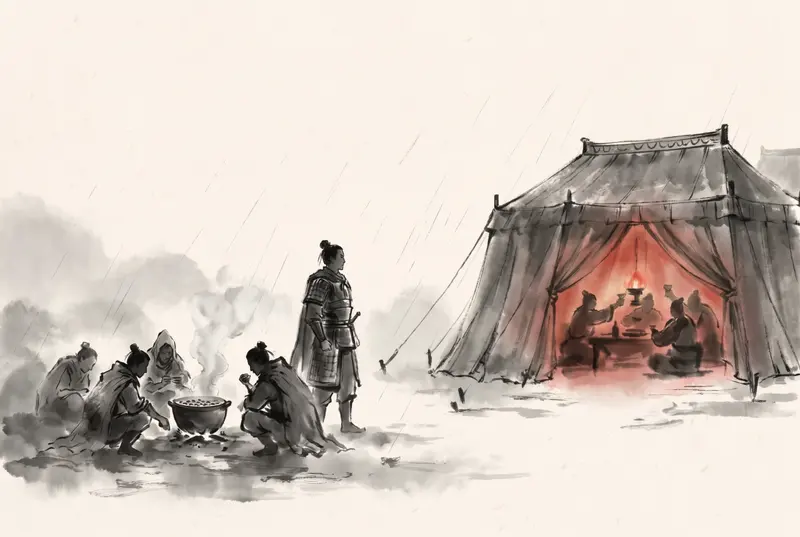
乃遣其子宋襄相齊,身送之至無鹽,飲酒高會。天寒大雨,士卒凍飢。項羽曰:「將戮力而攻秦,久留不行。今歲饑民貧,士卒食芋菽,軍無見糧,乃飲酒高會,不引兵渡河因趙食,與趙并力攻秦,乃曰『承其敝』。夫以秦之彊,攻新造之趙,其勢必舉趙。趙舉而秦彊,何敝之承!且國兵新破,王坐不安席,埽境內而專屬於將軍,國家安危,在此一舉。今不恤士卒而徇其私,非社稷之臣。」
書き下し文
乃ち其の子宋襄を遣わして斉に相たらしめ、身ら之を送りて無塩に至り、酒を飲みて高会す。天寒く大いに雨ふり、士卒凍え飢う。項羽曰く、「将に力を戮せて秦を攻めんとするに、久しく留まりて行かず。今歳饑えて民貧しく、士卒は芋菽を食い、軍に見糧無し。乃ち酒を飲みて高会し、兵を引きて河を渡り趙に因りて食し、趙と力を并せて秦を攻めずして、乃ち『其の敝れに承ぜん』と曰う。夫れ秦の彊きを以て、新造の趙を攻む。其の勢い必ず趙を挙げん。趙挙げられて秦彊からば、何の敝れにか之れ承ぜん。且つ国兵新たに破れ、王は坐して席を安んぜず、境内を埽いて将軍に専属せしむ。国家の安危は此の一挙に在り。今士卒を恤えずして其の私に徇う。社稷の臣に非ず」と。
現代語訳
そして宋義は、自分の子の宋襄を斉の宰相として送り出し、自ら無塩まで見送って、盛大な酒宴を開いた。寒い日で大雨が降り、兵士たちは凍え、飢えていた。項羽は言った。「力を合わせて秦を攻めるはずなのに、長くとどまって進まない。今年は飢饉で民は貧しく、兵士は芋や豆を食べ、軍には手持ちの兵糧もない。それなのに盛大な酒宴を開き、兵を率いて黄河を渡り、趙の食糧に頼って趙と力を合わせて秦を攻めようともせず、『秦の疲れに乗じる』などと言っている。強い秦が、できたばかりの趙を攻めるのだ。勢いからして、趙は必ず落とされる。趙が落ちれば、秦はますます強くなる。何の疲れに乗じるというのか。しかも、わが国の兵は敗れたばかりで、王は座っていても落ち着かず、国じゅうの兵をかき集めて将軍ひとりに任せたのだ。国家の安危は、この一戦にかかっている。それなのに兵士を思いやらず、自分の私事にかまけている。国家を支える臣ではない」。
英訳
Then Song Yi sent his son Song Xiang to be chancellor of Qi, went with him himself as far as Wuyan, and held a grand drinking party. The weather was cold and the rain heavy, and the soldiers were freezing and hungry. Xiang Yu said, "We are meant to join forces and attack Qin, yet we have stayed here a long time without moving. This year there is famine and the people are poor. The soldiers are eating taro and beans, and the army has no grain in hand. Yet he holds a grand drinking party. Instead of leading the army across the river, living off Zhao's food and joining Zhao to attack Qin, he says he will 'take advantage of their exhaustion.' Mighty Qin is attacking the newly founded Zhao; it is bound to take Zhao. Once Zhao falls, Qin will be stronger. What exhaustion will there be to take advantage of? Besides, our army has just been defeated, and the king cannot sit at ease. He swept up every soldier in the land and put them all in the general's hands. The safety of the state hangs on this one move. Yet instead of caring for his soldiers, he follows his own private interests. He is no minister worthy of the state."
解説(日)
- 無鹽: 今の山東省東平県のあたり。
- 芋菽: さといもと豆。粗末な食べ物。
- 新造之趙: 秦末の反乱のなかで新しく立てられた趙の国。
- 在此一舉: 「此の一挙に在り」。のちに成語となった。
- 社稷之臣: 国家を支える臣下。
解説(英)
- Wuyan: near Dongping in present-day Shandong.
- 芋菽: taro and beans, poor man's food.
- The newly founded Zhao: one of the states set up again during the revolts against Qin.
- 在此一舉 ("it hangs on this one move"): later became a saying.
- 社稷之臣: a minister who truly serves the state.
英語の語注
- famine/ˈfæmɪn/noun
a time when there is not enough food for many people
本文では: “This year there is famine”
似た語と違い: hunger — the feeling or state of needing food · shortage — not having enough of something
- exhaustion/ɪɡˈzɔstʃən/noun
the state of being extremely tired and weak
本文では: “take advantage of their exhaustion”
似た語と違い: fatigue — great tiredness · weariness — tiredness after long effort
- hang on/ˌhæŋ ˈɑn/phrasal verb
to depend completely on something
本文では: “The safety of the state hangs on this one move.”
似た語と違い: depend on — need something in order to happen · rest on — be based on
Hang on also means "wait a moment" (informal).
- worthy/ˈwɜrði/adjective
deserving respect or a particular position
本文では: “He is no minister worthy of the state.”
似た語と違い: deserving — having earned something · fit — suitable for a role
節 9
原文
項羽晨朝上將軍宋義,即其帳中斬宋義頭,出令軍中曰:「宋義與齊謀反楚,楚王陰令羽誅之。」當是時,諸將皆慴服,莫敢枝梧。皆曰:「首立楚者,將軍家也。今將軍誅亂。」乃相與共立羽為假上將軍。使人追宋義子,及之齊,殺之。使桓楚報命於懷王。懷王因使項羽為上將軍,當陽君、蒲將軍皆屬項羽。
書き下し文
項羽晨に上将軍宋義に朝し、即ち其の帳中に宋義の頭を斬り、出でて令を軍中に下して曰く、「宋義斉と謀りて楚に反す。楚王陰かに羽をして之を誅せしむ」と。是の時に当たり、諸将皆慴服し、敢えて枝梧する莫し。皆曰く、「首めて楚を立てし者は将軍の家なり。今将軍乱を誅す」と。乃ち相与に共に羽を立てて仮の上将軍と為す。人をして宋義の子を追わしめ、之に斉に及びて之を殺す。桓楚をして命を懐王に報ぜしむ。懐王因りて項羽をして上将軍たらしめ、当陽君・蒲将軍皆項羽に属す。
現代語訳
項羽は朝、上将軍の宋義のもとへ挨拶に行き、その幕舎の中で宋義の首を斬った。そして外に出て、軍中に命令を出した。「宋義は斉と謀って楚に背こうとした。楚王がひそかに、わたしに宋義を誅するよう命じられたのだ」。このとき、将軍たちはみな恐れてひれ伏し、逆らおうとする者はいなかった。みな言った。「楚を最初に立てたのは、将軍の家です。いま将軍は反逆者を討たれたのです」。そして皆で項羽を仮の上将軍に立てた。人をやって宋義の子を追わせ、斉で追いついて殺した。桓楚を懐王のもとに報告に行かせると、懐王はそのまま項羽を上将軍とし、当陽君(黥布)と蒲将軍は、みな項羽の配下に入った。
英訳
In the morning Xiang Yu went to pay his respects to the supreme general Song Yi, and there in his tent he cut off Song Yi's head. Then he went out and announced to the army: "Song Yi was plotting with Qi to betray Chu. The King of Chu secretly ordered me to put him to death." At this, all the generals bowed down in fear, and no one dared to oppose him. They all said, "It was your family, General, that first set up Chu again. Now you have put down a rebel." So together they made Xiang Yu acting supreme general. He sent men after Song Yi's son, who caught up with him in Qi and killed him. He sent Huan Chu to report to King Huai, and King Huai then made Xiang Yu supreme general. The Lord of Dangyang and General Pu were both placed under him.
解説(日)
- 晨朝: 朝の挨拶(朝見)に行く。
- 楚王陰令羽誅之: 王がひそかに命じたというのは、項羽の言い分にすぎない。
- 枝梧: 逆らう、抵抗する。
- 首立楚者: 楚の王家の子孫(懐王)を最初に立てたのは項梁。
- 當陽君: 黥布(英布)。鴻門の会の章にも出てくる。
解説(英)
- 晨朝: to pay a morning call on a superior.
- "The King of Chu secretly ordered me": this is only Xiang Yu's claim.
- 枝梧: to resist.
- "Your family first set up Chu": it was Xiang Liang who found and enthroned King Huai.
- The Lord of Dangyang: Qing Bu (Ying Bu), who also appears in the Feast at Hongmen.
英語の語注
- pay one's respects/ˌpeɪ wʌnz rɪˈspɛkts/phrase
to make a polite visit to someone important
本文では: “Xiang Yu went to pay his respects”
似た語と違い: call on — visit someone · greet — say hello to
- acting/ˈæktɪŋ/adjective
doing a job for a time until someone is officially chosen
本文では: “made Xiang Yu acting supreme general”
似た語と違い: temporary — lasting only for a time · interim — formal; for the time in between
節 10
原文
項羽已殺卿子冠軍,威震楚國,名聞諸侯。乃遣當陽君、蒲將軍將卒二萬渡河,救鉅鹿。戰少利,陳餘復請兵。項羽乃悉引兵渡河,皆沈船,破釜甑,燒廬舍,持三日糧,以示士卒必死,無一還心。
書き下し文
項羽已に卿子冠軍を殺し、威は楚国を震わし、名は諸侯に聞こゆ。乃ち当陽君・蒲将軍をして卒二万を将いて河を渡り、鉅鹿を救わしむ。戦い少しく利あり。陳余復た兵を請う。項羽乃ち悉く兵を引きて河を渡り、皆船を沈め、釜甑を破り、廬舎を焼き、三日の糧を持し、以て士卒に必死にして一の還る心無きを示す。
現代語訳
項羽が卿子冠軍(宋義)を殺すと、その威勢は楚の国じゅうをふるえあがらせ、その名は諸侯に知れわたった。項羽はまず当陽君と蒲将軍に兵二万を率いさせて黄河を渡らせ、鉅鹿を救わせた。戦いはやや有利だったが、陳余がさらに援軍を求めてきた。そこで項羽は全軍を率いて黄河を渡ると、船をすべて沈め、釜や甑(こしき)を打ち壊し、陣小屋を焼き払い、三日分の食糧だけを持たせた。兵士たちに、必ず死ぬ覚悟で戦い、生きて帰ろうという気持ちは一つもないことを示したのである。
英訳
Once Xiang Yu had killed the Lord General, his might shook the whole state of Chu, and his name was heard among all the lords. He sent the Lord of Dangyang and General Pu across the river with twenty thousand men to rescue Julu. They had some success, and Chen Yu asked for more troops. Then Xiang Yu led his whole army across the river. He sank all the boats, smashed the cooking pots and steamers, burned the huts, and carried only three days' food, to show the soldiers that they must fight to the death and that no one would think of going back.
解説(日)
- 陳餘: 趙の将。のちに井陘で韓信に敗れる(巻92の章を参照)。
- 沈船、破釜甑: 船を沈め、炊事に使う釜と甑を壊す。退路と長く戦うための手段をみずから断つこと。ここから「破釜沈舟」という成語が生まれた。韓信の「背水の陣」と並べて語られることが多い。
- 廬舍: 陣営の小屋。
解説(英)
- Chen Yu: a general of Zhao, later beaten by Han Xin at Jingxing (see Volume 92).
- Sinking the boats and smashing the pots: cutting off both retreat and the means of a long campaign. This gave rise to the saying "break the pots and sink the boats," often paired with Han Xin's army "with its back to the river."
- 廬舍: huts in the camp.
この節から生まれた言葉: 破釜沈船
英語の語注
- steamer/ˈstiːmər/noun
a cooking pot that cooks food with steam
本文では: “smashed the cooking pots and steamers”
似た語と違い: pot — any deep cooking container · boiler — a container for heating water
A steamer is also a ship driven by steam.
- to the death/tə ðə ˈdɛθ/phrase
until one side is killed
本文では: “they must fight to the death”
似た語と違い: to the end — until it is finished · to the last man — until no one is left
節 11
原文
於是至則圍王離,與秦軍遇,九戰,絕其甬道,大破之,殺蘇角,虜王離。涉閒不降楚,自燒殺。當是時,楚兵冠諸侯。諸侯軍救鉅鹿下者十餘壁,莫敢縱兵。及楚擊秦,諸將皆從壁上觀。楚戰士無不一以當十,楚兵呼聲動天,諸侯軍無不人人惴恐。於是已破秦軍,項羽召見諸侯將,入轅門,無不膝行而前,莫敢仰視。項羽由是始為諸侯上將軍,諸侯皆屬焉。
書き下し文
是に於いて至れば則ち王離を囲み、秦軍と遇い、九たび戦いて其の甬道を絶ち、大いに之を破り、蘇角を殺し、王離を虜にす。渉間は楚に降らず、自ら焼け死す。是の時に当たり、楚の兵は諸侯に冠たり。諸侯の軍の鉅鹿の下を救う者十余壁、敢えて兵を縦つもの莫し。楚の秦を撃つに及び、諸将皆壁上より観る。楚の戦士一以て十に当たらざるは無く、楚の兵の呼ぶ声天を動かし、諸侯の軍人人惴恐せざるは無し。是に於いて已に秦軍を破り、項羽諸侯の将を召見す。轅門に入るに、膝行して前まざるは無く、敢えて仰ぎ視るもの莫し。項羽是れに由りて始めて諸侯の上将軍と為り、諸侯皆焉に属す。
現代語訳
こうして、着くとすぐに王離の軍を囲み、秦軍とぶつかって九度戦い、その補給路を断ち切って大いに破り、蘇角を殺し、王離を捕虜にした。渉間は楚に降らず、自ら火に身を投じて死んだ。このとき、楚の兵は諸侯の中でずば抜けていた。鉅鹿の救援に来ていた諸侯の軍は、十いくつも陣を構えていたが、どこも兵を出そうとしなかった。楚が秦を攻めると、諸侯の将軍たちはみな陣の塀の上から眺めていた。楚の兵士は一人で十人を相手にしない者はなく、楚兵のときの声は天をゆるがし、諸侯の軍は一人残らず震えあがった。秦軍を破ったあと、項羽が諸侯の将軍たちを呼び寄せると、将軍たちは陣の門を入るなり膝で這って進み、だれ一人、顔を上げて項羽を見ようとしなかった。項羽はこれによって初めて諸侯の上将軍となり、諸侯はみなその配下に入った。
英訳
As soon as they arrived, they surrounded Wang Li, met the Qin army and fought it nine times. They cut its walled supply road and crushed it, killing Su Jiao and taking Wang Li prisoner. She Jian would not surrender to Chu and burned himself to death. At this time the Chu army was the finest of all the lords' armies. More than ten of the lords' armies had come to rescue Julu and lay in fortified camps below the city, but none dared to send out its troops. When Chu attacked Qin, the generals all watched from the tops of their walls. Every Chu soldier fought like ten men, the Chu war cries shook the sky, and every man in the lords' armies trembled with fear. When the Qin army had been beaten, Xiang Yu summoned the lords' generals. As they came in through the gate of his camp, every one of them moved forward on his knees, and none dared to look up at him. From then on Xiang Yu was supreme general of the lords, and all the lords served under him.
解説(日)
- 王離: 秦の名将王翦の孫。
- 蘇角・涉閒: 王離の部将。
- 甬道: 両側を壁で囲った補給路。
- 壁上觀: 陣の塀の上から見物する。手を出さずに傍観することを言う成語「作壁上観」のもと。
- 一以當十: 一人で十人に当たる。
- 轅門: 陣営の門。車の轅を立てて門にしたことから。
- 膝行: ひざで這って進むこと。相手をもっとも恐れ敬う態度。
- このあと(省略): 秦の章邯が降伏し、項羽は降った秦兵二十万を新安で生き埋めにして、関中へ向かう。そして鴻門の会となる(巻8「関中に入る」、巻7「鴻門の会」の章)。
解説(英)
- Wang Li: grandson of the great Qin general Wang Jian.
- Su Jiao, She Jian: Wang Li's officers.
- 甬道: a supply road walled on both sides.
- Watching from the walls: the source of a saying for standing by and not helping.
- 一以當十 ("one against ten"): every man fought like ten.
- 轅門: the gate of a camp, made by standing carriage shafts upright.
- Moving forward on their knees: the deepest show of fear and respect.
- After this (left out here): the Qin general Zhang Han surrendered, Xiang Yu buried two hundred thousand surrendered Qin soldiers alive at Xin'an, and marched on the land within the passes, which leads to the Feast at Hongmen (Volumes 8 and 7).
この節から生まれた言葉: 壁上観
英語の語注
- fortified/ˈfɔrtəˌfaɪd/adjective
protected by walls or other defenses
本文では: “lay in fortified camps below the city”
似た語と違い: walled — surrounded by walls · defended — protected against attack
- tremble/ˈtrɛmbəl/verb
to shake because of fear or cold
本文では: “trembled with fear”
似た語と違い: shake — the general word · quiver — shake slightly and quickly
- summon/ˈsʌmən/verb
to order someone to come
本文では: “Xiang Yu summoned the lords' generals”
似た語と違い: call — ask to come · send for — ask someone to come to you
- on one's knees/ɑn wʌnz ˈniːz/phrase
kneeling, as a sign of fear, respect or begging
本文では: “moved forward on his knees”
似た語と違い: kneeling — resting on the knees · crawling — moving on hands and knees