Biographies · Vol. 130
The Grand Historian's Own Account 太史公自序
The Grand Historian's Own Account: Why He Wrote 發憤著書
In the last volume of the Shiji, Sima Qian tells his own story. After traveling the realm as a young man, he receives his task from his dying father, Sima Tan: "Do not forget what I meant to write." As Grand Historian he resolves to carry on the work of Confucius's Spring and Autumn Annals. Then he defends the general Li Ling, angers Emperor Wu and is castrated. In his despair he remembers that King Wen, Confucius, Qu Yuan, Sun Bin and Han Fei all wrote their works in the midst of suffering, and that they "told of things past while thinking of those to come." So at last he completes one hundred and thirty chapters, from the Yellow Emperor down to his own day.
This page has the scene "The Grand Historian's Own Account: Why He Wrote" from this volume, not the whole volume.
Audio
The audio is synthetic speech.
Video
Passage 1
Original
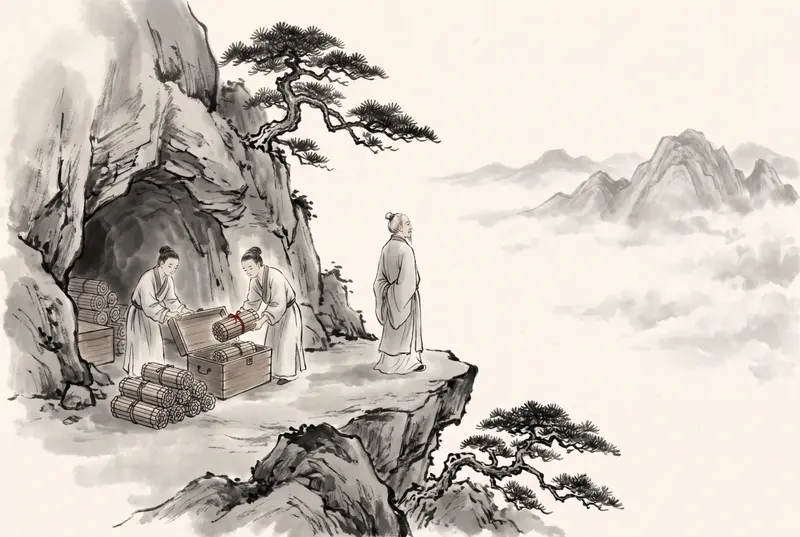
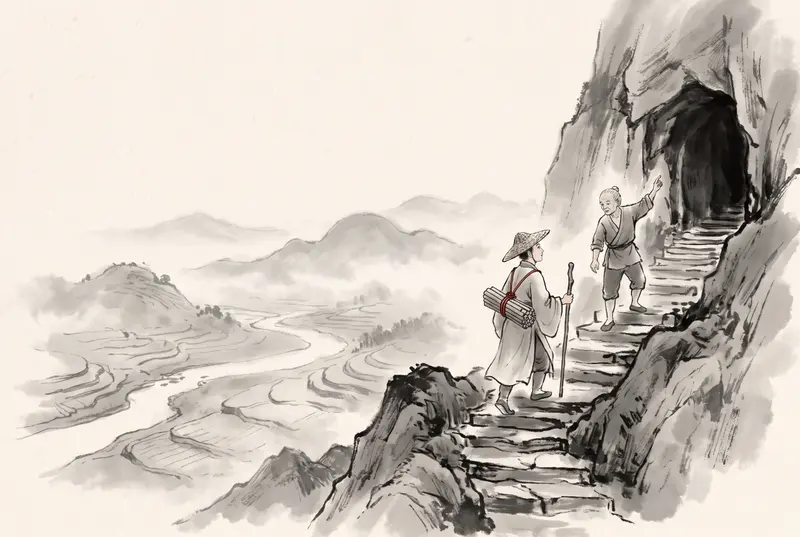
太史公既掌天官,不治民。有子曰遷。遷生龍門,耕牧河山之陽。年十歲則誦古文。二十而南游江、淮,上會稽,探禹穴,闚九疑,浮於沅、湘;北涉汶、泗,講業齊、魯之都,觀孔子之遺風,鄉射鄒、嶧;戹困鄱、薛、彭城,過梁、楚以歸。於是遷仕為郎中,奉使西征巴、蜀以南,南略邛、笮、昆明,還報命。
Kundoku (Japanese reading)
太史公既に天官を掌りて、民を治めず。子有り、遷と曰う。遷龍門に生まれ、河山の陽に耕牧す。年十歳にして則ち古文を誦す。二十にして南のかた江・淮に游び、会稽に上りて、禹穴を探り、九疑を闚い、沅・湘に浮かぶ。北のかた汶・泗を渉り、業を斉・魯の都に講じ、孔子の遺風を観て、郷射を鄒・嶧にす。鄱・薛・彭城に戹困し、梁・楚を過ぎて以て帰る。是に於いて遷仕えて郎中と為り、使いを奉じて西のかた巴・蜀以南を征し、南のかた邛・笮・昆明を略し、還りて命を報ず。
Japanese
太史公(父の司馬談)は天文や暦をつかさどる役につき、民を治める仕事はしなかった。遷という子がいた。遷は龍門に生まれ、黄河と山の南側で、畑を耕し家畜を飼って育った。十歳で古い文字で書かれた書物を読みこなした。二十歳で南へ旅して長江・淮水のあたりを巡り、会稽山に登って禹の墓所という洞穴を探り、九疑山をのぞみ、沅水や湘水に舟を浮かべた。北へ向かっては汶水・泗水を渡り、斉や魯の都で学問を修めて、孔子の残した気風にふれ、鄒や嶧山では郷射の礼を学んだ。鄱・薛・彭城では苦しい目にあい、梁・楚を通って帰ってきた。それから遷は役人となって郎中に任じられ、天子の使いとして西の巴・蜀より南へ遠征し、さらに南の邛・笮・昆明を巡って、帰って報告した。
English
The Grand Historian, Sima Tan, was in charge of the heavens and the calendar, not of governing the people. He had a son named Qian. Qian was born at Longmen and grew up farming and herding on the sunny side of the river and the mountains. At ten he could recite texts in the ancient script. At twenty he traveled south to the Yangzi and the Huai, climbed Mount Kuaiji to explore Yu's cave, viewed the Nine Doubts mountains and sailed on the Yuan and the Xiang. Going north, he crossed the Wen and the Si, studied in the capitals of Qi and Lu where he saw the customs left by Confucius, and took part in the archery rites at Zou and Mount Yi. He ran into hardship at Po, Xue and Pengcheng, and came home by way of Liang and Chu. Then Qian entered office as a palace gentleman. He was sent as an envoy west to the lands south of Ba and Shu, toured the south as far as Qiong, Ze and Kunming, and returned to report.
Notes (JA)
- この節の前(省略): 巻130は『史記』全体の最後の巻で、司馬氏の家の歴史、父の司馬談の学問、そして『史記』百三十巻の各巻の内容の紹介からなる。この章では、司馬遷が自分自身について書いた部分を読む。
- 太史公: ここでは父の司馬談(?〜前110年)。漢の武帝のもとで太史令(天文・暦・記録をつかさどる役)を務めた。
- 天官: 天文や暦をつかさどる役。
- 遷: 司馬遷(前145年または前135年〜?)。
- 龍門: 今の陝西省韓城市。黄河の急流「龍門」で知られる。「登竜門」という言葉のもと。
- 古文: 秦の統一以前の古い文字で書かれた書物。
- 禹穴: 会稽山にある、禹が葬られたとされる洞穴。
- 九疑: 九疑山。伝説の帝の舜が葬られたとされる山。
- 沅・湘: 長江の支流。屈原ゆかりの地。
- 鄉射: 村で行う弓の礼。
- 郎中: 皇帝の側に仕える役人。
- 巴・蜀・邛・笮・昆明: 今の四川省・雲南省のあたり。西南の異民族の地。
Notes (EN)
- Before this (left out here): Volume 130 is the last volume of the Shiji. It covers the history of the Sima family, the learning of Sima Qian's father, Sima Tan, and a summary of each of the Shiji's 130 volumes. This chapter reads the part where Sima Qian writes about himself.
- The Grand Historian (太史公): here his father, Sima Tan (d. 110 BCE), Grand Historian under Emperor Wu of Han, in charge of astronomy, the calendar and records.
- 天官: the office in charge of the heavens and the calendar.
- Qian: Sima Qian (born 145 or 135 BCE).
- Longmen ("Dragon Gate"): present-day Hancheng in Shaanxi, named after rapids on the Yellow River; the source of the saying about carp that leap the Dragon Gate.
- 古文: texts in the old script used before Qin unified writing.
- Yu's cave (禹穴): a cave on Mount Kuaiji where Yu was said to be buried.
- The Nine Doubts (九疑): mountains where the legendary emperor Shun was said to be buried.
- The Yuan and the Xiang: tributaries of the Yangzi, linked with the poet Qu Yuan.
- 鄉射: the village archery rite.
- Palace gentleman (郎中): an attendant of the emperor.
- Ba, Shu, Qiong, Ze, Kunming: in present-day Sichuan and Yunnan, lands of the southwestern peoples.
Word notes
- calendar/ˈkæləndər/noun
a system for dividing the year into days and months
In the text: “the heavens and the calendar”
Similar words: almanac — a book of dates and events · chronology — the order of events in time
- recite/rɪˈsaɪt/verb
to say a text aloud from memory
In the text: “could recite texts”
Similar words: repeat — say again · declaim — recite in a loud, grand way
- hardship/ˈhɑrdʃɪp/noun
a difficult situation, such as having little food or money
In the text: “He ran into hardship”
Similar words: difficulty — a problem · adversity — formal; bad luck and hard times
- envoy/ˈɛnvɔɪ/noun
a person sent to carry a message or do official business
In the text: “sent as an envoy”
Similar words: messenger — one who carries a message · ambassador — an official sent to another country
Passage 2
Original
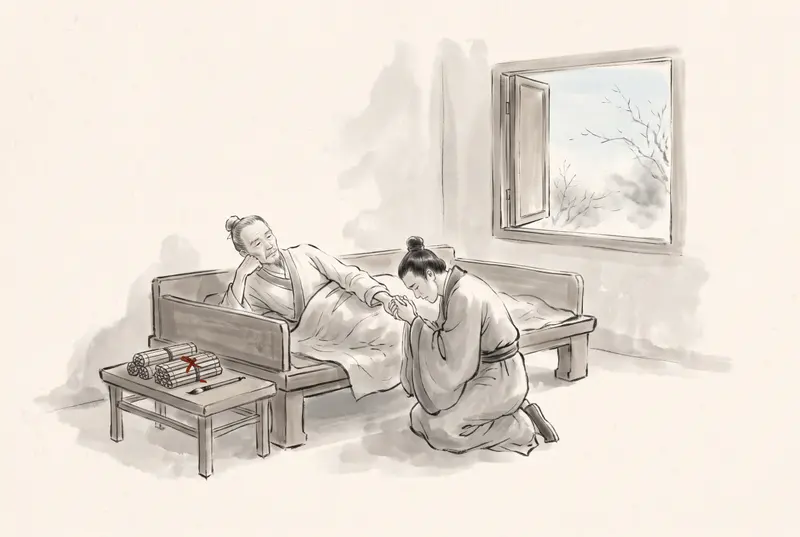
是歲天子始建漢家之封,而太史公留滯周南,不得與從事,故發憤且卒。而子遷適使反,見父於河洛之閒。太史公執遷手而泣曰:「余先周室之太史也。自上世嘗顯功名於虞夏,典天官事。後世中衰,絕於予乎?汝復為太史,則續吾祖矣。今天子接千歲之統,封泰山,而余不得從行,是命也夫,命也夫!
Kundoku (Japanese reading)
是の歳天子始めて漢家の封を建つ。而るに太史公周南に留滞して、与に事に従うを得ず。故に発憤して且に卒せんとす。而して子遷適たま使いより反り、父に河・洛の間に見ゆ。太史公遷の手を執りて泣きて曰く、「余が先は周室の太史なり。上世より嘗て功名を虞夏に顕し、天官の事を典る。後世中ごろ衰う。予に絶えんか。汝復た太史と為らば、則ち吾が祖を続がん。今天子千歳の統を接ぎ、泰山に封ず。而るに余従い行くを得ず。是れ命なるかな、命なるかな。
Japanese
この年、天子(漢の武帝)は初めて漢の封禅の儀式を行った。ところが太史公(司馬談)は周南(洛陽)にとどまったまま、儀式に加わることができなかった。そのため憤りのあまり、死にかけていた。ちょうどそのとき、子の遷が使いの旅から帰ってきて、黄河と洛水の間で父に会った。太史公は遷の手を取って泣きながら言った。「わが家の祖先は、周の王室の太史だった。はるかな昔、虞(舜)や夏の時代から功名をあらわし、天文の仕事をつかさどってきた。その後、中ごろに家は衰えたが、わたしの代で絶えてしまうのだろうか。おまえがまた太史になれば、わが祖先の仕事を継ぐことになる。いま天子は千年続く正統を受け継いで、泰山で封禅の儀式をなさっている。それなのに、わたしはお供をすることができない。これも運命なのだ、運命なのだ。
English
That year the Son of Heaven first performed the Feng sacrifice for the house of Han. But the Grand Historian had been left behind at Zhounan and could not take part. Filled with bitterness, he lay dying. Just then his son Qian returned from his mission and met his father between the Yellow River and the Luo. The Grand Historian took Qian's hand and said, weeping, "Our ancestors were Grand Historians of the house of Zhou. From the earliest ages, in the times of Yu and Xia, they won fame and were in charge of the heavens. Later the family declined. Is it to end with me? If you become Grand Historian again, you will carry on the work of our forefathers. Now the Son of Heaven has taken up a line a thousand years old and performs the Feng sacrifice on Mount Tai, and I cannot go with him. It is fate, it is fate!
Notes (JA)
- 是歲: 元封元年(前110年)。
- 封: 封禅。天子が泰山で天と地を祭る、最も重い儀式。
- 周南: 洛陽のあたり。
- 發憤: 憤りを発する、いきどおる。
- 河洛之閒: 黄河と洛水の間。洛陽のあたり。
- 虞夏: 伝説の帝舜の時代(虞)と夏王朝。
- 典天官事: 天文の仕事をつかさどる。
- 千歲之統: 千年続く正統。古の聖王から続く天子の系統。
- 命也夫: 運命なのだ。
Notes (EN)
- That year: 110 BCE, the first year of the Yuanfeng era.
- The Feng sacrifice (封): the emperor's sacrifice to Heaven on Mount Tai, the most solemn of all rites.
- Zhounan: the area around Luoyang.
- 發憤: to be filled with bitterness or indignation.
- Between the Yellow River and the Luo (河洛之閒): near Luoyang.
- Yu and Xia (虞夏): the age of the legendary emperor Shun (Yu) and the Xia dynasty.
- 典天官事: to be in charge of the heavens.
- A line a thousand years old (千歲之統): the true succession of rulers going back to the sage kings.
- 命也夫: "it is fate."
Word notes
- sacrifice/ˈsækrɪˌfaɪs/noun
an offering to a god
In the text: “performed the Feng sacrifice”
Similar words: offering — a gift to a god · rite — a religious ceremony
Sacrifice also means giving up something you value.
- bitterness/ˈbɪtərnəs/noun
angry, sad feeling about something unfair
In the text: “Filled with bitterness”
Similar words: resentment — bitter feeling · grief — deep sadness
- forefather/ˈfɔrˌfɑðər/noun
an ancestor
In the text: “the work of our forefathers”
Similar words: ancestor — a family member from long ago · forebear — formal; an ancestor
- fate/feɪt/noun
a power believed to decide what happens
In the text: “It is fate”
Similar words: destiny — what will happen to you · lot — your share in life
Passage 3
Original
余死,汝必為太史;為太史,無忘吾所欲論著矣。且夫孝始於事親,中於事君,終於立身。揚名於後世,以顯父母,此孝之大者。
Kundoku (Japanese reading)
余死せば、汝必ず太史と為れ。太史と為らば、吾が論著せんと欲する所を忘るる無かれ。且つ夫れ孝は親に事うるに始まり、君に事うるに中し、身を立つるに終わる。名を後世に揚げ、以て父母を顕す。此れ孝の大なる者なり。
Japanese
わたしが死んだら、おまえは必ず太史になれ。太史になったら、わたしが書き記そうとしていたことを忘れるな。そもそも孝というものは、親に仕えることに始まり、君主に仕えることがその中ほどで、自分の身を立てることで完成する。名を後の世にあげて、父母の名をあらわすこと、これが最も大きな孝なのだ。
English
When I am dead, you must become Grand Historian. And when you are Grand Historian, do not forget what I meant to write. Filial duty begins with serving one's parents, continues with serving one's lord, and ends with establishing oneself. To make one's name known to later ages and so bring glory to one's father and mother: that is the greatest filial duty.
Notes (JA)
- 論著: 論じて書き記すこと。司馬談は、すでに歴史書を書き始めていたとされる。
- 孝始於事親,中於事君,終於立身: 『孝経』にある言葉。
- 揚名於後世,以顯父母: 名を後世に残し、父母の名を高める。これも『孝経』の言葉で、日本でもよく知られる。
Notes (EN)
- 論著: to discuss and write down. Sima Tan seems to have already begun a history.
- 孝始於事親,中於事君,終於立身: a line from the Classic of Filial Piety.
- 揚名於後世,以顯父母: "to make one's name known to later ages and bring glory to one's parents," also from the Classic of Filial Piety.
Word notes
- filial/ˈfɪliəl/adjective
of a son or daughter, especially their duty to their parents
In the text: “Filial duty”
Similar words: dutiful — doing what you should · devoted — very loving and loyal
Filial piety is the central virtue of respect for parents.
- glory/ˈɡlɔri/noun
great fame and honor
In the text: “bring glory to one's father and mother”
Similar words: honor — respect · renown — fame
Passage 4
Original
夫天下稱誦周公,言其能論歌文武之德,宣周邵之風,達太王王季之思慮,爰及公劉,以尊后稷也。幽厲之後,王道缺,禮樂衰,孔子修舊起廢,論詩書,作春秋,則學者至今則之。自獲麟以來四百有餘歲,而諸侯相兼,史記放絕。今漢興,海內一統,明主賢君忠臣死義之士,余為太史而弗論載,廢天下之史文,余甚懼焉,汝其念哉!」遷俯首流涕曰:「小子不敏,請悉論先人所次舊聞,弗敢闕。」
Kundoku (Japanese reading)
夫れ天下の周公を称誦するは、其の能く文・武の徳を論歌し、周・邵の風を宣べ、太王・王季の思慮に達し、爰に公劉に及び、以て后稷を尊ぶを言うなり。幽・厲の後、王道欠け、礼楽衰う。孔子旧を修め廃を起こし、詩・書を論じ、春秋を作る。則ち学者今に至るまで之に則る。獲麟より以来四百有余歳、而して諸侯相兼ね、史記放絶す。今漢興り、海内一統す。明主・賢君・忠臣・死義の士、余太史と為りて論載せず、天下の史文を廃せば、余甚だ懼る。汝其れ念えや」と。遷首を俯して涕を流して曰く、「小子不敏なりと雖も、請う悉く先人の次する所の旧聞を論じ、敢えて闕かざらん」と。
Japanese
天下の人々が周公をたたえるのは、周公が文王と武王の徳を歌に詠み、周公・召公の教えを広め、太王・王季の思いを伝え、さかのぼって公劉にまで及び、祖先の后稷をあがめたからだ。幽王・厲王ののち、王の道はすたれ、礼と音楽は衰えた。孔子は古いものを修め、すたれたものを立て直し、『詩経』と『書経』を整え、『春秋』を作った。学ぶ者は、今に至るまでそれを手本にしている。麒麟が捕らえられて孔子が『春秋』の筆をおいてから四百年あまり、諸侯は互いに国を奪い合い、歴史の記録は散らばってとだえてしまった。いま漢がおこり、天下は一つにまとまった。すぐれた君主、賢い主、忠実な家臣、正義のために死んだ士がいるのに、わたしが太史でありながら、それを書き記さず、天下の歴史を廃れさせてしまうのを、わたしは何よりも恐れている。おまえはこのことを、よく心に刻んでおけ」。遷は頭を垂れ、涙を流して言った。「わたしは至らない者ですが、父上がまとめてこられた昔の記録をすべて論じ、何一つ欠かしはいたしません」。
English
The whole realm praises the Duke of Zhou because he set the virtue of Kings Wen and Wu to song, spread the ways of Zhou and Shao, made known the thoughts of King Tai and Wang Ji, reached back to Gong Liu and honored Hou Ji. After Kings You and Li, the way of the kings fell into neglect and rites and music decayed. Confucius restored the old and revived what had fallen away; he set the Songs and the Documents in order and wrote the Spring and Autumn Annals, and scholars follow them to this day. In the four hundred years and more since the capture of the unicorn, the lords have swallowed one another and the historical records have been scattered and lost. Now the Han has risen and all within the seas are united. There have been enlightened rulers, worthy lords, loyal ministers and men who died for what was right. If I, as Grand Historian, fail to set them down and let the historical writing of the realm go to waste, I will be filled with dread. Remember this!" Qian bowed his head and said in tears, "Though I am not clever, I will set down in full all the old records our forebears have gathered, and I will not dare to leave anything out."
Notes (JA)
- 周公: 周の武王の弟で、周の制度を整えたとされる聖人。孔子が理想とした人。
- 文武: 周を開いた文王と武王。
- 周邵: 周公と召公。周の初めの二人の重臣。
- 太王・王季・公劉・后稷: 周の王家の祖先たち。后稷は周の始祖とされる。
- 幽厲: 周の幽王と厲王。周を衰えさせた暗君とされる。
- 春秋: 孔子が魯の記録をもとにまとめたとされる歴史書。
- 獲麟: 麒麟が捕らえられたこと(前481年)。孔子はこれを聞いて『春秋』の筆をおいたとされる。
- 放絕: 散らばり、とだえる。
- 死義之士: 正義のために死んだ士。
- 小子: 若輩者。自分をへりくだって言う。
- 先人所次舊聞: 父が整理してきた昔の記録。
Notes (EN)
- The Duke of Zhou: brother of King Wu of Zhou, said to have set up the institutions of the Zhou; Confucius's great ideal.
- Kings Wen and Wu: the founders of the Zhou.
- Zhou and Shao (周邵): the Dukes of Zhou and Shao, the two great ministers of the early Zhou.
- King Tai, Wang Ji, Gong Liu, Hou Ji: ancestors of the Zhou royal house; Hou Ji was its founder.
- Kings You and Li: Zhou kings remembered as the rulers who brought the dynasty low.
- The Spring and Autumn Annals: the history of Lu said to have been edited by Confucius.
- The capture of the unicorn (獲麟): in 481 BCE; on hearing of it Confucius is said to have stopped writing the Annals.
- 放絕: scattered and lost.
- 死義之士: men who died for what was right.
- 小子: "your little son," a humble way of speaking of oneself.
- 先人所次舊聞: the old records his father had put in order.
Word notes
- neglect/nɪˈɡlɛkt/noun
not taking care of something
In the text: “fell into neglect”
Similar words: disrepair — bad condition from lack of care · decay — slowly getting worse
- dread/drɛd/noun
great fear about something that may happen
In the text: “filled with dread”
Similar words: fear — the feeling of being afraid · terror — very great fear
- forebear/ˈfɔrˌbɛr/noun
an ancestor
In the text: “our forebears have gathered”
Similar words: ancestor — a family member from long ago · predecessor — one who came before
Do not confuse with forbear, to hold back from doing something.
Passage 5
Original
卒三歲而遷為太史令,紬史記石室金匱之書。五年而當太初元年,十一月甲子朔旦冬至,天歷始改,建於明堂,諸神受紀。太史公曰:「先人有言:『自周公卒五百歲而有孔子。孔子卒後至於今五百歲,有能紹明世,正易傳,繼春秋,本詩書禮樂之際?』意在斯乎!意在斯乎!小子何敢讓焉。」
Kundoku (Japanese reading)
卒して三歳にして遷太史令と為り、史記石室金匱の書を紬む。五年にして太初元年に当たる。十一月甲子朔旦冬至、天暦始めて改まり、明堂に建て、諸神紀を受く。太史公曰く、「先人言える有り、『周公卒して五百歳にして孔子有り。孔子卒して後今に至るまで五百歳、能く明世を紹ぎ、易伝を正し、春秋を継ぎ、詩・書・礼・楽の際に本づく有らんか』と。意斯に在るか、意斯に在るか。小子何ぞ敢えて譲らんや」と。
Japanese
父の死から三年後、遷は太史令となり、宮中の石の書庫や金属の箱にしまわれた記録や書物を読みこんだ。それから五年たった年が、太初元年にあたる。その年の十一月甲子の日の朝、ちょうど冬至に、暦が初めて改められ、明堂でそれが定められて、神々もその暦によって祭られることになった。太史公(司馬遷)は言った。「父はこう言っていた。『周公が亡くなって五百年して孔子が出た。孔子が亡くなってから今日まで五百年になる。だれか明るい世を受け継ぎ、易の解釈を正し、春秋を継いで、詩・書・礼・楽の精神に基づく者は出ないだろうか』。父の思いはここにあったのだ、ここにあったのだ。わたしが、どうしてこの仕事をほかの人にゆずれようか」。
English
Three years after his father's death, Qian became Grand Historian, and he combed through the records and books kept in the stone chambers and metal caskets of the palace. Five years later came the first year of the Taichu era. On the jiazi day that began the eleventh month, at dawn on the winter solstice, the calendar was reformed for the first time, it was proclaimed in the Hall of Light, and all the gods received their places in it. The Grand Historian said: "My father used to say, 'Five hundred years after the Duke of Zhou died, there was Confucius. From the death of Confucius until now has been five hundred years. Is there someone who can carry on that enlightened age, set right the commentaries on the Changes, continue the Spring and Autumn Annals, and ground himself in the Songs, the Documents, the Rites and Music?' That is what he meant! That is what he meant! How could I, his son, dare to decline?"
Notes (JA)
- 卒三歲: 父の死から三年後。前108年。
- 太史令: 天文・暦・記録をつかさどる役所の長。
- 紬: 糸を引き出すように、書物の内容を読み取って整理する。
- 石室金匱: 石造りの書庫と、金属で作った箱。宮中の大切な記録の保管場所。
- 太初元年: 前104年。この年に「太初暦」が作られた。司馬遷も暦の改定にかかわった。
- 明堂: 天子が政令を発し、祭りを行う建物。
- 五百歲: 周公から孔子まで五百年、孔子から司馬遷まで五百年。五百年ごとに聖人が出るという考え。
- 易傳: 『易経』の解説。
- 讓: 辞退する、ゆずる。
Notes (EN)
- Three years after: 108 BCE.
- Grand Historian (太史令): head of the office of astronomy, the calendar and records.
- 紬: to draw out the threads, to read through and sort out.
- Stone chambers and metal caskets (石室金匱): where the palace kept its most precious records.
- The first year of Taichu: 104 BCE, when the new Taichu calendar was made. Sima Qian himself took part in the calendar reform.
- The Hall of Light (明堂): a ritual hall where the emperor proclaimed ordinances and offered sacrifices.
- Five hundred years: from the Duke of Zhou to Confucius, and from Confucius to Sima Qian; the belief that a sage appears every five hundred years.
- 易傳: the commentaries on the Book of Changes.
- 讓: to decline, to give way.
Word notes
- casket/ˈkæskɪt/noun
a small box for valuable things
In the text: “metal caskets”
Similar words: chest — a large strong box · coffer — a box for money or treasure
In American English a casket is also a coffin.
- solstice/ˈsɑlstɪs/noun
the shortest or longest day of the year
In the text: “the winter solstice”
Similar words: midwinter — the middle of winter · equinox — the day when day and night are equal
- commentary/ˈkɑmənˌtɛri/noun
notes that explain a text
In the text: “the commentaries on the Changes”
Similar words: annotation — a note added to a text · interpretation — an explanation of meaning
- decline/dɪˈklaɪn/verb
to refuse politely
In the text: “dare to decline”
Similar words: refuse — say no · turn down — say no to an offer
Decline also means to become weaker: "the way of Zhou had declined."
Passage 6
Original
上大夫壺遂曰:「昔孔子何為而作春秋哉?」太史公曰:「余聞董生曰:『周道衰廢,孔子為魯司寇,諸侯害之,大夫壅之。孔子知言之不用,道之不行也,是非二百四十二年之中,以為天下儀表,貶天子,退諸侯,討大夫,以達王事而已矣。』子曰:『我欲載之空言,不如見之於行事之深切著明也。』
Kundoku (Japanese reading)
上大夫壺遂曰く、「昔孔子何為れぞ春秋を作れるや」と。太史公曰く、「余董生に聞く、曰く、『周道衰廃し、孔子魯の司寇と為る。諸侯之を害い、大夫之を壅ぐ。孔子言の用いられず、道の行われざるを知るや、二百四十二年の中を是非して、以て天下の儀表と為し、天子を貶し、諸侯を退け、大夫を討じ、以て王事を達するのみ』と。子曰く、『我之を空言に載せんと欲するは、之を行事に見すことの深切著明なるに如かざるなり』と。
Japanese
上大夫の壺遂が言った。「昔、孔子はなぜ『春秋』を作ったのでしょうか」。太史公は言った。「わたしは董先生からこう聞きました。『周の道が衰えて廃れたころ、孔子は魯の司寇(法をつかさどる大臣)となったが、諸侯はこれを妨げ、大夫たちはその道をふさいだ。孔子は、自分の言葉が用いられず、自分の道が行われないことを知ると、二百四十二年間のできごとについて是非を判断し、天下の手本とした。天子でもけなし、諸侯でも退け、大夫でも責めて、王者のあるべき姿を示そうとしたのだ』。また孔子は、『わたしが道を空しい言葉で書き記すよりも、実際のできごとの中に示したほうが、はるかに深く、はっきりと伝わる』と言っています。
English
The high official Hu Sui said, "Why did Confucius write the Spring and Autumn Annals long ago?" The Grand Historian said, "I heard Master Dong say: 'When the way of Zhou had declined, Confucius became minister of justice in Lu, but the lords worked against him and the great officers blocked him. Knowing that his words would not be used and his way would not be followed, he judged the right and wrong of two hundred and forty-two years to make a standard for the realm. He criticized the Son of Heaven, demoted the lords and condemned the great officers, simply to make clear the business of a true king.' And the Master said, 'Rather than set it down in empty words, I would show it in actual deeds, where it is deeper, sharper and plainer to see.'
Notes (JA)
- 上大夫壺遂: 司馬遷と同時代の高官。司馬遷とともに暦の改定にかかわった。
- 董生: 董仲舒(前176ごろ〜前104年ごろ)。漢の儒学者で、儒学を国の学問にするよう武帝に説いた。司馬遷は董仲舒に学んだとされる。
- 司寇: 法や刑罰をつかさどる大臣。
- 壅: ふさぐ、さまたげる。
- 二百四十二年: 『春秋』が扱う年数(前722〜前481年)。
- 儀表: 手本、規範。
- 我欲載之空言,不如見之於行事之深切著明也: 空しい理屈を書くより、実際のできごとで示したほうが深く明らかに伝わる。司馬遷の歴史の書き方の土台となった考え。
- このあと(省略): 司馬遷は、『春秋』は是非を明らかにし、乱れた世を正す最高の書だ、と続ける。
Notes (EN)
- Hu Sui: a high official of Sima Qian's time who worked with him on the calendar reform.
- Master Dong (董生): Dong Zhongshu (c. 176–104 BCE), the Han Confucian who persuaded Emperor Wu to make Confucianism the state learning. Sima Qian is said to have studied with him.
- 司寇: the minister of justice.
- 壅: to block.
- Two hundred and forty-two years: the span covered by the Annals (722–481 BCE).
- 儀表: a standard, a model.
- "Rather than set it down in empty words, I would show it in actual deeds": the idea behind Sima Qian's own way of writing history.
- After this (left out here): Sima Qian goes on to call the Annals the greatest book for telling right from wrong and setting a disordered age straight.
Word notes
- demote/dɪˈmoʊt/verb
to move someone to a lower rank
In the text: “demoted the lords”
Similar words: downgrade — lower in rank · degrade — lower in rank or value
The opposite is promote.
- condemn/kənˈdɛm/verb
to say strongly that something is wrong; to sentence to punishment
In the text: “condemned the great officers”
Similar words: denounce — criticize publicly · censure — formal; officially criticize
- deed/diːd/noun
something that someone does
In the text: “actual deeds”
Similar words: act — a thing done · action — doing something
A deed is also a legal paper showing who owns land.
Passage 7
Original
壺遂曰:「孔子之時,上無明君,下不得任用,故作春秋,垂空文以斷禮義,當一王之法。今夫子上遇明天子,下得守職,萬事既具,咸各序其宜,夫子所論,欲以何明?」太史公曰:「唯唯,否否,不然。余聞之先人曰:『伏羲至純厚,作易八卦。堯舜之盛,尚書載之,禮樂作焉。湯武之隆,詩人歌之。春秋采善貶惡,推三代之德,褒周室,非獨刺譏而已也。』漢興以來,至明天子,獲符瑞,封禪,改正朔,易服色,受命於穆清,澤流罔極,海外殊俗,重譯款塞,請來獻見者,不可勝道。臣下百官力誦聖德,猶不能宣盡其意。且士賢能而不用,有國者之恥;主上明聖而德不布聞,有司之過也。且余嘗掌其官,廢明聖盛德不載,滅功臣世家賢大夫之業不述,墮先人所言,罪莫大焉。余所謂述故事,整齊其世傳,非所謂作也,而君比之於春秋,謬矣。」
Kundoku (Japanese reading)
壺遂曰く、「孔子の時、上に明君無く、下任用を得ず。故に春秋を作り、空文を垂れて以て礼義を断じ、一王の法に当つ。今夫子上明天子に遇い、下職を守るを得、万事既に具わり、咸各おの其の宜しきに序す。夫子の論ずる所、以て何をか明らかにせんと欲するや」と。太史公曰く、「唯唯、否否、然らず。余之を先人に聞く、曰く、『伏羲至純厚にして、易の八卦を作る。堯・舜の盛んなる、尚書之を載せ、礼楽作る。湯・武の隆んなる、詩人之を歌う。春秋は善を采り悪を貶し、三代の徳を推し、周室を褒む。独り刺譏するのみに非ざるなり』と。漢興りてより以来、明天子に至り、符瑞を獲、封禅し、正朔を改め、服色を易え、命を穆清に受け、沢流れて極まり罔し。海外の殊俗、重訳して塞を款き、来たりて献見せんことを請う者、勝げて道うべからず。臣下百官力めて聖徳を誦するも、猶お其の意を宣べ尽くす能わず。且つ士賢能にして用いられざるは、国を有つ者の恥なり。主上明聖にして徳布聞せざるは、有司の過ちなり。且つ余嘗て其の官を掌る。明聖盛徳を廃して載せず、功臣世家賢大夫の業を滅して述べず、先人の言う所を堕とさば、罪焉より大なるは莫し。余の所謂故事を述べ、其の世伝を整斉するは、所謂作るに非ざるなり。而るに君之を春秋に比す。謬れり」と。
Japanese
壺遂は言った。「孔子の時代は、上には賢い君主がおらず、孔子自身も下で用いられることがなかった。だから『春秋』を作り、実際には行われなかった言葉を書き残して、礼と義の是非を判断し、それを一人の王の法としたのです。いまあなたは、上には賢い天子にめぐりあい、下では職をつとめることができ、あらゆることがそろい、すべてがあるべき所に収まっています。あなたは書物を論じて、いったい何を明らかにしようというのですか」。太史公は言った。「はい、はい。いや、いや、そうではありません。わたしは父からこう聞いています。『伏羲はこの上なく純粋で手厚い人で、易の八卦を作った。堯・舜の盛んな世は『書経』に記され、礼と音楽が作られた。殷の湯王や周の武王の栄えた世は、詩人が歌った。『春秋』は善をとりあげ、悪をけなし、夏・殷・周三代の徳をたたえ、周の王室をほめている。ただ人をそしっているだけではない』。漢がおこってから今の明るい天子に至るまで、めでたいしるしが現れ、封禅の儀式が行われ、暦が改められ、衣服の色も改められ、天の清らかな命を受けて、そのめぐみは限りなく行きわたっています。海外の風俗の違う国々も、何度も通訳を重ねてはるばる国境の関所をたたき、貢ぎ物を献上してお目通りを願う者は、数えきれません。臣下や役人たちがいくら天子の徳をたたえても、まだ言いつくすことはできません。それに、賢く有能な士が用いられないのは、国を治める者の恥であり、天子が賢明なのに、その徳が世に知られないのは、役人の落ち度です。わたしは、その役目をつかさどる者です。賢明な天子の盛んな徳を書きもらし、功臣や名家や賢い大夫の業績を書かずに埋もれさせ、父の言葉を無にしてしまったら、これより大きな罪はありません。わたしの言う仕事は、昔のことを述べ伝え、代々の言い伝えを整理することであって、新しく作り出すことではありません。それなのに、あなたはこれを『春秋』になぞらえる。それは間違いです」。
English
Hu Sui said, "In Confucius's time there was no enlightened ruler above, and below he could find no office. So he wrote the Annals, leaving behind words that were never put into practice, to judge rites and right and serve as the law of a true king. Now you have met with an enlightened Son of Heaven above and hold an office below; everything is in place, and all things are in their proper order. What do you hope to make clear by your writing?" The Grand Historian said, "Yes, yes. No, no, that is not so. I heard from my father: 'Fuxi was perfectly pure and good, and he made the eight trigrams of the Changes. The glory of Yao and Shun is recorded in the Documents, and rites and music were made then. The greatness of Tang and King Wu was sung by the poets. The Annals pick out the good and condemn the bad, praise the virtue of the Three Dynasties and honor the house of Zhou. They do not only criticize.' Since the rise of the Han, down to our enlightened Son of Heaven, auspicious signs have appeared, the Feng and Shan sacrifices have been performed, the calendar has been reformed and the colors of court dress changed. He has received the mandate from serene Heaven, and his bounty flows without limit. Peoples of strange customs beyond the seas, speaking through interpreter after interpreter, have knocked at our frontier gates asking to come and pay tribute, more than can be counted. The ministers and officials strive to praise his sage virtue, yet still cannot say all there is to say. Moreover, when worthy and able men are not employed, it is a shame to the ruler of the state; when the sovereign is wise and enlightened and his virtue is not made known, it is the fault of the officials. And I hold that very office. If I failed to record the great virtue of a wise ruler, let the deeds of meritorious ministers, noble houses and worthy officials vanish unrecorded, and cast aside my father's words, there could be no greater crime. What I mean to do is to pass on the old stories and put the family traditions in order. It is not what is called creating. You are wrong to compare it to the Spring and Autumn Annals."
Notes (JA)
- 空文: 実際には行われなかった言葉。理想として書かれた言葉。
- 一王之法: 一人の王の法。孔子が『春秋』で、あるべき王の法を示したということ。
- 唯唯,否否: 「はい、はい」と相手を受けたあとで、「いや、いや」と打ち消す。
- 伏羲: 伝説の帝王。易の八卦を作ったとされる。
- 三代: 夏・殷・周の三つの王朝。
- 符瑞: めでたいしるし。天が天子を認めたしるしとされた。
- 正朔・服色: 暦と、朝廷の衣服の色。王朝が改まると変えるものとされた。
- 穆清: 清らかで静かな天。
- 重譯款塞: 何度も通訳を重ねて、国境の関所をたたく。遠い国から使いが来ること。
- 述故事,非所謂作也: 昔のことを述べ伝えるのであって、作るのではない。孔子の「述べて作らず」(『論語』)をふまえた言葉。
- この答えには武帝の世をたたえる言葉が並ぶが、『春秋』のように時代を批判する書だと思われないよう、本心を隠した言い方だと読む人も多い。
Notes (EN)
- 空文: words never put into practice, written as an ideal.
- 一王之法: the law of a true king, which Confucius was thought to have laid down in the Annals.
- "Yes, yes. No, no": first politely agreeing, then denying.
- Fuxi: a legendary sage-ruler said to have made the eight trigrams.
- The Three Dynasties: the Xia, Shang and Zhou.
- 符瑞: auspicious signs, taken as Heaven's approval of a ruler.
- The calendar and the colors of court dress (正朔・服色): things a new dynasty was expected to change.
- 穆清: serene Heaven.
- 重譯款塞: speaking through interpreter after interpreter and knocking at the frontier gates; envoys from distant lands.
- "To pass on, not to create" (述故事,非所謂作也): an echo of Confucius's "I transmit; I do not create" in the Analects.
- The answer is full of praise for Emperor Wu's reign, but many readers take it as guarded: Sima Qian did not want his book to be seen as a critique of his own age, as the Annals were.
Word notes
- enlightened/ɪnˈlaɪtənd/adjective
wise and understanding
In the text: “an enlightened Son of Heaven”
Similar words: wise — with good judgment · far-sighted — thinking about the future
- auspicious/ɔˈspɪʃəs/adjective
showing that good things will happen
In the text: “auspicious signs”
Similar words: lucky — bringing good luck · promising — likely to be good
- tradition/trəˈdɪʃən/noun
stories and customs passed down over time
In the text: “the family traditions”
Similar words: heritage — what is passed down · lore — old stories and knowledge
- compare/kəmˈpɛr/verb
to say that one thing is like another
In the text: “compare it to the Spring and Autumn Annals”
Similar words: liken — say is like · equate — say is equal to
Passage 8
Original
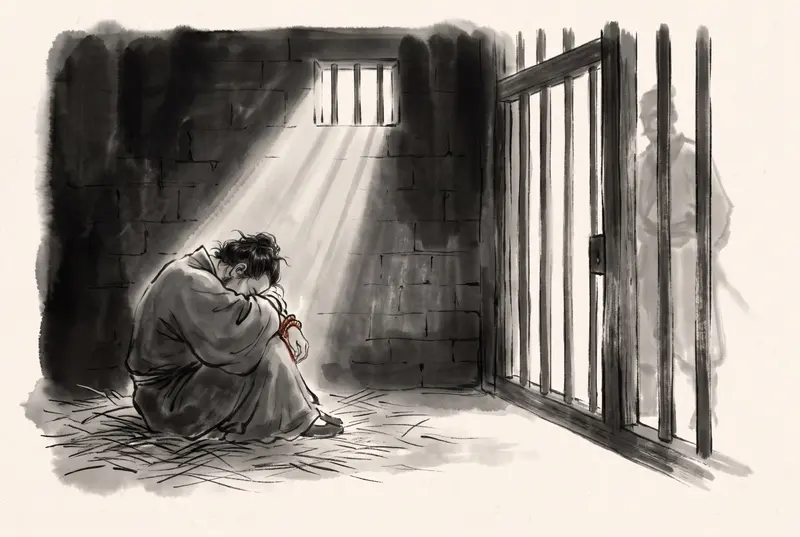
於是論次其文。七年而太史公遭李陵之禍,幽於縲紲。乃喟然而嘆曰:「是余之罪也夫!是余之罪也夫!身毀不用矣。」
Kundoku (Japanese reading)
是に於いて其の文を論次す。七年にして太史公李陵の禍に遭い、縲紲に幽せらる。乃ち喟然として嘆じて曰く、「是れ余の罪なるかな。是れ余の罪なるかな。身毀たれて用いられず」と。
Japanese
こうして、記録を論じ、順序だてて書き進めた。七年たったとき、太史公(司馬遷)は李陵の事件に巻きこまれて災いにあい、縄で縛られて牢につながれた。そしてため息をついて嘆いた。「これはわたしの罪なのか。これはわたしの罪なのか。この身は損なわれて、もう役に立たない」。
English
So he set about arranging and writing the text. Seven years later, the Grand Historian was caught up in the disaster of Li Ling and thrown into prison in bonds. He sighed and said, "Is this my fault? Is this my fault? My body is ruined, and I am of no more use."
Notes (JA)
- 論次: 論じて順序だてて並べる。
- 李陵之禍: 前99年、将軍の李陵が匈奴と戦って降伏した。司馬遷は武帝の前で李陵を弁護したため怒りを買い、宮刑(男性の生殖器を切る刑)を受けた。
- 縲紲: 罪人を縛る縄。牢獄。
- 身毀: 体が損なわれる。宮刑を受けたこと。
- 是余之罪也夫: これはわたしの罪なのか。自分を責める言葉とも、運命を問う言葉とも読める。
Notes (EN)
- 論次: to discuss and put in order.
- The disaster of Li Ling (李陵之禍): in 99 BCE the general Li Ling surrendered to the Xiongnu after a desperate battle. Sima Qian spoke in his defense before Emperor Wu, angered the emperor, and was sentenced to castration.
- 縲紲: the ropes that bind a prisoner, prison.
- 身毀 ("my body is ruined"): he had been castrated.
- "Is this my fault?": it can be read as self-blame or as a question put to fate.
Word notes
- bonds/bɑndz/noun
ropes or chains that tie a prisoner
In the text: “into prison in bonds”
Similar words: chains — linked metal rings · fetters — chains for the feet
Bonds also means feelings that join people, or loans to a government.
- ruined/ˈruːɪnd/adjective
badly damaged and spoiled
In the text: “My body is ruined”
Similar words: destroyed — completely damaged · wrecked — badly damaged
Passage 9
Original
退而深惟曰:「夫詩書隱約者,欲遂其志之思也。昔西伯拘羑里,演周易;孔子戹陳蔡,作春秋;屈原放逐,著離騷;左丘失明,厥有國語;孫子臏腳,而論兵法;不韋遷蜀,世傳呂覽;韓非囚秦,說難、孤憤;詩三百篇,大抵賢聖發憤之所為作也。此人皆意有所郁結,不得通其道也,故述往事,思來者。」於是卒述陶唐以來,至于麟止,自黃帝始。
Kundoku (Japanese reading)
退きて深く惟いて曰く、「夫れ詩・書の隠約なる者は、其の志の思いを遂げんと欲するなり。昔西伯羑里に拘せられて、周易を演ぶ。孔子陳・蔡に戹せられて、春秋を作る。屈原放逐せられて、離騒を著す。左丘明を失いて、厥れ国語有り。孫子臏脚せられて、兵法を論ず。不韋蜀に遷されて、世に呂覧を伝う。韓非秦に囚われて、説難・孤憤あり。詩三百篇は、大抵賢聖の発憤の為す所なり。此の人皆意に鬱結する所有りて、其の道を通ずるを得ず。故に往事を述べ、来者を思う」と。是に於いて卒に陶唐より以来、麟止に至るまでを述べ、黄帝より始む。
Japanese
司馬遷は退いて深く考え、こう言った。「そもそも『詩経』や『書経』の言葉が含みをもって控えめに書かれているのは、作者が胸の思いを遂げようとしたからだ。昔、周の文王は羑里に捕らえられて『周易』をおし広め、孔子は陳と蔡で苦しんで『春秋』を作り、屈原は追放されて『離騒』を書き、左丘は目が見えなくなって『国語』を残し、孫臏は足を切られて兵法を論じ、呂不韋は蜀に流されて、世に『呂氏春秋』を伝え、韓非は秦に捕らえられて「説難」「孤憤」を書いた。『詩経』の三百篇も、たいていは賢人や聖人が憤りを発して作ったものだ。この人たちはみな、心に晴らせない思いがつかえていて、その道を世に通すことができなかった。だから過ぎたことを書き記して、後の世の人に思いを託したのだ」。こうして司馬遷はついに、陶唐(堯)の時代から麒麟が捕らえられた時までを書き記した。書き始めは黄帝からである。
English
He withdrew and thought deeply, and said: "The Songs and the Documents are full of hidden meanings because their authors wished to carry out what was in their hearts. Long ago the Lord of the West was imprisoned at Youli and expanded the Changes of Zhou. Confucius was in distress between Chen and Cai and wrote the Spring and Autumn Annals. Qu Yuan was banished and composed 'Encountering Sorrow.' Zuo Qiu lost his sight, and there were the Discourses of the States. Sunzi had his feet cut off and set forth his art of war. Lü Buwei was exiled to Shu, and his Lü's Annals have come down to us. Han Fei was imprisoned in Qin, and there were 'The Difficulties of Persuasion' and 'Solitary Indignation.' The three hundred Songs were mostly written by worthies and sages pouring out their indignation. All these men had something pent up in their hearts that they could not see through to its end. So they told of things past while thinking of those to come." And so at last he told the story from Tao Tang down to the capture of the unicorn, beginning with the Yellow Emperor.
Notes (JA)
- 隱約: 言葉が控えめで、奥に深い意味をこめていること。
- 西伯: 周の文王。殷の紂王に羑里(今の河南省)に捕らえられ、易の卦を六十四に広げたとされる。
- 戹陳蔡: 孔子が陳と蔡の国境で囲まれ、食べ物もなくなった苦難。
- 屈原: 楚の詩人。王に退けられて追放され、長詩「離騒」を作ったとされる(巻84)。
- 左丘: 左丘明。『春秋左氏伝』『国語』の作者とされる。
- 孫子臏腳: 孫臏が足を切られたこと(巻65の章を参照)。
- 不韋遷蜀: 秦の宰相の呂不韋が蜀へ流されることになったこと。『呂氏春秋』(呂覧)は呂不韋が食客に作らせた書。
- 韓非囚秦: 法家の韓非が秦で捕らえられたこと(巻63。韓非を陥れたのは李斯とされる)。「説難」「孤憤」は『韓非子』の篇の名。
- 呂不韋や韓非の書は、実際には災難にあう前に書かれていたとされる。司馬遷は、苦難が書物を生むことを示すために並べている。
- 發憤: 憤りを発する。ここから「発憤著書(憤りを発して書を著す)」という言葉が生まれた。
- 述往事,思來者: 過ぎたことを書き記して、後の世の人を思う。
- 陶唐: 伝説の帝堯。
- 麟止: 麒麟が捕らえられて終わる。武帝が麒麟を得た元狩元年(前122年)とする説が多い。
- 自黃帝始: 『史記』は巻1「五帝本紀」の黄帝から始まる。
Notes (EN)
- 隱約: restrained words with deep meaning hidden in them.
- The Lord of the West (西伯): King Wen of Zhou, imprisoned at Youli by the last Shang king; he is said to have expanded the trigrams into the sixty-four hexagrams.
- Distress between Chen and Cai: when Confucius was surrounded and ran out of food on the border of those states.
- Qu Yuan: the poet of Chu who was banished by his king and is said to have written the long poem "Encountering Sorrow" (Volume 84).
- Zuo Qiu: Zuo Qiuming, the traditional author of the Zuo Commentary and the Discourses of the States.
- Sunzi had his feet cut off: Sun Bin (see Volume 65).
- Lü Buwei exiled to Shu: the Qin chancellor; his retainers compiled Lü's Annals for him.
- Han Fei imprisoned in Qin: the Legalist thinker (Volume 63; Li Si is said to have brought him down). The two titles are chapters of the Han Feizi.
- The books of Lü Buwei and Han Fei were in fact probably written before their disasters. Sima Qian lists them to show how suffering gives birth to books.
- 發憤 ("pouring out indignation"): the source of the phrase "to write a book out of indignation."
- 述往事,思來者: telling of the past while thinking of the future.
- Tao Tang: the legendary emperor Yao.
- The capture of the unicorn (麟止): usually taken as 122 BCE, when Emperor Wu obtained a unicorn.
- Beginning with the Yellow Emperor: the Shiji opens with the Yellow Emperor in Volume 1, "Annals of the Five Emperors."
Idioms from this passage: Writing out of indignation 発憤著書
Word notes
- banish/ˈbænɪʃ/verb
to send someone away from their country as a punishment
In the text: “was banished”
Similar words: exile — send away from home · expel — force to leave
- indignation/ˌɪndɪɡˈneɪʃən/noun
anger about something unfair
In the text: “pouring out their indignation”
Similar words: outrage — strong anger · resentment — bitter feeling
- unicorn/ˈjuːnɪˌkɔrn/noun
an animal in stories with a horn on its head; here, the qilin of Chinese legend
In the text: “the capture of the unicorn”
Similar words: qilin — the Chinese name · mythical beast — an animal from legends
Passage 10
Original
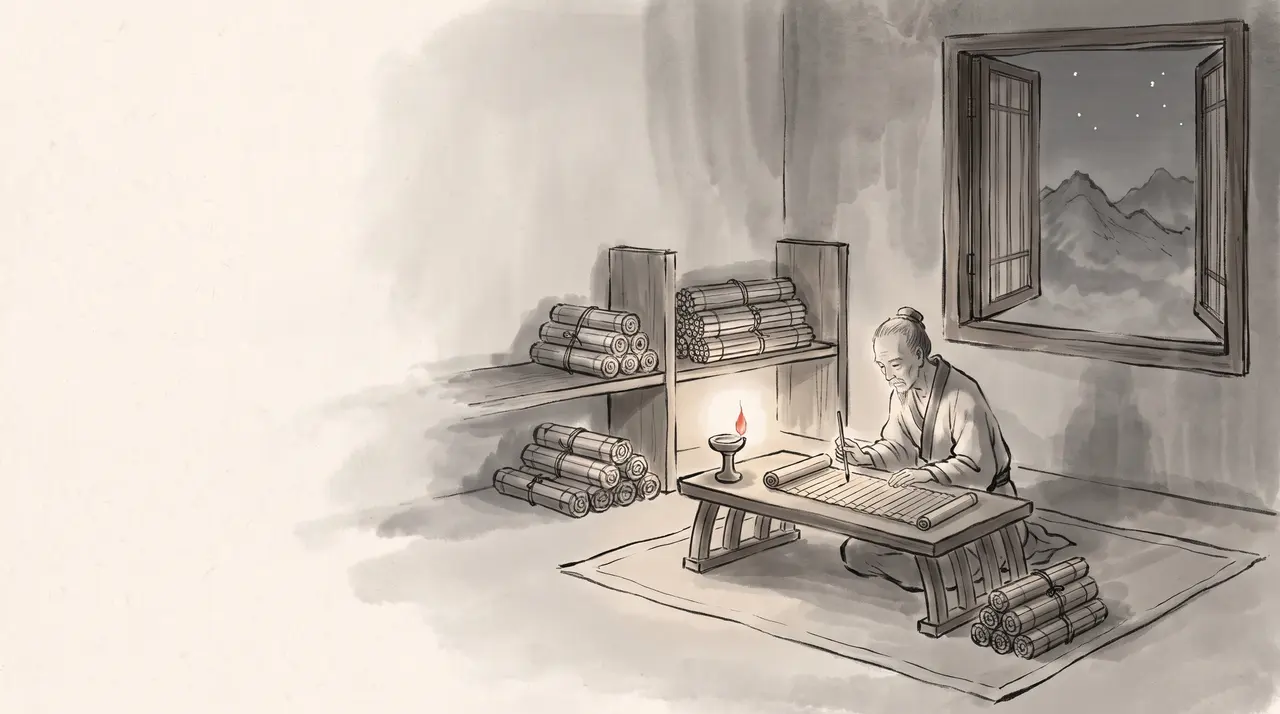
罔羅天下放失舊聞,王跡所興,原始察終,見盛觀衰,論考之行事,略推三代,錄秦漢,上記軒轅,下至于茲,著十二本紀,既科條之矣。并時異世,年差不明,作十表。禮樂損益,律歷改易,兵權山川鬼神,天人之際,承敝通變,作八書。二十八宿環北辰,三十輻共一轂,運行無窮,輔拂股肱之臣配焉,忠信行道,以奉主上,作三十世家。扶義俶儻,不令己失時,立功名於天下,作七十列傳。凡百三十篇,五十二萬六千五百字,為太史公書。序略,以拾遺補闕,成一家之言,厥協六經異傳,整齊百家雜語,藏之名山,副在京師,俟後世聖人君子。
Kundoku (Japanese reading)
天下の放失せる旧聞を罔羅し、王跡の興る所、始めを原ね終わりを察し、盛んなるを見て衰うるを観、之を行事に論考す。略ぼ三代を推し、秦・漢を録し、上は軒轅を記し、下は茲に至るまで、十二本紀を著し、既に之を科条す。時を并せて世を異にし、年差明らかならず、十表を作る。礼楽の損益、律暦の改易、兵権・山川・鬼神、天人の際、敝を承け変に通ずるに、八書を作る。二十八宿北辰を環り、三十輻一轂を共にし、運行窮まり無し。輔拂股肱の臣之に配し、忠信もて道を行い、以て主上に奉ず。三十世家を作る。義を扶け俶儻にして、己をして時を失わしめず、功名を天下に立つるに、七十列伝を作る。凡そ百三十篇、五十二万六千五百字、太史公書と為す。序略して、以て遺を拾い闕を補い、一家の言を成し、厥れ六経の異伝を協え、百家の雑語を整斉し、之を名山に蔵し、副は京師に在り、後世の聖人君子を俟つ。
Japanese
天下に散らばり失われていた昔の言い伝えを網ですくうように集め、王者の事業がおこったいきさつについて、その始まりをたずね、終わりを見きわめ、栄えるさまを見て、衰えるさまを観察し、それを実際のできごとに即して論じ考えた。夏・殷・周の三代はおおよそを推しはかり、秦と漢はくわしく記録し、上は黄帝(軒轅)から、下は今に至るまでを書いて、十二の本紀を著し、その筋道を立てた。同じ時代に並び立つ国々や、時代の違う国々の年代がはっきりしないので、十の表を作った。礼と音楽の移り変わり、音律と暦の改定、軍事・山川・神々、天と人とのかかわり、そして衰えを受けついで変化に通じる道について、八つの書を作った。天の二十八の星座が北極星をめぐり、車輪の三十本の輻が一つのこしきに集まって、限りなくめぐるように、君主を支える手足のような家臣たちが、まごころをもって道を行い、君主に仕えた。そこで三十の世家を作った。正義を助け、才気にあふれ、時機を逃さず、天下に功名を立てた人々について、七十の列伝を作った。あわせて百三十篇、五十二万六千五百字。これを『太史公書』とする。ここにあらましを述べて、もれたものを拾い、欠けたものを補い、一つの家の学説を打ち立てた。六経のさまざまな解釈を調和させ、諸子百家の雑多な言葉を整理した。正本は名山に納め、副本は都に置いて、後の世の聖人や君子が読んでくれるのを待つ。
English
He gathered as in a net the old traditions of the realm that had been scattered and lost. Where the deeds of kings arose, he traced their beginnings and examined their ends, watched them flourish and saw them decline, and studied them through what was actually done. Roughly reckoning the Three Dynasties and recording Qin and Han in detail, from Xuanyuan, the Yellow Emperor, down to the present, he wrote twelve Basic Annals and laid out their order. Because the dates of states that existed side by side, and of different ages, were unclear, he made ten Tables. On the changes in rites and music, the reform of pitch-pipes and calendar, warfare, mountains and rivers, spirits and gods, the meeting of Heaven and man, and how to take over a decaying order and adapt to change, he wrote eight Treatises. As the twenty-eight lunar mansions circle the Pole Star, and the thirty spokes of a wheel share one hub, turning without end, so the ministers who were the ruler's arms and legs supported him, walking the Way with loyalty and good faith to serve their sovereign; for them he made thirty Hereditary Houses. For men who upheld what was right, bold and free, who did not let their moment pass and won fame in the world, he made seventy Biographies. In all there are one hundred and thirty chapters, five hundred and twenty-six thousand five hundred characters, called The Book of the Grand Historian. Here I have set down an outline, to gather what was left out and fill in what was missing, and to make the teaching of one school. It reconciles the differing traditions of the Six Classics and puts in order the miscellaneous sayings of the Hundred Schools. The original will be stored away in a famous mountain and a copy kept in the capital, to wait for the sages and gentlemen of later ages.
Notes (JA)
- この節の前(省略): 司馬遷は、巻1「五帝本紀」から巻129「貨殖列伝」までの各巻について、何を書いたかを短い文で紹介している。この節は、その最後のまとめの部分。
- 罔羅: 網ですくうように広く集める。
- 原始察終,見盛觀衰: 始まりをたずね、終わりを見きわめ、栄えるさまと衰えるさまを見る。『史記』の歴史の見方をよく表す言葉。
- 軒轅: 黄帝の名。
- 本紀・表・書・世家・列傳: 『史記』の五つの部分。本紀12巻(帝王)、表10巻(年表)、書8巻(制度)、世家30巻(諸侯の家)、列伝70巻(人物)。このサイトの章の分類もこれに従う。
- 二十八宿環北辰,三十輻共一轂: 天の二十八の星座が北極星をめぐり、車輪の三十本の輻が一つのこしきに集まる。家臣が君主を支えるたとえ。
- 俶儻: 才気にあふれ、型にはまらない。
- 太史公書: 『史記』のもとの名。「史記」と呼ばれるようになるのは後の時代のこと。
- 成一家之言: 一つの家の学説を打ち立てる。司馬遷が『史記』で目ざしたこと。
- 六經: 詩・書・礼・楽・易・春秋の六つの経典。
- 藏之名山,副在京師: 正本は名山に納め、副本は都に置く。
- 俟後世聖人君子: 後の世の聖人や君子を待つ。いまの世で理解されなくても、いつか読んでくれる人が現れることを願った言葉。
Notes (EN)
- Before this (left out here): Sima Qian gives a short description of each volume, from Volume 1, "Annals of the Five Emperors," to Volume 129, "Biographies of the Money-Makers." This passage is his summing-up.
- 罔羅: to gather widely, as with a net.
- 原始察終,見盛觀衰: "tracing beginnings and examining ends, watching things flourish and decline," a fine statement of the Shiji's way of seeing history.
- Xuanyuan: the name of the Yellow Emperor.
- Basic Annals, Tables, Treatises, Hereditary Houses, Biographies: the five parts of the Shiji: 12 Annals (rulers), 10 Tables (chronologies), 8 Treatises (institutions), 30 Hereditary Houses (ruling families) and 70 Biographies (people). This site sorts its chapters the same way.
- The twenty-eight lunar mansions and the thirty spokes: images of ministers supporting the ruler.
- 俶儻: bold, gifted and unconventional.
- The Book of the Grand Historian (太史公書): the original title of the Shiji, which came to be called Shiji only later.
- 成一家之言: "to make the teaching of one school," what Sima Qian set out to do.
- The Six Classics: the Songs, Documents, Rites, Music, Changes and Spring and Autumn Annals.
- Stored away in a famous mountain, a copy in the capital (藏之名山,副在京師).
- "To wait for the sages and gentlemen of later ages" (俟後世聖人君子): his hope that, even if his own age did not understand him, readers would come.
Word notes
- flourish/ˈflɜrɪʃ/verb
to grow strong and successful
In the text: “watched them flourish”
Similar words: thrive — grow well · prosper — be successful
- reconcile/ˈrɛkənˌsaɪl/verb
to make two different ideas fit together
In the text: “It reconciles the differing traditions”
Similar words: harmonize — make fit together · unite — bring together
Reconcile also means to make people friends again.
- copy/ˈkɑpi/noun
a second version of a book or document
In the text: “a copy kept in the capital”
Similar words: duplicate — an exact copy · transcript — a written copy
- sage/seɪdʒ/noun
a very wise person
In the text: “the sages and gentlemen of later ages”
Similar words: wise man — a person of great wisdom · scholar — a learned person
Sage is also a herb used in cooking.