Biographies · Vol. 92
Biography of the Marquis of Huaiyin 淮陰侯列傳
Han Xin: Peerless in the Realm 國士無雙
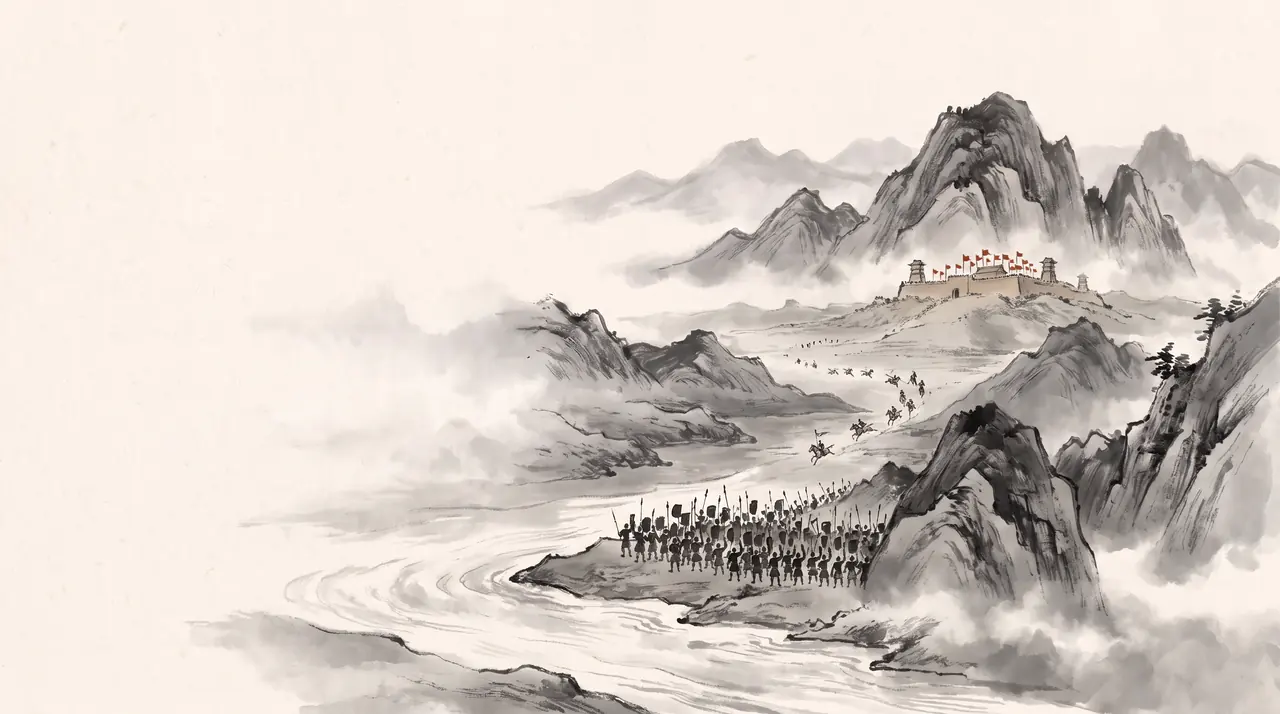
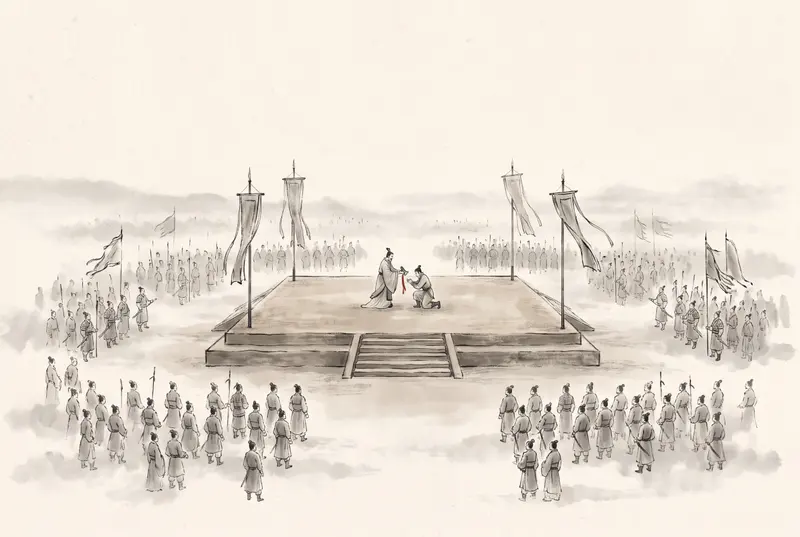
As a young man, the poor Han Xin lives off other people and even crawls between a bully's legs. When he deserts Liu Bang for want of a chance, Xiao He rides after him, calls him "peerless in the realm" and has him made supreme general. Later, against Zhao, he wins a great victory by drawing up his army with its back to a river.
This page has the scene "Han Xin: Peerless in the Realm" from this volume, not the whole volume.
Audio
The audio is synthetic speech.
Video
Passage 1
Original
淮陰侯韓信者,淮陰人也。始爲布衣時,貧無行,不得推擇爲吏,又不能治生商賈,常從人寄食飲,人多厭之者,常數從其下鄉南昌亭長寄食,數月,亭長妻患之,乃晨炊蓐食。食時信往,不爲具食。信亦知其意,怒,竟絕去。
Kundoku (Japanese reading)
淮陰侯韓信なる者は、淮陰の人なり。始め布衣為りし時、貧にして行い無く、推択せられて吏と為るを得ず。又た生を治め商賈すること能わず。常に人に従いて寄食飲す。人多く之を厭う者あり。常に数しば其の下郷の南昌の亭長に従いて寄食すること数月、亭長の妻之を患え、乃ち晨に炊ぎて蓐食す。食時に信往くも、為に食を具えず。信も亦た其の意を知り、怒りて、竟に絶ちて去る。
Japanese
淮陰侯の韓信は、淮陰の人である。はじめ庶民だったころ、貧しいうえに品行も良くなかったので、推薦されて役人になることもできず、かといって生計を立てたり商売をしたりすることもできなかった。いつも人の家に居候して食べさせてもらっていたので、嫌う者が多かった。あるとき、下郷の南昌の亭長のもとに何か月も居候していたところ、亭長の妻がこれを嫌がり、朝早く飯を炊いて、寝床の中で食べてしまった。食事の時刻に韓信が行っても、食事を出さなかった。韓信もその意図を察し、怒って、とうとう縁を切って立ち去った。
English
Han Xin, the Marquis of Huaiyin, was a man of Huaiyin. When he was still a commoner, he was poor and had no record of good conduct, so he could not be recommended for office; nor could he make a living or go into trade. He was always eating at other people's tables, and many people resented him. Once he spent several months eating at the house of the head of the Nanchang post station in Xiaxiang. The station head's wife grew tired of it, so she cooked early in the morning and ate in bed. When Han Xin came at mealtime, nothing was laid out for him. He understood what she meant, was angry, and left for good.
Notes (JA)
- 淮陰: 今の江蘇省淮安市のあたり。韓信の故郷で、のちに「淮陰侯」に封じられる。
- 布衣: 庶民。
- 無行: 品行が悪い、または評判になるような行いがない。
- 推択: 推薦され、選ばれること。
- 亭長: 宿場の長。劉邦もかつて亭長だった。
- 蓐食: 寝床で食事をすること。早く食べてしまい、韓信の分を残さないため。
Notes (EN)
- Huaiyin: around present-day Huai'an in Jiangsu. Han Xin's hometown; he was later made Marquis of Huaiyin.
- 布衣: a commoner.
- 無行: no record of good conduct (or simply bad conduct).
- 推擇: being recommended and chosen for office.
- 亭長: head of a post station. Liu Bang too had once held this post.
- 蓐食 ("ate in bed"): eating early so that nothing would be left for Han Xin.
Word notes
- commoner/ˈkɑmənər/noun
an ordinary person, not a noble or official
In the text: “When he was still a commoner”
Similar words: ordinary person — someone with no special rank · peasant — a poor farmer
- resent/rɪˈzɛnt/verb
to feel angry and bitter about someone or something
In the text: “many people resented him”
Similar words: dislike — not like; milder · begrudge — feel unwilling to give or allow
Passage 2
Original
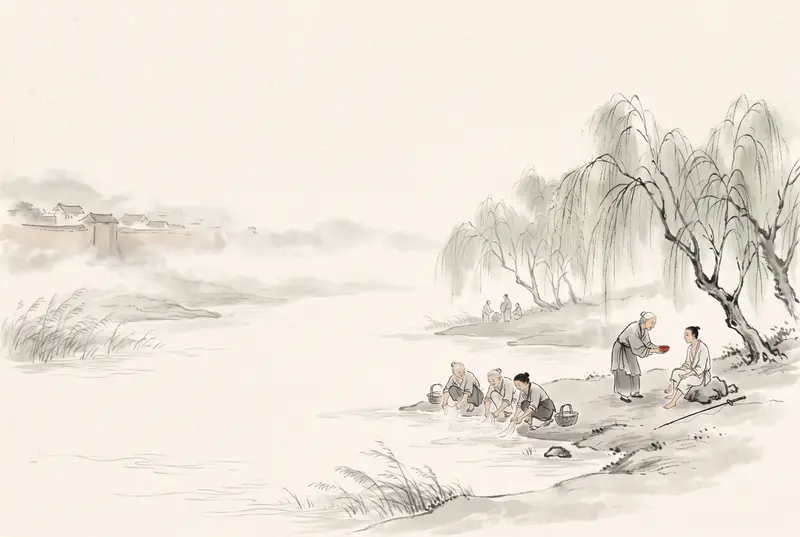
信釣於城下,諸母漂,有一母見信飢,飯信,竟漂數十日。信喜,謂漂母曰:『吾必有以重報母。』母怒曰:『大丈夫不能自食,吾哀王孫而進食,豈望報乎!』
Kundoku (Japanese reading)
信、城下に釣す。諸母漂す。一母有り、信の飢うるを見て、信に飯せしむること、漂を竟うるまで数十日。信喜び、漂母に謂いて曰く、「吾必ず以て重く母に報ゆること有らん」と。母怒りて曰く、「大丈夫自ら食う能わず。吾王孫を哀れみて食を進む。豈に報いを望まんや」と。
Japanese
韓信が城の下で釣りをしていると、女たちが川で綿をさらしていた。そのうちの一人の老婆が、韓信が飢えているのを見て、ご飯を食べさせ、綿さらしの仕事が終わるまで数十日、それを続けた。韓信は喜んで、老婆に言った。「必ずたっぷりとご恩返しをします。」老婆は怒って言った。「一人前の男が自分で食べていけないから、若様を気の毒に思って食べさせたのです。お礼など当てにするものですか。」
English
Han Xin was fishing below the city walls, where some women were rinsing silk floss in the river. One old woman saw that he was hungry and fed him, and went on feeding him for the several dozen days until the rinsing was done. Han Xin was pleased and said to her, "One day I will repay you richly." The old woman was angry and said, "A grown man who cannot feed himself! I gave you food because I pitied you, young sir. Do you think I want a reward?"
Notes (JA)
- 漂: 水で綿(または絹)をさらす仕事。
- 漂母: 綿をさらす老婆。のちに楚王となった韓信は、この老婆に千金を贈って恩を返す(この巻の後半)。
- 王孫: 若様。若者への敬称。
- 大丈夫: 一人前の男。
Notes (EN)
- 漂: rinsing silk floss (or cotton) in water.
- The old woman (漂母): when Han Xin later became King of Chu, he repaid her with a thousand pieces of gold (later in this volume).
- 王孫 ("young sir"): a polite way of addressing a young man.
- 大丈夫: a grown man, a man worthy of the name.
Idioms from this passage: The kindness of a single meal 一飯の恩
Word notes
- repay/rɪˈpeɪ/verb
to give something back to someone who helped you
In the text: “One day I will repay you richly.”
Similar words: pay back — the everyday phrase · reward — give something for good service
- pity/ˈpɪti/verb
to feel sorry for someone who is suffering
In the text: “I gave you food because I pitied you”
Similar words: feel sorry for — the everyday phrase · sympathize — share or understand someone's feelings
Passage 3
Original
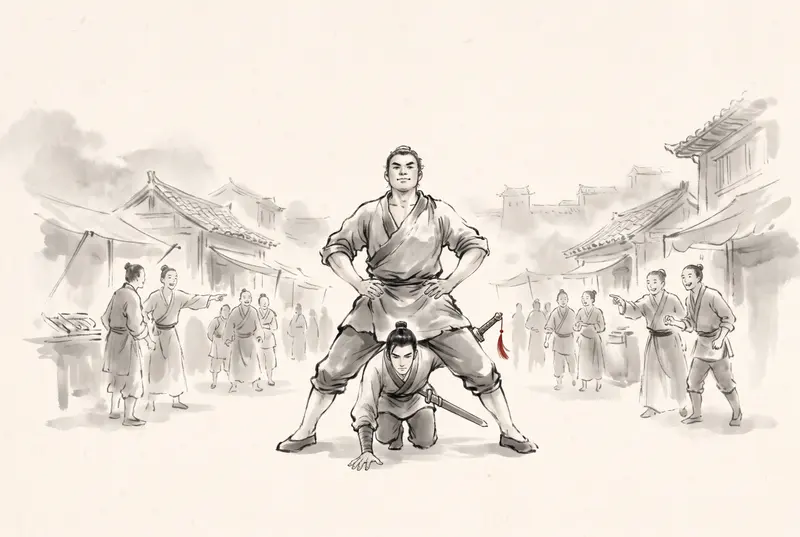
淮陰屠中少年有侮信者,曰:『若雖長大,好帶刀劍,中情怯耳。』眾辱之曰:『信能死,刺我;不能死,出我袴下。』於是信孰視之,俛出袴下,蒲伏。一市人皆笑信,以爲怯。
Kundoku (Japanese reading)
淮陰の屠中の少年に信を侮る者有り、曰く、「若長大にして、好んで刀剣を帯ぶと雖も、中情は怯なるのみ」と。衆にて之を辱めて曰く、「信能く死せば、我を刺せ。死する能わずんば、我が袴下より出でよ」と。是に於いて信孰視して、俛して袴下より出で、蒲伏す。一市の人皆信を笑い、以て怯と為す。
Japanese
淮陰の肉屋の若者の中に、韓信をばかにする者がいて、言った。「おまえは図体が大きく、好んで刀を帯びているが、内心は臆病なだけだ。」そして人前で辱めて言った。「韓信、死ぬ覚悟があるなら、おれを刺してみろ。死ねないのなら、おれの股の下をくぐれ。」韓信は相手をじっと見つめていたが、身をかがめて股の下をくぐり、腹ばいになって出た。市場じゅうの人が韓信を笑い、臆病者だと思った。
English
Among the young butchers of Huaiyin there was one who mocked Han Xin. "You may be tall and fond of wearing a sword," he said, "but inside you're a coward." And in front of a crowd he humiliated him: "If you're ready to die, stab me. If you're not, crawl out between my legs." Han Xin looked at him for a long while, then bent down, crawled out between his legs and lay on the ground. The whole marketplace laughed at Han Xin and thought him a coward.
Notes (JA)
- 袴下: 股の下。「韓信の股くぐり」として知られ、大きな目的のために一時の屈辱に耐えることのたとえになった。
- 孰視: 熟視、じっと見つめる。
- 蒲伏: 匍匐、腹ばいになる。
- のちの話: 楚王となった韓信は、この若者を呼んで中尉(警察の役人)に取り立て、「あのとき殺しても名は上がらなかった。だから耐えたのだ」と言った(この巻の後半)。
Notes (EN)
- 袴下 ("between my legs"): the famous story of Han Xin crawling between a bully's legs, a figure for bearing a moment's shame for a greater goal.
- 孰視: to look at someone long and hard.
- 蒲伏: to crawl, lying flat.
- Later: as King of Chu, Han Xin made this young man an officer of the guard, saying that killing him back then would have won no fame, which is why he endured it (later in this volume).
Idioms from this passage: Han Xin crawls between the legs 韓信の股くぐり
Word notes
- mock/mɑk/verb
to laugh at someone in an unkind way
In the text: “one who mocked Han Xin”
Similar words: tease — make fun of, often playfully · ridicule — make someone look foolish
- coward/ˈkaʊərd/noun
a person who is not brave
In the text: “inside you're a coward”
Similar words: weakling — someone without strength · chicken — informal; someone afraid to act
Passage 4
Original
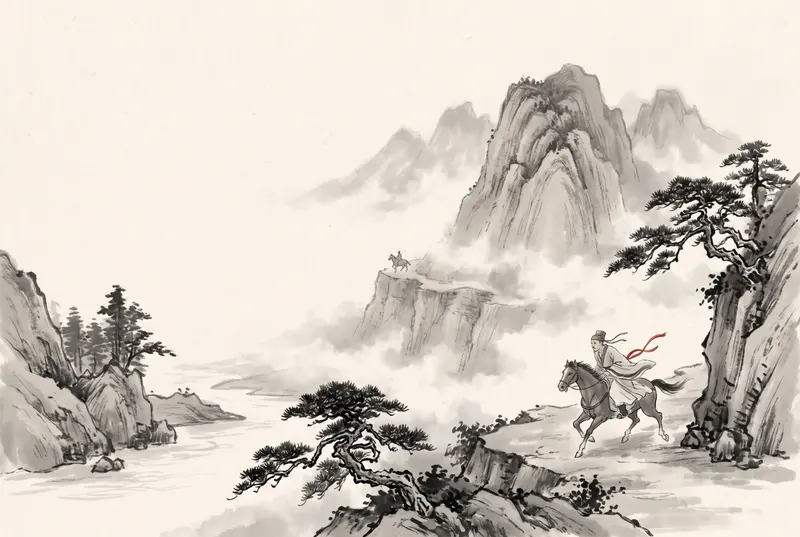
信數與蕭何語,何奇之。至南鄭,諸將行道亡者數十人,信度何等已數言上,上不我用,即亡。何聞信亡,不及以聞,自追之。
Kundoku (Japanese reading)
信数しば蕭何と語る。何之を奇とす。南鄭に至るに、諸将の行道に亡ぐる者数十人。信度るに、何等已に数しば上に言うも、上我を用いず、と。即ち亡ぐ。何、信の亡ぐるを聞き、以て聞するに及ばず、自ら之を追う。
Japanese
韓信は何度も蕭何と語り合い、蕭何は韓信を並外れた人物だと思った。(漢王の軍が)南鄭に着くまでに、途中で逃亡する将校が数十人も出た。韓信は、蕭何たちがもう何度も自分のことを漢王に推薦してくれたのに、漢王は自分を用いないと考えて、逃げ出した。蕭何は韓信が逃げたと聞くと、漢王に報告するひまもなく、自ら後を追った。
English
Han Xin talked with Xiao He many times, and Xiao He thought him remarkable. On the march to Nanzheng, dozens of officers deserted along the way. Han Xin reckoned that Xiao He and the others had already spoken to the king about him several times, and the king still would not use him, so he deserted too. When Xiao He heard that Han Xin had gone, he set off after him himself, without stopping to report it.
Notes (JA)
- この場面の前: 韓信は、はじめ項梁・項羽に仕えたが用いられず、漢王(劉邦)のもとへ移った。罪に問われて斬られかけたところを、夏侯嬰(滕公)に救われた。
- 蕭何: 劉邦の古くからの臣で、漢の丞相。
- 南鄭: 漢中の中心地(今の陝西省漢中市)。鴻門の会の後、劉邦は項羽によって、辺地の漢中の王に追いやられていた(前206年)。
- 上: 漢王の劉邦のこと。
Notes (EN)
- Before this scene: Han Xin first served Xiang Liang and Xiang Yu, who never used him, and then went over to the King of Han (Liu Bang). Charged with a crime, he was about to be beheaded when Xiahou Ying (Lord Teng) saved him.
- Xiao He: an old follower of Liu Bang and chancellor of Han.
- Nanzheng: the chief town of Hanzhong (present-day Hanzhong in Shaanxi). After the Feast at Hongmen, Xiang Yu had pushed Liu Bang off to be king of remote Hanzhong (206 BCE).
- 上 ("the king"): Liu Bang, the King of Han.
Word notes
- desert/dɪˈzɜrt/verb
to leave the army without permission
In the text: “dozens of officers deserted along the way”
Similar words: abandon — leave someone or something completely · run away — the everyday phrase
The noun desert (dry land) is stressed on the first syllable: /ˈdɛzərt/.
- remarkable/rɪˈmɑrkəbəl/adjective
unusual and worth noticing, especially in a good way
In the text: “Xiao He thought him remarkable”
Similar words: extraordinary — very unusual · outstanding — much better than others
Passage 5
Original
人有言上曰:『丞相何亡。』上大怒,如失左右手。居一二日,何來謁上,上且怒且喜,罵何曰:『若亡,何也?』何曰:『臣不敢亡也,臣追亡者。』上曰:『若所追者誰?』何曰:『韓信也。』上復罵曰:『諸將亡者以十數,公無所追;追信,詐也。』
Kundoku (Japanese reading)
人の上に言う有りて曰く、「丞相何亡げたり」と。上大いに怒り、左右の手を失うが如し。居ること一二日、何来たりて上に謁す。上且つ怒り且つ喜び、何を罵りて曰く、「若の亡げしは、何ぞや」と。何曰く、「臣敢えて亡げず。臣は亡ぐる者を追えり」と。上曰く、「若の追う所の者は誰ぞ」と。何曰く、「韓信なり」と。上復た罵りて曰く、「諸将の亡ぐる者十を以て数うるも、公追う所無し。信を追うとは、詐りなり」と。
Japanese
ある者が漢王に、「丞相の蕭何が逃げました」と告げた。漢王は激怒し、左右の手をもがれたように落胆した。一、二日して、蕭何が戻ってきて漢王にお目通りした。漢王は怒りつつも喜び、蕭何をののしって言った。「おまえが逃げたのは、どういうわけだ。」蕭何は言った。「私は逃げてなどおりません。逃げた者を追っていたのです。」漢王は言った。「おまえが追ったのは誰だ。」蕭何は言った。「韓信です。」漢王はまたののしって言った。「逃げた将校は十人単位でいたのに、おまえは誰も追わなかった。韓信を追ったなどと、うそだろう。」
English
Someone told the king, "Chancellor Xiao He has deserted." The king was furious; he felt as if he had lost his right and left hands. A day or two later Xiao He came back and appeared before the king. Angry and glad at once, the king cursed him: "Why did you run away?" Xiao He said, "I did not dare to run away. I was chasing someone who had." The king said, "Who were you chasing?" Xiao He said, "Han Xin." The king cursed him again: "Officers have deserted by the dozen and you chased none of them. Chasing Han Xin? You're lying."
Notes (JA)
- 丞相: 最高位の大臣。
- 如失左右手: 劉邦が、それほど蕭何を頼りにしていたことを示す。
- 且怒且喜: 怒りながらも、戻ってきたことを喜ぶ。
- 後世の名場面: この話は「蕭何、月下に韓信を追う」として、劇などで広く知られた(「月下」は後の脚色)。
Notes (EN)
- 丞相: chancellor, the highest minister.
- "As if he had lost his right and left hands": a sign of how much Liu Bang relied on Xiao He.
- 且怒且喜: angry, yet glad to have him back.
- A favorite scene: later plays made it famous as "Xiao He chases Han Xin under the moon" (the moon was added later).
Word notes
- curse/kɜrs/verb
to speak angrily to someone, using rude words
In the text: “the king cursed him”
Similar words: swear at — use bad words toward someone · scold — speak angrily to someone
Curse also means "to wish harm on someone by magic".
Passage 6
Original
何曰:『諸將易得耳。至如信者,國士無雙。王必欲長王漢中,無所事信;必欲爭天下,非信無所與計事者。顧王策安所決耳。』王曰:『吾亦欲東耳,安能郁郁久居此乎?』何曰:『王計必欲東,能用信,信即留;不能用,信終亡耳。』
Kundoku (Japanese reading)
何曰く、「諸将は得易きのみ。信の如き者に至りては、国士無双なり。王必ず長く漢中に王たらんと欲せば、信を事とする所無し。必ず天下を争わんと欲せば、信に非ずんば与に事を計る者無し。顧だ王の策安くに決するかのみ」と。王曰く、「吾も亦た東せんと欲するのみ。安くんぞ能く鬱鬱として久しく此に居らんや」と。何曰く、「王の計、必ず東せんと欲せば、能く信を用いば、信即ち留まらん。用うる能わずんば、信終に亡げんのみ」と。
Japanese
蕭何は言った。「ほかの将校なら、いくらでも手に入ります。しかし韓信ほどの者は、国じゅうに二人といない人物(国士無双)です。王が漢中の王のままでずっと満足なさるなら、韓信に用はありません。しかし天下を争おうとなさるなら、韓信をおいて、ともに大事をはかれる者はいません。王がどちらに決められるか、それ次第です。」漢王は言った。「私も東へ出たいのだ。どうしていつまでも、こんな所でくすぶっていられようか。」蕭何は言った。「王が必ず東へ出るおつもりなら、韓信を用いることができれば、韓信はとどまるでしょう。用いることができなければ、韓信はいずれ去ってしまいます。」
English
Xiao He said, "Officers are easy to come by. But a man like Han Xin has no equal in the whole realm. If Your Majesty means to stay king of Hanzhong forever, you have no use for Han Xin. But if you mean to contend for the empire, there is no one but Han Xin to plan it with. It all depends on which way Your Majesty decides." The king said, "I too want to go east. How could I bear to stay shut up here forever?" Xiao He said, "If Your Majesty is set on going east, then use Han Xin, and he will stay. If you cannot use him, he will leave in the end."
Notes (JA)
- 国士無双: 国じゅうで並ぶ者のない優れた人物。この場面から生まれた成語。
- 漢中: 秦嶺山脈の南の盆地。劉邦はここの「漢王」とされ、のちの王朝名「漢」はこれにちなむ。
- 東: 関中、さらには天下を目指して、東へ出ること。
- 郁郁: 鬱鬱と同じで、気がふさぐさま。
Notes (EN)
- 國士無雙 ("peerless in the realm"): a man with no equal in the whole country. The set phrase comes from this scene.
- Hanzhong: a basin south of the Qinling Mountains. Liu Bang was made "King of Han" here, and the later dynasty took its name from it.
- 東 ("east"): going east to win back the land within the passes and then the empire.
- 郁郁: the same as 鬱鬱, gloomy and frustrated.
Idioms from this passage: Unrivaled in the realm 国士無双
Word notes
- contend/kənˈtɛnd/verb
to compete or fight in order to win something
In the text: “if you mean to contend for the empire”
Similar words: compete — try to win against others · struggle — fight hard
Passage 7
Original
王曰:『吾爲公以爲將。』何曰:『雖爲將,信必不留。』王曰:『以爲大將。』何曰:『幸甚。』於是王欲召信拜之。何曰:『王素慢無禮,今拜大將如呼小兒耳,此乃信所以去也。王必欲拜之,擇良日,齋戒,設壇場,具禮,乃可耳。』王許之。諸將皆喜,人人各自以爲得大將。至拜大將,乃韓信也,一軍皆驚。
Kundoku (Japanese reading)
王曰く、「吾公の為に以て将と為さん」と。何曰く、「将と為すと雖も、信必ず留まらじ」と。王曰く、「以て大将と為さん」と。何曰く、「幸甚なり」と。是に於いて王信を召して之を拝せんと欲す。何曰く、「王素より慢にして礼無し。今大将を拝すること小児を呼ぶが如きのみ。此れ乃ち信の去る所以なり。王必ず之を拝せんと欲せば、良日を択び、斎戒し、壇場を設け、礼を具えて、乃ち可なるのみ」と。王之を許す。諸将皆喜び、人人各おの自ら以為えらく大将を得んと。大将を拝するに至りて、乃ち韓信なり。一軍皆驚く。
Japanese
漢王は言った。「おまえのために、韓信を将軍にしてやろう。」蕭何は言った。「将軍にしたくらいでは、韓信はとどまりません。」漢王は言った。「では大将にしよう。」蕭何は言った。「たいへん結構です。」そこで漢王は韓信を呼び寄せて任命しようとした。蕭何は言った。「王はふだんから傲慢で礼儀を欠いておられます。いま大将を任命するのに、子どもを呼びつけるようになさる。これこそ韓信が去っていく理由です。王がどうしても任命なさりたいなら、吉日を選び、身を清め、任命の壇を設けて、礼を尽くしてこそ、よろしいのです。」漢王はそれを承知した。将軍たちはみな喜び、それぞれ自分こそ大将に任命されると思っていた。ところが大将の任命式になってみると、それは韓信だったので、全軍がみな驚いた。
English
The king said, "For your sake I will make him a general." Xiao He said, "Even as a general, he will not stay." The king said, "Then I will make him supreme general." Xiao He said, "That is very good." So the king wanted to call Han Xin in and appoint him. Xiao He said, "Your Majesty has always been haughty and careless of courtesy. Now you would appoint a supreme general as if calling a little boy. That is exactly why Han Xin left. If you truly want to appoint him, choose an auspicious day, purify yourself, set up an altar and perform the full ceremony. Only then will it do." The king agreed. The generals were all delighted, each one thinking he would be made supreme general. When the appointment came, it was Han Xin, and the whole army was astonished.
Notes (JA)
- 大将: 全軍の総司令官。
- 慢: おごり、傲慢。劉邦の欠点として、『史記』に何度も書かれる(「完璧帰趙」の秦王の無礼とも比べられる)。
- 壇場: 任命の儀式を行う壇。「登壇拝将」の成語のもと。
- 一軍皆驚: 股くぐりで笑われた無名の男が、総大将になった驚き。
Notes (EN)
- 大將: supreme general, commander of the whole army.
- 慢 ("haughty"): a fault of Liu Bang's that the Shiji mentions again and again.
- 壇場: an altar platform for the appointment ceremony; the source of the phrase "mounting the altar to appoint a general".
- 一軍皆驚 ("the whole army was astonished"): an unknown man, once laughed at for crawling between a bully's legs, had become supreme general.
Word notes
- haughty/ˈhɔti/adjective
proud and unfriendly, treating others as less important
In the text: “Your Majesty has always been haughty and careless of courtesy”
Similar words: arrogant — thinking you are better than others · proud — can be good or bad
- auspicious/ɔˈspɪʃəs/adjective
showing signs of good luck; good for starting something
In the text: “choose an auspicious day”
Similar words: lucky — the everyday word · favorable — likely to bring success
Passage 8
Original
韓信使人閒視,知其不用,還報,則大喜,乃敢引兵遂下。未至井陘口三十里,止舍。夜半傳發,選輕騎二千人,人持一赤幟,從閒道萆山而望趙軍,誡曰:『趙見我走,必空壁逐我,若疾入趙壁,拔趙幟,立漢赤幟。』令其裨將傳飱,曰:『今日破趙會食!』諸將皆莫信,詳應曰:『諾。』謂軍吏曰:『趙已先據便地爲壁,且彼未見吾大將旗鼓,未肯擊前行,恐吾至阻險而還。』信乃使萬人先行,出,背水陳。趙軍望見而大笑。
Kundoku (Japanese reading)
韓信、人をして間視せしめ、其の用いられざるを知り、還りて報ずれば、則ち大いに喜び、乃ち敢えて兵を引きて遂に下る。未だ井陘口に至らざること三十里、止まりて舎す。夜半、伝えて発し、軽騎二千人を選び、人ごとに一赤幟を持たしめ、間道より山に萆れて趙軍を望ましめ、誡めて曰く、「趙我の走るを見ば、必ず壁を空しくして我を逐わん。若疾く趙の壁に入り、趙の幟を抜き、漢の赤幟を立てよ」と。其の裨将をして飱を伝えしめて曰く、「今日趙を破りて会食せん」と。諸将皆信ずる莫く、詳りて応えて曰く、「諾」と。軍吏に謂いて曰く、「趙已に先に便地に拠りて壁を為す。且つ彼未だ吾が大将の旗鼓を見ざれば、未だ前行を撃つを肯んぜず。吾の阻険に至りて還らんことを恐るればなり」と。信乃ち万人をして先に行かしめ、出でて、水を背にして陳す。趙軍望見して大いに笑う。
Japanese
韓信は人をやってひそかに探らせ、趙の陣営で(広武君の策が)用いられなかったことを知ると、報告を聞いて大喜びし、思い切って兵を率いて(井陘の険しい道を)下っていった。井陘の入口まであと三十里のところで止まって野営した。夜中に命令を伝えて出発させ、身軽な騎兵二千人を選んで、一人一本ずつ赤い旗を持たせ、間道を通り、山陰に隠れながら趙軍を見張らせて、言い含めた。「趙軍は、わが軍が逃げるのを見れば、必ず陣地を空にして追ってくる。そのとき、おまえたちはすばやく趙の陣地に入り、趙の旗を抜き、漢の赤い旗を立てよ。」また副将に軽い食事を配らせて、「今日、趙を破ってから、皆で食事をしよう」と言った。将軍たちは誰も本気にせず、うわべだけ「承知しました」と答えた。韓信は軍吏に言った。「趙はすでに先に有利な地を占めて陣地を築いている。それに、わが大将の旗と太鼓を見ないうちは、先頭の部隊を攻撃しようとはしないだろう。わが軍が険しい所まで来て、引き返してしまうのを恐れるからだ。」そこで韓信は一万人を先に行かせ、(井陘を)出て、川を背にして陣を敷かせた。趙軍はそれを遠くから見て、大笑いした。
English
Han Xin sent men to spy in secret, and learned that the enemy had not taken Lord Guangwu's advice. When they reported back, he was overjoyed and boldly led his army down the pass. Thirty li short of the mouth of the Jingxing Pass he halted and made camp. At midnight he sent out orders. He picked two thousand light horsemen, gave each of them a red flag, and sent them by a side road to hide in the hills and watch the Zhao army. He told them, "When Zhao sees us run, they will empty their fort to chase us. Then go in fast, pull down the Zhao flags and set up the red flags of Han." He had his lieutenants hand out a light meal, saying, "Today we beat Zhao, and then we eat together!" None of the generals believed it, but they answered, "Yes, sir," as if they did. He told his officers, "Zhao has already taken a good position and built its fort. And until they see the flag and drums of our supreme general, they will not attack our vanguard, for fear that we will turn back at the narrow pass." Then he sent ten thousand men ahead, out of the pass, and drew them up with their backs to the river. The Zhao army saw this from afar and laughed out loud.
Notes (JA)
- 背景: 前204年、韓信は張耳とともに数万の兵で趙を攻めた。趙の参謀の広武君(李左車)は、井陘の狭い道で漢軍の補給を断つ策を進めたが、趙の総大将の成安君(陳余)はこれを退けた。
- 井陘: 太行山脈を越える険しい道。今の河北省井陘県のあたり。
- 赤幟: 漢の赤い旗。漢は赤を尊んだ。
- 会食: 「勝ってから食事をしよう」という、勝利への自信。
- 背水陳: 川を背にして陣を敷くこと。兵法では退路のない悪い形とされ、だから趙軍は笑った。成語「背水の陣」のもと。
Notes (EN)
- Background: in 204 BCE Han Xin and Zhang Er attacked Zhao with a few tens of thousands of men. Zhao's adviser, Lord Guangwu (Li Zuoche), urged cutting off the Han supply line in the narrow Jingxing road, but Zhao's commander, the Lord of Chengan (Chen Yu), refused.
- Jingxing: a steep road across the Taihang Mountains, around present-day Jingxing County in Hebei.
- Red flags: the Han honored the color red.
- 會食 ("eat together"): confidence that the meal will come after the victory.
- 背水陳 ("backs to the river"): a formation with no line of retreat, considered a blunder by the art of war, which is why Zhao laughed. The source of the phrase "fighting with one's back to the river (water)".
Idioms from this passage: Fighting with the river at one's back 背水の陣
Word notes
- spy/spaɪ/verb
to watch an enemy secretly to get information
In the text: “Han Xin sent men to spy in secret”
Similar words: scout — go ahead to look at the land or enemy · watch — look at carefully
- vanguard/ˈvænˌɡɑrd/noun
the front part of an army
In the text: “they will not attack our vanguard”
Similar words: front line — the soldiers nearest the enemy · advance guard — troops sent ahead of the main army
- from afar/frəm əˈfɑr/phrase
from a long distance away
In the text: “The Zhao army saw this from afar”
Similar words: from a distance — the everyday phrase · far off — at a great distance
Passage 9
Original
平旦,信建大將之旗鼓,鼓行出井陘口,趙開壁擊之,大戰良久。於是信、張耳詳弃鼓旗,走水上軍。水上軍開入之,復疾戰。趙果空壁爭漢鼓旗,逐韓信、張耳。韓信、張耳已入水上軍,軍皆殊死戰,不可敗。
Kundoku (Japanese reading)
平旦、信大将の旗鼓を建て、鼓行して井陘口を出づ。趙壁を開きて之を撃ち、大いに戦うこと良久し。是に於いて信・張耳、詳りて鼓旗を棄て、水上の軍に走る。水上の軍開きて之を入れ、復た疾く戦う。趙果たして壁を空しくして漢の鼓旗を争い、韓信・張耳を逐う。韓信・張耳已に水上の軍に入れば、軍皆殊死して戦い、敗るべからず。
Japanese
夜明けに、韓信は大将の旗と太鼓を立て、太鼓を打ち鳴らしながら井陘の入口から出ていった。趙は陣地を開いて攻撃してきて、長いあいだ激しく戦った。そこで韓信と張耳は、わざと太鼓と旗を捨てて、川岸の陣へ逃げこんだ。川岸の陣は門を開いて二人を迎え入れ、ふたたび激しく戦った。趙軍は案の定、陣地を空にして漢の太鼓や旗を奪い合い、韓信と張耳を追ってきた。韓信と張耳がすでに川岸の陣に入ると、兵たちはみな決死の覚悟で戦ったので、打ち破られることはなかった。
English
At dawn Han Xin raised the flag and drums of the supreme general and marched out of the mouth of the pass with drums beating. Zhao opened its fort and attacked, and they fought hard for a long time. Then Han Xin and Zhang Er pretended to abandon their drums and flags and ran to the army by the river. The army by the river opened its ranks to take them in, and fought fiercely again. Just as expected, Zhao emptied its fort to fight over the Han drums and flags and chased Han Xin and Zhang Er. Once Han Xin and Zhang Er were inside the army by the river, the soldiers all fought to the death and could not be beaten.
Notes (JA)
- 平旦: 夜明け。
- 張耳: 韓信とともに趙を攻めた将。のちに趙王となる。
- 詳: 「佯」と同じで、いつわる、ふりをする。
- 殊死: 死を覚悟して。退路がないので、兵は必死に戦うしかなかった。
Notes (EN)
- 平旦: dawn.
- Zhang Er: the general who attacked Zhao with Han Xin. He later became King of Zhao.
- 詳: used for 佯, "to pretend".
- 殊死 ("to the death"): with no way back, the soldiers had no choice but to fight for their lives.
Word notes
- abandon/əˈbændən/verb
to leave something behind and not come back for it
In the text: “pretended to abandon their drums and flags”
Similar words: leave behind — the everyday phrase · give up — stop trying to keep
- fiercely/ˈfɪrsli/adverb
with great strength and energy
In the text: “fought fiercely again”
Similar words: violently — with great force · hard — with a lot of effort
Passage 10
Original
信所出奇兵二千騎,共候趙空壁逐利,則馳入趙壁,皆拔趙旗,立漢赤幟二千。趙軍已不勝,不能得信等,欲還歸壁,壁皆漢赤幟,而大驚,以爲漢皆已得趙王將矣,兵遂亂,遁走,趙將雖斬之,不能禁也。於是漢兵夾擊,大破虜趙軍,斬成安君泜水上,禽趙王歇。
Kundoku (Japanese reading)
信の出だす所の奇兵二千騎、共に趙の壁を空しくして利を逐うを候い、則ち馳せて趙の壁に入り、皆趙の旗を抜き、漢の赤幟二千を立つ。趙軍已に勝たず、信等を得る能わず、還りて壁に帰らんと欲すれば、壁は皆漢の赤幟なり。而して大いに驚き、以為えらく漢皆已に趙王の将を得たり、と。兵遂に乱れて遁走す。趙将之を斬ると雖も、禁ずる能わざるなり。是に於いて漢兵夾撃し、大いに趙軍を破虜し、成安君を泜水の上に斬り、趙王歇を禽にす。
Japanese
韓信が送り出しておいた奇襲の騎兵二千は、趙軍が陣地を空にして手柄を追うのを待ち構えていて、すかさず趙の陣地に駆けこみ、趙の旗をすべて抜き取り、漢の赤い旗を二千本立てた。趙軍は勝てず、韓信たちを捕らえることもできないまま、陣地へ引き返そうとすると、陣地は一面に漢の赤い旗になっていた。趙兵はひどく驚き、漢がすでに趙王や将軍たちを捕らえてしまったと思いこみ、軍は乱れて逃げ出した。趙の将軍が逃げる兵を斬っても、止めることはできなかった。そこで漢軍は挟み撃ちにして、趙軍を大いに破って捕虜にし、成安君を泜水のほとりで斬り、趙王の歇を生け捕りにした。
English
Han Xin's two thousand horsemen, sent out as a surprise force, had been waiting for Zhao to empty its fort and chase after gain. Now they galloped into the Zhao fort, pulled down every Zhao flag and set up two thousand red flags of Han. The Zhao army could not win and could not catch Han Xin and the others. When it tried to go back to its fort, the walls were covered with red Han flags. The men were terrified, thinking that Han had already captured the King of Zhao and his generals, and the army broke and fled. The Zhao generals cut some of them down but could not stop them. Then the Han troops attacked from both sides, crushed the Zhao army and took many prisoners. They beheaded the Lord of Chengan by the Zhi River and captured Xie, the King of Zhao.
Notes (JA)
- 奇兵: 不意をつくための別動隊。
- 夾撃: 挟み撃ち。前は川岸の陣、後ろは赤い旗の陣地に挟まれた。
- 成安君: 陳余。趙の総大将で、広武君の策を退けた人物。
- 泜水: 今の河北省を流れる川。
- 趙王歇: 趙の王。名が歇。
Notes (EN)
- 奇兵: a surprise force sent out to strike unexpectedly.
- 夾擊 ("from both sides"): Zhao was caught between the army by the river and its own fort, now under red flags.
- The Lord of Chengan: Chen Yu, Zhao's commander, who had rejected Lord Guangwu's plan.
- The Zhi River: a river in present-day Hebei.
- Xie: the personal name of the King of Zhao.
Word notes
- terrified/ˈtɛrəˌfaɪd/adjective
extremely frightened
In the text: “The men were terrified”
Similar words: scared — afraid; informal · panicked — so afraid you cannot think clearly
- capture/ˈkæptʃər/verb
to catch and take as a prisoner
In the text: “had already captured the King of Zhao”
Similar words: seize — take by force · take prisoner — catch someone in war
Passage 11
Original
信乃令軍中毋殺廣武君,有能生得者購千金。於是有縛廣武君而致戲下者,信乃解其縛,東鄉坐,西鄉對,師事之。諸將效首虜,(休)畢賀,因問信曰:『兵法右倍山陵,前左水澤,今者將軍令臣等反背水陳,曰破趙會食,臣等不服。然竟以勝,此何術也?』
Kundoku (Japanese reading)
信乃ち軍中に令して広武君を殺す毋からしめ、能く生得する者有らば千金を購う、と。是に於いて広武君を縛して戯下に致す者有り。信乃ち其の縛を解き、東郷して坐せしめ、西郷して対し、之に師事す。諸将首虜を效し、畢わりて賀す。因りて信に問いて曰く、「兵法に、山陵を右にし背にし、水沢を前にし左にす、と。今者将軍臣等をして反って水を背にして陳せしめ、趙を破りて会食せんと曰う。臣等服せず。然れども竟に以て勝てり。此れ何の術ぞや」と。
Japanese
韓信は軍中に命じて、広武君を殺してはならない、生け捕りにした者には千金を与える、と告げた。すると広武君を縛って本陣に連れてくる者があった。韓信はその縄を解き、広武君を東向きの上座に座らせ、自分は西向きに向かい合って、師として仕えた。将軍たちは討ち取った首と捕虜を差し出し、それが終わると勝利を祝い、韓信に尋ねた。「兵法では、山や丘を右と背に、川や沢を前と左にせよと言います。ところが今回、将軍は私たちに反対に川を背にして陣を敷かせ、趙を破ってから食事をしようと言われた。私たちは納得できませんでした。それなのに、結局勝ちました。これはどういう戦術なのですか。」
English
Han Xin ordered his army not to kill Lord Guangwu, and offered a thousand pieces of gold to whoever took him alive. Someone soon brought Lord Guangwu to headquarters in bonds. Han Xin untied him, seated him facing east in the place of honor, sat facing west across from him, and treated him as his teacher. The generals presented the heads and prisoners they had taken, and when they had finished, they offered their congratulations. Then they asked Han Xin, "The art of war says to keep hills and mountains on your right and at your back, and water and marshes in front and on your left. This time, General, you made us do the opposite and draw up with our backs to the river, and you said we would eat together after beating Zhao. We were not convinced. Yet in the end we won. What tactic was this?"
Notes (JA)
- 広武君: 李左車。趙の参謀で、漢軍の補給を断つ策を進めたが、用いられなかった人物。
- 東郷坐: 東向きの席は上座(「鴻門の会」の座席と同じ)。敵の参謀を師として敬った。
- 效首虜: 討ち取った首と捕虜を差し出すこと。
- (休): このテキストで、校訂者が不要な字として括弧に入れた字。読まない。
- 兵法: 当時の兵法の定石。山を背に、水を前に置くのが良いとされた。
Notes (EN)
- Lord Guangwu: Li Zuoche, Zhao's adviser, who had urged cutting off the Han supplies but was not listened to.
- Facing east: the seat of honor (as in the seating at the Feast at Hongmen). Han Xin honored the enemy's adviser as his teacher.
- 效首虜: presenting the heads and prisoners taken in battle.
- (休): a character the editor of this text marked as superfluous; it is not read.
- The art of war: the rule of the day was to keep hills at your back and water in front.
Word notes
- convinced/kənˈvɪnst/adjective
completely sure that something is true
In the text: “We were not convinced.”
Similar words: sure — certain · persuaded — made to agree
- tactic/ˈtæktɪk/noun
a planned way of fighting or of getting what you want
In the text: “What tactic was this?”
Similar words: strategy — a large, long-term plan · maneuver — a skillful movement of troops
Passage 12
Original
信曰:『此在兵法,顧諸君不察耳。兵法不曰「陷之死地而後生,置之亡地而後存」?且信非得素拊循士大夫也,此所謂「驅市人而戰之」,其勢非置之死地,使人人自爲戰;今予之生地,皆走,寧尚可得而用之乎!』諸將皆服曰:『善。非臣所及也。』
Kundoku (Japanese reading)
信曰く、「此れ兵法に在り。顧だ諸君察せざるのみ。兵法に曰わずや、『之を死地に陥れて而る後に生き、之を亡地に置きて而る後に存す』と。且つ信は素より士大夫を拊循するを得たるに非ず。此れ所謂『市人を駆りて之を戦わしむ』なり。其の勢い、之を死地に置き、人人をして自ら戦いを為さしむるに非ずんばあらず。今之に生地を予えば、皆走らん。寧くんぞ尚お得て之を用うべけんや」と。諸将皆服して曰く、「善し。臣の及ぶ所に非ざるなり」と。
Japanese
韓信は言った。「これも兵法にある。ただ諸君が気づかなかっただけだ。兵法に、『兵を死地に陥れてこそ生き残り、亡びの地に置いてこそ存続する』とあるではないか。それに、私は普段から兵士たちを手なずけてきたわけではない。これはいわゆる『市場の人々を駆り立てて戦わせる』ようなものだ。それでは、兵を死地に置いて、一人ひとりが自分のために戦うようにさせるしかない。もし逃げ道のある所に置けば、みな逃げてしまう。それでどうして兵として使えようか。」将軍たちはみな感服して言った。「なるほど。私どもの及ぶところではありません。」
English
Han Xin said, "This is in the art of war; you simply did not notice. Does it not say, 'Throw them into deadly ground, and they will live; put them where there is no escape, and they will survive'? Besides, these were not soldiers I had long trained and cared for. This was what they call 'driving people from the marketplace into battle'. In that situation there was nothing to do but put them on deadly ground, so that every man would fight for his own life. Had I given them ground with a way out, they would all have run. How could I have used them then?" The generals were all won over and said, "Excellent. That is beyond us."
Notes (JA)
- 陥之死地而後生: 『孫子』九地篇の言葉に近い。退路のない所に置かれた兵は、死に物狂いで戦う。
- 拊循: なでいたわる。日ごろから兵を手なずけること。
- 市人: 市場の人々。訓練されていない寄せ集めの兵のたとえ。
- 背水の陣: この戦いから、「後のない状況に身を置いて、全力を尽くすこと」のたとえになった。
- この後の韓信: 斉を平定して斉王となり、垓下で項羽を包囲する(巻7「四面楚歌」)。しかし天下が定まると力を恐れられ、最後は呂后に殺された。
Notes (EN)
- 陷之死地而後生: close to a line in the Sunzi (the "Nine Grounds" chapter). Soldiers with no way out fight like men possessed.
- 拊循: to soothe and care for, to win the loyalty of soldiers over time.
- 市人 ("people from the marketplace"): untrained, scraped-together troops.
- "Back to the river": from this battle the phrase came to mean putting oneself in a position with no retreat and giving everything.
- Han Xin later: he conquered Qi, became King of Qi, and led the encirclement of Xiang Yu at Gaixia ("Songs of Chu on Every Side", volume 7). But once the empire was won he was feared for his power, and in the end Empress Lü had him killed.
Word notes
- survive/sərˈvaɪv/verb
to stay alive through danger
In the text: “they will survive”
Similar words: live through — come through a hard time · endure — last through difficulty
- win over/ˌwɪn ˈoʊvər/phrasal verb
to persuade someone to agree with or support you
In the text: “The generals were all won over”
Similar words: convince — make someone believe · persuade — make someone agree to do something