Hereditary Houses · Vol. 48
Hereditary House of Chen She 陳涉世家
Chen Sheng's Uprising: The Ambition of the Swan 鴻鵠之志
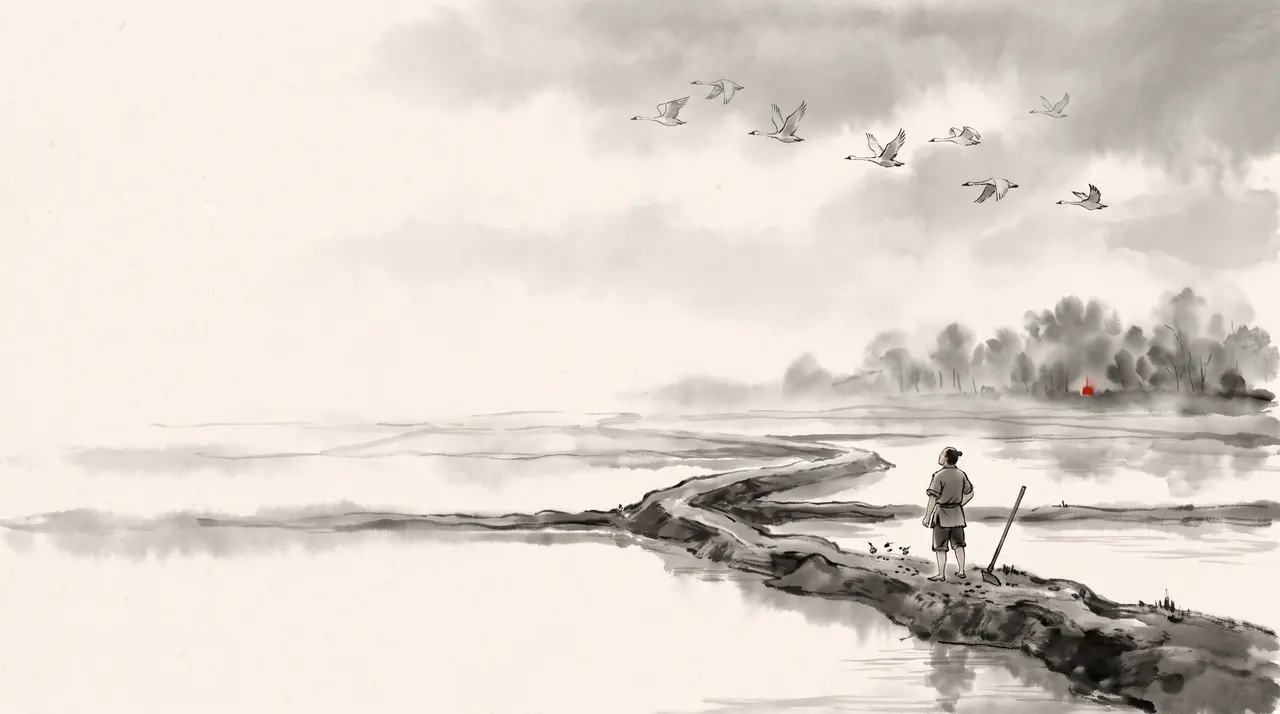
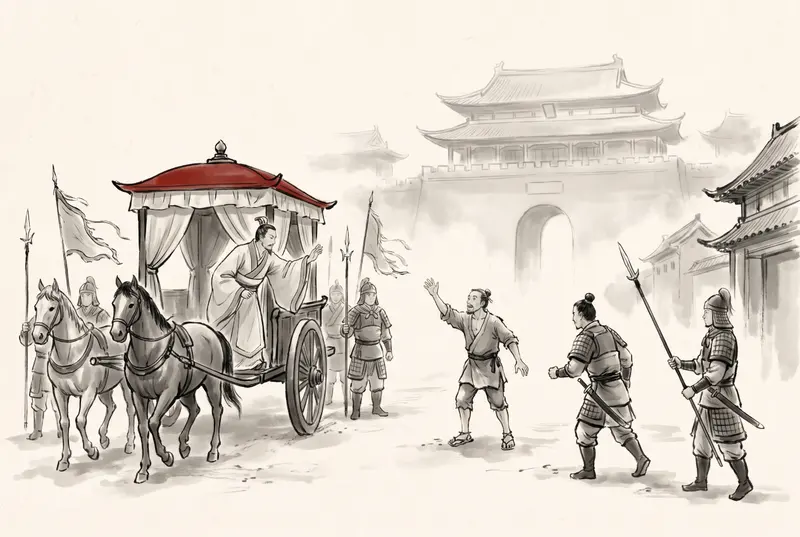
As a young hired plowman, Chen Sheng declares, "How can swallows and sparrows know the ambitions of the swan?" In the first year of the Second Emperor of Qin, on their way to guard the frontier, he and Wu Guang are held up by heavy rain; late for the deadline, they all face death. "Kings, lords, generals and ministers: are they a breed apart?" he asks, and the men rise with him. Often called the first great peasant revolt in history, it lasted only six months for Chen Sheng himself, but lit the fire that brought down Qin.
This page has the scene "Chen Sheng's Uprising: The Ambition of the Swan" from this volume, not the whole volume.
Audio
The audio is synthetic speech.
Video
Passage 1
Original
陳勝者,陽城人也,字涉。吳廣者,陽夏人也,字叔。陳涉少時,嘗與人傭耕。輟耕之壟上,悵恨久之,曰:「苟富貴,無相忘。」傭者笑而應曰:「若為庸耕,何富貴也?」陳涉太息曰:「嗟乎,燕雀安知鴻鵠之志哉!」
Kundoku (Japanese reading)
陳勝なる者は、陽城の人なり、字は渉。呉広なる者は、陽夏の人なり、字は叔。陳渉少き時、嘗て人と傭耕す。耕すを輟めて壟上に之き、悵恨すること之を久しうして、曰く、「苟くも富貴とならば、相忘るること無からん」と。傭者笑いて応えて曰く、「若は庸耕を為す、何ぞ富貴ならんや」と。陳渉太息して曰く、「嗟乎、燕雀安くんぞ鴻鵠の志を知らんや」と。
Japanese
陳勝は陽城の人で、字を渉という。呉広は陽夏の人で、字を叔という。陳渉は若いころ、人に雇われて、ほかの者たちと畑を耕していた。あるとき耕す手を止めて畦に上がり、長いあいだ悔しそうに嘆いていたが、やがて言った。「もし金持ちになって出世しても、お互い忘れないようにしよう」。雇われ仲間は笑って答えた。「おまえは雇われて畑を耕している身だ。どうして金持ちになどなれるものか」。陳渉は深くため息をついて言った。「ああ、燕や雀のような小鳥に、どうして鴻や鵠のような大きな鳥の志がわかろうか」。
English
Chen Sheng was a man of Yangcheng; his courtesy name was She. Wu Guang was a man of Yangxia; his courtesy name was Shu. When Chen She was young, he once worked in the fields with others as a hired laborer. He stopped plowing, went up onto a ridge between the fields, and stood there a long while, bitter and resentful. Then he said, "If any of us becomes rich and noble, let us not forget one another." The other laborers laughed and answered, "You are a hired plowman. How could you ever become rich and noble?" Chen She heaved a deep sigh and said, "Alas! How can swallows and sparrows know the ambitions of the swan?"
Notes (JA)
- 陳勝・陳渉: 名は勝、字(あざな)は渉。『史記』は「陳勝」と「陳渉」の両方で呼ぶ。王になってからは「陳王」とも呼ばれる。
- 陽城・陽夏: どちらも秦の県。陽夏は今の河南省太康県。陽城の位置には諸説ある(河南省の登封市のあたり、あるいは安徽省・河南省の南部とする説など)。
- 世家: 本来は諸侯の家の歴史を記す部分。農民出身の陳勝を世家に入れたのは、秦を倒すきっかけを作った功績を重く見たためとされる。
- 傭耕: 雇われて田畑を耕すこと。
- 苟富貴、無相忘: 「もし富貴になったら、お互いに忘れまい」。
- 燕雀安知鴻鵠之志哉: 「燕雀安くんぞ鴻鵠の志を知らんや」。小人物には大人物の大きな志はわからない、という意味の故事成語になった。鴻はおおとり、鵠はくぐい(白鳥)で、どちらも大きく高く飛ぶ鳥。
Notes (EN)
- Chen Sheng / Chen She: his personal name was Sheng and his courtesy name She. The Shiji uses both, and after he becomes king it also calls him the King of Chen.
- Yangcheng, Yangxia: Qin counties. Yangxia is present-day Taikang in Henan; the location of Yangcheng is debated.
- Hereditary House: this part of the Shiji is meant for the houses of the feudal lords. Putting a peasant like Chen Sheng here is usually explained as Sima Qian's way of honoring the man who started the fall of Qin.
- 傭耕: working in the fields for hire.
- 苟富貴,無相忘: "if one of us becomes rich and noble, let us not forget each other".
- 燕雀安知鴻鵠之志哉: the source of a famous saying: small minds cannot understand great ambitions. 鴻 and 鵠 are large birds that fly high, such as wild geese and swans.
Idioms from this passage: How can sparrows know the aims of a swan? 燕雀安くんぞ鴻鵠の志を知らんや
Word notes
- resentful/rɪˈzɛntfəl/adjective
feeling angry because life seems unfair
In the text: “bitter and resentful”
Similar words: bitter — angry and hurt for a long time · indignant — angry at unfair treatment
- ambition/æmˈbɪʃən/noun
a strong wish to achieve something great
In the text: “the ambitions of the swan”
Similar words: aim — a goal; neutral · aspiration — formal; a hope to achieve something
Passage 2
Original
二世元年七月,發閭左適戍漁陽,九百人屯大澤鄉。陳勝、吳廣皆次當行,為屯長。會天大雨,道不通,度已失期。失期,法皆斬。陳勝、吳廣乃謀曰:「今亡亦死,舉大計亦死,等死,死國可乎?」
Kundoku (Japanese reading)
二世の元年七月、閭左を発して漁陽に適戍せしむ。九百人、大沢郷に屯す。陳勝・呉広皆次として当に行くべく、屯長と為る。会たま天大いに雨ふり、道通ぜず、度るに已に期を失う。期を失わば、法として皆斬らる。陳勝・呉広乃ち謀りて曰く、「今亡ぐるも亦た死し、大計を挙ぐるも亦た死す。等しく死せば、国に死するは可ならんか」と。
Japanese
二世皇帝の元年(前209年)七月、村の門の左側に住む貧しい人々を集めて、北方の漁陽の守備に送ることになった。そのうち九百人が大沢郷に宿営した。陳勝と呉広はどちらも順番に当たって行くことになっており、屯長(隊の長)になっていた。ちょうど大雨が降って道が通れなくなり、日数を数えると、もう期日には間に合わなかった。期日に遅れれば、法律ではみな斬られる。そこで陳勝と呉広は相談して言った。「いま逃げても死ぬ、大きなことを起こしても死ぬ。どうせ同じく死ぬのなら、国を立てるために死ぬのはどうだろう」。
English
In the seventh month of the first year of the Second Emperor, the poor who lived on the left side of the village gates were called up and sent to guard Yuyang, and nine hundred of them camped at Dazexiang. Chen Sheng and Wu Guang had both been chosen in turn to go, and served as squad leaders. Just then heavy rain fell and the roads were cut, and they reckoned that they had already missed the deadline. By law, missing the deadline meant death for them all. So Chen Sheng and Wu Guang made a plan together. "If we run away now, we die. If we start a great uprising, we also die. Since we die either way, why not die fighting for a kingdom?"
Notes (JA)
- 二世元年: 秦の二世皇帝(胡亥)の元年、前209年。始皇帝が死んだ翌年(巻6「始皇帝の死と秦の滅亡」を参照)。
- 閭左: 村の門(閭)の左側。貧しい人々が住んだところとされる。
- 適戍: 罪や身分によって辺境の守りに送られること。
- 漁陽: 今の北京市密雲区のあたり。北方の守りの拠点。
- 大沢郷: 今の安徽省宿州市のあたり。蜂起の地。
- 屯長: 宿営する隊の長。
- 失期、法皆斬: 期日に遅れれば、全員が斬られる。秦の法のきびしさを表す言葉としてよく引かれる。ただし、出土した秦の法律の文書には、遅れた日数に応じた叱責や罰金の規定があり、この記述をそのまま事実とみてよいかには議論がある。
- 死国: 国(を立てること)のために死ぬ。
Notes (EN)
- First year of the Second Emperor: 209 BCE, the year after the First Emperor died (see Volume 6, "The Fall of Qin").
- 閭左 ("left of the village gate"): the poor, who are said to have lived there.
- 適戍: being sent to guard the frontier as a punishment or because of one's low status.
- Yuyang: near Miyun in present-day Beijing, a base for the northern frontier.
- Dazexiang: near Suzhou in present-day Anhui, where the uprising began.
- 失期,法皆斬 ("miss the deadline and by law all are beheaded"): often quoted to show how harsh Qin law was. But Qin legal texts found in tombs give only reprimands and fines for being late, so whether this was really the law is debated.
- 死國: to die for a state, here meaning to found a new one.
Word notes
- deadline/ˈdɛdˌlaɪn/noun
the time by which something must be done
In the text: “they had already missed the deadline”
Similar words: time limit — the most time allowed · due date — the date something is expected
- squad/skwɑd/noun
a small group of soldiers
In the text: “served as squad leaders”
Similar words: unit — a group in an army · team — a group working together
- uprising/ˈʌpˌraɪzɪŋ/noun
a rebellion by ordinary people against those in power
In the text: “If we start a great uprising”
Similar words: rebellion — fighting against a government · revolt — a sudden rebellion
Passage 3
Original
陳勝曰:「天下苦秦久矣。吾聞二世少子也,不當立,當立者乃公子扶蘇。扶蘇以數諫故,上使外將兵。今或聞無罪,二世殺之。百姓多聞其賢,未知其死也。項燕為楚將,數有功,愛士卒,楚人憐之。或以為死,或以為亡。今誠以吾眾詐自稱公子扶蘇、項燕,為天下唱,宜多應者。」吳廣以為然。
Kundoku (Japanese reading)
陳勝曰く、「天下秦に苦しむこと久し。吾聞く、二世は少子なり、当に立つべからず、当に立つべき者は乃ち公子扶蘇なりと。扶蘇は数しば諫むるを以ての故に、上、外に兵を将いしむ。今或いは聞く、罪無きに、二世之を殺すと。百姓多く其の賢を聞くも、未だ其の死を知らざるなり。項燕は楚の将為り。数しば功有り、士卒を愛す。楚人之を憐れむ。或いは以て死せりと為し、或いは以て亡げたりと為す。今誠に吾が衆を以て詐りて公子扶蘇・項燕と自称し、天下の唱えを為さば、宜しく応ずる者多かるべし」と。呉広以て然りと為す。
Japanese
陳勝は言った。「天下の人々は、長いあいだ秦に苦しめられてきた。聞くところでは、二世皇帝は末の子で、本来は位につくはずではなく、つくべきだったのは公子の扶蘇だという。扶蘇はたびたび始皇帝をいさめたので、都から遠ざけられ、外で兵を率いさせられていた。いま噂では、罪もないのに二世皇帝に殺されたという。民の多くは扶蘇が賢いことを聞いているが、死んだことはまだ知らない。項燕は楚の将軍で、何度も手柄を立て、兵士をかわいがったので、楚の人々は今も彼を慕っている。死んだと言う者もいれば、逃げのびたと言う者もいる。いま、われわれの仲間が偽って公子扶蘇と項燕を名のり、天下に先がけて呼びかければ、きっと応じる者が多いだろう」。呉広はもっともだと思った。
English
Chen Sheng said, "The realm has suffered under Qin for a long time. I hear that the Second Emperor is a younger son and should not have taken the throne. The one who should have was Prince Fusu. Because Fusu often protested, the late emperor sent him away to command troops on the frontier. Now some say that, though he had done no wrong, the Second Emperor has killed him. Many of the common people have heard that he is a worthy man, but they do not yet know he is dead. Xiang Yan was a general of Chu. He won many victories and cared for his soldiers, and the people of Chu still mourn him. Some think he is dead, others that he escaped. If we now use our men, falsely claim to be Prince Fusu and Xiang Yan, and call on the realm to rise, many are sure to answer." Wu Guang agreed.
Notes (JA)
- 扶蘇: 始皇帝の長子。始皇帝をいさめたため北方の守りに出され、始皇帝の死後、偽の命令で自殺させられた(巻6の場面を参照)。
- 上: ここでは始皇帝を指す。
- 項燕: 秦に滅ぼされた楚の最後の名将で、項羽の祖父。楚の人々に慕われていた。
- 為天下唱: 天下に先がけて呼びかける。「唱」は先に声をあげること。
- 死んだはずの人物の名を借りたのは、秦に恨みをもつ人々や旧楚の人々の心をつかむためである。
Notes (EN)
- Fusu: the First Emperor's eldest son. Sent to the northern frontier for protesting against his father, he was forced to kill himself by a forged order after the emperor died (see the scene in Volume 6).
- 上 ("the one above"): here, the First Emperor.
- Xiang Yan: the last great general of Chu, which Qin had destroyed, and the grandfather of Xiang Yu. The people of Chu remembered him fondly.
- 為天下唱: to be the first to call out to the realm.
- Borrowing the names of two men believed dead was a way to win over people who hated Qin, especially in the old land of Chu.
Word notes
- protest/prəˈtɛst/verb
to say strongly that you disagree
In the text: “Because Fusu often protested”
Similar words: object — say you do not agree · remonstrate — formal; protest to someone in power
As a noun it is stressed on the first syllable: /ˈproʊtɛst/.
- mourn/mɔrn/verb
to feel or show deep sadness for someone who has died
In the text: “the people of Chu still mourn him”
Similar words: grieve — feel great sadness · lament — formal; express sorrow aloud
Mourn sounds like morning without -ing.
Passage 4
Original
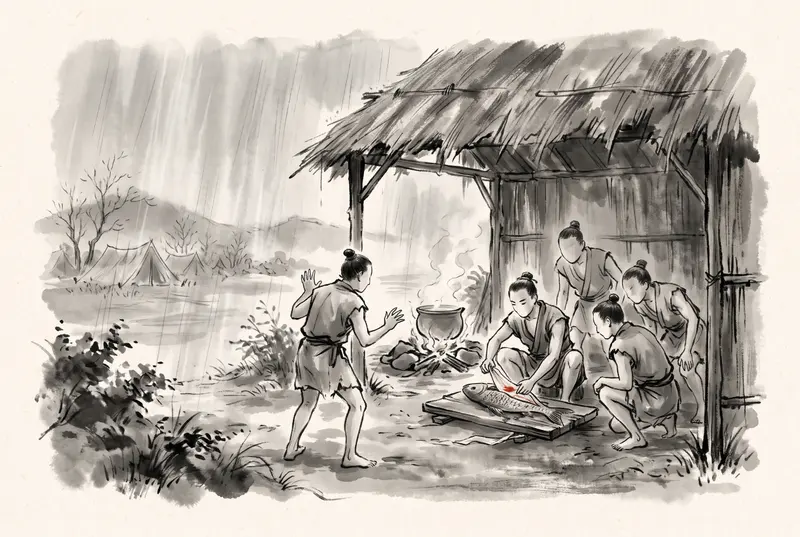
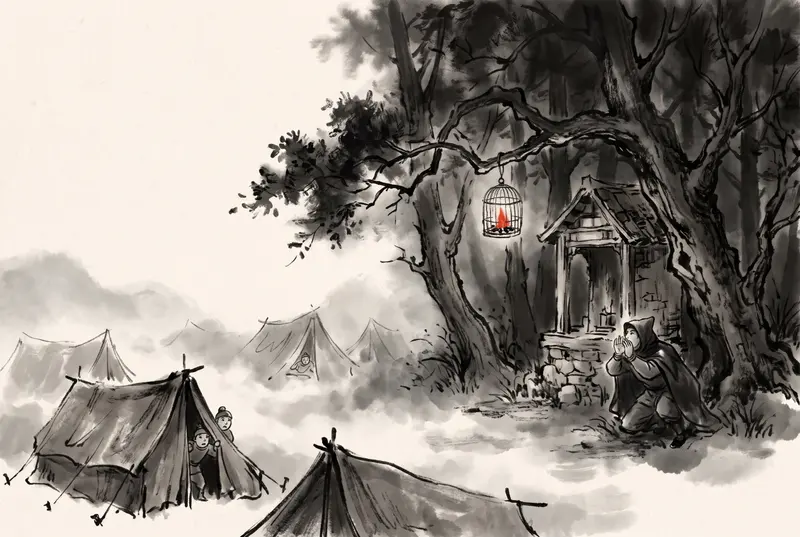
乃行卜。卜者知其指意,曰:「足下事皆成,有功。然足下卜之鬼乎!」陳勝、吳廣喜,念鬼,曰:「此教我先威眾耳。」乃丹書帛曰「陳勝王」,置人所罾魚腹中。卒買魚烹食,得魚腹中書,固以怪之矣。又彊令吳廣之次所旁叢祠中,夜篝火,狐鳴呼曰「大楚興,陳勝王」。卒皆夜驚恐。旦日,卒中往往語,皆指目陳勝。
Kundoku (Japanese reading)
乃ち卜を行う。卜者其の指意を知りて、曰く、「足下の事皆成り、功有らん。然れども足下之を鬼に卜せよ」と。陳勝・呉広喜び、鬼を念いて曰く、「此れ我に先ず衆を威せよと教うるのみ」と。乃ち丹もて帛に書して「陳勝王たらん」と曰い、人の罾する所の魚の腹中に置く。卒魚を買いて烹て食い、魚の腹中の書を得て、固より以て之を怪しむ。又た彊いて呉広をして次する所の旁らの叢祠の中に之かしめ、夜篝火して、狐鳴して呼びて曰く、「大楚興らん、陳勝王たらん」と。卒皆夜驚き恐る。旦日、卒中往往にして語り、皆陳勝を指目す。
Japanese
そこで占いをしてもらった。占い師は二人のねらいを見抜いて言った。「あなたがたの企てはみな成功し、手柄を立てるでしょう。それでも、鬼神にも占ってみてはいかがですか」。陳勝と呉広は喜び、鬼神のことを考えて言った。「これは、まず鬼神の力を借りて皆を恐れ従わせよ、と教えているのだ」。そこで朱で絹に「陳勝王たらん(陳勝が王になる)」と書き、人が網でとった魚の腹の中に入れておいた。兵士たちはその魚を買って煮て食べ、腹の中から書きつけを見つけて、すっかり不思議に思った。さらに、呉広を宿営の近くの、木の茂った祠に行かせ、夜にかがり火をたいて、狐の鳴き声をまねて「大楚興らん、陳勝王たらん(大いなる楚が興り、陳勝が王になる)」と叫ばせた。兵士たちはみな夜通し驚き恐れた。翌朝、兵士たちはあちこちでうわさし合い、みな陳勝を指さしては目で追った。
English
So they went to a diviner. The diviner saw what they had in mind and said, "Everything you plan will succeed, and you will win merit. But why not consult the spirits as well?" Chen Sheng and Wu Guang were pleased. Thinking about the spirits, they said, "This tells us to first win the men over with awe." So they wrote in red on a piece of silk, "Chen Sheng will be king," and put it inside the belly of a fish that someone had caught in a net. The soldiers bought the fish to cook and eat, found the writing in its belly, and were filled with wonder. Then Wu Guang was sent to a shrine in a grove beside the camp. At night he lit a fire in a cage and, crying like a fox, called out, "Great Chu will rise! Chen Sheng will be king!" All night the soldiers were frightened. The next morning they talked among themselves everywhere, and all pointed and stared at Chen Sheng.
Notes (JA)
- 卜之鬼: 「之を鬼に卜せよ」。鬼神(死者の霊や神々)の力を借りよ、という遠回しの助言と、二人は受けとった。
- 丹書: 朱(赤い顔料)で書くこと。
- 罾: 四つ手網。またその網で魚をとること。
- 彊令: 通行の本文では「間令(ひそかに…させる)」とするものが多い。ここでは Wikisource の字のままにし、訳は「行かせ」とした。
- 篝火: かご(篝)に入れて焚く火。狐火に見せかけたとされる。
- 狐鳴: 狐の鳴き声をまねること。狐は霊力をもつ獣と考えられていた。
- 指目: 指さし、目で追う。陳勝がただ者ではないと皆が思いはじめた。
Notes (EN)
- 卜之鬼 ("divine it with the spirits"): the two took this as a hint to make use of the spirits' power.
- 丹書: writing in red pigment.
- 罾: a square dip net, or fishing with one.
- 彊令: many editions read 間令, "secretly sent". The text here follows Wikisource.
- 篝火: a fire burning in a cage, said to have been made to look like a fox fire.
- 狐鳴: imitating the cry of a fox, an animal believed to have magic powers.
- 指目 ("pointed and stared"): the men began to feel that Chen Sheng was no ordinary man.
Word notes
- diviner/dɪˈvaɪnər/noun
a person who tells the future by reading signs
In the text: “So they went to a diviner.”
Similar words: fortune-teller — the everyday word · prophet — someone said to speak for the gods
- awe/ɔ/noun
a feeling of great respect mixed with fear or wonder
In the text: “win the men over with awe”
Similar words: wonder — surprise at something amazing · reverence — deep respect, often religious
Passage 5
Original
吳廣素愛人,士卒多為用者。將尉醉,廣故數言欲亡,忿恚尉,令辱之,以激怒其眾。尉果笞廣。尉劍挺,廣起,奪而殺尉。陳勝佐之,并殺兩尉。召令徒屬曰:「公等遇雨,皆已失期,失期當斬。藉弟令毋斬,而戍死者固十六七。且壯士不死即已,死即舉大名耳,王侯將相寧有種乎!」徒屬皆曰:「敬受命。」
Kundoku (Japanese reading)
呉広素より人を愛す。士卒多く用を為す者あり。将尉酔う。広故らに数しば亡げんと欲すと言い、尉を忿恚せしめ、之を辱めしめて、以て其の衆を激怒せしむ。尉果たして広を笞うつ。尉の剣挺く。広起ちて、奪いて尉を殺す。陳勝之を佐け、并せて両尉を殺す。徒属を召し令して曰く、「公等雨に遇い、皆已に期を失う。期を失わば当に斬らるべし。藉し弟だ斬らるること毋からしむるも、而も戍りて死する者固より十に六七。且つ壮士死せずんば即ち已む。死せば即ち大名を挙げんのみ。王侯将相寧くんぞ種有らんや」と。徒属皆曰く、「敬んで命を受けん」と。
Japanese
呉広は日ごろから人を大切にしたので、兵士の多くは彼のためなら働こうと思っていた。引率の将尉が酒に酔ったとき、呉広はわざと何度も「逃げてやる」と言って将尉を怒らせ、自分を辱めさせて、仲間たちの怒りをかき立てようとした。将尉ははたして呉広を鞭で打った。将尉の剣がさやから抜け出たので、呉広は立ち上がってそれを奪い、将尉を殺した。陳勝も加勢して、二人の将尉をともに殺した。そして仲間を集めて言った。「諸君は雨にあって、みな期日に遅れてしまった。遅れれば斬られる。たとえ斬られずにすんだとしても、辺境の守りで死ぬ者は、もともと十人に六、七人はいる。それに、男子たるもの、死なないならそれまでだが、死ぬのなら大きな名をあげるだけだ。王や諸侯や将軍・宰相に、どうして生まれつきの血筋などあるものか」。仲間たちはみな言った。「謹んで命令に従います」。
English
Wu Guang had always cared for others, and many of the soldiers were ready to do his bidding. When the officers in charge were drunk, Wu Guang made a point of saying again and again that he meant to run away, to anger them into humiliating him and so stir the men to fury. Sure enough, an officer flogged Wu Guang. The officer's sword slipped from its sheath; Wu Guang leapt up, seized it and killed him. Chen Sheng helped him, and together they killed both officers. Then they called the men together and said, "You have all met the rain and missed the deadline, and for missing the deadline you will be beheaded. Even if you were spared, six or seven in ten of those who guard the frontier die anyway. Besides, a brave man either does not die, or if he dies, he dies making a great name. Kings, lords, generals and ministers: are they a breed apart?" The men all said, "We will obey your orders."
Notes (JA)
- 将尉: 兵を引率する役人。ここでは二人いた。
- 忿恚: 怒らせる。
- 挺: 抜け出る。
- 藉弟令: 「たとえ…としても」。仮定を表す言い方。
- 王侯将相寧有種乎: 「王侯将相寧くんぞ種有らんや」。王や諸侯、将軍や宰相になる者に、生まれつきの家柄など関係があろうか、という意味。身分は生まれで決まらない、という言葉として後世に広く引かれた。
- 徒属: 従う仲間たち。
Notes (EN)
- 將尉: the officers leading the men; there were two of them.
- 挺: to slip out.
- 藉弟令: "even if", a way of stating a supposition.
- 王侯將相寧有種乎: one of the most famous lines in the Shiji. Being a king or a minister is not a matter of birth. It has been quoted ever since by people who reject rank by birth.
- 徒屬: the men who followed them.
Idioms from this passage: Are kings and generals a breed apart? 王侯将相寧くんぞ種有らんや
Word notes
- humiliate/hjuːˈmɪliˌeɪt/verb
to make someone feel ashamed in front of others
In the text: “to anger them into humiliating him”
Similar words: shame — make someone feel ashamed · insult — say or do something rude to someone
- flog/flɑɡ/verb
to beat someone hard with a whip or stick as punishment
In the text: “an officer flogged Wu Guang”
Similar words: whip — hit with a whip · beat — hit again and again
- breed/briːd/noun
a kind or type, especially of animal; "a breed apart" means a different, special kind
In the text: “are they a breed apart?”
Similar words: kind — a type or sort · race — a group sharing ancestors
Passage 6
Original
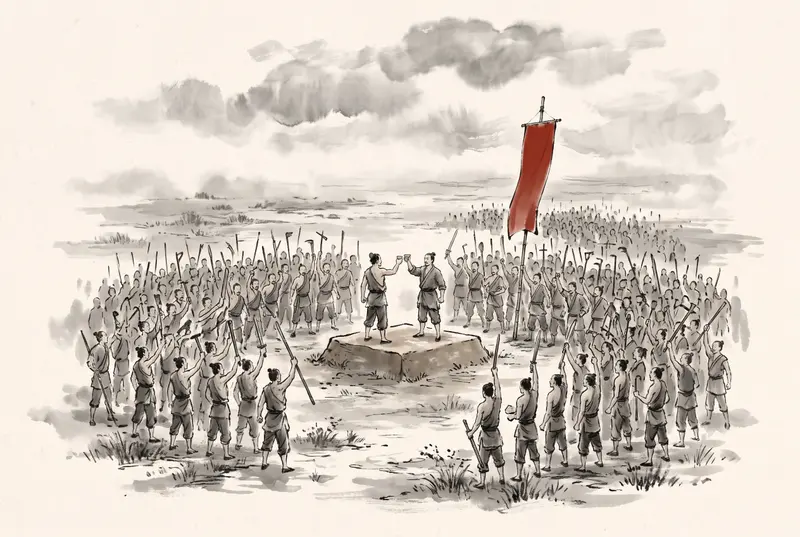
乃詐稱公子扶蘇、項燕,從民欲也。袒右,稱大楚。為壇而盟,祭以尉首。陳勝自立為將軍,吳廣為都尉。攻大澤鄉,收而攻蘄。蘄下,乃令符離人葛嬰將兵徇蘄以東。攻銍、酇、苦、柘、譙皆下之。行收兵。
Kundoku (Japanese reading)
乃ち詐りて公子扶蘇・項燕と称す。民の欲するに従うなり。右を袒ぎ、大楚と称す。壇を為りて盟い、祭るに尉の首を以てす。陳勝自ら立ちて将軍と為り、呉広都尉と為る。大沢郷を攻め、収めて蘄を攻む。蘄下る。乃ち符離の人葛嬰をして兵を将いて蘄以東を徇えしむ。銍・酇・苦・柘・譙を攻めて皆之を下す。行くゆく兵を収む。
Japanese
そこで、偽って公子扶蘇・項燕を名のった。民の望みに合わせたのである。右の肩をあらわにして目印とし、「大楚」と称した。壇を築いて誓いを立て、将尉の首を供えて祭った。陳勝は自ら将軍となり、呉広は都尉となった。大沢郷を攻め、その兵を加えて蘄を攻めた。蘄が降ると、符離の人の葛嬰に兵を率いさせて、蘄より東の地を従えさせた。銍・酇・苦・柘・譙を攻めて、すべて降した。進みながら兵を集めていった。
English
Then they falsely claimed to be Prince Fusu and Xiang Yan, as the people wished. They bared their right shoulders and called themselves Great Chu. They built an altar, swore an oath, and offered up the officers' heads. Chen Sheng made himself general and Wu Guang commandant. They attacked Dazexiang, took in its men and attacked the town of Qi. When Qi fell, they sent Ge Ying of Fuli with troops to bring the land east of Qi under control. They attacked Zhi, Cuo, Ku, Zhe and Qiao, and took them all, gathering soldiers as they went.
Notes (JA)
- 袒右: 右の肩をはだぬぎにすること。味方の目印。
- 大楚: 「大いなる楚」。秦に滅ぼされた楚の再興をかかげた。
- 祭以尉首: 殺した将尉の首を供えて誓いの儀式をした。
- 都尉: 将軍に次ぐ武官。
- 蘄: 今の安徽省宿州市の南のあたり。
- 銍・酇・苦・柘・譙: いずれも今の安徽省北部から河南省東部にあった県。苦は老子の故郷とされる地。
- 徇: 兵を率いて各地を回り、従わせること。
Notes (EN)
- 袒右: baring the right shoulder, a sign to tell friends from foes.
- Great Chu: they claimed to be reviving Chu, which Qin had destroyed.
- 祭以尉首: they offered the officers' heads at the oath-taking.
- 都尉 ("commandant"): a military rank below general.
- Qi (蘄): a town near Suzhou in present-day Anhui, not the state of Qi.
- Zhi, Cuo, Ku, Zhe, Qiao: counties in what is now northern Anhui and eastern Henan. Ku is said to be the home of Laozi.
- 徇: to march through an area and bring it under control.
Word notes
- oath/oʊθ/noun
a serious, formal promise, often made before gods
In the text: “swore an oath”
Similar words: vow — a solemn promise · pledge — a serious promise
- commandant/ˈkɑmənˌdænt/noun
an officer in charge of soldiers
In the text: “Wu Guang commandant”
Similar words: commander — a leader of soldiers · officer — a soldier with authority
Passage 7
Original
比至陳,車六七百乘,騎千餘,卒數萬人。攻陳,陳守令皆不在,獨守丞與戰譙門中。弗勝,守丞死,乃入據陳。數日,號令召三老、豪傑與皆來會計事。三老、豪傑皆曰:「將軍身被堅執銳,伐無道,誅暴秦,復立楚國之社稷,功宜為王。」陳涉乃立為王,號為張楚。
Kundoku (Japanese reading)
陳に至る比おい、車六七百乗、騎千余、卒数万人。陳を攻む。陳の守令皆在らず、独り守丞のみ与に譙門の中に戦う。勝たず、守丞死す。乃ち入りて陳に拠る。数日にして、号令して三老・豪傑を召し、与に皆来たりて会して事を計る。三老・豪傑皆曰く、「将軍身に堅を被り鋭を執り、無道を伐ち、暴秦を誅し、復た楚国の社稷を立つ。功宜しく王為るべし」と。陳渉乃ち立ちて王と為り、号して張楚と為す。
Japanese
陳に着くころには、戦車六、七百台、騎兵千余り、歩兵数万人になっていた。陳を攻めると、郡守も県令も不在で、守丞(副長官)だけが城門の楼の下で戦った。守丞は勝てずに死に、陳勝らは城に入って陳を拠点とした。数日後、陳勝は命令を出して、土地の長老や有力者を呼び集め、皆で集まって今後を相談した。長老や有力者たちはみな言った。「将軍は自ら鎧を着け、鋭い武器を手に、道にはずれた者を討ち、暴虐な秦を罰して、楚の国をふたたび立てられました。その功績からすれば、王となられるのがふさわしい」。そこで陳渉は王位につき、国号を「張楚」とした。
English
By the time they reached Chen, they had six or seven hundred chariots, more than a thousand horsemen and tens of thousands of foot soldiers. They attacked Chen. Neither the governor nor the magistrate was there; only the deputy fought them beneath the gate tower. He lost and was killed, and they entered and held Chen. A few days later Chen Sheng sent out orders summoning the elders and leading men, who all came to discuss what to do. The elders and leading men all said, "General, you put on armor and took up sharp weapons yourself, struck down the lawless, punished cruel Qin, and raised up again the altars of the state of Chu. For such merit you should be king." So Chen She made himself king, and named his state Zhang Chu, "Chu Expanded."
Notes (JA)
- 陳: 今の河南省周口市淮陽区。かつて楚が都を置いたこともある町。
- 守令: 郡の長官(守)と県の長官(令)。守丞はその副官。
- 譙門: 物見やぐらのある城門。
- 三老: 村や県の教化を受けもった土地の長老。
- 被堅執鋭: 堅い鎧を身につけ、鋭い武器を手にとる。
- 社稷: 土地の神と穀物の神。国家そのものを表す。
- 張楚: 「楚を張る(大きくする)」。陳勝が立てた国の名。
Notes (EN)
- Chen: present-day Huaiyang in Henan, once a capital of Chu.
- 守令: the governor of the commandery (守) and the magistrate of the county (令); the 守丞 was their deputy.
- 譙門: a city gate with a watchtower.
- 三老 ("the elders"): local elders who guided the people of a village or county.
- 被堅執銳: putting on hard armor and taking up sharp weapons.
- 社稷: the gods of the soil and grain, standing for the state itself.
- Zhang Chu: "Chu made great", the name of Chen Sheng's state.
Word notes
- magistrate/ˈmædʒəˌstreɪt/noun
the official who governs a county and judges cases
In the text: “Neither the governor nor the magistrate was there”
Similar words: governor — the head of a larger area · judge — a person who decides cases in court
- merit/ˈmɛrɪt/noun
good deeds or qualities that deserve praise or reward
In the text: “For such merit you should be king.”
Similar words: worth — value in general · achievement — something done well with effort
Passage 8
Original
臘月,陳王之汝陰,還至下城父,其御莊賈殺以降秦。陳勝葬碭,謚曰隱王。
Kundoku (Japanese reading)
臘月、陳王汝陰に之き、還りて下城父に至る。其の御荘賈、殺して以て秦に降る。陳勝碭に葬られ、謚して隠王と曰う。
Japanese
臘月(十二月)、陳王は汝陰へ行き、引き返して下城父まで来たところで、御者の荘賈に殺された。荘賈は秦に降った。陳勝は碭に葬られ、隠王と諡された。
English
In the twelfth month, the King of Chen went to Ruyin and, on his way back, reached Xiachengfu. There his driver, Zhuang Jia, killed him and went over to Qin. Chen Sheng was buried at Dang, and given the posthumous title King Yin.
Notes (JA)
- この節の前の部分(省略): 陳勝は呉広らを西へ、武臣らを北へ送り出した。しかし、武臣は趙王を名のって自立し、各地の将軍も次々と王を名のった。西へ向かった周文の大軍は秦の章邯に破られ、滎陽を囲んでいた呉広は部下の田臧に殺された。章邯の軍が陳に迫り、陳勝は敗れて逃げた。
- 臘月: 十二月。秦の暦では十月が年の始めなので、蜂起から数えておよそ半年後(前208年の初めごろ)にあたる。
- 汝陰・下城父: 汝陰は今の安徽省阜陽市、下城父はその東のあたり。
- 御: 車の御者。
- 碭: 今の安徽省碭山県・河南省永城市のあたり。
- 謚: 死後に贈られる名(おくりな)。
Notes (EN)
- What comes before (left out here): Chen Sheng sent Wu Guang west and Wu Chen north. But Wu Chen made himself King of Zhao, and other generals too declared themselves kings. Zhou Wen's great army in the west was crushed by the Qin general Zhang Han, and Wu Guang, besieging Xingyang, was killed by his own officer Tian Zang. Zhang Han then advanced on Chen, and Chen Sheng was defeated and fled.
- 臘月 ("the twelfth month"): the Qin year began in the tenth month, so this was about six months after the uprising, early in 208 BCE.
- Ruyin, Xiachengfu: Ruyin is present-day Fuyang in Anhui; Xiachengfu lay to its east.
- Dang: near Dangshan in Anhui and Yongcheng in Henan.
- 謚: a posthumous title.
Word notes
- posthumous/ˈpɑstʃəməs/adjective
given or happening after a person has died
In the text: “given the posthumous title King Yin”
Similar words: after death — the everyday phrase · memorial — done in memory of the dead
Passage 9
Original
陳勝王凡六月。已為王,王陳。其故人嘗與庸耕者聞之,之陳,扣宮門曰:「吾欲見涉。」宮門令欲縛之。自辯數,乃置,不肯為通。陳王出,遮道而呼涉。陳王聞之,乃召見,載與俱歸。入宮,見殿屋帷帳,客曰:「夥頤!涉之為王沈沈者!」楚人謂多為夥,故天下傳之,夥涉為王,由陳涉始。客出入愈益發舒,言陳王故情。或說陳王曰:「客愚無知,顓妄言,輕威。」陳王斬之。諸陳王故人皆自引去,由是無親陳王者。
Kundoku (Japanese reading)
陳勝王たること凡そ六月。已に王と為り、陳に王たり。其の故人の嘗て与に庸耕せし者之を聞き、陳に之き、宮門を扣きて曰く、「吾渉に見えんと欲す」と。宮門の令之を縛らんと欲す。自ら辯ずること数しばにして、乃ち置くも、為に通ずるを肯んぜず。陳王出づ。道を遮りて渉と呼ぶ。陳王之を聞き、乃ち召し見て、載せて与に倶に帰る。宮に入り、殿屋帷帳を見て、客曰く、「夥頤、渉の王為る、沈沈たる者かな」と。楚人多を謂いて夥と為す。故に天下之を伝えて、「夥渉王と為る」は陳渉より始まる。客出入して愈いよ益ます発舒し、陳王の故情を言う。或るひと陳王に説きて曰く、「客愚にして知る無く、顓ら妄言し、威を軽んず」と。陳王之を斬る。諸もろの陳王の故人皆自ら引き去り、是れに由りて陳王に親しむ者無し。
Japanese
陳勝が王であったのは、あわせて六か月であった。王となって陳を都にしていたころ、かつて一緒に雇われて畑を耕していた昔なじみがそれを聞き、陳にやって来て宮殿の門をたたき、「渉に会いたい」と言った。門番の長は男を縛ろうとした。男が何度も事情を説明したので、ようやく放してやったが、取り次ごうとはしなかった。陳王が外出したとき、男は道をさえぎって「渉!」と呼んだ。陳王はそれを聞くと、呼び寄せて会い、車に乗せて一緒に宮殿へ帰った。宮殿に入って、御殿や垂れ幕を見た客は言った。「すごいなあ(夥頤)! 渉が王になると、こんなに奥深く立派なものか」。楚の人は「多い」ことを「夥」という。そこから天下に広まって、「夥渉王と為る(たいしたものだ、渉が王になった)」という言い回しは、陳渉から始まったのである。客は宮中に出入りするうちに、ますます遠慮がなくなり、陳王の昔の身の上を言いふらした。ある者が陳王に言った。「あの客は愚かで物を知らず、勝手なでたらめを言って、王の威厳を軽んじています」。陳王は客を斬った。陳王の昔なじみたちは、みな自分から去っていき、それ以来、陳王に親しむ者はいなくなった。
English
Chen Sheng was king for six months in all. After he became king, he ruled from Chen. An old friend who had once worked in the fields with him as a hired hand heard of it, came to Chen, knocked at the palace gate and said, "I want to see Chen She." The gatekeeper was about to tie him up. Only after he had explained himself again and again did the gatekeeper let him go, and even then he would not announce him. When the King of Chen came out, the man blocked the road and called out, "Chen She!" Hearing him, the King of Chen called him over, took him into his carriage and rode back with him. When the visitor entered the palace and saw the halls and curtains, he said, "Wow! What a deep, grand place Chen She has, now that he's king!" The people of Chu say huo for "a lot." That is how the saying "Wow, Chen She's become king!" spread across the realm; it began with Chen She. The visitor came and went more and more freely and talked about the king's humble past. Someone told the King of Chen, "Your visitor is a foolish, ignorant man. He talks wild nonsense, and makes light of your dignity." The King of Chen had him beheaded. All the king's old friends left of their own accord, and after that no one was close to the King of Chen.
Notes (JA)
- 凡六月: 陳勝が王であったのは、あわせて六か月。司馬遷はここから時をさかのぼって、王であったころの話を書く。
- 故人: 昔なじみ。p1 で「苟くも富貴とならば、相忘るること無からん」と言った相手の一人とも読める。
- 宮門令: 宮殿の門を守る役人の長。
- 夥頤: 驚きの声。「夥」は楚の言葉で「多い」、「頤」は語気を表す字。
- 沈沈: 宮殿が奥深く、立派なようす。
- 夥渉為王: 「たいしたものだ、渉が王になった」。成り上がった者をからかう言い回しになった。
- 発舒: 気ままにふるまう。
- 顓: 「専」と同じで、もっぱら、勝手に。
- 王になった陳勝が、昔の約束(p1)を忘れて旧友を斬ったことで人心が離れていくようすを、司馬遷は書きとめている。
Notes (EN)
- 凡六月 ("six months in all"): Sima Qian now steps back in time to tell stories from Chen Sheng's reign.
- 故人 ("an old friend"): perhaps one of the men to whom Chen Sheng had said, "Let us not forget one another" (p1).
- 夥頤: a cry of amazement. 夥 means "a lot" in the speech of Chu.
- 沈沈: deep and grand, of a palace.
- 夥涉為王 ("Wow, Chen She's become king!"): became a saying to mock someone who has risen above his station.
- Sima Qian shows how the king, forgetting his promise in p1 and killing an old friend, lost the people around him.
Word notes
- announce/əˈnaʊns/verb
to tell someone officially that a visitor has arrived
In the text: “he would not announce him”
Similar words: introduce — present someone to another · report — tell someone about something
- nonsense/ˈnɑnsɛns/noun
foolish or untrue words
In the text: “He talks wild nonsense”
Similar words: rubbish — informal; worthless talk · drivel — silly, meaningless talk
- dignity/ˈdɪɡnəti/noun
the quality of deserving respect; a ruler's honor
In the text: “makes light of your dignity”
Similar words: honor — good name and respect · prestige — respect that comes from power
"Make light of" means to treat something as unimportant.
Passage 10
Original
陳王以朱房為中正,胡武為司過,主司群臣。諸將徇地,至,令之不是者,系而罪之,以苛察為忠。其所不善者,弗下吏,輒自治之。陳王信用之。諸將以其故不親附,此其所以敗也。
Kundoku (Japanese reading)
陳王、朱房を以て中正と為し、胡武を司過と為し、群臣を主司せしむ。諸将地を徇えて至るに、之に令して是ならざる者は、繋ぎて之を罪し、苛察を以て忠と為す。其の善からざる所の者は、吏に下さず、輒ち自ら之を治む。陳王之を信用す。諸将其の故を以て親附せず。此れ其の敗るる所以なり。
Japanese
陳王は朱房を中正に、胡武を司過に任じ、家臣たちの監督にあたらせた。将軍たちが各地を攻めとって戻ってくると、命令どおりでなかった者を捕らえて罪に問い、きびしく粗探しをすることを忠義と考えた。気に入らない者は、役人に任せず、すぐさま自分たちで処罰した。陳王はこの二人を信じて重く用いた。将軍たちはそのために陳王に心を寄せなかった。これが陳王の敗れた理由である。
English
The King of Chen made Zhu Fang his Inspector and Hu Wu his Censor, and put them in charge of watching his officials. When the generals came back from winning over new lands, anyone who had not followed orders was arrested and punished; these two counted harsh fault-finding as loyalty. Those they disliked they did not hand over to the courts, but dealt with themselves at once. The King of Chen trusted them. For this reason the generals did not stay loyal to him. This is why he failed.
Notes (JA)
- 中正・司過: どちらも家臣の過ちを取りしまる役職。
- 系: 「繋」と同じで、捕らえてつなぐこと。
- 苛察: こまかく、きびしく人の過失を調べたてること。
- 下吏: 役人(裁判の担当者)に引き渡すこと。
- 此其所以敗也: 「此れ其の敗るる所以なり」。司馬遷は、陳勝の敗因を、人を信じず側近の取りしまりに頼ったことに見ている。
Notes (EN)
- 中正, 司過: officials whose job was to find faults among the king's men.
- 系: the same as 繫, to arrest and bind.
- 苛察: harsh, petty fault-finding.
- 下吏: handing a case over to the officials in charge of trials.
- 此其所以敗也 ("this is why he failed"): Sima Qian puts Chen Sheng's fall down to distrust of his own generals and reliance on harsh watchdogs.
Word notes
- fault-finding/ˈfɔltˌfaɪndɪŋ/noun
looking for small mistakes in order to criticize
In the text: “harsh fault-finding”
Similar words: nitpicking — informal; criticizing tiny details · criticism — saying what is wrong
- loyal/ˈlɔɪəl/adjective
always supporting a person or group
In the text: “the generals did not stay loyal to him”
Similar words: faithful — keeping your promises · devoted — loving and loyal
Passage 11
Original
陳勝雖已死,其所置遣侯王將相竟亡秦,由涉首事也。高祖時為陳涉置守冢三十家碭,至今血食。
Kundoku (Japanese reading)
陳勝已に死すと雖も、其の置き遣わす所の侯王将相、竟に秦を亡ぼすは、渉の首事に由るなり。高祖の時、陳渉の為に守冢三十家を碭に置き、今に至るまで血食す。
Japanese
陳勝はすでに死んだが、彼が立てたり送り出したりした王や諸侯、将軍や宰相が、最後には秦を滅ぼした。それは陳渉が最初に事を起こしたからである。高祖の時代、碭にある陳渉の墓を守る家を三十戸置き、今に至るまで祭りが絶えることはない。
English
Although Chen Sheng died, the kings, lords, generals and ministers he had set up or sent out finally destroyed Qin, and that was because Chen She was the first to rise. In the time of Emperor Gaozu, thirty households were settled at Dang to guard Chen She's tomb, and to this day he receives offerings.
Notes (JA)
- 首事: 最初に事を起こすこと。秦を倒した劉邦や項羽も、陳勝の蜂起のあとに兵を挙げた。
- 高祖: 漢の初代皇帝、劉邦(沛公)。
- 守冢: 墓守り。三十家(戸)が置かれた。
- 血食: いけにえの肉を供えて祭られること。子孫が絶えずに祭りが続くことを言う。
- 今: 司馬遷の時代(前漢の武帝のころ)。
- この巻の後半には、賈誼の「過秦論」が引かれ、秦がなぜ一人の農民の蜂起で滅びたのかが論じられる(この章では省く)。
Notes (EN)
- 首事 ("the first to rise"): Liu Bang and Xiang Yu, who later destroyed Qin, raised their armies only after Chen Sheng's uprising.
- Emperor Gaozu: Liu Bang (the Lord of Pei), the first emperor of Han.
- 守冢: households settled to guard and tend a tomb.
- 血食 ("blood food"): receiving sacrifices of meat, meaning one's rites go on without end.
- To this day: in Sima Qian's own time, under Emperor Wu of Han.
- The rest of the volume quotes Jia Yi's essay "The Faults of Qin", which asks how one peasant's uprising could bring down mighty Qin (not included in this chapter).
Word notes
- offering/ˈɔfərɪŋ/noun
something given to the dead or to the gods as part of a ceremony
In the text: “he receives offerings”
Similar words: sacrifice — something killed or given to the gods · gift — something given freely