Annals · Vol. 12
The Basic Annals of Emperor Wu 孝武本紀
Still Hoping to Meet the Real Thing 冀遇其真
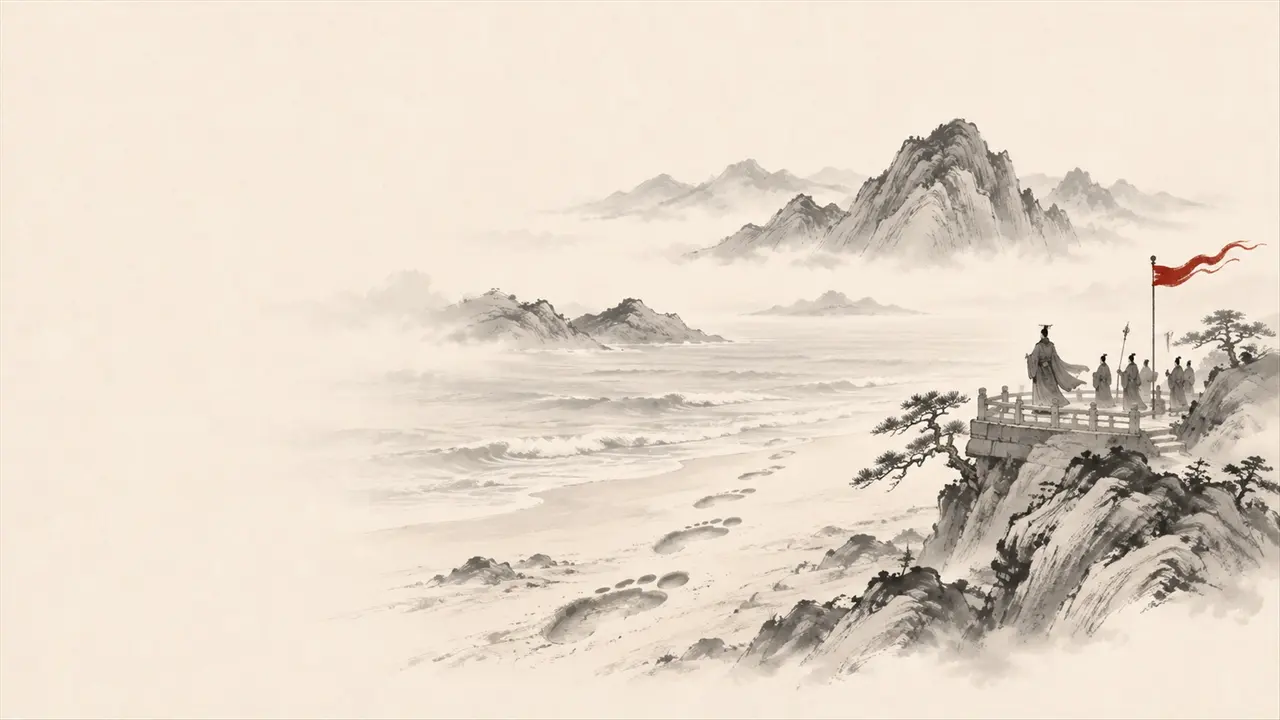
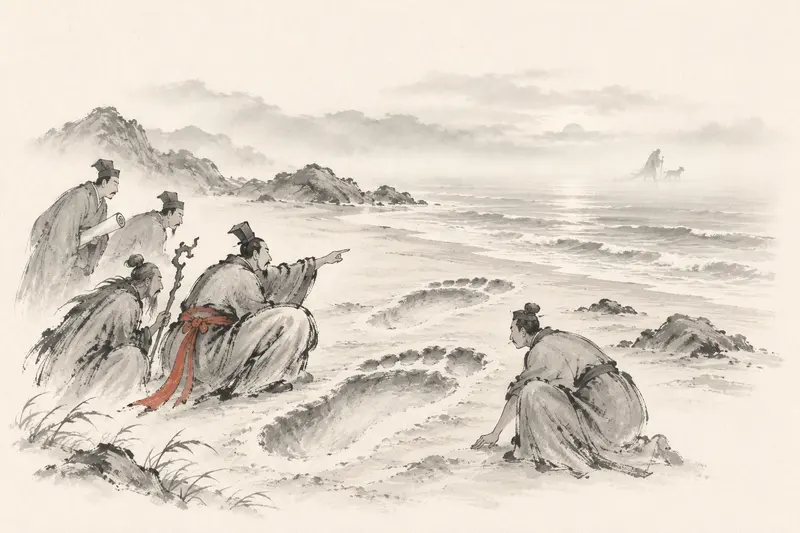
The annals of Emperor Wu, "the present emperor" whom Sima Qian served. The original is thought to have been lost early, and the present text is almost entirely copied from the Emperor Wu section of the Treatise on the Feng and Shan Sacrifices — a record of the emperor's long search for gods and immortals. Newly enthroned, he planned the great sacrifices with Confucian scholars, but his grandmother Empress Dowager Dou, a follower of the Yellow Emperor and Laozi, stopped them. He worshipped "the Spirit Lady", the ghost of a woman of Changling; made a general of the magician Shaoweng, who showed him the dead Lady Wang by night, then executed him when a forged message found in an ox's belly gave him away; enshrined in his palace a spirit said to have cured him at Ganquan; welcomed a bronze cauldron dug from the earth at Fenyin as a treasure; and prayed to the Great One with a "spirit banner" before the war on Southern Yue. His magicians sought the immortals of Penglai and reported giant footprints by the sea and an old man leading a dog, but nothing ever came of it — and still the emperor kept them, hoping to meet the real thing.
This page has the scene "Still Hoping to Meet the Real Thing" from this volume, not the whole volume.
Audio
The audio is synthetic speech.
Video
Passage 1
Original
孝武皇帝者,孝景中子也。母曰王太后。孝景四年,以皇子為膠東王。孝景七年,栗太子廢為臨江王,以膠東王為太子。孝景十六年崩,太子即位,為孝武皇帝。孝武皇帝初即位,尤敬鬼神之祀。元年,漢興已六十餘歲矣,天下乂安,薦紳之屬皆望天子封禪改正度也。而上鄉儒術,招賢良,趙綰、王臧等以文學為公卿,欲議古立明堂城南,以朝諸侯。草巡狩封禪改歷服色事未就。會竇太后治黃老言,不好儒術,使人微得趙綰等姦利事,召案綰、臧,綰、臧自殺,諸所興為者皆廢。
Kundoku (Japanese reading)
孝武皇帝は、孝景の中子なり。母を王太后と曰う。孝景の四年、皇子を以て膠東王と為る。孝景の七年、栗太子廃せられて臨江王と為り、膠東王を以て太子と為す。孝景十六年にして崩じ、太子即位し、孝武皇帝と為る。孝武皇帝初めて即位し、尤も鬼神の祀を敬う。元年、漢興りて已に六十余歳、天下乂安なり。薦紳の属皆天子の封禅し正度を改むるを望む。而して上儒術に郷い、賢良を招く。趙綰・王臧等文学を以て公卿と為り、古を議して明堂を城南に立て、以て諸侯を朝せしめんと欲す。巡狩・封禅・改暦・服色の事を草して未だ就らず。会々竇太后黄老の言を治め、儒術を好まず。人をして微かに趙綰等の姦利の事を得しめ、綰・臧を召して案ず。綰・臧自殺し、諸々の興し為す所の者皆廃す。
Japanese
孝武皇帝は景帝の子の一人で、母は王太后である。景帝の四年、皇子として膠東王となった。景帝の七年、栗太子が廃されて臨江王となると、膠東王が太子となった。景帝が在位十六年で亡くなると、太子が位につき、孝武皇帝となった。孝武皇帝は即位したばかりのころから、とりわけ鬼神の祭りを重んじた。元年(前140年)、漢が興ってからすでに六十年あまりたち、天下はよく治まっていた。役人や学者たちは皆、天子が封禅を行い、暦や制度を改めることを望んでいた。武帝は儒学に心を寄せ、賢い人を招いた。趙綰・王臧らは学問によって高官となり、昔のならわしを論じて都の南に明堂を建て、諸侯を朝見させようとした。巡幸・封禅・暦の改定・衣服の色などの案を作ったが、まだ実現しないうちに、竇太后が黄老の学を信じて儒学を好まなかったので、人を使ってひそかに趙綰らの不正を探らせた。趙綰と王臧は呼び出されて取り調べを受け、自殺した。二人が始めたことは、すべて取りやめになった。
English
Emperor Wu was one of the middle sons of Emperor Jing; his mother was Empress Dowager Wang. In Emperor Jing's fourth year he was made King of Jiaodong as a prince. In Emperor Jing's seventh year, when the Li crown prince was deposed and made King of Linjiang, the King of Jiaodong became crown prince. When Emperor Jing died in his sixteenth year, the crown prince came to the throne as Emperor Wu. From the very start of his reign Emperor Wu paid special reverence to the sacrifices to gods and spirits. In his first year, Han had been in power for more than sixty years and the realm was at peace; the officials and scholars all hoped the Son of Heaven would perform the Feng and Shan sacrifices and reform the calendar and the regulations. The emperor inclined toward Confucian learning and summoned worthy men. Zhao Wan, Wang Zang and others rose to high office for their learning and, consulting the ancients, wanted to build a Hall of Light south of the city where the lords could attend court. They drafted plans for royal tours, the Feng and Shan, a new calendar and new court colours, but before these were carried out, Empress Dowager Dou, who followed the teachings of the Yellow Emperor and Laozi and disliked Confucian learning, had someone secretly dig up evidence of Zhao Wan's corruption. Zhao Wan and Wang Zang were summoned for questioning and killed themselves, and everything they had begun was abandoned.
Notes (JA)
- 孝武本紀: 司馬遷の書いた「今上本紀」は失われ、後の人が封禅書の文で補ったと考えられている。
- 封禅: 泰山で天と地を祭る、天子だけが行う大きな祭り(028-fengshan の章)。
- 趙綰・王臧: 申公の弟子の儒者(121-rulin の章)。
Notes (EN)
- The Basic Annals of Emperor Wu: Sima Qian's own "Annals of the Present Emperor" is thought lost, its place filled later with text from the Treatise on the Feng and Shan.
- The Feng and Shan: the great sacrifices to Heaven and Earth at Mount Tai, performed only by the Son of Heaven (chapter 028).
- Zhao Wan and Wang Zang: Confucian disciples of Master Shen (chapter 121).
Word notes
- reverence/ˈrɛvərəns/noun
deep respect, especially for something holy
In the text: “paid special reverence to the sacrifices”
Similar words: respect — high regard · devotion — deep love and loyalty
- corruption/kəˈrʌpʃən/noun
dishonest behaviour by people in power
In the text: “evidence of Zhao Wan's corruption”
Similar words: bribery — paying people to act dishonestly · fraud — cheating for gain
Passage 2
Original
明年,上初至雍,郊見五畤。後常三歲一郊。是時上求神君,捨之上林中蹄氏觀。神君者,長陵女子,以子死悲哀,故見神於先後宛若。宛若祠之其室,民多往祠。平原君往祠,其後子孫以尊顯。及武帝即位,則厚禮置祠之內中,聞其言,不見其人云。
Kundoku (Japanese reading)
明年、上初めて雍に至り、郊して五畤に見ゆ。後常に三歳に一たび郊す。是の時上神君を求め、之を上林中の蹄氏観に舎らしむ。神君とは、長陵の女子なり。子の死せしを以て悲哀し、故に神を先後宛若に見す。宛若之を其の室に祠り、民多く往きて祠る。平原君往きて祠り、其の後子孫以て尊顕なり。武帝の即位するに及び、則ち厚く礼して之を内中に置きて祠る。其の言を聞くも、其の人を見ずと云う。
Japanese
翌年、武帝は初めて雍へ行き、郊外の五つの祭場で上帝を祭った。その後はいつも三年に一度、郊祭を行った。このころ武帝は「神君」を求め、上林苑の中の蹄氏観に住まわせた。神君とは長陵の女で、子が死んだのを悲しんで亡くなり、兄嫁の宛若に霊となって現れた。宛若はこの霊を自分の部屋に祭り、多くの民が拝みに行った。平原君(武帝の祖母)も拝みに行ったところ、その子孫はのちに尊く栄えた。武帝が即位すると、手厚い礼をもって宮中に迎えて祭った。その声は聞こえるが、姿は見えなかったという。
English
The next year the emperor went to Yong for the first time and worshipped at the five altars in the suburbs; after that he always held the suburban sacrifice once every three years. At this time the emperor sought out the Spirit Lady and lodged her in the Tishi Lodge in the Shanglin Park. The Spirit Lady was a woman of Changling who, grieving over the death of her son, had died and appeared as a spirit to her sister-in-law Wanruo. Wanruo worshipped her in her own room, and many people went to pray there. The Lady of Pingyuan went to pray, and afterwards her descendants rose to honour and fame. When Emperor Wu came to the throne, he received the spirit with great ceremony and enshrined her inside the palace. It is said that her voice could be heard, but she could not be seen.
Notes (JA)
- 五畤: 雍にあった、五帝を祭る五つの祭場。
- 平原君: 武帝の母王太后の母、臧児のこと。戦国の趙の平原君とは別人。
- 先後: 兄弟の妻どうしの呼び方。
Notes (EN)
- The five altars (五畤): the sacred sites at Yong where the Five Emperors were worshipped.
- The Lady of Pingyuan: Zang Er, mother of Emperor Wu's mother — not the Lord of Pingyuan of Zhao.
- Sister-in-law (先後): the term for wives of brothers.
Word notes
- enshrine/ɪnˈʃraɪn/verb
to place something holy in a special shrine
In the text: “enshrined her inside the palace”
Similar words: consecrate — make holy · house — give a place to
- grieve/ɡriːv/verb
to feel deep sadness, especially after a death
In the text: “grieving over the death of her son”
Similar words: mourn — show sadness for the dead · lament — express grief
Passage 3
Original
亳人薄誘忌奏祠泰一方,曰:「天神貴者泰一,泰一佐曰五帝。古者天子以春秋祭泰一東南郊,用太牢具,七日,為壇開八通之鬼道。」於是天子令太祝立其祠長安東南郊,常奉祠如忌方。其後人有上書,言「古者天子三年一用太牢具祠神三一:天一,地一,泰一」。天子許之,令太祝領祠之忌泰一壇上,如其方。後人復有上書,言「古者天子常以春秋解祠,祠黃帝用一梟破鏡;冥羊用羊;祠馬行用一青牡馬;泰一、皋山山君、地長用牛;武夷君用乾魚;陰陽使者以一牛」。令祠官領之如其方,而祠於忌泰一壇旁。
Kundoku (Japanese reading)
亳人薄誘忌泰一を祠るの方を奏して曰く、「天神の貴き者は泰一、泰一の佐を五帝と曰う。古は天子春秋を以て泰一を東南の郊に祭り、太牢の具を用い、七日、壇を為りて八通の鬼道を開く」と。是に於いて天子太祝をして其の祠を長安の東南の郊に立てしめ、常に祠を奉ずること忌の方の如くす。其の後人上書する有りて言う、「古は天子三年に一たび太牢の具を用いて神三一を祠る。天一・地一・泰一なり」と。天子之を許し、太祝をして之を忌の泰一の壇上に領祠せしむること、其の方の如くす。後人復た上書する有りて言う、「古は天子常に春秋を以て解祠し、黄帝を祠るには一梟・破鏡を用い、冥羊には羊を用い、馬行を祠るには一青牡馬を用い、泰一・皋山山君・地長には牛を用い、武夷君には乾魚を用い、陰陽の使者には一牛を以てす」と。祠官をして之を領すること其の方の如くせしめ、而して忌の泰一の壇の旁に祠る。
Japanese
亳の人、薄誘忌が泰一を祭る方法を上奏した。「天の神でいちばん尊いのは泰一で、泰一を補佐するのが五帝です。昔、天子は春と秋に長安の東南の郊外で泰一を祭り、牛・羊・豚の大きないけにえを用いて七日間祭り、壇を作って八方に通じる霊の通り道を開きました」。そこで天子は太祝(祭りの長)に命じて、長安の東南の郊外にその祭場を作らせ、薄忌の方法どおりにいつも祭らせた。その後、ある人が上書した。「昔、天子は三年に一度、大きないけにえで天一・地一・泰一の三一の神を祭りました」。天子はこれを許し、太祝に、薄忌の泰一の壇の上で、その方法どおりに祭らせた。さらにのちに別の人が上書した。「昔、天子はいつも春と秋に災いを払う祭りをし、黄帝にはふくろうと破鏡(親を食うとされた獣)を一つずつ、冥羊には羊を、馬行には青い牡馬を一頭、泰一・皋山の山君・地長には牛を、武夷君には干し魚を、陰陽の使者には牛を一頭供えました」。天子は祭りの役人にその方法どおりに行わせ、薄忌の泰一の壇のそばで祭らせた。
English
Bo Youji of Bo presented a method for worshipping the Great One, saying: "The most honoured of the gods of Heaven is the Great One, and his helpers are called the Five Emperors. In ancient times the Son of Heaven sacrificed to the Great One in spring and autumn in the southeastern suburbs, using the full set of victims for seven days, building an altar and opening spirit-roads to the eight directions." So the Son of Heaven had the Grand Invoker set up the shrine in the southeastern suburbs of Chang'an and worship there regularly by Ji's method. Later someone sent up a letter saying: "In ancient times the Son of Heaven once every three years sacrificed with the full set of victims to the Three Ones: the One of Heaven, the One of Earth and the Great One." The Son of Heaven agreed, and had the Grand Invoker hold those rites on Ji's altar of the Great One by that method. Later still someone sent up another letter: "In ancient times the Son of Heaven always held rites of release in spring and autumn: for the Yellow Emperor he offered an owl and a pojing beast; for the Dark Ram a ram; for the Horse Road a black-green stallion; for the Great One, the Mountain Lord of Gao and the Earth Elder, oxen; for Lord Wuyi dried fish; and for the Messenger of Yin and Yang one ox." He had the sacrificial officials carry this out by that method beside Ji's altar of the Great One.
Notes (JA)
- 泰一: 天の最高神。漢の武帝のころ、国の祭りの中心となった。
- 太牢: 牛・羊・豚をそろえた最も重いいけにえ。
- 破鏡: 父を食うと言われた想像上の獣。梟(母を食うとされた)とともに、悪いものを絶やすために供えたとされる。
Notes (EN)
- The Great One (泰一): the supreme god of Heaven, made the centre of state worship under Emperor Wu.
- The full set of victims (太牢): ox, sheep and pig together, the weightiest offering.
- Pojing (破鏡): a fabled beast said to eat its father, offered with the owl (said to eat its mother) to stamp out evil.
Word notes
- altar/ˈɔːltər/noun
a raised table or place for offerings to gods
In the text: “building an altar”
Similar words: shrine — a holy place · sanctuary — a sacred place
- victim/ˈvɪktɪm/noun
here, an animal killed as an offering to a god
In the text: “using the full set of victims”
Similar words: offering — something given to a god · sacrifice — an animal killed for a god
Here the old sense: an animal offered in a sacrifice.
Passage 4
Original
其明年,齊人少翁以鬼神方見上。上有所幸王夫人,夫人卒,少翁以方術蓋夜致王夫人及灶鬼之貌云,天子自帷中望見焉。於是乃拜少翁為文成將軍,賞賜甚多,以客禮禮之。文成言曰:「上即欲與神通,宮室被服不象神,神物不至。」乃作畫雲氣車,及各以勝日駕車辟惡鬼。又作甘泉宮,中為臺室,畫天、地、泰一諸神,而置祭具以致天神。居歲餘,其方益衰,神不至。乃為帛書以飯牛,詳弗知也,言此牛腹中有奇。殺而視之,得書,書言其怪,天子疑之。有識其手書,問之人,果(為)[偽]書。於是誅文成將軍而隱之。
Kundoku (Japanese reading)
其の明年、斉人少翁鬼神の方を以て上に見ゆ。上の幸する所の王夫人有り。夫人卒す。少翁方術を以て蓋し夜に王夫人及び竈鬼の貌を致すと云う。天子帷中より望み見る。是に於いて乃ち少翁を拝して文成将軍と為し、賞賜甚だ多く、客礼を以て之を礼す。文成言いて曰く、「上即し神と通ぜんと欲するも、宮室被服神に象らざれば、神物至らず」と。乃ち雲気を画きたる車を作り、及び各々勝日を以て車を駕して悪鬼を辟く。又た甘泉宮を作り、中に台室を為り、天・地・泰一の諸神を画き、祭具を置きて以て天神を致す。居ること歳余にして、其の方益々衰え、神至らず。乃ち帛書を為りて以て牛に飯わしめ、詳りて知らずとし、此の牛の腹中に奇有りと言う。殺して之を視るに、書を得たり。書其の怪を言う。天子之を疑う。其の手書を識る有り、之を人に問うに、果たして偽書なり。是に於いて文成将軍を誅して之を隠す。
Japanese
その翌年、斉の人少翁が鬼神を呼ぶ術によって武帝に会った。武帝には寵愛した王夫人がいたが、亡くなっていた。少翁は術を使って、夜に王夫人とかまどの神の姿を呼び出したといい、武帝はとばりの中からそれを見た。そこで少翁を文成将軍に任じ、たくさんのほうびを与え、客として礼を尽くした。文成将軍は言った。「陛下が神と通じたいと思われても、宮殿や衣服が神にふさわしくなければ、神は来ません」。そこで雲の模様を描いた車を作らせ、日ごとに縁起のよい色の車に乗って悪鬼を払った。また甘泉宮を造り、その中に高い台の部屋を設けて、天・地・泰一などの神々を描き、祭りの道具を置いて天の神を招いた。一年あまりたつと、術の効き目はますます落ち、神は来なくなった。そこで少翁は絹に字を書いてそれを牛に食べさせ、知らないふりをして「この牛の腹の中に不思議なものがある」と言った。牛を殺して調べると、書が出てきて、そこには奇妙なことが書いてあった。天子はこれを疑った。少翁の筆跡を知っている者がいたので、人にたずねてみると、やはり偽の書だった。そこで文成将軍を殺し、このことを秘密にした。
English
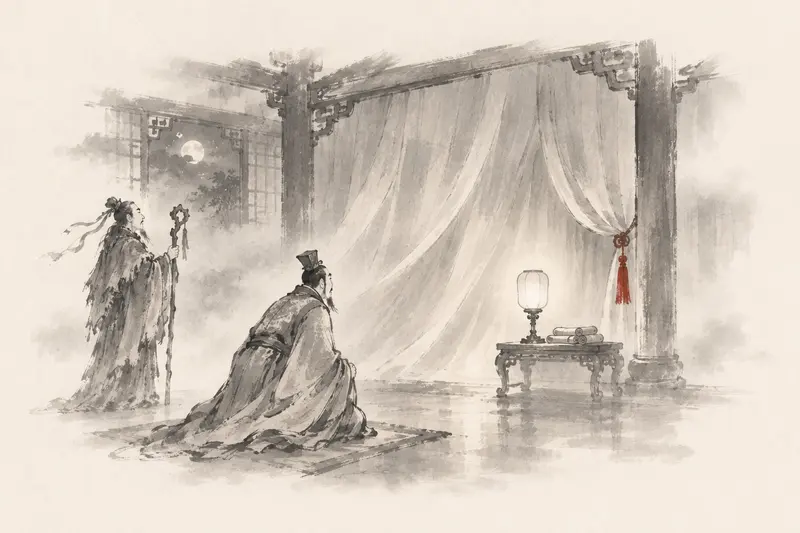
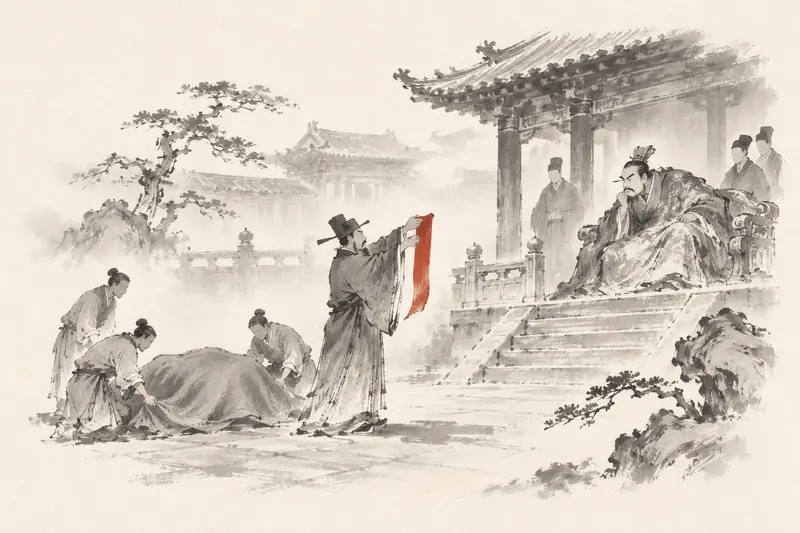
The following year a man of Qi named Shaoweng came before the emperor with arts for summoning spirits. The emperor had loved a Lady Wang, who had died. Shaoweng, it is said, used his arts to call up by night the likeness of Lady Wang and of the Hearth God, and the Son of Heaven watched from behind a curtain. So he made Shaoweng General of Accomplished Learning, gave him great rewards and treated him with the courtesy due a guest. The general said: "If Your Majesty wishes to commune with the gods, but your palaces and clothing are not like those of the gods, the divine beings will not come." So carriages painted with cloud patterns were made, and each day one was driven in the colour that overcame that day's element, to ward off evil spirits. He also built the Ganquan Palace with a terrace chamber in it, painted with the gods of Heaven and Earth and the Great One, and set out sacrificial vessels to bring down the gods of Heaven. After a year or so his arts grew weaker and weaker, and the gods did not come. So he wrote a message on silk and fed it to an ox, pretended to know nothing, and said there was something strange in the ox's belly. When the ox was killed and opened, the writing was found, telling of marvels. The Son of Heaven was suspicious. Someone recognised the handwriting, and on inquiry it proved to be a forgery. So the General of Accomplished Learning was put to death, and the matter was kept secret.
Notes (JA)
- 王夫人: 劉閎(斉王)の母(060-sanwang の章)。李夫人とする本もある。
- 竈鬼: かまどの神。
- 勝日: 五行で、その日の気に勝つ色の車に乗ること。
- 少翁の死は秘密にされ、のちの欒大に「文成は馬の肝を食べて死んだ」と説明された(028-fengshan の章)。
Notes (EN)
- Lady Wang: mother of Liu Hong, King of Qi (chapter 060); some texts say Lady Li.
- The Hearth God (竈鬼): the god of the kitchen stove.
- The day's element: in Five Phases thought, riding in the colour that overcomes the element ruling the day.
- Shaoweng's execution was kept quiet; Luan Da was later told he had died of eating horse liver (chapter 028).
Word notes
- forgery/ˈfɔːrdʒəri/noun
a false copy made to deceive people
In the text: “it proved to be a forgery”
Similar words: fake — not real · counterfeit — a copy made to cheat
- likeness/ˈlaɪknəs/noun
an image or appearance that looks like someone
In the text: “the likeness of Lady Wang”
Similar words: image — a picture or form · semblance — an outward look
Passage 5
Original
文成死明年,天子病鼎湖甚,巫醫無所不致,(至)不愈。游水發根乃言曰:「上郡有巫,病而鬼下之。」上召置祠之甘泉。及病,使人問神君。神君言曰:「天子毋憂病。病少愈,彊與我會甘泉。」於是病愈,遂幸甘泉,病良已。大赦天下,置壽宮神君。神君最貴者(大夫)[太一],其佐曰大禁、司命之屬,皆從之。非可得見,聞其音,與人言等。時去時來,來則風肅然也。居室帷中。時晝言,然常以夜。天子祓,然後入。因巫為主人,關飲食。所欲者言行下。又置壽宮、北宮,張羽旗,設供具,以禮神君。神君所言,上使人受書其言,命之曰「畫法」。其所語,世俗之所知也,毋絕殊者,而天子獨喜。其事祕,世莫知也。
Kundoku (Japanese reading)
文成死するの明年、天子鼎湖に病むこと甚だし。巫医致さざる所無きも、愈えず。游水発根乃ち言いて曰く、「上郡に巫有り。病みて鬼之に下る」と。上召して之を甘泉に置きて祠る。病むに及び、人をして神君に問わしむ。神君言いて曰く、「天子病を憂うること毋かれ。病少しく愈えなば、彊いて我と甘泉に会え」と。是に於いて病愈え、遂に甘泉に幸し、病良く已ゆ。天下に大赦し、寿宮の神君を置く。神君の最も貴き者は太一、其の佐を大禁・司命の属と曰い、皆之に従う。見るを得べきに非ず。其の音を聞くに、人の言と等し。時に去り時に来たる。来たれば則ち風粛然たり。室の帷中に居る。時に昼言うも、然れども常に夜を以てす。天子祓いて、然る後に入る。巫に因りて主人と為し、飲食を関す。欲する所の者言えば行い下す。又た寿宮・北宮を置き、羽旗を張り、供具を設けて、以て神君を礼す。神君の言う所、上人をして受けて其の言を書せしめ、之を命じて「画法」と曰う。其の語る所は、世俗の知る所なり。絶殊なる者毋し。而るに天子独り喜ぶ。其の事秘にして、世知る莫きなり。
Japanese
文成将軍が死んだ翌年、天子は鼎湖で重い病気になった。巫や医者をありとあらゆる手で呼んだが、治らなかった。游水発根という者が言った。「上郡に巫がいて、病気になると神が乗り移ります」。天子はその巫を呼んで甘泉に置き、祭らせた。病気がひどくなると、人をやって神君にたずねさせた。神君は言った。「天子は病気を心配しなくてよい。少しよくなったら、無理をしてでも甘泉で会おう」。すると病気がよくなったので、天子は甘泉に行幸し、すっかり治った。天下に大赦を行い、寿宮に神君を祭った。神君のうちいちばん尊いのは太一で、その補佐の大禁・司命などの神々が従っていた。姿は見えないが、声は人と同じように聞こえる。来たり去ったりし、来るときには風がさっと吹いた。部屋のとばりの中にいて、昼に話すこともあったが、たいていは夜だった。天子は身を清めてから中に入った。巫を取り次ぎにして、飲食を供えた。神君が望むことは、言うとそのまま実行された。また寿宮と北宮を建て、羽の旗を張り、供え物をそろえて神君を祭った。神君の言葉は人に書き取らせ、「画法」と名づけた。その内容は世間の誰もが知っていることで、とくに変わったものはなかったが、天子だけが喜んだ。このことは秘密にされ、世の人は知らなかった。
English
The year after the General of Accomplished Learning died, the Son of Heaven fell gravely ill at Dinghu. Every shaman and doctor was called in, but he did not recover. Then Youshui Fagen said: "There is a shaman in Shang commandery on whom a spirit descends when she falls ill." The emperor summoned her and had her installed and worshipped at Ganquan. When he was ill, he sent someone to ask the Spirit Lord, who said: "Let the Son of Heaven not worry about his illness. When he is a little better, let him make the effort to meet me at Ganquan." Then he got better, went to Ganquan, and was fully cured. He proclaimed a general amnesty and set up the Spirit Lord in the Palace of Long Life. The most honoured of these spirit lords was the Great One, and his helpers, the Great Prohibitor, the Arbiter of Fate and others, all came with him. They could not be seen, but their voices could be heard, just like human speech. They came and went; when they came, a wind rose with a rustling sound. They dwelt behind curtains in a chamber. Sometimes they spoke by day, but usually at night. The Son of Heaven purified himself before going in. The shaman acted as host and saw to food and drink, and whatever the spirits wanted was spoken through her and carried out. He also built the Palace of Long Life and the Northern Palace, hung feathered banners and set out offerings to honour the Spirit Lord. He had what the Spirit Lord said taken down in writing and called it "the Painted Rules". What it said was what everyone already knew, nothing out of the ordinary, yet the Son of Heaven alone was delighted. The matter was secret, and the world knew nothing of it.
Notes (JA)
- 鼎湖: 黄帝が鼎を鋳て天に昇ったと伝えられる地の名をとった宮殿。
- 原文の「(大夫)[太一]」は、底本が「大夫」を「太一」に改めたもの。「(至)」は余分な字とされる。
- 司馬遷はこのあとの太史公の評で、自分も寿宮に入って神の言葉の祭りに仕えたと書いている(第12節)。
Notes (EN)
- Dinghu: a palace named after the place where the Yellow Emperor was said to have cast a cauldron and risen to Heaven.
- The text's "(大夫)[太一]" shows "grandee" corrected to "Great One"; "(至)" is marked as an extra character.
- In his closing comment Sima Qian says he himself attended the rites of the spirits' words in the Palace of Long Life (passage 12).
Word notes
- purify/ˈpjʊərɪfaɪ/verb
to make clean, especially before a religious rite
In the text: “purified himself before going in”
Similar words: cleanse — make clean · sanctify — make holy
- amnesty/ˈæmnəsti/noun
an official pardon for many people
In the text: “proclaimed a general amnesty”
Similar words: pardon — official forgiveness · reprieve — a cancelled punishment
Passage 6
Original
其夏六月中,汾陰巫錦為民祠魏脽后土營旁,見地如鉤狀,掊視得鼎。鼎大異於眾鼎,文鏤毋款識,怪之,言吏。吏告河東太守勝,勝以聞。天子使使驗問巫錦得鼎無姦詐,乃以禮祠,迎鼎至甘泉,從行,上薦之。至中山,晏溫,有黃雲蓋焉。有麃過,上自射之,因以祭雲。至長安,公卿大夫皆議請尊寶鼎。天子曰:「閒者河溢,歲數不登,故巡祭后土,祈為百姓育穀。今年豐廡未有報,鼎曷為出哉?」有司皆曰:「聞昔大帝興神鼎一,一者一統,天地萬物所系終也。黃帝作寶鼎三,象天地人也。禹收九牧之金,鑄九鼎,皆嘗鬺烹上帝鬼神。遭聖則興,遷于夏商。周德衰,宋之社亡,鼎乃淪伏而不見。
Kundoku (Japanese reading)
其の夏六月中、汾陰の巫錦民の為に魏脽の后土の営の旁に祠る。地の鉤の如き状を見、掊ちて視るに鼎を得たり。鼎は大いに衆鼎に異なり、文鏤ありて款識毋し。之を怪しみ、吏に言う。吏河東の太守勝に告ぐ。勝以て聞す。天子使いをして巫錦の鼎を得しに姦詐無きかを験問せしめ、乃ち礼を以て祠り、鼎を迎えて甘泉に至らしめ、行に従えて、上之を薦む。中山に至るに、晏温にして、黄雲之を蓋う有り。麃の過ぐる有り、上自ら之を射て、因りて以て雲を祭る。長安に至り、公卿大夫皆議して宝鼎を尊ばんことを請う。天子曰く、「間者河溢れ、歳数々登らず。故に巡りて后土を祭り、百姓の為に穀を育まんことを祈る。今年豊廡なるも未だ報いず。鼎曷為れぞ出づるや」と。有司皆曰く、「聞く、昔大帝神鼎一を興す。一とは一統なり、天地万物の系りて終わる所なり。黄帝宝鼎三を作り、天地人に象る。禹九牧の金を収め、九鼎を鋳る。皆嘗て上帝鬼神を鬺烹す。聖に遭えば則ち興り、夏商に遷る。周の徳衰え、宋の社亡び、鼎乃ち淪伏して見えず」と。
Japanese
その夏の六月、汾陰の巫の錦が、民のために魏脽の后土の祭場のそばで祭りをしていると、地面が鉤のような形に盛り上がっているのを見つけた。掘ってみると、鼎が出てきた。その鼎はほかの鼎とはまったく違い、模様が刻まれているが、銘文はなかった。錦はふしぎに思って役人に知らせ、役人は河東の太守の勝に伝え、勝が天子に申し上げた。天子は使いをやって、巫の錦が鼎を手に入れたことにいつわりがないかを調べさせたうえで、礼をもって祭り、鼎を甘泉まで迎えさせ、自分の行列に加えて、神に供えた。中山まで来ると、空が晴れて暖かく、黄色い雲が鼎の上をおおった。鹿が通りかかったので、天子は自ら射て、それを雲に供えた。長安に着くと、大臣たちは皆、この宝の鼎を尊ぶよう願い出た。天子は言った。「近ごろ黄河があふれ、何年も作物が実らなかった。だから巡幸して后土を祭り、民のために穀物が育つよう祈ったのだ。今年は豊作だったが、まだ神にお礼をしていない。それなのに、なぜ鼎が出てきたのか」。役人たちは皆言った。「昔、大帝は神の鼎を一つ作ったと聞いています。一とは天下の統一で、天地万物がそこに結ばれ、そこに帰るものです。黄帝は宝の鼎を三つ作り、天・地・人をかたどりました。禹は九州の長から金属を集めて九つの鼎を鋳造しました。これらの鼎はいずれも上帝や鬼神のためにいけにえを煮るのに使われました。聖人が現れると鼎も現れ、夏から殷へと受け継がれました。周の徳が衰え、宋の社が滅びると、鼎は沈んで見えなくなったのです」。
English
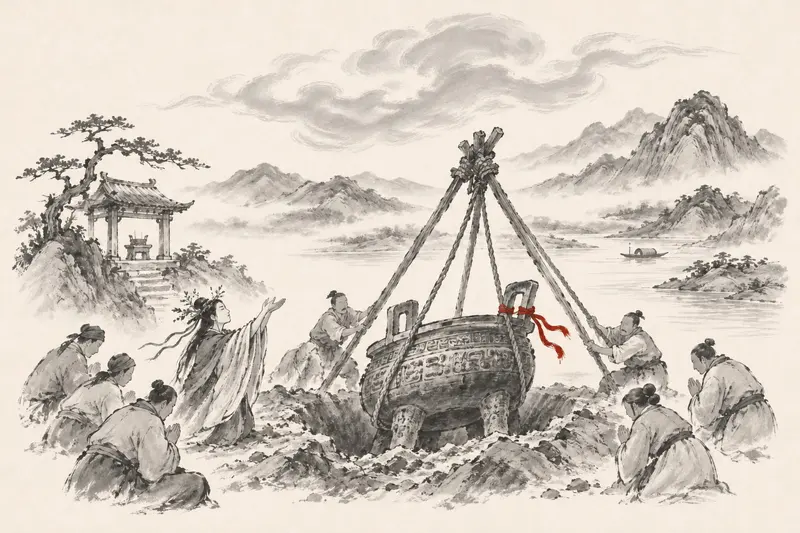
In the sixth month of that summer, a shaman of Fenyin named Jin was worshipping for the people beside the precinct of the Earth Sovereign at Weishui, when she noticed the ground humped up like a hook. Digging, she found a cauldron. It was quite unlike other cauldrons, with patterns carved on it but no inscription. Thinking it strange, she told the officials, who told Sheng, governor of Hedong, and Sheng reported it to the throne. The Son of Heaven sent envoys to make sure the shaman had found the cauldron without trickery, then had it honoured with rites and brought to Ganquan, taking it along on his travels and presenting it to the gods. When they reached Zhongshan, the sky was clear and warm and a yellow cloud hung over the cauldron. A deer passed by; the emperor shot it himself and offered it to the cloud. When they reached Chang'an, the high ministers all proposed that the precious cauldron be honoured. The Son of Heaven said: "Lately the River has overflowed and the harvests have failed year after year, so I toured and worshipped the Earth Sovereign, praying that grain would grow for the people. This year's harvest has been rich, but we have not yet given thanks. Why has the cauldron appeared?" The officials all said: "We have heard that long ago the Great Emperor raised one divine cauldron — one for unity, where Heaven, Earth and all things are bound and come to their end. The Yellow Emperor made three precious cauldrons, after Heaven, Earth and Man. Yu gathered the metal of the nine provinces and cast nine cauldrons. All of them were used to cook offerings for the Lord on High and the spirits. When a sage appeared they appeared too, and they passed down to Xia and Shang. When the virtue of Zhou declined and the altar of Song was lost, the cauldrons sank out of sight."
Notes (JA)
- 后土: 地の神。武帝は汾陰に后土の祠を建てた。
- 九鼎: 禹が作り、夏・殷・周と受け継がれた天下の宝。秦の始皇帝も泗水で探させたが見つからなかったと伝えられる(006-qin-shihuang の章)。
- この鼎の出土を記念して、年号は「元鼎」とされた。
Notes (EN)
- The Earth Sovereign (后土): the god of the earth, whose shrine Emperor Wu built at Fenyin.
- The nine cauldrons: Yu's treasures, handed down through Xia, Shang and Zhou; the First Emperor is said to have searched the Si River for them in vain (chapter 006).
- The reign name Yuanding, "First Cauldron", commemorated this find.
Word notes
- inscription/ɪnˈskrɪpʃən/noun
words cut into stone or metal
In the text: “no inscription”
Similar words: engraving — cut letters or pictures · epitaph — words on a tomb
- trickery/ˈtrɪkəri/noun
the use of tricks to cheat people
In the text: “without trickery”
Similar words: deceit — dishonesty · fraud — cheating
Passage 7
Original
其秋,為伐南越,告禱泰一,以牡荊畫幡日月北斗登龍,以象天一三星,為泰一鋒,名曰「靈旗」。為兵禱,則太史奉以指所伐國。而五利將軍使不敢入海,之泰山祠。上使人微隨驗,實無所見。五利妄言見其師,其方盡,多不讎。上乃誅五利。其冬,公孫卿候神河南,見僊人跡緱氏城上,有物若雉,往來城上。天子親幸緱氏城視跡。問卿:「得毋效文成、五利乎?」卿曰:「僊者非有求人主,人主求之。其道非少寬假,神不來。言神事,事如迂誕,積以歲乃可致。」於是郡國各除道,繕治宮觀名山神祠所,以望幸矣。
Kundoku (Japanese reading)
其の秋、南越を伐たんが為に、泰一に告禱し、牡荊を以て幡に日月・北斗・登龍を画き、以て天一の三星に象り、泰一の鋒と為し、名づけて「霊旗」と曰う。兵の為に禱るときは、則ち太史奉じて以て伐つ所の国を指す。而して五利将軍使いせられて敢えて海に入らず、泰山に之きて祠る。上人をして微かに随いて験せしむるに、実に見る所無し。五利妄りに其の師を見ると言い、其の方尽き、多く讎わず。上乃ち五利を誅す。其の冬、公孫卿神を河南に候い、僊人の跡を緱氏城の上に見る。物の雉の若き有り、城上を往来す。天子親ら緱氏城に幸して跡を視る。卿に問う、「文成・五利に効うこと得毋きか」と。卿曰く、「僊者は人主に求むること有るに非ず。人主之を求むるなり。其の道少しく寛仮するに非ずんば、神来たらず。神事を言うに、事は迂誕なるが如きも、積むに歳を以てすれば乃ち致すべし」と。是に於いて郡国各々道を除い、宮観・名山の神祠の所を繕治し、以て幸を望む。
Japanese
その秋(前112年)、南越を討つために泰一に祈り、牡荊(ニンジンボク)の木を竿にした旗に太陽・月・北斗星・昇り竜を描いて、天一の三つの星をかたどり、泰一の矛先として「霊旗」と名づけた。戦のために祈るときは、太史がこの旗を持って、攻める国を指し示した。いっぽう五利将軍(欒大)は、海へ使いに出されたのに海に入ろうとせず、泰山へ行って祭りをしていた。天子がひそかに人をつけて調べさせると、実際には何も見ていなかった。五利将軍は師に会ったとでたらめを言っていたが、術はすでに尽きて、言うことの多くは当たらなかった。天子はそこで五利将軍を殺した。その冬、公孫卿が河南で神の現れるのを待っていると、緱氏の城壁の上に仙人の足跡を見つけ、キジのようなものが城壁の上を行き来していたと言った。天子は自ら緱氏城へ行って足跡を見た。そして公孫卿にたずねた。「文成将軍や五利将軍のまねをしているのではないだろうな」。公孫卿は言った。「仙人の方から君主に何かを求めるのではありません。君主が仙人を求めるのです。そのやり方に少しゆとりを持たなければ、神は来ません。神のことを言うと、まわりくどく、でたらめのように聞こえますが、年月を重ねれば、招くことができるのです」。そこで郡や国はそれぞれ道を整え、宮殿や高殿、名山の神の祠を修理して、天子の行幸を待った。
English
That autumn, to attack Southern Yue, the emperor prayed to the Great One. On a banner hung from a pole of vitex wood were painted the sun, the moon, the Northern Dipper and a rising dragon, after the three stars of the Heavenly One, as the spearhead of the Great One; it was called the Spirit Banner. When praying for war, the Grand Historian carried it and pointed it toward the state to be attacked. Meanwhile the General of Five Profits, sent on his mission, did not dare go out to sea but went to Mount Tai to worship. The emperor had men secretly follow and check him: he had in fact seen nothing. The General of Five Profits had lied that he met his teacher; his arts were exhausted and most of his claims did not come true. So the emperor put him to death. That winter Gongsun Qing, watching for spirits in Henan, saw footprints of an immortal on the wall of Goushi, and something like a pheasant going back and forth along the wall. The Son of Heaven went to Goushi in person to see the footprints, and asked Qing: "You are not imitating Wencheng and Wuli, are you?" Qing said: "The immortals do not seek anything from a ruler; it is the ruler who seeks them. Unless his way is a little more patient, the spirits will not come. Talk of spirits may sound roundabout and wild, but over years they can be brought." So the commanderies and kingdoms each cleared their roads and repaired their palaces, towers and shrines on famous mountains, hoping for an imperial visit.
Notes (JA)
- 五利将軍: 欒大。武帝の娘を妻とし、多くの将軍の印を帯びた方士(028-fengshan の章)。
- 霊旗: 戦の勝利を祈るための旗。のちの軍旗のもとになったともいわれる。
- 公孫卿: 斉の方士。黄帝が鼎を得て天に昇った話を武帝に説いた。
Notes (EN)
- The General of Five Profits: Luan Da, the magician who married the emperor's daughter and wore many generals' seals (chapter 028).
- The Spirit Banner (靈旗): a banner for praying for victory in war.
- Gongsun Qing: a magician of Qi who told the emperor how the Yellow Emperor found a cauldron and rose to Heaven.
Word notes
- banner/ˈbænər/noun
a long flag carried on a pole
In the text: “the Spirit Banner”
Similar words: flag — a cloth with a design · standard — a military flag
- patient/ˈpeɪʃənt/adjective
able to wait calmly
In the text: “a little more patient”
Similar words: tolerant — willing to put up with things · calm — not upset
Passage 8
Original
其來年冬,上議曰:「古者先振兵澤旅,然後封禪。」乃遂北巡朔方,勒兵十餘萬,還祭黃帝冢橋山,澤兵須如。上曰:「吾聞黃帝不死,今有冢,何也?」或對曰:「黃帝已僊上天,群臣葬其衣冠。」即至甘泉,為且用事泰山,先類祠泰一。
Kundoku (Japanese reading)
其の来年の冬、上議して曰く、「古は先ず兵を振い旅を沢して、然る後に封禅す」と。乃ち遂に北のかた朔方を巡り、兵十余万を勒し、還りて黄帝の冢を橋山に祭り、兵を須如に沢す。上曰く、「吾聞く、黄帝は死せずと。今冢有るは、何ぞや」と。或るひと対えて曰く、「黄帝已に僊して天に上る。群臣其の衣冠を葬る」と。即ち甘泉に至り、且に事を泰山に用いんとするが為に、先ず泰一を類祠す。
Japanese
その翌年の冬(前110年)、天子は言った。「昔は、まず兵をふるい起こし軍を整えてから、封禅を行ったという」。そこで北の朔方を巡り、兵十万あまりを並べて閲兵し、帰りに橋山で黄帝の墓を祭り、須如で兵を解いた。天子は言った。「黄帝は死なずに天に昇ったと聞いている。それなのに墓があるのはなぜか」。ある者が答えた。「黄帝は仙人となって天に昇りました。家臣たちはその衣と冠を葬ったのです」。こうして甘泉に戻り、泰山で封禅を行う前に、まず泰一を祭った。
English
The following winter the emperor proposed: "In ancient times they first marshalled the army and disbanded the troops, and only then performed the Feng and Shan." So he toured north to Shuofang, reviewed more than a hundred thousand troops, and on his way back worshipped at the tomb of the Yellow Emperor on Mount Qiao and disbanded the troops at Xuru. The emperor said: "I have heard that the Yellow Emperor did not die. Why then is there a tomb?" Someone answered: "The Yellow Emperor became an immortal and rose to Heaven. His ministers buried his robes and cap." Then the emperor went to Ganquan and, as he was about to perform the rites at Mount Tai, first made an offering to the Great One.
Notes (JA)
- 橋山: 黄帝の陵とされる地。いまの陝西省黄陵県。
- 衣冠を葬る: 遺体のかわりに衣と冠を葬った墓を「衣冠冢」という。
- 武帝はこの年、泰山で封禅を行った(028-fengshan の章)。
Notes (EN)
- Mount Qiao: the reputed tomb of the Yellow Emperor, in modern Huangling, Shaanxi.
- Burying his robes and cap: a "robe-and-cap tomb" holds clothing in place of a body.
- That year the emperor performed the Feng and Shan at Mount Tai (chapter 028).
Word notes
- review/rɪˈvjuː/verb
to inspect troops formally
In the text: “reviewed more than a hundred thousand troops”
Similar words: inspect — look at carefully · parade — march for display
- immortal/ɪˈmɔːrtəl/noun
a being who never dies
In the text: “became an immortal”
Similar words: deity — a god · sage — a very wise person
Passage 9
Original
上遂東巡海上,行禮祠八神。齊人之上疏言神怪奇方者以萬數,然無驗者。乃益發船,令言海中神山者數千人求蓬萊神人。公孫卿持節常先行候名山,至東萊,言夜見一人,長數丈,就之則不見,見其跡甚大,類禽獸云。群臣有言見一老父牽狗,言「吾欲見巨公」,已忽不見。上既見大跡,未信,及群臣有言老父,則大以為僊人也。宿留海上,與方士傳車及閒使求僊人以千數。
Kundoku (Japanese reading)
上遂に東して海上を巡り、礼を行いて八神を祠る。斉人の上疏して神怪奇方を言う者万を以て数うるも、然れども験ある者無し。乃ち益々船を発し、海中の神山を言う者数千人をして蓬萊の神人を求めしむ。公孫卿節を持して常に先行して名山を候い、東萊に至り、言う、夜一人を見る、長さ数丈、之に就けば則ち見えず、其の跡を見るに甚だ大にして、禽獣に類すと云う。群臣に言う有り、一老父の狗を牽くを見る、「吾巨公に見えんと欲す」と言い、已にして忽ち見えずと。上既に大跡を見るも、未だ信ぜず。群臣の老父を言う有るに及び、則ち大いに以て僊人と為すなり。海上に宿留し、方士に伝車及び間使を与えて僊人を求めしむること千を以て数う。
Japanese
天子はこうして東へ向かって海辺を巡り、礼を尽くして八神を祭った。斉の人で上書して神や怪異、ふしぎな術を語る者は一万人を数えたが、どれも効き目はなかった。そこでさらに船を出し、海の中の神山のことを語る者数千人に蓬萊の神人を探させた。公孫卿は天子の節を持っていつも先回りして名山で神を待ち、東萊まで来ると、こう言った。「夜、身の丈が数丈もある人を見ました。近づくと見えなくなりましたが、足跡を見るととても大きく、鳥や獣の足跡のようでした」。家臣の中にも、「犬を引いた老人に会いました。『わしは巨公にお会いしたい』と言って、ふっと消えてしまいました」と言う者がいた。天子は大きな足跡を見ても、まだ信じなかったが、家臣たちが老人の話をすると、これこそ仙人だと大いに信じた。天子は海辺にとどまり、方士たちに駅伝の車を与えたり、ひそかに使いを出したりして、千人もの者に仙人を探させた。
English
The emperor then went east along the coast, performing rites to the Eight Spirits. Men of Qi who sent up letters about spirits, marvels and strange arts numbered in the tens of thousands, but none of their claims proved true. So he sent out more ships, and had several thousand men who spoke of the sacred mountains in the sea search for the divine beings of Penglai. Gongsun Qing, carrying the imperial staff, always went ahead to watch for spirits on famous mountains. At Donglai he said that he had seen at night a man several zhang tall; when he approached, the man vanished, but his footprints were huge, like those of a bird or beast. Some of the ministers said they had seen an old man leading a dog, who said, "I wish to see the Great Lord," and then suddenly vanished. The emperor had seen the giant footprints but still did not believe; when the ministers spoke of the old man, he became quite sure it was an immortal. He lingered by the sea, and sent out thousands of magicians in post carriages and secret envoys to seek the immortals.
Notes (JA)
- 八神: 斉の地で古くから祭られていた天主・地主・兵主など八柱の神(028-fengshan の章)。
- 蓬萊: 東の海にあるとされた仙人の山。秦の始皇帝も探させた。
- 巨公: 偉大な主人。天子のことと受け取られた。
Notes (EN)
- The Eight Spirits: eight gods long worshipped in Qi, including the Lords of Heaven, Earth and War (chapter 028).
- Penglai: an island mountain of immortals in the eastern sea, sought by the First Emperor too.
- The Great Lord (巨公): taken to mean the Son of Heaven.
Word notes
- vanish/ˈvænɪʃ/verb
to disappear suddenly
In the text: “then suddenly vanished”
Similar words: disappear — go out of sight · fade — slowly become less visible
- linger/ˈlɪŋɡər/verb
to stay in a place longer than needed
In the text: “He lingered by the sea”
Similar words: remain — stay · dawdle — move slowly; informal
Passage 10
Original
上還,以柏梁災故,朝受計甘泉。公孫卿曰:「黃帝就青靈臺,十二日燒,黃帝乃治明庭。明庭,甘泉也。」方士多言古帝王有都甘泉者。其後天子又朝諸侯甘泉,甘泉作諸侯邸。勇之乃曰:「越俗有火災,復起屋必以大,用勝服之。」於是作建章宮,度為千門萬戶。前殿度高未央,其東則鳳闕,高二十餘丈。其西則唐中,數十里虎圈。其北治大池,漸臺高二十餘丈,名曰泰液池,中有蓬萊、方丈、瀛洲、壺梁,象海中神山龜魚之屬。其南有玉堂、璧門、大鳥之屬。乃立神明臺、井幹樓,度五十餘丈,輦道相屬焉。
Kundoku (Japanese reading)
上還り、柏梁の災あるを以ての故に、朝して計を甘泉に受く。公孫卿曰く、「黄帝青霊台に就くに、十二日にして焼く。黄帝乃ち明庭を治む。明庭とは、甘泉なり」と。方士多く言う、古の帝王に甘泉に都する者有りと。其の後天子又た諸侯を甘泉に朝せしめ、甘泉に諸侯の邸を作る。勇之乃ち曰く、「越の俗に火災有れば、復た屋を起こすに必ず大を以てし、勝を用いて之を服す」と。是に於いて建章宮を作り、度りて千門万戸と為す。前殿は度高きこと未央に過ぎ、其の東は則ち鳳闕、高さ二十余丈。其の西は則ち唐中、数十里の虎圏。其の北は大池を治め、漸台高さ二十余丈、名づけて泰液池と曰う。中に蓬萊・方丈・瀛洲・壺梁有り、海中の神山・亀魚の属に象る。其の南に玉堂・璧門・大鳥の属有り。乃ち神明台・井幹楼を立て、度五十余丈、輦道相属く。
Japanese
天子は都に戻ったが、柏梁台が火事で焼けたので、甘泉で朝見して各地の会計報告を受けた。公孫卿は言った。「黄帝は青霊台を建てましたが、十二日で焼けてしまいました。そこで黄帝は明庭を造りました。明庭とは甘泉のことです」。方士たちの多くも、昔の帝王に甘泉を都とした者がいると言った。その後、天子はまた甘泉で諸侯の朝見を受け、甘泉に諸侯の屋敷を建てた。越の人の勇之は言った。「越のならわしでは、火事があると、建て直すときには必ずもっと大きな建物にして、勝ることで災いを抑えます」。そこで建章宮を造り、千の門と一万の戸がある大きさにした。前殿は未央宮より高く、その東には高さ二十丈あまりの鳳闕(鳳凰の門)、西には何十里もある虎の囲い場があった。北には大きな池を掘り、高さ二十丈あまりの漸台を建てて、泰液池と名づけた。池の中には蓬萊・方丈・瀛洲・壺梁の島を作り、海の中の神山や亀・魚をかたどった。南には玉堂・璧門・大鳥の像などがあった。さらに高さ五十丈あまりの神明台と井幹楼を建て、天子の車が通る空中の道でつないだ。
English
When the emperor came back, because the Boliang Terrace had burned, he received the provincial accounts at court at Ganquan. Gongsun Qing said: "The Yellow Emperor's Green Spirit Terrace burned after twelve days, so the Yellow Emperor built the Bright Court. The Bright Court is Ganquan." Many magicians said that ancient emperors had had their capitals at Ganquan. After that the Son of Heaven received the lords at Ganquan too, and residences for the lords were built there. Then Yongzhi of Yue said: "In Yue, when a house burns, it is always rebuilt larger, to overcome the disaster by surpassing it." So the Jianzhang Palace was built, planned with a thousand gates and ten thousand doors. Its front hall was higher than the Weiyang Palace. To the east stood the Phoenix Gate Tower, more than twenty zhang high; to the west the Tang Garden, with a tiger enclosure tens of li around. To the north a great lake was dug, with a terrace more than twenty zhang high, called the Lake of Great Liquid; in it were Penglai, Fangzhang, Yingzhou and Huliang, modelled on the sacred mountains of the sea, with tortoises and fish. To the south were the Jade Hall, the Jade Disc Gate, great bird statues and the like. He also raised the Spirit Brightness Terrace and the Well-Frame Tower, more than fifty zhang high, joined by raised carriage-ways.
Notes (JA)
- 柏梁: 武帝が建てた香木の高殿。前104年に焼けた。
- 建章宮: 長安の西に造られた巨大な宮殿。池に仙人の島をかたどった庭は、のちの庭園のもとになった。
- 丈: 長さの単位。漢の一丈はおよそ二・三メートル。
Notes (EN)
- The Boliang Terrace: Emperor Wu's tower of fragrant timber, burned in 104 BCE.
- The Jianzhang Palace: a vast palace west of Chang'an; its lake with islands of the immortals became a model for later gardens.
- Zhang (丈): a unit of length, about 2.3 metres in Han times.
Word notes
- terrace/ˈtɛrəs/noun
a raised flat platform or tower
In the text: “the Boliang Terrace had burned”
Similar words: platform — a raised flat area · tower — a tall building
- enclosure/ɪnˈkloʊʒər/noun
an area surrounded by a fence or wall
In the text: “a tiger enclosure”
Similar words: pen — a small fenced area · compound — an enclosed area
Passage 11
Original
今天子所興祠,泰一、后土,三年親郊祠,建漢家封禪,五年一修封。薄忌泰一及三一、冥羊、馬行、赤星,五,寬舒之祠官以歲時致禮。凡六祠,皆太祝領之。至如八神諸神,明年、凡山他名祠,行過則祀,去則已。方士所興祠,各自主,其人終則已,祠官弗主。他祠皆如其故。今上封禪,其後十二歲而還,徧於五嶽、四瀆矣。而方士之候祠神人,入海求蓬萊,終無有驗。而公孫卿之候神者,猶以大人跡為解,無其效。天子益怠厭方士之怪迂語矣,然終羈縻弗絕,冀遇其真。自此之後,方士言祠神者彌眾,然其效可睹矣。
Kundoku (Japanese reading)
今の天子の興す所の祠は、泰一・后土、三年に親ら郊祠し、漢家の封禅を建て、五年に一たび封を修む。薄忌の泰一及び三一・冥羊・馬行・赤星の五は、寛舒の祠官歳時を以て礼を致す。凡そ六祠、皆太祝之を領す。八神の諸神、明年・凡山の他の名祠の如きに至りては、行きて過ぐれば則ち祀り、去れば則ち已む。方士の興す所の祠は、各自ら主り、其の人終われば則ち已む。祠官主らず。他の祠は皆其の故の如し。今上封禅し、其の後十二歳にして還り、五嶽・四瀆に徧し。而して方士の神人を候祠し、海に入りて蓬萊を求むるも、終に験有る無し。而して公孫卿の神を候う者、猶お大人の跡を以て解と為すも、其の効無し。天子益々方士の怪迂の語に怠厭す。然れども終に羈縻して絶たず、其の真に遇わんことを冀う。此れより後、方士の神を祠ることを言う者弥々衆きも、然れども其の効は睹るべし。
Japanese
いまの天子が始めた祭りは、泰一と后土の祭りで、三年に一度自ら郊外で祭り、漢の封禅を定めて、五年に一度、封の祭りを行った。薄忌の泰一、三一・冥羊・馬行・赤星の五つの祭りは、寛舒らの祭官が季節ごとに行い、合わせて六つの祭りをすべて太祝がつかさどった。八神などの神々や、明年・凡山などのほかの名高い祠は、天子が通りかかったときに祭り、去ればそれきりだった。方士たちが始めた祭りは、それぞれの方士が自分で取りしきり、その人が死ねばやめになり、祭官はかかわらなかった。そのほかの祭りは、すべて元のままだった。いまの天子が封禅を行ってから十二年、五嶽と四瀆(四つの大河)をくまなく巡った。しかし方士たちが神人を待ち、海に入って蓬萊を探しても、ついに一度も効き目はなかった。公孫卿は神を待ちながら、相変わらず大きな足跡を言いわけにしたが、何の成果もなかった。天子は方士たちのでたらめな話にますます飽きていったが、それでも最後まで手放さず、本物に出会えることを願っていた。これより後、神を祭ることを言う方士はますます多くなったが、その効き目のほどは見てのとおりである。
English
The rites founded by the present Son of Heaven are those to the Great One and the Earth Sovereign, which he performs himself in the suburbs every three years; and the Han Feng and Shan, which he renews once every five years. Bo Ji's Great One, and the five rites to the Three Ones, the Dark Ram, the Horse Road and the Red Star, are carried out in their seasons by Kuan Shu's sacrificial officials — six rites in all, all under the Grand Invoker. As for the Eight Spirits and the other gods, and the famous shrines such as Mingnian and Mount Fan, he worships them when he passes and stops when he leaves. Rites founded by the magicians are each run by the magician himself and end when he dies; the sacrificial officials have no part in them. All the other rites go on as before. Twelve years after his Feng and Shan, the present emperor had been round all the Five Peaks and the Four Great Rivers. But the magicians who waited for divine beings and went to sea to seek Penglai never had any result, and Gongsun Qing, waiting for spirits, still explained himself by the giant footprints, to no effect. The Son of Heaven grew more and more weary of the magicians' strange, roundabout talk, yet in the end he kept them on a loose rein and never cut them off, hoping to meet the real thing. From then on the magicians who spoke of worshipping spirits grew ever more numerous — and the results can be seen.
Notes (JA)
- 五嶽・四瀆: 天下の五つの名山(泰山・華山・衡山・恒山・嵩山)と、四つの大河(江・河・淮・済)。
- 羈縻: ゆるやかにつなぎとめること。
- 「其の効は睹るべし」: 効き目がないことは明らかだ、という皮肉をこめた結び。
Notes (EN)
- The Five Peaks and Four Great Rivers: Mounts Tai, Hua, Heng (south), Heng (north) and Song; the Yangzi, Yellow River, Huai and Ji.
- A loose rein (羈縻): keeping something tethered without letting go.
- "The results can be seen": an ironic close — plainly there were none.
Word notes
- weary/ˈwɪəri/adjective
tired and bored
In the text: “grew more and more weary of the magicians”
Similar words: tired — needing rest · fed up — annoyed and bored; informal
- roundabout/ˈraʊndəbaʊt/adjective
not saying things in a simple, direct way
In the text: “strange, roundabout talk”
Similar words: indirect — not straight · evasive — avoiding a clear answer
Passage 12
Original
太史公曰:余從巡祭天地諸神名山川而封禪焉。入壽宮侍祠神語,究觀方士祠官之言,於是退而論次。自古以來用事於鬼神者,具見其表裏。後有君子,得以覽焉。至若俎豆珪幣之詳,獻酬之禮,則有司存焉。
Kundoku (Japanese reading)
太史公曰く、余天地の諸神・名山川を巡祭するに従いて封禅す。寿宮に入りて神語を祠るに侍し、究めて方士・祠官の言を観る。是に於いて退きて論次す。古より以来鬼神に事を用うる者、具さに其の表裏を見わす。後に君子有らば、以て覧るを得ん。俎豆・珪幣の詳、献酬の礼の若きに至りては、則ち有司存す。
Japanese
太史公は言う。わたしは天子に従って、天地の神々や名山・大河を巡って祭り、封禅にも加わった。寿宮に入って神の言葉の祭りに仕え、方士や祭官の言うことをくまなく見た。そこで退いて、昔から鬼神に仕えてきた者たちのことを順序立てて書き、その表も裏もすべて明らかにした。後の世の君子は、これを読んでほしい。供え物の器や玉・絹のこまかいこと、酒をささげる礼などについては、係の役人の記録に残っている。
English
The Grand Historian says: I followed the emperor on his tours to worship the gods of Heaven and Earth and the famous mountains and rivers, and took part in the Feng and Shan. I entered the Palace of Long Life and attended the rites where the spirits spoke, and I looked closely into what the magicians and sacrificial officials said. Then I withdrew and set in order the record of all who have served gods and spirits since ancient times, showing them inside and out. Gentlemen of later ages may read it. As for the details of vessels, jades and silks, and the rites of offering wine, the officials keep those records.
Notes (JA)
- この評は封禅書の結びとほぼ同じ文である(028-fengshan の章)。
- 其の表裏を見わす: 方士たちの言葉の表向きと、その裏の実際の両方を書いた、という意味。
Notes (EN)
- This comment is nearly identical to the close of the Treatise on the Feng and Shan (chapter 028).
- Showing them inside and out: recording both what the magicians claimed and what actually happened.
Word notes
- attend/əˈtɛnd/verb
to be present at an event
In the text: “attended the rites”
Similar words: be present — be there · take part — join in
- withdraw/wɪðˈdrɔː/verb
to leave a place or position
In the text: “Then I withdrew”
Similar words: retire — go away to rest · retreat — move back