Annals · Vol. 9
The Basic Annals of Empress Lü 呂太后本紀
Empress Lü's Rule and the Fall of the Lü Clan 呂后稱制與諸呂之誅
The story of Empress Lü, wife of Liu Bang, the first Han emperor. Gaozu wanted to replace his gentle heir, the future Emperor Hui, with Ruyi, the son of his favourite, Lady Qi, but his ministers stopped him. When Gaozu died, the empress poisoned Ruyi, had Lady Qi's hands and feet cut off and called her "the human swine". Emperor Hui, made to look at her, never recovered and died young. Holding power herself, the empress broke the oath that Gaozu and his ministers had sworn, that if anyone not of the Liu clan became a king the whole realm should attack him, and made king after king of her own Lü clan. Wang Ling objected and was pushed aside; Chen Ping and Zhou Bo went along and waited. When she died, Zhou Bo entered the Northern Army and called on those loyal to the Lü to bare their right shoulders and those loyal to the Liu to bare their left, and every man bared his left. Liu Zhang, the Marquis of Zhuxu, killed Lü Chan, and the Lü clan was destroyed. Sima Qian ends by noting that through all of this the common people were at last able to rest from war.
This page has the scene "Empress Lü's Rule and the Fall of the Lü Clan" from this volume, not the whole volume.
Audio
The audio is synthetic speech.
Video
Passage 1
Original
呂太后者,高祖微時妃也,生孝惠帝、女魯元太后。及高祖為漢王,得定陶戚姬,愛幸,生趙隱王如意。孝惠為人仁弱,高祖以為不類我,常欲廢太子,立戚姬子如意,如意類我。戚姬幸,常從上之關東,日夜啼泣,欲立其子代太子。呂后年長,常留守,希見上,益疏。如意立為趙王後,幾代太子者數矣,賴大臣爭之,及留侯策,太子得毋廢。呂后為人剛毅,佐高祖定天下,所誅大臣多呂后力。呂后兄二人,皆為將。長兄周呂侯死事,封其子呂台為酈侯,子產為交侯;次兄呂釋之為建成侯。
Kundoku (Japanese reading)
呂太后なる者は、高祖微なりし時の妃なり。孝恵帝・女魯元太后を生む。高祖の漢王と為るに及び、定陶の戚姫を得て、愛幸し、趙の隠王如意を生む。孝恵人と為り仁弱なり。高祖以為えらく我に類せずと。常に太子を廃して、戚姫の子如意を立てんと欲す。如意は我に類すればなり。戚姫幸せられ、常に上に従いて関東に之き、日夜啼泣して、其の子を立てて太子に代えんと欲す。呂后は年長じ、常に留守して、上に見ゆること希にして、益々疏んぜらる。如意立ちて趙王と為りし後、幾ど太子に代わる者数々なり。大臣の之を争うと、留侯の策とに頼りて、太子廃せらるること毋きを得たり。 呂后人と為り剛毅にして、高祖を佐けて天下を定む。誅する所の大臣は多く呂后の力なり。呂后の兄二人、皆将と為る。長兄周呂侯事に死す。其の子呂台を封じて酈侯と為し、子産を交侯と為す。次兄呂釈之を建成侯と為す。
Japanese
呂太后は、高祖(劉邦)がまだ身分の低かったころの妻で、孝恵帝と、娘の魯元太后を産んだ。高祖は漢王になると、定陶出身の戚姫を手に入れてかわいがり、戚姫は趙の隠王如意を産んだ。孝恵帝は情け深いが気が弱く、高祖は「わしに似ていない」と思って、たびたび太子を廃して戚姫の子如意を立てようとした。如意のほうが自分に似ていると考えたのである。戚姫は寵愛され、いつも高祖について関東の戦地へ行き、昼も夜も泣いて、わが子を太子に代えてほしいと願った。呂后は年をとっていて、いつも都に残って留守を守り、高祖に会うことも少なく、ますます遠ざけられた。如意が趙王に立てられてからは、あやうく太子と入れ替わりそうになったことが何度もあったが、大臣たちがいさめたことと、留侯張良の策のおかげで、太子は廃されずにすんだ。 呂后は気性が強く、高祖を助けて天下を平定した。高祖が誅殺した大臣の多くは、呂后の力によるものだった。呂后の兄二人はどちらも将軍となった。長兄の周呂侯は戦死したので、その子の呂台を酈侯に、呂産を交侯に封じた。次兄の呂釈之は建成侯となった。
English
Empress Lü was the wife Gaozu had married while he was still a man of no rank. She bore the future Emperor Hui and a daughter, later the Queen Dowager of Lu. After Gaozu became King of Han he took Lady Qi of Dingtao, loved her, and she bore Ruyi, later King Yin of Zhao. Emperor Hui was kind but weak, and Gaozu felt he was "not like me". Again and again he wanted to set the crown prince aside and make Lady Qi's son Ruyi his heir instead, for Ruyi was like him. Lady Qi was his favourite. She always went with him on campaign east of the passes, and day and night she wept, wanting her son to take the crown prince's place. Empress Lü was older; she usually stayed behind to guard the capital, rarely saw the emperor, and was pushed further and further aside. After Ruyi was made King of Zhao he nearly replaced the crown prince several times; only the protests of the great ministers and a plan of the Marquis of Liu, Zhang Liang, kept the prince from being deposed. Empress Lü was hard and resolute. She had helped Gaozu win the realm, and many of the great ministers he put to death were killed through her doing. Her two elder brothers both became generals. The elder, the Marquis of Zhoulü, died in battle, and his sons were enfeoffed: Lü Tai as Marquis of Li, and Lü Chan as Marquis of Jiao. The younger brother, Lü Shizhi, became Marquis of Jiancheng.
Notes (JA)
- 微時: まだ身分が低かったころ。劉邦は沛の亭長だった。
- 魯元太后: 呂后の娘、魯元公主。その子張偃が魯王となったので、死後こう呼ばれた。
- 如意類我: 「如意はわしに似ている」。高祖の言葉。
- 留侯策: 張良の策。人々が仕えたがらなかった四人の老賢者「商山四皓」を太子に付けさせ、高祖に太子を見直させた(巻55)。
- 剛毅: 気性が強く、くじけない。
Notes (EN)
- A man of no rank (微時): Liu Bang was then a minor village official in Pei.
- A plan of the Marquis of Liu (留侯策): Zhang Liang had the prince attended by four aged worthies who had refused to serve Gaozu, which convinced the emperor to keep him (see vol. 55).
- Hard and resolute (剛毅): strong-willed and unbending.
Word notes
- resolute/ˈrɛzəˌlut/adjective
firm and determined, not easily changing one's mind
In the text: “hard and resolute”
Similar words: determined — set on a goal · unbending — not giving way
- depose/dɪˈpoʊz/verb
to remove a ruler or heir from their position
In the text: “kept the prince from being deposed”
Similar words: remove — take away from a post · set aside — put out of the way
Passage 2
Original
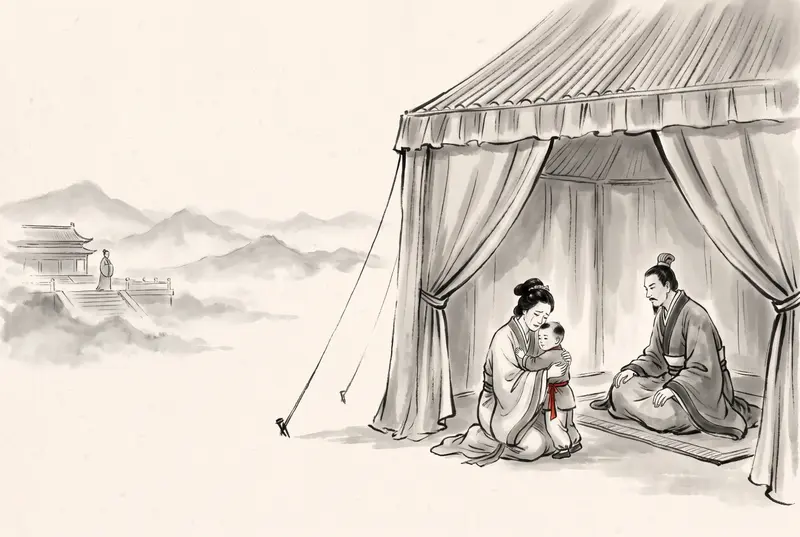
呂后最怨戚夫人及其子趙王,乃令永巷囚戚夫人,而召趙王。使者三反,趙相建平侯周昌謂使者曰:「高帝屬臣趙王,趙王年少。竊聞太后怨戚夫人,欲召趙王并誅之,臣不敢遣王。王且亦病,不能奉詔。」呂后大怒,乃使人召趙相。趙相徵至長安,乃使人復召趙王。王來,未到。孝惠帝慈仁,知太后怒,自迎趙王霸上,與入宮,自挾與趙王起居飲食。太后欲殺之,不得閒。孝惠元年十二月,帝晨出射。趙王少,不能蚤起。太后聞其獨居,使人持酖飲之。犁明,孝惠還,趙王已死。於是乃徙淮陽王友為趙王。夏,詔賜酈侯父追謚為令武侯。
Kundoku (Japanese reading)
呂后最も戚夫人及び其の子趙王を怨み、乃ち永巷をして戚夫人を囚えしめ、而して趙王を召す。使者三たび反る。趙の相建平侯周昌使者に謂いて曰く、「高帝臣に趙王を属す。趙王年少し。竊かに聞く、太后戚夫人を怨み、趙王を召して并せて之を誅せんと欲すと。臣敢えて王を遣わさず。王且つ亦病みて、詔を奉ずる能わず」と。呂后大いに怒り、乃ち人をして趙の相を召さしむ。趙の相徴されて長安に至る。乃ち人をして復た趙王を召さしむ。王来たるも、未だ到らず。孝恵帝慈仁にして、太后の怒れるを知り、自ら趙王を霸上に迎え、与に宮に入り、自ら挟みて趙王と起居飲食す。太后之を殺さんと欲するも、閒を得ず。孝恵元年十二月、帝晨に出でて射る。趙王少く、蚤く起くる能わず。太后其の独り居るを聞き、人をして酖を持ちて之に飲ましむ。犁明、孝恵還れば、趙王已に死せり。是に於いて乃ち淮陽王友を徙して趙王と為す。夏、詔して酈侯の父に賜い、追謚して令武侯と為す。
Japanese
呂后は、戚夫人とその子の趙王をもっとも恨んでいた。そこで永巷(後宮の獄)に戚夫人を閉じこめさせ、趙王を都へ呼び寄せた。使者は三度行って、三度むなしく戻った。趙の宰相の建平侯周昌が使者にこう言ったのである。「高帝は私に趙王を託されました。趙王はまだお若い。ひそかに聞くところでは、太后は戚夫人を恨み、趙王を呼び寄せていっしょに殺すおつもりだとか。私は王をお送りするわけにはまいりません。それに王はご病気で、詔に従うことができません」。呂后はひどく怒り、まず趙の宰相を呼び出した。周昌が長安に召されると、改めて趙王を呼び寄せた。王は都へ向かったが、まだ着かないうちに、情け深い孝恵帝は太后の怒りを知って、自ら霸上まで趙王を迎えに出て、いっしょに宮中に入り、自分のそばに置いて寝起きも食事もともにした。太后は趙王を殺そうとしたが、すきがなかった。孝恵帝の元年十二月、帝は朝早く狩りに出かけた。趙王は幼くて、早く起きられなかった。太后は趙王が一人でいると聞き、人に毒酒を持たせて飲ませた。夜が明けて孝恵帝が戻ると、趙王はもう死んでいた。そこで淮陽王の劉友を移して趙王とした。夏、詔を出して酈侯呂台の父に、令武侯というおくり名を贈った。
English
Of all people, Empress Lü hated Lady Qi and her son, the King of Zhao. She had Lady Qi imprisoned in the palace jail, the Yongxiang, and summoned the King of Zhao. Three times her envoys went, and three times they came back alone, for Zhou Chang, the Marquis of Jianping and chancellor of Zhao, told them: "The late emperor entrusted the King of Zhao to me, and the king is young. I hear that the empress dowager hates Lady Qi and means to summon the king and kill him with her. I dare not send him. Besides, the king is ill and cannot obey the summons." The empress was furious. First she summoned the chancellor of Zhao, and once he had been brought to Chang'an she summoned the king again. The king set out, but before he arrived, the kind-hearted Emperor Hui, knowing his mother's anger, went out himself to Bashang to meet him, brought him into the palace, and kept him at his side, sleeping, rising and eating with him. The empress wanted to kill the boy but found no chance. In the twelfth month of the first year of his reign, the emperor went out early in the morning to hunt. The King of Zhao was young and could not get up so early. Hearing that he was alone, the empress sent someone with poisoned wine and made him drink it. At daybreak Emperor Hui came back, and the King of Zhao was already dead. Liu You, King of Huaiyang, was then moved to be King of Zhao. In the summer an edict granted the father of the Marquis of Li the posthumous title Marquis Lingwu.
Notes (JA)
- 永巷: 宮中の長い路地にある、罪を犯した宮女を閉じこめる場所。
- 周昌: 高祖の古い家臣で、口ごもる癖があったが剛直で知られた。高祖に頼まれて趙の宰相となり、如意を守った。
- 霸上: 長安の東の高台。都へ入る者を出迎える場所。
- 酖: 鴆という鳥の羽をひたした毒酒。
- 犁明: 夜明けごろ。
Notes (EN)
- Yongxiang (永巷): the "long lane" of the palace, where offending palace women were confined.
- Zhou Chang (周昌): an old follower of Gaozu, known for his stammer and his blunt honesty; Gaozu made him chancellor of Zhao to protect Ruyi.
- Poisoned wine (酖): wine steeped with the feathers of the zhen bird, said to be deadly.
Word notes
- summon/ˈsʌmən/verb
to order someone to come
In the text: “summoned the King of Zhao”
Similar words: call for — ask to come · send for — order to come
- entrust/ɪnˈtrʌst/verb
to give someone the duty of caring for something or someone
In the text: “entrusted the King of Zhao to me”
Similar words: hand over — give into someone's care · commit — give for safekeeping
Passage 3
Original
太后遂斷戚夫人手足,去眼,煇耳,飲瘖藥,使居廁中,命曰「人彘」。居數日,乃召孝惠帝觀人彘。孝惠見,問,乃知其戚夫人,乃大哭,因病,歲餘不能起。使人請太后曰:「此非人所為。臣為太后子,終不能治天下。」孝惠以此日飲為淫樂,不聽政,故有病也。
Kundoku (Japanese reading)
太后遂に戚夫人の手足を断ち、眼を去り、耳を煇き、瘖薬を飲ましめ、廁中に居らしめ、命じて「人彘」と曰う。居ること数日、乃ち孝恵帝を召して人彘を観しむ。孝恵見て、問い、乃ち其の戚夫人なるを知り、乃ち大いに哭し、因りて病み、歳余起つ能わず。人をして太后に請わしめて曰く、「此れ人の為す所に非ず。臣太后の子と為りては、終に天下を治むる能わず」と。孝恵此を以て日に飲みて淫楽を為し、政を聴かず。故に病有るなり。
Japanese
太后はついに戚夫人の手足を断ち、目をえぐり、耳をいぶして聞こえなくし、声の出なくなる薬を飲ませて、便所の中に住まわせ、「人彘(人のぶた)」と呼ばせた。数日たって、太后は孝恵帝を呼んで人彘を見せた。孝恵帝は見て、尋ね、それが戚夫人だと知ると、声をあげて泣き、そのまま病気になって、一年あまり起き上がれなかった。帝は人を太后のもとへやって、こう伝えさせた。「これは人のすることではありません。私は太后の子である以上、とても天下を治めることはできません」。孝恵帝はこれ以来、毎日酒を飲んで遊びにふけり、政治を見なくなった。だから病気になったのである。
English
Then the empress dowager had Lady Qi's hands and feet cut off, her eyes put out and her ears burned deaf, made her drink a drug that took away her voice, and kept her in a privy, calling her "the human swine". After a few days she summoned Emperor Hui to come and look at the human swine. Emperor Hui looked, asked who it was, and when he learned it was Lady Qi he wept aloud. He fell ill and could not leave his bed for more than a year. He sent a message to his mother: "This is not something a human being does. As your son, I can never rule the realm." From then on Emperor Hui drank every day, gave himself up to pleasure and paid no attention to government. That is why he fell ill.
Notes (JA)
- 人彘: 「人のぶた」。古代の便所は豚小屋とつながっていた。
- 煇耳: 耳を火でいぶして聞こえなくする。
- 瘖藥: 声が出なくなる薬。
- 此非人所為: 「これは人のすることではない」。孝恵帝は母を止められない自分に絶望した。
- この場面は後世、呂后の残酷さの象徴として語り継がれた。
Notes (EN)
- The human swine (人彘): in ancient China the privy was often built over the pigsty.
- "This is not something a human being does" (此非人所為): Emperor Hui, unable to stop his mother, gave up on ruling.
- This scene became, for later readers, the very image of Empress Lü's cruelty.
Word notes
- privy/ˈprɪvi/noun
an old word for a toilet, often outside the house
In the text: “kept her in a privy”
Similar words: latrine — a simple toilet · outhouse — a toilet in a small hut
- give oneself up to/ɡɪv wʌnˈsɛlf ʌp tu/phrase
to stop resisting and let a habit or feeling take over
In the text: “gave himself up to pleasure”
Similar words: indulge in — allow yourself too much of · abandon oneself to — let go completely
Passage 4
Original
七年秋八月戊寅,孝惠帝崩。發喪,太后哭,泣不下。留侯子張辟彊為侍中,年十五,謂丞相曰:「太后獨有孝惠,今崩,哭不悲,君知其解乎?」丞相曰:「何解?」辟彊曰:「帝毋壯子,太后畏君等。君今請拜呂台、呂產、呂祿為將,將兵居南北軍,及諸呂皆入宮,居中用事,如此則太后心安,君等幸得脫禍矣。」丞相乃如辟彊計。太后說,其哭乃哀。呂氏權由此起。乃大赦天下。九月辛丑,葬。太子即位為帝,謁高廟。元年,號令一出太后。
Kundoku (Japanese reading)
七年秋八月戊寅、孝恵帝崩ず。喪を発す。太后哭するも、泣下らず。留侯の子張辟彊侍中たり、年十五。丞相に謂いて曰く、「太后独り孝恵有るのみ。今崩じて、哭すれども悲しまず。君其の解を知るか」と。丞相曰く、「何の解ぞ」と。辟彊曰く、「帝に壮子毋く、太后君等を畏る。君今請いて呂台・呂産・呂禄を拝して将と為し、兵を将いて南北軍に居らしめ、及び諸呂皆宮に入り、中に居りて事を用いしめよ。此くの如くんば則ち太后の心安んじ、君等幸いに禍を脱るるを得ん」と。丞相乃ち辟彊の計の如くす。太后説び、其の哭乃ち哀し。呂氏の権此れ由り起こる。乃ち天下に大赦す。九月辛丑、葬る。太子即位して帝と為り、高廟に謁す。元年、号令一に太后より出づ。
Japanese
孝恵帝の七年秋八月戊寅の日、孝恵帝が亡くなった。喪が発せられ、太后は声をあげて泣いたが、涙は流れなかった。留侯張良の子の張辟彊は侍中で、年は十五だった。辟彊は丞相に言った。「太后には孝恵帝しか子がいなかったのに、いま亡くなって、声をあげても悲しんでおられません。そのわけがおわかりですか」。丞相「どういうわけだ」。辟彊「帝には成人した子がなく、太后はあなたがた大臣を恐れておられるのです。いま、呂台・呂産・呂禄を将軍に任じ、兵を率いて宮城を守る南軍と北軍に置き、呂氏の人々をみな宮中に入れて政治を取りしきらせるよう、願い出なさいませ。そうすれば太后は安心なさり、あなたがたも幸いにわざわいを逃れられましょう」。丞相は辟彊の計のとおりにした。太后は喜び、その泣き声は本当に悲しげになった。呂氏の権力はここから始まった。天下に大赦が行われ、九月辛丑の日に葬られた。太子が即位して帝となり、高祖の廟に参拝した。その元年から、命令はすべて太后から出された。
English
In the eighth month, autumn, of the seventh year, on the day wuyin, Emperor Hui died. Mourning was announced. The empress dowager wailed, but no tears fell. Zhang Bijiang, son of the Marquis of Liu, was then a palace attendant, fifteen years old. He said to the chancellor: "The empress dowager had no son but Emperor Hui. Now he is dead, and she wails without grief. Do you know why?" "Why?" asked the chancellor. Bijiang said: "The emperor has no grown son, and she is afraid of you and the other ministers. If you now ask her to appoint Lü Tai, Lü Chan and Lü Lu as generals, put them in command of the Southern and Northern Armies, and let the whole Lü clan come into the palace and take charge of affairs, her mind will be at rest, and you will be lucky enough to escape disaster." The chancellor did as Bijiang advised. The empress dowager was pleased, and then her wailing was full of grief. The power of the Lü clan began here. A great amnesty was proclaimed throughout the realm. On the day xinchou of the ninth month the emperor was buried. The crown prince took the throne and paid his respects at the temple of Gaozu. From the first year of his reign, every command came from the empress dowager.
Notes (JA)
- 哭,泣不下: 声をあげて泣く儀礼はしたが、涙は出なかった。
- 張辟彊: 張良の子。少年ながら太后の心を読んだ。
- 南北軍: 都を守る二つの軍。南軍は宮城、北軍は都城を守った。
- 號令一出太后: 新しい帝(少帝)は幼く、政治はすべて呂后が行った。これより呂后の時代を「高后」の紀年で数える。
Notes (EN)
- Wailed, but no tears fell (哭,泣不下): she performed the ritual wailing without real weeping.
- Southern and Northern Armies (南北軍): the two forces guarding the capital; the Southern guarded the palaces, the Northern the city.
- Every command came from the empress dowager (號令一出太后): the new emperor was a small child, and she ruled in his name.
Word notes
- wail/weɪl/verb
to cry out loudly in grief
In the text: “wailed, but no tears fell”
Similar words: lament — show deep sorrow · howl — cry long and loud
- amnesty/ˈæmnəsti/noun
an official pardon for many people at once
In the text: “A great amnesty was proclaimed”
Similar words: pardon — forgiveness of a crime · reprieve — a cancelled punishment
Passage 5
Original
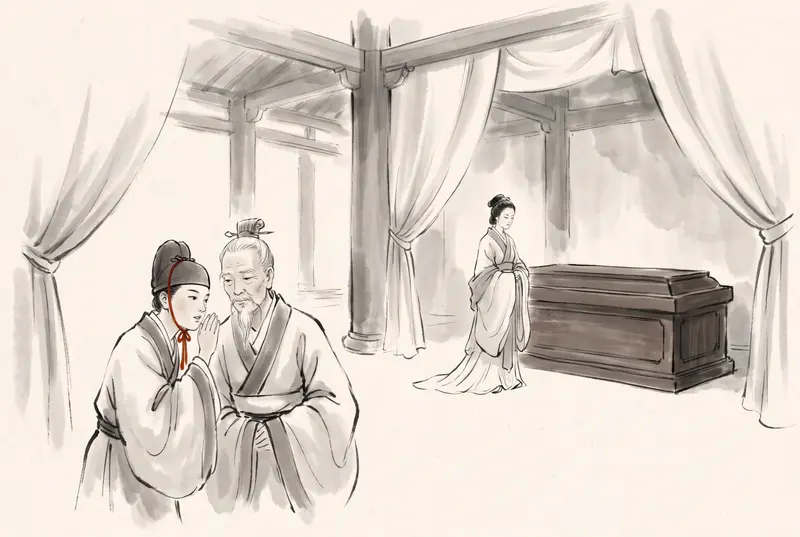
太后稱制,議欲立諸呂為王,問右丞相王陵。王陵曰:「高帝刑白馬盟曰『非劉氏而王,天下共擊之』。今王呂氏,非約也。」太后不說。問左丞相陳平、絳侯周勃。勃等對曰:「高帝定天下,王子弟,今太后稱制,王昆弟諸呂,無所不可。」太后喜,罷朝。王陵讓陳平、絳侯曰:「始與高帝啑血盟,諸君不在邪?今高帝崩,太后女主,欲王呂氏,諸君從欲阿意背約,何面目見高帝地下?」陳平、絳侯曰:「於今面折廷爭,臣不如君;夫全社稷,定劉氏之後,君亦不如臣。」王陵無以應之。十一月,太后欲廢王陵,乃拜為帝太傅,奪之相權。王陵遂病免歸。乃以左丞相平為右丞相,以辟陽侯審食其為左丞相。左丞相不治事,令監宮中,如郎中令。食其故得幸太后,常用事,公卿皆因而決事。乃追尊酈侯父為悼武王,欲以王諸呂為漸。
Kundoku (Japanese reading)
太后制を称し、議して諸呂を立てて王と為さんと欲し、右丞相王陵に問う。王陵曰く、「高帝白馬を刑して盟いて曰く、『劉氏に非ずして王たらば、天下共に之を撃て』と。今呂氏を王とするは、約に非ざるなり」と。太后説ばず。左丞相陳平・絳侯周勃に問う。勃等対えて曰く、「高帝天下を定め、子弟を王とす。今太后制を称し、昆弟諸呂を王とするも、不可なる所無し」と。太后喜び、朝を罷む。王陵陳平・絳侯を譲めて曰く、「始め高帝と血を啑りて盟う。諸君在らざりしか。今高帝崩じ、太后女主にして、呂氏を王とせんと欲す。諸君欲に従い意に阿り約に背く。何の面目ありてか高帝に地下に見えん」と。陳平・絳侯曰く、「今に於いて面折廷争するは、臣君に如かず。夫れ社稷を全うし、劉氏の後を定むるは、君も亦臣に如かず」と。王陵以て之に応うる無し。十一月、太后王陵を廃せんと欲し、乃ち拝して帝の太傅と為し、之が相権を奪う。王陵遂に病みて免ぜられて帰る。乃ち左丞相平を以て右丞相と為し、辟陽侯審食其を以て左丞相と為す。左丞相事を治めず、宮中を監せしむること、郎中令の如し。食其故より太后に幸せられ、常に事を用う。公卿皆因りて事を決す。乃ち酈侯の父を追尊して悼武王と為し、以て諸呂を王とするの漸と為さんと欲す。
Japanese
太后は天子に代わって政治を行い、呂氏の人々を王に立てようとして、右丞相の王陵に意見を聞いた。王陵は言った。「高帝は白馬を殺して、『劉氏でない者が王になったら、天下こぞってこれを討て』と誓われました。いま呂氏を王にするのは、この約束にそむきます」。太后は不機嫌になり、左丞相の陳平と絳侯周勃に聞いた。周勃らは答えた。「高帝は天下を平定して、ご自分の子弟を王にされました。いま太后が政治を行っておられるのですから、ご兄弟や呂氏の方々を王にされても、さしつかえはございません」。太后は喜び、朝廷の会議を終えた。王陵は陳平と絳侯を責めた。「はじめ高帝と血をすすって誓いを立てたとき、あなたがたもその場にいたではないか。いま高帝が亡くなり、女の太后が呂氏を王にしようとしている。あなたがたはその望みに従い、機嫌をとって、約束にそむいた。あの世で高帝にどんな顔をして会うつもりか」。陳平と絳侯は言った。「いま面と向かって朝廷で言い争うことでは、われわれはあなたに及びません。しかし国家を守りぬき、劉氏の跡継ぎを安泰にすることでは、あなたもわれわれに及ばないでしょう」。王陵は何も言い返せなかった。十一月、太后は王陵をやめさせようとして、帝の太傅(教育係)に任じて宰相の権限を取り上げた。王陵は病気を理由に職を辞して故郷へ帰った。左丞相の陳平が右丞相に、辟陽侯審食其が左丞相となった。左丞相の審食其は政治をせず、郎中令のように宮中を取りしまった。食其は以前から太后に気に入られていたので、いつも実権を握り、大臣たちはみな彼を通して事を決めた。太后は酈侯呂台の父に悼武王というおくり名を贈り、呂氏を王にする手始めとした。
English
The empress dowager ruled in the emperor's name. Wanting to make kings of the Lü, she put the question to the Chancellor of the Right, Wang Ling. Wang Ling said: "Gaozu killed a white horse and swore: 'If anyone not of the Liu clan becomes a king, let the whole realm attack him.' To make the Lü kings now would break that oath." The empress dowager was displeased. She asked the Chancellor of the Left, Chen Ping, and Zhou Bo, the Marquis of Jiang. Zhou Bo and the others answered: "When Gaozu won the realm, he made his sons and brothers kings. Now that Your Majesty rules, there is nothing wrong with making kings of your brothers and the Lü." The empress dowager was delighted and closed the court. Wang Ling rebuked Chen Ping and the Marquis of Jiang: "When we smeared our lips with blood and swore that oath with Gaozu, were you gentlemen not there? Now Gaozu is dead, a woman rules, and she wants to make the Lü kings, and you go along with her wishes, flatter her and break the oath. How will you face Gaozu in the world below?" Chen Ping and the Marquis of Jiang said: "In standing up to her face and arguing in open court, we are not your equal. But in keeping the state whole and securing the Liu succession, you are not ours." Wang Ling had no answer. In the eleventh month the empress dowager, wanting to remove Wang Ling, made him Grand Tutor to the emperor and took away his powers as chancellor. Wang Ling pleaded illness, resigned and went home. Chen Ping was made Chancellor of the Right, and Shen Yiji, the Marquis of Biyang, Chancellor of the Left. The Chancellor of the Left did not govern; he was set to oversee the palace, like a Chief of the Palace Attendants. Shen Yiji had long been a favourite of the empress dowager and always held real power; the high officials all settled their business through him. Then she gave the father of the Marquis of Li the posthumous title King Daowu, a first step toward making the Lü kings.
Notes (JA)
- 稱制: 天子に代わって命令を出す。女性が政治を行うことをいう。
- 白馬之盟: 白馬を殺して血をすすり、劉氏以外を王にしないと誓った約束。
- 面折廷爭: 面と向かって相手の非を責め、朝廷で言い争う。
- 全社稷,定劉氏之後: 陳平と周勃は、今は逆らわずに力を残し、時が来たら劉氏を守るつもりだった。後の展開がそれを示す。
- 審食其: 呂后の古くからの側近。高祖が楚に捕らわれていたころから呂后に仕えた。
Notes (EN)
- Ruled in the emperor's name (稱制): issuing decrees on the ruler's behalf; used of a woman holding power.
- The oath of the white horse (白馬之盟): sworn over the blood of a white horse, that none but the Liu should be kings.
- Securing the Liu succession: Chen Ping and Zhou Bo chose to keep their strength rather than resist now, and the end of the story proves them right.
Word notes
- rebuke/rɪˈbjuk/verb
to speak sharply to someone because they did wrong
In the text: “Wang Ling rebuked Chen Ping”
Similar words: scold — tell off angrily · reproach — express disapproval
- flatter/ˈflætər/verb
to praise someone too much to win their favour
In the text: “flatter her and break the oath”
Similar words: fawn on — try too hard to please · butter up — praise for gain (informal)
British spelling in the meaning: favour (US: favor).
Passage 6
Original
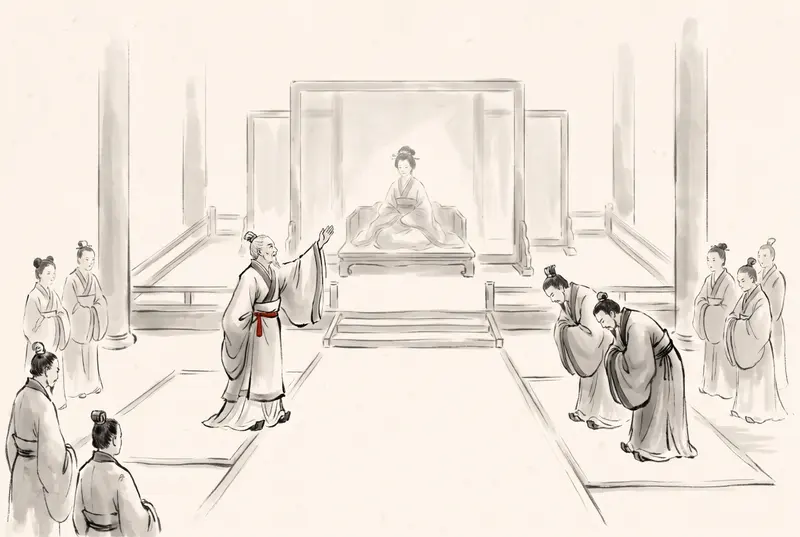
七月中,高后病甚,乃令趙王呂祿為上將軍,軍北軍;呂王產居南軍。呂太后誡產、祿曰:「高帝已定天下,與大臣約,曰『非劉氏王者,天下共擊之』。今呂氏王,大臣弗平。我即崩,帝年少,大臣恐為變。必據兵衛宮,慎毋送喪,毋為人所制。」辛巳,高后崩,遺詔賜諸侯王各千金,將相列侯郎吏皆以秩賜金。大赦天下。以呂王產為相國,以呂祿女為帝后。
Kundoku (Japanese reading)
七月中、高后病甚だし。乃ち趙王呂禄をして上将軍と為し、北軍に軍せしめ、呂王産をして南軍に居らしむ。呂太后産・禄を誡めて曰く、「高帝已に天下を定め、大臣と約して曰く、『劉氏に非ずして王たる者は、天下共に之を撃て』と。今呂氏王たり、大臣平らかならず。我即し崩ずれば、帝年少くして、大臣恐らくは変を為さん。必ず兵に拠りて宮を衛り、慎みて喪を送ること毋かれ。人の制する所と為ること毋かれ」と。辛巳、高后崩ず。遺詔して諸侯王に各々千金を賜い、将相列侯郎吏には皆秩を以て金を賜う。天下に大赦す。呂王産を以て相国と為し、呂禄の女を以て帝の后と為す。
Japanese
七月、高后(呂后)の病が重くなった。そこで趙王呂禄を上将軍として北軍を率いさせ、呂王呂産を南軍に置いた。呂太后は呂産と呂禄に言い聞かせた。「高帝は天下を平定したとき、大臣と『劉氏でない者が王になったら、天下こぞってこれを討て』と約束なさった。いま呂氏が王になっていて、大臣たちは不満に思っている。私が死ねば、帝はまだ幼いから、大臣たちはおそらく事を起こすだろう。必ず兵を握って宮城を守り、決して葬列について宮を出てはならない。人に押さえこまれてはならぬ」。辛巳の日、高后が亡くなった。遺詔によって諸侯王にはそれぞれ千金を、将軍・大臣・列侯・役人には位に応じて金を賜わり、天下に大赦を行った。呂王呂産を相国とし、呂禄の娘を帝の后とした。
English
In the seventh month the empress dowager fell gravely ill. She made Lü Lu, King of Zhao, supreme general in command of the Northern Army, and placed Lü Chan, King of Lü, over the Southern Army. She warned them: "When Gaozu had won the realm he made a pact with his ministers: 'If anyone not of the Liu clan becomes a king, let the whole realm attack him.' Now the Lü are kings, and the ministers resent it. When I die, the emperor is young, and I fear the ministers will rise. You must keep hold of the troops and guard the palace. Be careful not to leave it to follow my funeral. Do not let anyone get you in his power." On the day xinsi the empress dowager died. Her testament gave each of the kings a thousand pieces of gold, and the generals, ministers, marquises and officials gold according to rank. A great amnesty was proclaimed. Lü Chan, King of Lü, was made chancellor of state, and Lü Lu's daughter was made the emperor's empress.
Notes (JA)
- 高后: 呂后のこと。高祖の后の意。
- 慎毋送喪: 葬列について宮を出れば、その間に大臣に兵を奪われる、という警告。
- 相國: 丞相より上の最高の宰相。
- 呂后は死ぬまで、大臣たちが本当は従っていないことを見抜いていた。
Notes (EN)
- Do not leave to follow my funeral (慎毋送喪): leaving the palace would give the ministers their chance to seize the troops.
- Chancellor of state (相國): a post above the ordinary chancellors.
- To the end, the empress knew that the ministers had never truly accepted the Lü.
Word notes
- testament/ˈtɛstəmənt/noun
a statement of a person's wishes after their death; a will
In the text: “Her testament gave each”
Similar words: will — a legal paper about one's property · last wishes — what someone wants after death
- resent/rɪˈzɛnt/verb
to feel angry about something you think is unfair
In the text: “the ministers resent it”
Similar words: begrudge — feel unhappy about · take offence at — feel insulted by
Passage 7
Original
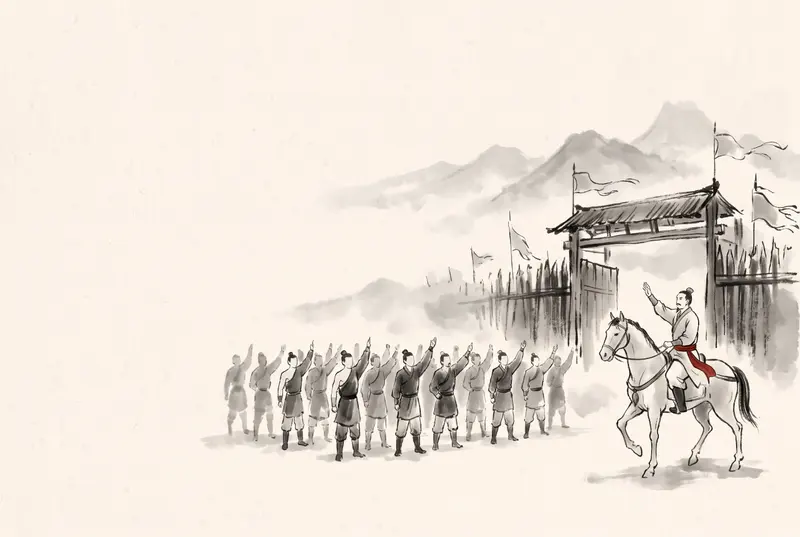
八月庚申旦,平陽侯窋行御史大夫事,見相國產計事。郎中令賈壽使從齊來,因數產曰:「王不蚤之國,今雖欲行,尚可得邪?」具以灌嬰與齊楚合從,欲誅諸呂告產,乃趣產急入宮。平陽侯頗聞其語,乃馳告丞相、太尉。太尉欲入北軍,不得入。襄平侯通尚符節。乃令持節矯內太尉北軍。太尉復令酈寄與典客劉揭先說呂祿曰:「帝使太尉守北軍,欲足下之國,急歸將印辭去,不然,禍且起。」呂祿以為酈兄不欺己,遂解印屬典客,而以兵授太尉。太尉將之入軍門,行令軍中曰:「為呂氏右袒,為劉氏左袒。」軍中皆左袒為劉氏。太尉行至,將軍呂祿亦已解上將印去,太尉遂將北軍。
Kundoku (Japanese reading)
八月庚申の旦、平陽侯窋御史大夫の事を行い、相国産に見えて事を計る。郎中令賈寿使いして斉より来たり、因りて産を数めて曰く、「王蚤く国に之かず。今行かんと欲すと雖も、尚お得べけんや」と。具に灌嬰の斉・楚と合従して、諸呂を誅せんと欲するを以て産に告げ、乃ち産を趣して急ぎ宮に入らしむ。平陽侯頗る其の語を聞き、乃ち馳せて丞相・太尉に告ぐ。太尉北軍に入らんと欲するも、入るを得ず。襄平侯通符節を尚る。乃ち節を持して矯りて太尉を北軍に内れしむ。太尉復た酈寄と典客劉掲とをして先に呂禄に説かしめて曰く、「帝太尉をして北軍を守らしめ、足下の国に之かんことを欲す。急ぎ将印を帰して辞し去れ。然らずんば、禍且に起こらんとす」と。呂禄以為えらく酈兄己を欺かずと。遂に印を解きて典客に属し、而して兵を以て太尉に授く。太尉之を将いて軍門に入り、令を軍中に行いて曰く、「呂氏の為にする者は右袒せよ、劉氏の為にする者は左袒せよ」と。軍中皆左袒して劉氏の為にす。太尉行きて至れば、将軍呂禄も亦已に上将の印を解きて去る。太尉遂に北軍に将たり。
Japanese
八月庚申の日の朝、平陽侯曹窋は御史大夫の職務を代行しており、相国呂産に会って政務を相談していた。そこへ郎中令の賈寿が斉への使いから戻り、呂産を責めた。「王が早く領国へ行かなかったからです。いまさら行こうとしても、もう行けますまい」。そして、将軍灌嬰が斉・楚と手を結び、呂氏を誅殺しようとしていることを詳しく告げ、急いで宮中に入るよう呂産をせきたてた。平陽侯はその話をあらかた聞いて、馬を走らせて丞相陳平と太尉周勃に知らせた。太尉周勃は北軍に入ろうとしたが、入れなかった。襄平侯紀通が割り符を管理していたので、割り符を持たせ、帝の命令といつわって太尉を北軍に入れさせた。太尉はさらに、酈寄と典客の劉掲を先に行かせて呂禄を説かせた。「帝は太尉に北軍を守らせ、あなたには領国へ行っていただくおつもりです。急いで将軍の印を返して去りなさい。さもないと、わざわいが起こりますぞ」。呂禄は、親友の酈寄が自分をだますはずはないと思い、印をはずして典客に渡し、兵を太尉に引き渡した。太尉は兵を率いて軍門に入り、軍中に命令を下した。「呂氏に味方する者は右の肩を脱げ。劉氏に味方する者は左の肩を脱げ」。兵はみな左の肩を脱いで、劉氏に味方した。太尉が着いたとき、将軍の呂禄もすでに上将軍の印をはずして去っていた。こうして太尉は北軍を率いることになった。
English
At dawn on the day gengshen of the eighth month, Cao Zhu, the Marquis of Pingyang, who was acting Grandee Secretary, went to see Chancellor of State Lü Chan about affairs. Jia Shou, Chief of the Palace Attendants, had just come back from a mission to Qi, and he reproached Lü Chan: "You did not go to your kingdom in time, King. Even if you wanted to go now, could you?" He told him in full how the general Guan Ying had joined with Qi and Chu to destroy the Lü, and urged him to hurry into the palace. The Marquis of Pingyang heard most of what was said and galloped off to tell the chancellor and the Grand Commandant. The Grand Commandant, Zhou Bo, tried to enter the Northern Army but could not get in. Ji Tong, the Marquis of Xiangping, kept the tallies of authority; so they had him take a tally and, on the pretence of an imperial order, let the Grand Commandant into the Northern Army. The Grand Commandant also sent Li Ji and the Director of Guests, Liu Jie, ahead to persuade Lü Lu: "The emperor has put the Grand Commandant in charge of the Northern Army and wishes you to go to your kingdom. Give back your seal as general at once and take your leave. If you do not, disaster is coming." Lü Lu thought that his friend Li Ji would never deceive him. He took off his seal, handed it to the Director of Guests, and gave his troops over to the Grand Commandant. The Grand Commandant led them in through the camp gate and issued an order to the army: "Those for the Lü, bare your right shoulder; those for the Liu, bare your left." Every man in the army bared his left shoulder for the Liu. By the time the Grand Commandant had come in, Lü Lu too had taken off his seal as supreme general and gone. So the Grand Commandant took command of the Northern Army.
Notes (JA)
- 平陽侯窋: 曹窋。蕭何の後を継いだ宰相曹参の子。
- 灌嬰: 高祖の将軍。斉王の挙兵を討つよう呂氏から命じられたが、逆に斉と手を結んだ。
- 矯: 帝の命令といつわる。
- 酈寄: 酈商の子で、呂禄の親友。周勃と陳平が父の酈商を人質にとって、呂禄をだまさせた。
- 左袒: 左の肩を脱ぐ。ここから「味方する」ことを「左袒する」という。
Notes (EN)
- Cao Zhu (窋): son of Cao Can, the chancellor who succeeded Xiao He.
- Guan Ying (灌嬰): sent by the Lü against the rising in Qi, he instead made common cause with it.
- Li Ji (酈寄): Lü Lu's close friend; Zhou Bo and Chen Ping held his father hostage to make him deceive Lü Lu.
- Bare your left shoulder (左袒): from this scene, "to bare the left shoulder" came to mean "to take someone's side".
Idioms from this passage: To bare the left shoulder 左袒
Word notes
- reproach/rɪˈproʊtʃ/verb
to tell someone you are disappointed with what they did
In the text: “he reproached Lü Chan”
Similar words: blame — say someone is at fault · criticise — point out faults
- pretence/ˈpritɛns/noun
a false reason given to hide the real one
In the text: “on the pretence of an imperial order”
Similar words: pretext — a false excuse · guise — a false appearance
British spelling; US: pretense.
Passage 8
Original
然尚有南軍。平陽侯聞之,以呂產謀告丞相平,丞相平乃召朱虛侯佐太尉。太尉令朱虛侯監軍門。令平陽侯告衛尉:「毋入相國產殿門。」呂產不知呂祿已去北軍,乃入未央宮,欲為亂,殿門弗得入,裴回往來。平陽侯恐弗勝,馳語太尉。太尉尚恐不勝諸呂,未敢訟言誅之,乃遣朱虛侯謂曰:「急入宮衛帝。」朱虛侯請卒,太尉予卒千餘人。入未央宮門,遂見產廷中。日餔時,遂擊產。產走,天風大起,以故其從官亂,莫敢鬬。逐產,殺之郎中府吏廁中。
Kundoku (Japanese reading)
然れども尚お南軍有り。平陽侯之を聞き、呂産の謀を以て丞相平に告ぐ。丞相平乃ち朱虚侯を召して太尉を佐けしむ。太尉朱虚侯をして軍門を監せしむ。平陽侯をして衛尉に告げしむ、「相国産を殿門に入るること毋かれ」と。呂産呂禄の已に北軍を去れるを知らず、乃ち未央宮に入り、乱を為さんと欲するも、殿門入るを得ず、裴回往来す。平陽侯勝たざらんことを恐れ、馳せて太尉に語ぐ。太尉尚お諸呂に勝たざらんことを恐れ、未だ敢えて訟言して之を誅せず。乃ち朱虚侯を遣わして謂いて曰く、「急ぎ宮に入りて帝を衛れ」と。朱虚侯卒を請う。太尉卒千余人を予う。未央宮の門に入り、遂に産を廷中に見る。日餔の時、遂に産を撃つ。産走る。天風大いに起こり、故を以て其の従官乱れ、敢えて闘う莫し。産を逐い、之を郎中府の吏の廁中に殺す。
Japanese
しかし、まだ南軍が残っていた。平陽侯は呂産のたくらみを丞相陳平に知らせ、陳平は朱虚侯劉章を呼んで太尉を助けさせた。太尉は朱虚侯に軍門を見張らせ、平陽侯に命じて衛尉(宮門の守備長官)に「相国呂産を宮殿の門に入れるな」と伝えさせた。呂産は呂禄がすでに北軍を去ったことを知らず、未央宮に入って事を起こそうとしたが、宮殿の門から入れず、行ったり来たりしていた。平陽侯は勝てないかもしれないと恐れ、馬を走らせて太尉に告げた。太尉もまだ呂氏に勝てるか不安で、呂氏を誅せよと公然とは言えなかった。そこで朱虚侯をやって「急いで宮中に入り、帝をお守りせよ」と言った。朱虚侯が兵を求めると、太尉は千人あまりを与えた。朱虚侯は未央宮の門を入り、庭に呂産の姿を見つけた。夕方の食事どき、朱虚侯は呂産を攻撃した。呂産は逃げた。そのとき大風が吹き起こり、呂産の従者たちは乱れて、誰も戦おうとしなかった。朱虚侯は呂産を追い、郎中府の役人の便所の中で殺した。
English
But the Southern Army remained. When the Marquis of Pingyang heard of Lü Chan's plan, he told Chancellor Chen Ping, who summoned Liu Zhang, the Marquis of Zhuxu, to help the Grand Commandant. The Grand Commandant set the Marquis of Zhuxu to watch the camp gate, and sent the Marquis of Pingyang to tell the commandant of the palace guard: "Do not let Chancellor of State Lü Chan through the palace gates." Lü Chan, not knowing that Lü Lu had already left the Northern Army, went into the Weiyang Palace meaning to make trouble, but could not get through the gates of the hall, and paced back and forth. The Marquis of Pingyang, afraid they might lose, galloped to tell the Grand Commandant. Even now the Grand Commandant feared he might not overcome the Lü, and did not yet dare say openly that they should be killed. So he sent the Marquis of Zhuxu, saying: "Go into the palace at once and guard the emperor." The Marquis of Zhuxu asked for soldiers, and the Grand Commandant gave him over a thousand men. He entered the gate of the Weiyang Palace and saw Lü Chan in the courtyard. At the hour of the evening meal he attacked. Lü Chan fled. A great wind sprang up, so that his attendants fell into confusion and none dared fight. The Marquis of Zhuxu chased Lü Chan and killed him in a privy of the office of the palace attendants.
Notes (JA)
- 朱虛侯: 劉章。高祖の孫で、斉王劉襄の弟。かつて呂后の宴席で、逃げ出した呂氏の一人を斬ってみせたほどの剛の者。
- 未央宮: 長安の宮殿。帝の住まい。
- 裴回: うろうろと行き来する。
- 日餔: 申の刻ごろ、夕方の食事の時刻。
- 人彘の戚夫人が便所に置かれたのに対し、呂産もまた便所で死ぬ。
Notes (EN)
- Liu Zhang, Marquis of Zhuxu (朱虛侯): a grandson of Gaozu, bold enough to have once killed a Lü clansman at one of the empress's own banquets.
- Weiyang Palace (未央宮): the emperor's palace in Chang'an.
- Lady Qi was kept in a privy as "the human swine"; Lü Chan dies in one.
Word notes
- pace/peɪs/verb
to walk up and down because you are nervous
In the text: “paced back and forth”
Similar words: walk to and fro — move one way, then the other · stride — walk with long steps
- attendant/əˈtɛndənt/noun
a person who goes with and serves someone important
In the text: “his attendants fell into confusion”
Similar words: servant — a person who serves · follower — a person in someone's group
Passage 9
Original
太史公曰:孝惠皇帝、高后之時,黎民得離戰國之苦,君臣俱欲休息乎無為,故惠帝垂拱,高后女主稱制,政不出房戶,天下晏然。刑罰罕用,罪人是希。民務稼穡,衣食滋殖。
Kundoku (Japanese reading)
太史公曰く、孝恵皇帝・高后の時、黎民戦国の苦しみを離るるを得、君臣倶に無為に休息せんと欲す。故に恵帝垂拱し、高后女主にして制を称し、政房戸を出でずして、天下晏然たり。刑罰用うること罕にして、罪人是れ希なり。民稼穡に務めて、衣食滋々殖ゆ。
Japanese
太史公は言う。孝恵帝と高后の時代、人々はようやく戦乱の苦しみから離れることができ、君主も臣下もともに、何もせずに休もうと願った。だから恵帝は手をこまぬいて何もせず、高后は女の身で天子に代わって政治を行い、政治は宮中の部屋の中から外へ出なかったが、天下は平穏だった。刑罰を用いることはまれで、罪人も少なかった。民は農業にはげみ、衣服も食べ物もますます豊かになった。
English
The Grand Historian says: In the time of Emperor Hui and the Empress Dowager, the common people were at last free of the miseries of the Warring States, and rulers and ministers alike wished only to rest and do nothing. So Emperor Hui sat with folded hands, the empress ruled as a woman in the emperor's name, and government never went beyond the doors of the inner palace; yet the realm was at peace. Punishments were seldom used and offenders were few. The people worked at their farming, and food and clothing grew ever more plentiful.
Notes (JA)
- 無爲: 何もしないこと。黄老思想の、民に干渉しない政治。
- 垂拱: 衣を垂れ、手をこまぬく。何もせずに天下が治まるさま。
- 政不出房戶: 宮廷の争いは宮中の部屋の中のことにとどまり、民には及ばなかった、という意味。
- 司馬遷は、宮廷の残酷な争いを描いたあとで、民の暮らしの側からこの時代を評価している。
Notes (EN)
- Do nothing (無爲): the Huang-Lao ideal of a government that leaves the people alone.
- Government never went beyond the doors of the inner palace (政不出房戶): the cruelties at court stayed at court and did not touch the people.
- After the bloody palace story, Sima Qian judges the era from the people's side.
Word notes
- plentiful/ˈplɛntɪfəl/adjective
existing in large amounts
In the text: “grew ever more plentiful”
Similar words: abundant — more than enough · ample — enough or more
- offender/əˈfɛndər/noun
a person who has broken the law
In the text: “offenders were few”
Similar words: criminal — a lawbreaker · wrongdoer — a person who does wrong