Annals · Vol. 5
The Basic Annals of Qin 秦本紀
Duke Mu of Qin and the Five-Ramskin Minister 秦繆公與百里傒
The story of Duke Mu, who made Qin, then a small state on the western edge of the Chinese world, a great power more than four hundred years before the First Emperor. He ransomed Baili Xi, an old minister of the fallen state of Yu, for five black ramskins, gave him the government and called him "the Grandee of the Five Ramskins"; on Baili Xi's advice he also brought in his friend Jian Shu. When Jin starved, he sent it grain in spite of old wrongs, yet Jin repaid him by attacking. In that battle his life was saved by three hundred villagers from the foot of Mount Qi, who had once caught and eaten his runaway horse and been given wine instead of punishment. Later, against the warnings of his two old ministers, he sent an army to surprise the state of Zheng, and Jin destroyed it in the pass of Xiao. Duke Mu met his returning generals in mourning clothes and blamed himself; when they took their revenge he buried the bones of the dead and swore an oath against his own mistake. He won over You Yu, a wise man of the Rong, and became overlord of the western tribes, but at his death one hundred and seventy-seven people were made to follow him into the grave, three of Qin's best ministers among them.
This page has the scene "Duke Mu of Qin and the Five-Ramskin Minister" from this volume, not the whole volume.
Audio
The audio is synthetic speech.
Video
Passage 1
Original
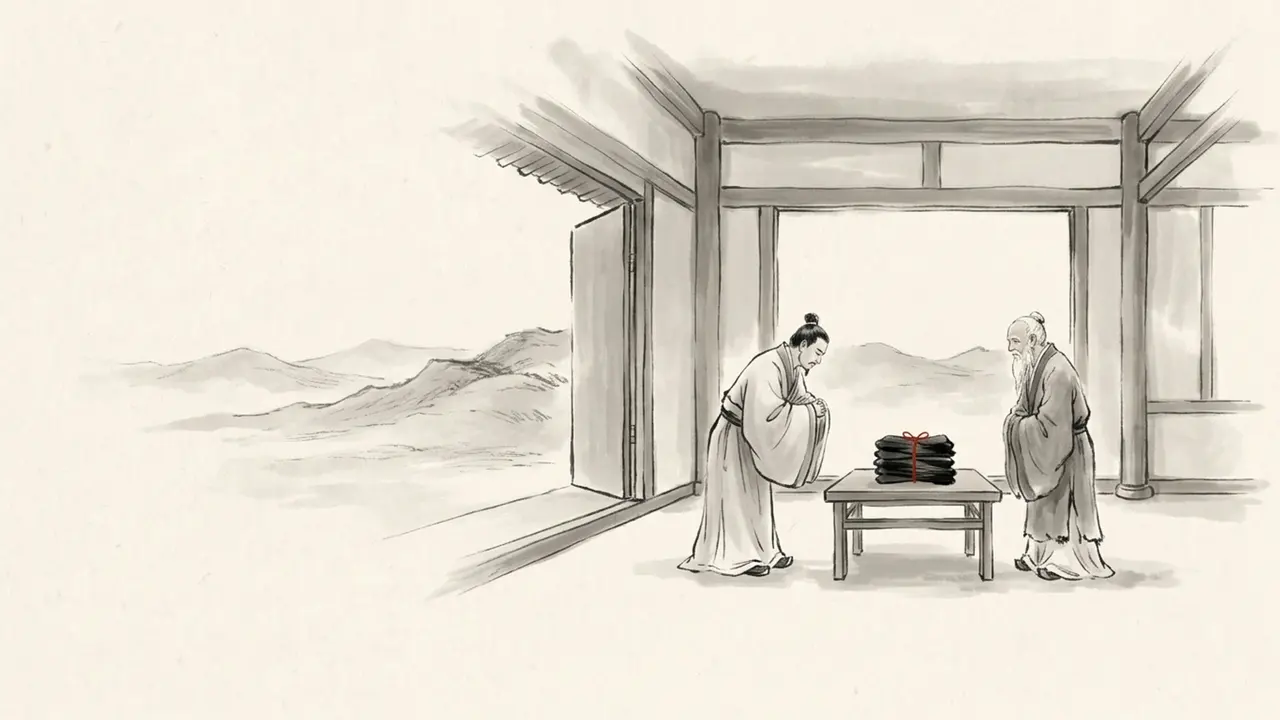
五年,晉獻公滅虞、虢,虜虞君與其大夫百里傒,以璧馬賂於虞故也。既虜百里傒,以為秦繆公夫人媵於秦。百里傒亡秦走宛,楚鄙人執之。繆公聞百里傒賢,欲重贖之,恐楚人不與,乃使人謂楚曰:「吾媵臣百里傒在焉,請以五羖羊皮贖之。」。楚人遂許與之。當是時,百里傒年已七十餘。繆公釋其囚,與語國事。謝曰:「臣亡國之臣,何足問!」繆公曰:「虞君不用子,故亡,非子罪也。」固問,語三日,繆公大說,授之國政,號曰五羖大夫。百里傒讓曰:「臣不及臣友蹇叔,蹇叔賢而世莫知。臣常游困於齊而乞食铚人,蹇叔收臣。臣因而欲事齊君無知,蹇叔止臣,臣得脫齊難,遂之周。周王子穨好牛,臣以養牛干之。及穨欲用臣,蹇叔止臣,臣去,得不誅。事虞君,蹇叔止臣。臣知虞君不用臣,臣誠私利祿爵,且留。再用其言,得脫,一不用,及虞君難:是以知其賢。」於是繆公使人厚幣迎蹇叔,以為上大夫。
Kundoku (Japanese reading)
五年、晋の献公、虞・虢を滅ぼし、虞君と其の大夫百里傒とを虜にす。璧馬を以て虞に賂いし故なり。既に百里傒を虜にし、以て秦の繆公の夫人の秦に媵する者と為す。百里傒、秦を亡れて宛に走る。楚の鄙人之を執う。繆公、百里傒の賢なるを聞き、重く之を贖わんと欲するも、楚人の与えざるを恐れ、乃ち人をして楚に謂わしめて曰く、「吾が媵臣百里傒焉に在り。請う、五羖羊皮を以て之を贖わん」と。楚人遂に許して之を与う。是の時に当たり、百里傒、年已に七十余なり。繆公其の囚を釈き、与に国事を語る。謝して曰く、「臣は亡国の臣なり、何ぞ問うに足らん」と。繆公曰く、「虞君子を用いず、故に亡ぶ。子の罪に非ざるなり」と。固く問い、語ること三日、繆公大いに説び、之に国政を授け、号して五羖大夫と曰う。百里傒譲りて曰く、「臣は臣が友蹇叔に及ばず。蹇叔は賢なるも世知る莫し。臣常て斉に游びて困しみ、銍人に食を乞う。蹇叔臣を収む。臣因りて斉君無知に事えんと欲す。蹇叔臣を止め、臣斉の難を脱るるを得て、遂に周に之く。周の王子穨、牛を好む。臣、牛を養うを以て之に干む。穨の臣を用いんと欲するに及び、蹇叔臣を止む。臣去りて、誅せられざるを得たり。虞君に事うるに、蹇叔臣を止む。臣、虞君の臣を用いざるを知るも、臣誠に私かに禄爵を利とし、且く留まる。再び其の言を用いて脱るるを得、一たび用いずして虞君の難に及ぶ。是を以て其の賢なるを知る」と。是に於いて繆公、人をして幣を厚くして蹇叔を迎えしめ、以て上大夫と為す。
Japanese
穆公の五年(前655年)、晋の献公が虞と虢を滅ぼし、虞の君主とその大夫の百里傒を捕虜にした。虞が晋から玉と名馬の賄賂を受け取って、晋の軍に道を貸したためである。晋は百里傒を捕らえると、秦の穆公に嫁ぐ献公の娘のお付きの召使いにして、秦へ送った。百里傒は秦から逃げ出して宛へ走ったが、楚の田舎の者に捕まった。穆公は百里傒が賢者だと聞き、高い値で買い戻したいと思ったが、それでは楚が手放さないのではと心配し、楚に使いを送ってこう言わせた。「わが国の嫁入りの召使いの百里傒が、そちらにおります。黒い羊の皮五枚で買い戻させてください」。楚はそれを承知して引き渡した。このとき百里傒はすでに七十歳を過ぎていた。穆公は縄を解き、国の政治について語り合おうとした。百里傒は「わたしは国を滅ぼした臣です。おたずねになる値打ちなどありません」と辞退した。穆公は「虞の君があなたを用いなかったから滅んだのだ。あなたの罪ではない」と言って重ねてたずね、三日間語り合った。穆公は大いに喜んで国政をまかせ、「五羖大夫(羊の皮五枚の大夫)」と呼んだ。百里傒は辞退して言った。「わたしは友人の蹇叔に及びません。蹇叔は賢者ですが、世の人は知りません。わたしは斉で行き詰まり、銍の人に食べ物を乞うていたとき、蹇叔に拾われました。そのあと斉の君主無知に仕えようとすると、蹇叔に止められ、おかげで斉の内乱に巻きこまれずにすみ、周へ行きました。周の王子穨が牛を好んだので、牛を育てる腕で取り入ろうとしましたが、穨がわたしを用いようとしたとき、蹇叔に止められて去り、殺されずにすみました。虞の君に仕えたときも、蹇叔は止めました。わたしは虞の君がわたしの意見を用いないと分かっていながら、俸禄と爵位が惜しくて、しばらくとどまりました。二度は彼の言葉に従って助かり、一度従わずに虞の君の災難に巻きこまれました。それで彼が賢者だと分かるのです」。そこで穆公は、手厚い贈り物を持たせて使いを送って蹇叔を迎え、上大夫とした。
English
In the fifth year of his reign, Duke Xian of Jin destroyed the states of Yu and Guo, and captured the ruler of Yu and his minister Baili Xi, because Yu had taken a bribe of jade and horses from Jin. Having captured Baili Xi, Jin sent him to Qin as a servant in the wedding train of Duke Mu's bride. Baili Xi ran away from Qin to Wan, where some country people of Chu seized him. Duke Mu heard that Baili Xi was a man of worth and wanted to pay a high ransom for him, but he feared that Chu would then refuse to let him go. So he sent a man to say to Chu: "My wife's servant Baili Xi is with you. Let me buy him back for five black ramskins." Chu agreed and handed him over. At that time Baili Xi was already over seventy. Duke Mu set him free and talked with him about the affairs of the state. Baili Xi declined, saying: "I am the minister of a fallen state. What use is it to ask me?" Duke Mu said: "The ruler of Yu did not use you, and so he fell. It was not your fault." He pressed him, and they talked for three days. Duke Mu was delighted, gave him the government of the state, and called him "the Grandee of the Five Ramskins". Baili Xi declined again and said: "I am not as good as my friend Jian Shu. Jian Shu is a man of worth, but the world does not know him. Once, when I was stranded in Qi and begging for food from the people of Zhi, Jian Shu took me in. Then I wanted to serve Wuzhi, the ruler of Qi, but Jian Shu stopped me, and so I escaped the troubles of Qi and went on to Zhou. Prince Tui of Zhou loved oxen, and I tried to win his favour by raising oxen. When Tui was about to employ me, Jian Shu stopped me; I left, and so I was not killed. When I served the ruler of Yu, Jian Shu stopped me again. I knew the ruler of Yu would not take my advice, but I truly cared for my salary and rank, and I stayed on. Twice I followed his words and escaped; once I did not, and I was caught in the ruin of Yu. That is how I know he is a man of worth." So Duke Mu sent men with rich gifts to bring Jian Shu, and made him a senior grandee.
Notes (JA)
- 繆公: 穆公と同じ。秦の第九代の君主(在位前659〜前621年)。春秋五覇の一人に数えられることもある。
- 以璧馬賂於虞: 晋は虢を討つために、玉と名馬を虞に贈って道を借り、帰りに虞も滅ぼした(「仮道伐虢」)。
- 五羖羊皮: 黒い雄羊の皮五枚。わざと安い値をつけて、楚に百里傒の価値を気づかせなかった。
- 媵: 嫁入りに付き従う召使い。
Notes (EN)
- Duke Mu (繆公, also written 穆公) ruled Qin 659-621 BCE.
- Jin bribed Yu to let its army pass on the way to Guo, then destroyed Yu too on the way back.
- Five black ramskins (五羖羊皮): a deliberately low price, so that Chu would not guess his value.
Word notes
- ransom/ˈrænsəm/verb
to pay money to set a prisoner free
In the text: “wanted to pay a high ransom for him”
Similar words: buy back — pay to get back · redeem — free by paying
- decline/dɪˈklaɪn/verb
to say politely that you will not accept something
In the text: “Baili Xi declined, saying”
Similar words: refuse — say no · turn down — not accept
Passage 2
Original
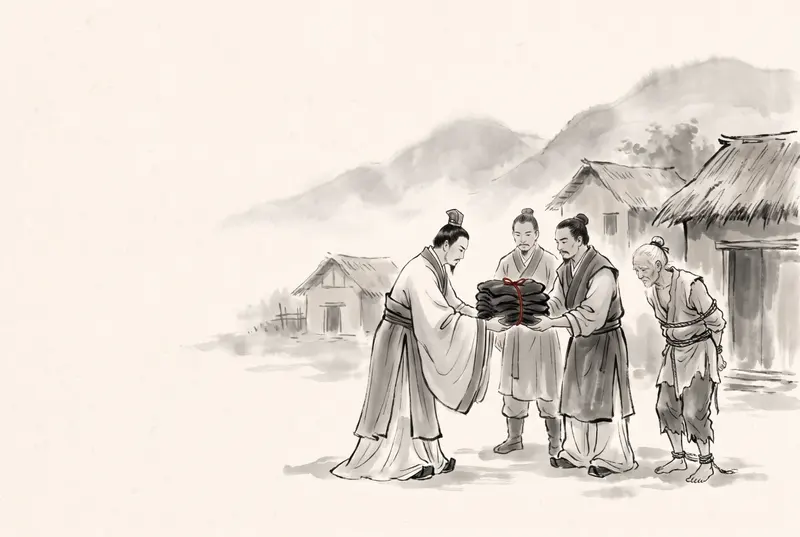
晉旱,來請粟。丕豹說繆公勿與,因其饑而伐之。繆公問公孫支,支曰:「饑穰更事耳,不可不與。」問百里傒,傒曰:「夷吾得罪於君,其百姓何罪?」於是用百里傒、公孫支言,卒與之粟。以船漕車轉,自雍相望至絳。十四年,秦饑,請粟於晉。晉君謀之群臣。虢射曰:「因其饑伐之,可有大功。」晉君從之。十五年,興兵將攻秦。繆公發兵,使丕豹將,自往擊之。九月壬戌,與晉惠公夷吾合戰於韓地。晉君棄其軍,與秦爭利,還而馬騺。繆公與麾下馳追之,不能得晉君,反為晉軍所圍。晉擊繆公,繆公傷。於是岐下食善馬者三百人馳冒晉軍,晉軍解圍,遂脫繆公而反生得晉君。初,繆公亡善馬,岐下野人共得而食之者三百餘人,吏逐得,欲法之。繆公曰:「君子不以畜產害人。吾聞食善馬肉不飲酒,傷人。」乃皆賜酒而赦之。三百人者聞秦擊晉,皆求從,從而見繆公窘,亦皆推鋒爭死,以報食馬之德。
Kundoku (Japanese reading)
晋旱し、来たりて粟を請う。丕豹、繆公に説きて与うる勿く、其の饑うるに因りて之を伐たしめんとす。繆公、公孫支に問う。支曰く、「饑穣は更々の事のみ。与えざるべからず」と。百里傒に問う。傒曰く、「夷吾は罪を君に得たるも、其の百姓に何の罪かあらん」と。是に於いて百里傒・公孫支の言を用い、卒に之に粟を与う。船漕・車転を以て、雍より相望みて絳に至る。十四年、秦饑え、粟を晋に請う。晋君之を群臣に謀る。虢射曰く、「其の饑うるに因りて之を伐たば、大功有るべし」と。晋君之に従う。十五年、兵を興して将に秦を攻めんとす。繆公兵を発し、丕豹をして将たらしめ、自ら往きて之を撃つ。九月壬戌、晋の恵公夷吾と韓の地に合戦す。晋君其の軍を棄て、秦と利を争い、還りて馬騺く。繆公、麾下と馳せて之を追うも、晋君を得る能わず、反って晋軍の囲む所と為る。晋、繆公を撃ち、繆公傷つく。是に於いて岐下の善馬を食らいし者三百人、馳せて晋軍を冒し、晋軍囲みを解き、遂に繆公を脱して反って晋君を生け得たり。初め、繆公善馬を亡う。岐下の野人共に得て之を食らう者三百余人、吏逐いて得、之を法せんと欲す。繆公曰く、「君子は畜産を以て人を害せず。吾聞く、善馬の肉を食らいて酒を飲まざれば、人を傷うと」と。乃ち皆に酒を賜いて之を赦す。三百人の者、秦の晋を撃つを聞き、皆従わんことを求む。従いて繆公の窘しむを見、亦た皆鋒を推して死を争い、以て馬を食らいしの徳に報ゆ。
Japanese
晋が日照りにみまわれ、秦に穀物を求めてきた。丕豹は穆公に、与えずに、晋が飢えているのに乗じて攻めるよう説いた。穆公が公孫支にたずねると、支は「豊作と凶作は代わる代わる来るものです。与えないわけにはいきません」と言った。百里傒にたずねると、傒は「晋の君夷吾は、殿に対して罪を犯しました。しかし、その民に何の罪がありましょう」と言った。そこで百里傒と公孫支の言葉に従い、ついに穀物を与えた。船で運び、車で運び、都の雍から晋の都の絳まで、輸送の列が途切れずに続いた。穆公の十四年、こんどは秦が飢え、晋に穀物を求めた。晋の君は家臣に相談した。虢射は「秦の飢えに乗じて攻めれば、大きな手柄が立てられます」と言い、晋の君はそれに従った。十五年、晋は兵を挙げて秦を攻めようとした。穆公も兵を出し、丕豹を将として、自ら迎え撃った。九月壬戌の日、晋の恵公夷吾と韓の地で戦った。晋の君は自分の軍を離れて秦の兵と手柄を争い、引き返すとき馬が泥にはまって動けなくなった。穆公は旗本とともに駆けて追ったが晋の君を捕らえられず、逆に晋軍に囲まれた。晋は穆公を攻め、穆公は傷を負った。そのとき、岐山のふもとで穆公の名馬を食べた者たち三百人が、晋軍の中へ駆けこんだので、晋軍の囲みは解け、穆公は助かったうえ、逆に晋の君を生け捕りにした。以前、穆公は名馬を逃がしてしまったことがあった。岐山のふもとの村人三百人あまりがそれを捕まえて食べてしまい、役人が追って捕らえ、法によって罰しようとした。穆公は「君子は家畜のことで人を傷つけたりはしない。名馬の肉を食べて酒を飲まないと、体をこわすと聞いている」と言い、皆に酒を与えて許した。この三百人は、秦が晋を攻めると聞いて、皆、従軍を願い出た。そして穆公が追いつめられたのを見ると、皆、刃をふるって先を争って死に物狂いで戦い、馬を食べたときの恩に報いたのである。
English
Jin suffered a drought and came to Qin to ask for grain. Pi Bao urged Duke Mu not to give it, but to attack Jin while it was starving. Duke Mu asked Gongsun Zhi, who said: "Lean years and good years take turns. You cannot refuse." He asked Baili Xi, who said: "Yiwu, the ruler of Jin, has wronged you; but what wrong have his people done?" So Duke Mu followed Baili Xi and Gongsun Zhi and sent the grain after all. It went by boat and by cart, in a line that stretched without a break from Yong, the capital of Qin, to Jiang, the capital of Jin. In the fourteenth year Qin had a famine and asked Jin for grain. The ruler of Jin asked his ministers. Guo She said: "Attack them while they are starving, and you will win great glory." The ruler of Jin agreed, and in the fifteenth year he raised an army to attack Qin. Duke Mu sent out his troops with Pi Bao as general and went himself to meet the enemy. In the ninth month he fought Duke Hui of Jin, Yiwu, in the land of Han. The ruler of Jin left his own army to fight the men of Qin for glory, and as he turned back his horses stuck fast in the mud. Duke Mu and his guards galloped after him but could not catch him, and were themselves surrounded by the army of Jin. Jin attacked Duke Mu, and he was wounded. Then three hundred men from the foot of Mount Qi, who had once eaten his fine horse, charged into the army of Jin. The ring was broken, Duke Mu escaped, and instead he took the ruler of Jin alive. Earlier, Duke Mu had lost a fine horse. More than three hundred country people from the foot of Mount Qi caught it together and ate it. The officials tracked them down and wanted to punish them by law. But Duke Mu said: "A gentleman does not harm people for the sake of an animal. I have heard that if you eat the meat of a fine horse without drinking wine, it will make you ill." He gave them all wine and pardoned them. When these three hundred men heard that Qin was attacking Jin, they all asked to go with the army. And when they saw Duke Mu in danger, they all thrust forward with their blades and raced one another to die for him, to repay the kindness he had shown them over the horse.
Notes (JA)
- 夷吾: 晋の恵公。穆公の助けで晋の君となったが、約束した河西の城を秦に渡さなかった。重耳(晋の文公)の異母弟。
- 自雍相望至絳: 秦の都の雍から晋の都の絳まで、輸送の船や車が見わたすかぎり続いた。「汎舟の役」とも呼ばれる。
- 岐下野人: 岐山のふもとの村人。秦はもとこのあたりを根拠地とした。
- 善馬の肉と酒: 生の馬の肉を酒なしで食べると体に悪い、という当時の言い伝え。
Notes (EN)
- Yiwu (夷吾): Duke Hui of Jin, half-brother of Chong'er; Duke Mu had helped him to the throne.
- Mount Qi (岐): west of the later capital, the old homeland of Zhou and then of Qin.
- The three hundred villagers: a story often told as a lesson in mercy and its rewards.
Word notes
- drought/draʊt/noun
a long time with little or no rain
In the text: “Jin suffered a drought”
Similar words: dry spell — a time without rain · water shortage — not enough water
- pardon/ˈpɑrdən/verb
to officially forgive someone for a crime
In the text: “gave them all wine and pardoned them”
Similar words: forgive — stop blaming · let off — not punish (informal)
Passage 3
Original
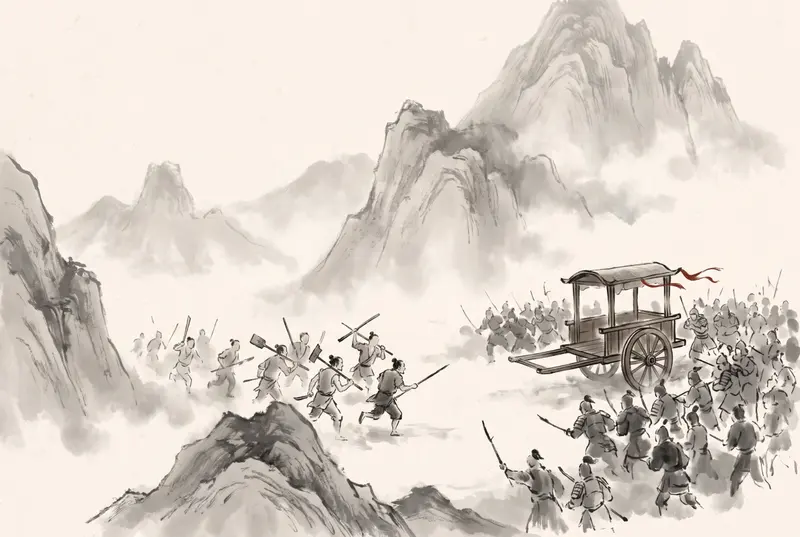
鄭人有賣鄭於秦曰:「我主其城門,鄭可襲也。」繆公問蹇叔、百里傒,對曰:「徑數國千里而襲人,希有得利者。且人賣鄭,庸知我國人不有以我情告鄭者乎?不可。」繆公曰:「子不知也,吾已決矣。」遂發兵,使百里傒子孟明視,蹇叔子西乞術及白乙丙將兵。行日,百里傒、蹇叔二人哭之。繆公聞,怒曰:「孤發兵而子沮哭吾軍,何也?」二老曰:「臣非敢沮君軍。軍行,臣子與往;臣老,遲還恐不相見,故哭耳。」二老退,謂其子曰:「汝軍即敗,必於殽阨矣。」三十三年春,秦兵遂東,更晉地,過周北門。周王孫滿曰:「秦師無禮,不敗何待!」兵至滑,鄭販賣賈人弦高,持十二牛將賣之周,見秦兵,恐死虜,因獻其牛,曰:「聞大國將誅鄭,鄭君謹修守御備,使臣以牛十二勞軍士。」秦三將軍相謂曰:「將襲鄭,鄭今已覺之,往無及已。」滅滑。滑,晉之邊邑也。
Kundoku (Japanese reading)
鄭人に鄭を秦に売る者有りて曰く、「我其の城門を主る。鄭襲うべきなり」と。繆公、蹇叔・百里傒に問う。対えて曰く、「数国千里を径て人を襲うは、利を得る者希なり。且つ人鄭を売る、庸ぞ我が国人に我が情を以て鄭に告ぐる者有らざるを知らんや。不可なり」と。繆公曰く、「子は知らざるなり。吾已に決せり」と。遂に兵を発し、百里傒の子孟明視、蹇叔の子西乞術及び白乙丙をして兵を将いしむ。行く日、百里傒・蹇叔の二人、之に哭す。繆公聞き、怒りて曰く、「孤兵を発するに、子沮みて吾が軍に哭するは何ぞや」と。二老曰く、「臣敢えて君の軍を沮むに非ず。軍行くに、臣の子与に往く。臣老いたり。遅く還らば相見ざるを恐る。故に哭するのみ」と。二老退き、其の子に謂いて曰く、「汝が軍即し敗れなば、必ず殽の阨に於いてせん」と。三十三年春、秦の兵遂に東し、晋の地を更て、周の北門を過ぐ。周の王孫満曰く、「秦の師無礼なり。敗れずして何をか待たん」と。兵滑に至る。鄭の販売の賈人弦高、十二牛を持して将に之を周に売らんとす。秦の兵を見、死虜を恐れ、因りて其の牛を献じて曰く、「聞く、大国将に鄭を誅せんとすと。鄭君謹みて守御の備えを修め、臣をして牛十二を以て軍士を労わしむ」と。秦の三将軍相謂いて曰く、「将に鄭を襲わんとするに、鄭今已に之を覚る。往くも及ぶ無からん」と。滑を滅ぼす。滑は晋の辺邑なり。
Japanese
鄭の者で、鄭を秦に売ろうとする者が来て言った。「わたしは鄭の城門を預かっています。鄭は不意打ちにできます」。穆公が蹇叔と百里傒にたずねると、二人は答えた。「いくつもの国を通って千里のかなたの国を不意打ちして、利を得た例はまずありません。それに、人が鄭を売るのなら、わが国の者にも、こちらの事情を鄭に知らせる者がいないとはかぎりません。いけません」。穆公は「あなたがたには分からない。わたしはもう決めたのだ」と言った。こうして兵を出し、百里傒の子の孟明視、蹇叔の子の西乞術と白乙丙に軍を率いさせた。出発の日、百里傒と蹇叔の二人は軍を見送って声をあげて泣いた。穆公はそれを聞いて怒った。「わたしが兵を出すのに、そなたらが泣いてわが軍の士気をくじくとは、どういうことだ」。二人の老臣は答えた。「殿の軍の士気をくじこうというのではありません。軍が出て行くとき、わたしどもの子も一緒に行きます。わたしどもは年老いました。帰りが遅くなれば、もう会えないのではないかと思って、泣いたまでです」。二人は退出すると、それぞれの子に言った。「お前たちの軍が負けるとすれば、きっと殽の険しい山道でだろう」。穆公の三十三年の春、秦の軍はついに東へ向かい、晋の領内を通って、周の都の北門を過ぎた。周の王孫満は「秦の軍は礼儀を知らない。負けずにすむはずがない」と言った。軍が滑まで来たとき、鄭の商人の弦高が、十二頭の牛を周へ売りに行こうとしていた。秦の軍を見て、殺されるか捕まるかすると恐れ、牛を差し出して言った。「大国が鄭を討とうとしていると聞きました。鄭の君は守りの備えを固めており、わたしに牛十二頭で兵士の方々をねぎらうよう命じられました」。秦の三人の将軍は「鄭を不意打ちしようとしたのに、鄭はもう気づいている。行っても間に合うまい」と話し合い、滑を滅ぼした。滑は晋の国境の町である。
English
A man of Zheng came to sell his country to Qin. "I am in charge of a city gate of Zheng," he said. "Zheng can be taken by surprise." Duke Mu asked Jian Shu and Baili Xi. They answered: "Few have ever gained by marching through several states and a thousand li to surprise someone. Besides, if a man will sell Zheng, how do we know there is no one in our own country who will tell Zheng about us? It cannot be done." Duke Mu said: "You do not understand. I have already decided." He sent out the army under Meng Mingshi, the son of Baili Xi, and Xiqi Shu and Bai Yibing, the sons of Jian Shu. On the day it marched, the two old men wept aloud over it. Duke Mu heard and said angrily: "I send out my army, and you weep over it and dishearten my troops. Why?" The two old men said: "We would not dare to dishearten your army. When the army goes, our sons go with it. We are old; if they are late coming back, we fear we shall never see them again. That is all we weep for." When they withdrew, they said to their sons: "If your army is defeated, it will surely be in the narrow pass of Xiao." In the spring of the thirty-third year the army of Qin marched east, crossed the land of Jin and passed the north gate of the Zhou capital. Wangsun Man of Zhou said: "The army of Qin has no manners. What can it expect but defeat?" When the army reached Hua, a merchant of Zheng named Xian Gao was on his way to sell twelve oxen in Zhou. Seeing the troops of Qin, he was afraid of being killed or taken, so he offered them his oxen and said: "We hear that a great state means to punish Zheng. The ruler of Zheng has carefully prepared his defences, and has sent me with these twelve oxen to refresh your soldiers." The three generals of Qin said to one another: "We meant to surprise Zheng, but Zheng already knows. If we go on, we shall be too late." They destroyed Hua instead. Hua was a border town of Jin.
Notes (JA)
- 哭: 声をあげて泣くこと。出陣の日に泣くのは縁起が悪いので、穆公は怒った。
- 殽: 函谷関の東の険しい山道(今の河南省西部)。
- 王孫満: 周の大夫。秦の兵が周の門の前で兵車から降りて礼をしてはすぐ飛び乗るのを見て、軽はずみだと評したと『春秋左氏伝』にある。
- 弦高: 鄭の牛商人。とっさの機転で国を救った人物として名高い。
Notes (EN)
- Wept aloud (哭): weeping as an army set out was an ill omen, hence the duke's anger.
- Xiao (殽): a steep pass east of the Hangu Pass, in western Henan.
- Xian Gao (弦高): the merchant whose quick wits saved his state.
Word notes
- dishearten/dɪsˈhɑrtən/verb
to make someone lose hope or courage
In the text: “dishearten my troops”
Similar words: discourage — take away confidence · demoralise — weaken the spirit
British spelling: demoralise (US: demoralize).
- refresh/rɪˈfrɛʃ/verb
to give food or drink to someone who is tired
In the text: “to refresh your soldiers”
Similar words: revive — give new strength · feed — give food
Passage 4
Original
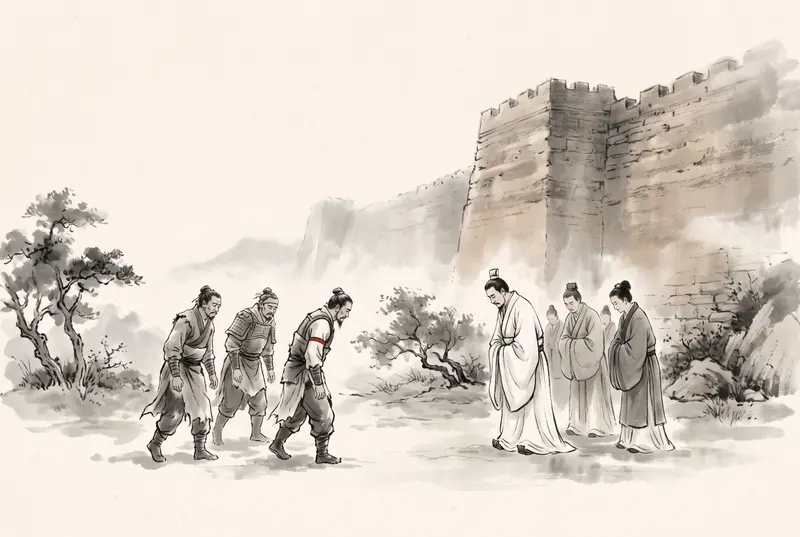
當是時,晉文公喪尚未葬。太子襄公怒曰:「秦侮我孤,因喪破我滑。」遂墨衰绖,發兵遮秦兵於殽,擊之,大破秦軍,無一人得脫者。虜秦三將以歸。文公夫人,秦女也,為秦三囚將請曰:「繆公之怨此三人入於骨髓,願令此三人歸,令我君得自快烹之。」晉君許之,歸秦三將。三將至,繆公素服郊迎,向三人哭曰:「孤以不用百里傒、蹇叔言以辱三子,三子何罪乎?子其悉心雪恥,毋怠。」遂復三人官秩如故,愈益厚之。
Kundoku (Japanese reading)
是の時に当たり、晋の文公の喪尚お未だ葬らず。太子襄公怒りて曰く、「秦、我が孤を侮り、喪に因りて我が滑を破る」と。遂に衰絰を墨くし、兵を発して秦の兵を殽に遮り、之を撃ち、大いに秦の軍を破り、一人も脱るるを得る者無し。秦の三将を虜にして以て帰る。文公の夫人は秦の女なり。秦の三囚将の為に請いて曰く、「繆公の此の三人を怨むこと骨髄に入る。願わくは此の三人をして帰らしめ、我が君をして自ら快く之を烹るを得しめん」と。晋君許して、秦の三将を帰す。三将至る。繆公、素服して郊に迎え、三人に向かいて哭して曰く、「孤、百里傒・蹇叔の言を用いざるを以て以て三子を辱めたり。三子何の罪かあらん。子其れ心を悉くして恥を雪げ、怠ること毋かれ」と。遂に三人の官秩を復すること故の如く、愈々益々之を厚くす。
Japanese
このとき、晋の文公(重耳)はまだ亡くなったばかりで、葬儀も済んでいなかった。太子の襄公は怒って言った。「秦は父を亡くしたわたしを侮り、喪中につけこんでわが滑を攻め破った」。そこで喪服を黒く染めて兵を出し、殽で秦の軍を待ち伏せて攻撃し、秦の軍を大いに破った。逃げのびた者は一人もいなかった。晋は秦の三人の将軍を捕虜にして帰った。文公の夫人は秦の公女だったので、捕虜の三将軍のために願い出た。「穆公がこの三人を恨む気持ちは骨の髄にまでしみています。どうかこの三人を帰らせ、わが国の君に、自分の手で思うぞんぶん煮殺させてやってください」。晋の君はそれを許し、秦の三将軍を帰した。三将軍が帰ってくると、穆公は白い喪服を着て都の外まで出迎え、三人に向かって声をあげて泣いて言った。「わたしが百里傒と蹇叔の言葉を聞かなかったために、そなたら三人に恥をかかせてしまった。そなたらに何の罪があろう。心を尽くしてこの恥をすすいでくれ。気をゆるめてはならぬ」。そして三人の官位と俸禄をもとどおりにし、いっそう手厚く遇した。
English
At that time Duke Wen of Jin had died and was not yet buried. His son, Duke Xiang, said in anger: "Qin scorns me because I have lost my father, and it has used the time of mourning to destroy our town of Hua." He dyed his mourning clothes black, sent out his troops, blocked the army of Qin in the pass of Xiao and attacked it. The army of Qin was utterly defeated; not a single man escaped. The three generals of Qin were taken back to Jin as prisoners. The widow of Duke Wen was a daughter of Qin, and she pleaded for the three captive generals. "Duke Mu hates these three men to the marrow of his bones," she said. "Please let them go home, so that our kinsman may have the pleasure of boiling them himself." The ruler of Jin agreed and sent the three generals back. When they arrived, Duke Mu went out of the city in plain white mourning clothes to meet them. He wept aloud before them and said: "Because I did not listen to Baili Xi and Jian Shu, I brought this disgrace on you three. What fault was it of yours? Give all your hearts to wiping out this shame, and never slacken." He gave them back their offices and pay as before, and treated them even more generously.
Notes (JA)
- 墨衰絰: 本来白い喪服を黒く染めること。喪中でも戦うために、喪服を戦の色に変えた。
- 文公夫人: 文公の夫人懐嬴(文嬴)。穆公の娘で、文公が秦にいたときに嫁いだ。
- 素服郊迎: 白い服で都の外まで出迎える。敗戦の責任を自分が負うという姿勢を示した。
Notes (EN)
- Dyed his mourning clothes black (墨衰絰): mourning was white, so black let him fight while still in mourning.
- The widow of Duke Wen was Duke Mu's own daughter, married to Chong'er when he was in exile in Qin.
- Plain white clothes (素服): Duke Mu takes the blame for the defeat on himself.
Word notes
- marrow/ˈmæroʊ/noun
the soft substance inside bones; "to the marrow" means completely
In the text: “to the marrow of his bones”
Similar words: core — the deepest part · heart — the centre of feeling
- slacken/ˈslækən/verb
to become slower or less active
In the text: “never slacken”
Similar words: ease off — do less · let up — stop trying so hard
Passage 5
Original
戎王使由余於秦。由余,其先晉人也,亡入戎,能晉言。聞繆公賢,故使由余觀秦。秦繆公示以宮室、積聚。由余曰:「使鬼為之,則勞神矣。使人為之,亦苦民矣。」繆公怪之,問曰:「中國以詩書禮樂法度為政,然尚時亂,今戎夷無此,何以為治,不亦難乎?」由余笑曰:「此乃中國所以亂也。夫自上聖黃帝作為禮樂法度,身以先之,僅以小治。及其後世,日以驕淫。阻法度之威,以責督於下,下罷極則以仁義怨望於上,上下交爭怨而相篡弒,至於滅宗,皆以此類也。夫戎夷不然。上含淳德以遇其下,下懷忠信以事其上,一國之政猶一身之治,不知所以治,此真聖人之治也。」
Kundoku (Japanese reading)
戎王、由余をして秦に使いせしむ。由余は、其の先は晋人なり。亡れて戎に入り、能く晋の言を言う。繆公の賢なるを聞き、故に由余をして秦を観しむ。秦の繆公示すに宮室・積聚を以てす。由余曰く、「鬼をして之を為らしむれば、則ち神を労せん。人をして之を為らしむれば、亦た民を苦しめん」と。繆公之を怪しみ、問いて曰く、「中国は詩書礼楽法度を以て政を為すも、然も尚お時に乱る。今戎夷には此れ無し。何を以て治を為す。亦た難からずや」と。由余笑いて曰く、「此れ乃ち中国の乱るる所以なり。夫れ上聖黄帝の礼楽法度を作為し、身以て之に先んじてより、僅かに以て小しく治まる。其の後世に及び、日に以て驕淫す。法度の威を阻みて、以て下を責督し、下罷極すれば則ち仁義を以て上を怨望す。上下交々争い怨みて相篡弑し、宗を滅ぼすに至るは、皆此の類を以てなり。夫れ戎夷は然らず。上は淳徳を含みて以て其の下に遇し、下は忠信を懐きて以て其の上に事う。一国の政は猶お一身の治のごとく、治むる所以を知らず。此れ真の聖人の治なり」と。
Japanese
戎の王が由余を使者として秦へ送ってきた。由余は、先祖は晋の人で、戎の地へ逃れたため、晋の言葉も話せた。戎の王は穆公が賢い君主だと聞いて、由余に秦の様子を見に行かせたのである。穆公は宮殿や蓄えた財物を見せた。由余は言った。「これを鬼神に造らせたのなら、神々も疲れたでしょう。人に造らせたのなら、民を苦しめたことでしょう」。穆公はふしぎに思ってたずねた。「中国(中原の国々)は、詩・書・礼・楽と法律で政治を行っているのに、それでもときどき乱れる。戎にはそれがない。どうやって治めているのか。難しくはないのか」。由余は笑って言った。「それこそが中国の乱れるもとなのです。古の聖人黄帝が礼楽や法律を作り、自分が手本を示してからも、ほんの少し治まっただけでした。その後の代になると、君主は日に日におごり高ぶるようになり、法律の威光をたのんで下の者を責めたてました。下の者は疲れはてると、仁義をたてにして上の者を恨みます。上と下が争い恨み合い、主君の位を奪い、殺し合い、一族を滅ぼすまでになるのは、みなこの類いです。戎はそうではありません。上の者は飾らない徳をもって下の者に接し、下の者は真心をもって上の者に仕えます。一国の政治が一人の体を治めるようなもので、どうして治まっているのかも分からないほどです。これこそが本当の聖人の政治なのです」。
English
The king of the Rong sent You Yu as his envoy to Qin. You Yu's forefathers were men of Jin; he had fled to the Rong, and he could speak the language of Jin. The king of the Rong had heard that Duke Mu was wise, and so he sent You Yu to have a look at Qin. Duke Mu showed him his palaces and his stores of wealth. You Yu said: "If you made spirits build all this, it wore out the spirits. If you made men build it, it was hard on the people." Duke Mu was puzzled and asked: "The central states govern with the Odes and the Documents, with rites and music, laws and rules, and still they fall into disorder from time to time. The Rong have none of these. How do you govern? Is it not hard?" You Yu laughed and said: "That is exactly why the central states are in disorder. Ever since the great sage, the Yellow Emperor, made rites and music, laws and rules, and set an example himself, there has been only a little order. In later ages the rulers grew prouder and more wasteful every day. They leaned on the force of the law to drive those below them; and when those below were worn out, they blamed those above in the name of humanity and justice. High and low quarrel and hate each other, seize the throne and murder their rulers, until whole families are wiped out. It all comes from this. The Rong are not like that. Those above hold to a simple virtue in dealing with those below, and those below serve those above with loyalty and good faith. Governing the whole state is like a man governing his own body: he does not even know how he does it. That is the true rule of a sage."
Notes (JA)
- 戎: 秦の西や北にいた遊牧・半農の人々の総称。
- 中国: ここでは、黄河中流域の周の文化をもつ国々のこと。
- 由余のことばには、礼や法が多いほど国が乱れるという、のちの道家に近い考えが見える。
Notes (EN)
- The Rong (戎): peoples to the west and north of Qin.
- The central states (中國): the states of the Zhou cultural world on the Yellow River plain.
- You Yu's view, that more rites and laws bring more disorder, is close to later Daoist thought.
Word notes
- puzzled/ˈpʌzəld/adjective
confused because you cannot understand something
In the text: “Duke Mu was puzzled”
Similar words: baffled — completely confused · perplexed — unsure and confused
- wasteful/ˈweɪstfəl/adjective
using more than is needed
In the text: “prouder and more wasteful every day”
Similar words: extravagant — spending too much · lavish — too rich and costly
Passage 6
Original
於是繆公退而問內史廖曰:「孤聞鄰國有聖人,敵國之憂也。今由余賢,寡人之害,將奈之何?」內史廖曰:「戎王處辟匿,未聞中國之聲。君試遺其女樂,以奪其志;為由余請,以疏其閒;留而莫遣,以失其期。戎王怪之,必疑由余。君臣有閒,乃可虜也。且戎王好樂,必怠於政。」繆公曰:「善。」因與由余曲席而坐,傳器而食,問其地形與其兵勢盡察,而後令內史廖以女樂二八遺戎王。戎王受而說之,終年不還。於是秦乃歸由余。由余數諫不聽,繆公又數使人閒要由余,由余遂去降秦。繆公以客禮禮之,問伐戎之形。
Kundoku (Japanese reading)
是に於いて繆公退きて内史廖に問いて曰く、「孤聞く、隣国に聖人有るは、敵国の憂いなりと。今由余賢なるは、寡人の害なり。将に之を奈何せん」と。内史廖曰く、「戎王は辟匿に処り、未だ中国の声を聞かず。君試みに其の女楽を遺り、以て其の志を奪え。由余の為に請い、以て其の間を疏んぜよ。留めて遣る莫く、以て其の期を失わしめよ。戎王之を怪しまば、必ず由余を疑わん。君臣間有らば、乃ち虜にすべきなり。且つ戎王は楽を好む。必ず政に怠らん」と。繆公曰く、「善し」と。因りて由余と席を曲げて坐し、器を伝えて食らい、其の地形と其の兵勢とを問いて尽く察し、而る後に内史廖をして女楽二八を以て戎王に遺らしむ。戎王受けて之を説び、終年還らず。是に於いて秦乃ち由余を帰す。由余数々諫むるも聴かれず。繆公又数々人をして間に由余を要えしむ。由余遂に去りて秦に降る。繆公、客礼を以て之を礼し、戎を伐つの形を問う。
Japanese
そこで穆公は奥へ下がって、内史(記録を司る役人)の廖にたずねた。「隣の国に聖人がいるのは、敵国にとって心配の種だと聞く。いま由余のような賢者がいるのは、わたしにとって害になる。どうすればよいか」。内史廖は言った。「戎の王は辺地に住んでいて、中国の音楽を聞いたことがありません。試しに歌や舞の女たちを贈って、その心を奪ってごらんなさい。そして由余を秦にとどめたいと戎王に願い出て、二人の仲を引き離します。由余を引き留めて帰さず、帰るべき時期を逃させるのです。戎王は不審に思い、きっと由余を疑うでしょう。君臣の間に溝ができれば、戎は討ち取れます。しかも戎王は音楽を好みますから、きっと政治を怠るでしょう」。穆公は「よし」と言った。そして由余と席をくっつけて座り、同じ器で食事をして、戎の地形と兵力をことごとく聞き出した。そのうえで、内史廖に命じて歌舞の女十六人を戎王に贈らせた。戎王は喜んで受け取り、一年中それにふけって移動の旅に出なかった。そこで秦はようやく由余を帰した。由余は何度も戎王をいさめたが、聞き入れられなかった。穆公はまた、何度もひそかに人をやって由余を招いた。由余はついに戎を去って秦に降った。穆公は由余を賓客の礼でもてなし、戎を討つ手だてをたずねた。
English
Then Duke Mu withdrew and asked Liao, his court scribe: "I have heard that a sage in a neighbouring state is a worry for its rivals. Now You Yu is a man of worth, and that is a danger to me. What shall I do?" The scribe Liao said: "The king of the Rong lives in a remote place and has never heard the music of the central states. Try sending him singing girls, to steal away his will. Ask to keep You Yu here, to open a gap between them. Keep him and do not send him back, so that he misses the time he was due home. The king of the Rong will wonder at it and will surely begin to suspect You Yu. Once there is a gap between ruler and minister, the Rong can be taken. Besides, the king of the Rong loves music; he will surely neglect his government." Duke Mu said: "Good." So he sat with You Yu with their mats pulled close together, and they ate from the same dishes, and he asked him about the lie of the land and the strength of the Rong armies until he knew everything. After that he had the scribe Liao send the king of the Rong two troupes of eight singing girls. The king took them with delight, and for a whole year he did not move his camp. Only then did Qin send You Yu home. You Yu warned the king again and again, but he would not listen. Meanwhile Duke Mu kept sending men in secret to invite You Yu, and in the end You Yu left the Rong and came over to Qin. Duke Mu received him with the honours due to a guest, and asked him how the Rong could be conquered.
Notes (JA)
- 女楽二八: 歌や舞をする女性の楽団を八人ずつ二組、合わせて十六人。
- 終年不還: 遊牧の民は季節ごとに移動するが、戎王は女楽にふけって一年じゅう同じ場所にとどまった。
- 曲席而坐: 席を曲げて(くっつけて)座る。親しさを示すふるまい。
Notes (EN)
- Two troupes of eight (二八): sixteen singing and dancing girls in all.
- Did not move his camp (終年不還): a herding people moved with the seasons; the king stayed put all year.
- The plan to win You Yu shows the duke's cunning as well as his eye for talent.
Word notes
- troupe/trup/noun
a group of performers who work together
In the text: “two troupes of eight singing girls”
Similar words: company — a group of actors or dancers · band — a group of musicians
- neglect/nɪˈɡlɛkt/verb
to fail to give enough care or attention to something
In the text: “he will surely neglect his government”
Similar words: ignore — pay no attention to · overlook — fail to notice or deal with
Passage 7
Original
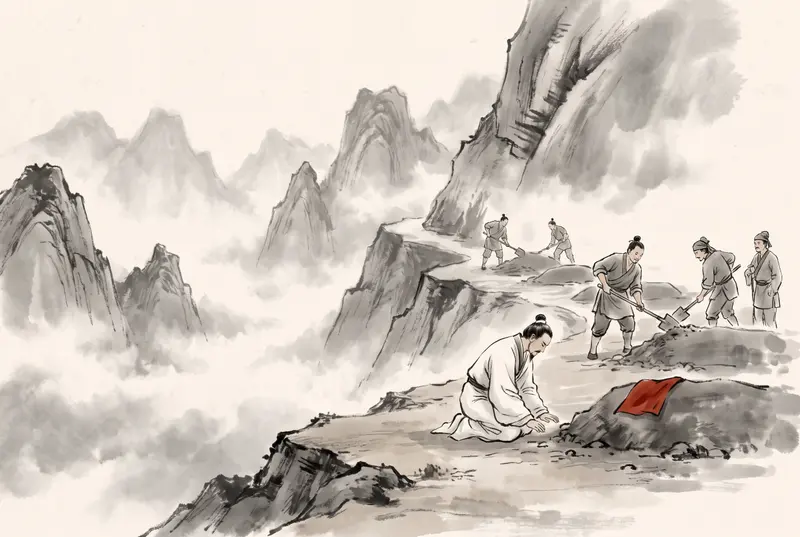
三十六年,繆公復益厚孟明等,使將兵伐晉,渡河焚船,大敗晉人,取王官及鄗,以報殽之役。晉人皆城守不敢出。於是繆公乃自茅津渡河,封殽中尸,為發喪,哭之三日。乃誓於軍曰:「嗟士卒!聽無譁,余誓告汝。古之人謀黃髪番番,則無所過。」以申思不用蹇叔、百里傒之謀,故作此誓,令後世以記余過。君子聞之,皆為垂涕,曰:「嗟乎!秦繆公之與人周也,卒得孟明之慶。」三十七年,秦用由余謀伐戎王,益國十二,開地千里,遂霸西戎。天子使召公過賀繆公以金鼓。
Kundoku (Japanese reading)
三十六年、繆公復た益々孟明等を厚くし、兵を将いて晋を伐たしむ。河を渡りて船を焚き、大いに晋人を敗り、王官及び鄗を取り、以て殽の役に報ゆ。晋人皆城守して敢えて出でず。是に於いて繆公乃ち茅津より河を渡り、殽中の尸を封じ、為に喪を発し、之に哭すること三日。乃ち軍に誓いて曰く、「嗟、士卒よ。聴きて譁しきこと無かれ。余誓いて汝に告げん。古の人は黄髪番番に謀る。則ち過つ所無し」と。以て蹇叔・百里傒の謀を用いざりしを申思す。故に此の誓いを作り、後世をして以て余が過ちを記さしむ。君子之を聞き、皆為に涕を垂れて曰く、「嗟乎、秦の繆公の人に与するや周し。卒に孟明の慶を得たり」と。三十七年、秦、由余の謀を用いて戎王を伐ち、国を益すこと十二、地を開くこと千里、遂に西戎に霸たり。天子、召公過をして繆公を賀するに金鼓を以てせしむ。
Japanese
穆公の三十六年(前624年)、穆公はいっそう孟明たちを手厚く遇し、軍を率いて晋を討たせた。孟明たちは黄河を渡ると乗ってきた船を焼き捨て(退路を断ち)、晋の軍を大いに破って、王官と鄗の町を取り、殽の戦いの仕返しを果たした。晋の人々は皆、城にこもって出てこなかった。そこで穆公は茅津から黄河を渡り、殽の山中に野ざらしになっていた戦死者の骨に土をかぶせて葬り、喪を発して三日間声をあげて泣いた。そして軍に向かって誓った。「ああ、兵士たちよ。静かに聞け。わたしは誓ってお前たちに告げる。昔の人は、白髪頭の老人に相談した。だから過ちがなかったのだ」。蹇叔と百里傒の意見を用いなかったことを、深く悔いたのである。それでこの誓いを作り、後の世の人に自分の過ちを覚えておいてもらおうとした。君子(教養ある人々)はこれを聞いて、皆涙を流して言った。「ああ、秦の穆公の人とのつきあいは、行き届いていることだ。それで、ついに孟明の手柄を得られたのだ」。三十七年、秦は由余の計略を用いて戎の王を討ち、十二の国を併せ、千里の土地を開いて、ついに西戎の覇者となった。周の天子は召公過を使者として送り、金の鐘と太鼓を贈って穆公を祝った。
English
In the thirty-sixth year Duke Mu treated Meng Ming and the others more generously than ever, and sent them with an army to attack Jin. They crossed the Yellow River and burned their boats, utterly defeated the men of Jin and took Wangguan and Hao, and so paid Jin back for the battle of Xiao. The men of Jin all stayed behind their walls and did not dare come out. Then Duke Mu crossed the river at Maojin, heaped earth over the bodies that still lay in the pass of Xiao, held a funeral for them, and wept aloud for three days. Then he swore an oath before the army: "Ah, soldiers! Listen, and do not make a sound. I swear this and tell it to you. The men of old took counsel with the white-haired elders, and so they made no mistakes." He was thinking over and over of how he had not followed the advice of Jian Shu and Baili Xi. That was why he made this oath: so that later ages would remember his mistake. When gentlemen heard of it, they all wept and said: "Ah! Duke Mu of Qin was true to the men who served him. In the end he was rewarded with Meng Ming's victory." In the thirty-seventh year Qin used You Yu's plans to attack the king of the Rong. It added twelve states to its own and opened up a thousand li of land, and so became overlord of the western Rong. The Son of Heaven sent the Duke of Shao, Guo, to congratulate Duke Mu with gifts of bronze bells and drums.
Notes (JA)
- 渡河焚船: 河を渡って船を焼き、退路を断って決死の覚悟を示した。のちの項羽の「破釜沈船」に似る。
- 封殽中尸: 殽の戦いで死んだ兵士の遺骸に土を盛って葬ったこと。
- 黄髮番番: 白髪交じりの老人。この誓いは『尚書』の「秦誓」として伝わる。
- 霸西戎: 西方の諸部族の盟主となったこと。
Notes (EN)
- Burned their boats (焚船): to cut off retreat, like Xiang Yu's "breaking the pots and sinking the boats" centuries later.
- The oath survives as the "Oath of Qin" (秦誓), the last chapter of the Book of Documents.
- Overlord of the western Rong (霸西戎): leader of the western peoples.
Word notes
- oath/oʊθ/noun
a serious promise
In the text: “swore an oath before the army”
Similar words: vow — a solemn promise · pledge — a formal promise
- elder/ˈɛldər/noun
an older person, often one who is respected
In the text: “took counsel with the white-haired elders”
Similar words: senior — an older person · old man — a man of great age
Passage 8
Original
三十九年,繆公卒,葬雍。從死者百七十七人,秦之良臣子輿氏三人名曰奄息、仲行、鍼虎,亦在從死之中。秦人哀之,為作歌黃鳥之詩。君子曰:「秦繆公廣地益國,東服彊晉,西霸戎夷,然不為諸侯盟主,亦宜哉。死而棄民,收其良臣而從死。且先王崩,尚猶遺德垂法,況奪之善人良臣百姓所哀者乎?是以知秦不能復東征也。」繆公子四十人,其太子嵤代立,是為康公。
Kundoku (Japanese reading)
三十九年、繆公卒し、雍に葬る。死に従う者百七十七人。秦の良臣子輿氏の三人、名づけて奄息・仲行・鍼虎と曰う。亦た従死の中に在り。秦人之を哀れみ、為に歌を作る。黄鳥の詩なり。君子曰く、「秦の繆公、地を広め国を益し、東は彊晋を服し、西は戎夷に霸たり。然れども諸侯の盟主と為らざるは、亦た宜なるかな。死して民を棄て、其の良臣を収めて死に従わしむ。且つ先王崩ずるも、尚お猶お徳を遺し法を垂る。況や之に善人良臣の百姓の哀しむ所の者を奪うをや。是を以て秦の復た東征する能わざるを知るなり」と。繆公の子四十人、其の太子嵤代わりて立つ。是れ康公たり。
Japanese
三十九年(前621年)、穆公が亡くなり、雍に葬られた。後を追って死なされた者は百七十七人。秦のすぐれた家臣、子輿氏の三人、奄息・仲行・鍼虎も、そのなかにいた。秦の人々はこれを悲しみ、彼らのために歌を作った。それが『詩経』の「黄鳥」の詩である。君子はこう言った。「秦の穆公は土地を広げて国を大きくし、東では強い晋を従え、西では戎の覇者となった。それでも諸侯の盟主になれなかったのは、もっともなことだ。死ぬにあたって民を見捨て、すぐれた家臣を取り上げて道連れにしたのだから。昔の王たちは、亡くなっても徳を残し、手本となる決まりを伝えた。まして、民が惜しむ善人や良臣を奪い取るとは。これで、秦がふたたび東へ進出できないことが分かる」。穆公には四十人の子がいた。そのうち太子の嵤が後を継いだ。これが康公である。
English
In the thirty-ninth year Duke Mu died and was buried at Yong. One hundred and seventy-seven people followed him in death. Among them were three good ministers of Qin of the Ziyu clan, named Yanxi, Zhonghang and Zhenhu. The people of Qin grieved for them and made a song for them: the poem "The Yellow Birds". The gentlemen said: "Duke Mu of Qin widened his lands and enlarged his state. In the east he made mighty Jin submit, and in the west he became overlord of the Rong. Yet it was fitting that he never became leader of all the lords. When he died he abandoned his people, taking his best ministers to follow him into death. Even when the kings of old died, they left behind their virtue and handed down good laws; how much worse, then, to rob the people of the good men and wise ministers whom they mourned! From this we know that Qin would not march east again." Duke Mu had forty sons. His heir, Ying, succeeded him; he was Duke Kang.
Notes (JA)
- 從死: 殉死。主君の死にあたって、家臣や召使いをともに葬ること。秦では武公のときに始まり、献公のとき(前384年)にやめさせた。
- 黃鳥之詩: 『詩経』秦風の詩。三良を惜しみ、「もし身代わりになれるなら、百人の命でも差し出すのに」と歌う。
- 不能復東征: 実際に秦が東へ大きく進むのは、三百年近くのちの孝公・商鞅の時代からである。
Notes (EN)
- Followed him in death (從死): human sacrifice at a ruler's burial; Qin banned it in 384 BCE.
- "The Yellow Birds" (黃鳥): a poem in the Book of Odes mourning the three good men.
- Qin did not push east again in earnest until Duke Xiao and Shang Yang, nearly three centuries later.
Word notes
- grieve/ɡriv/verb
to feel great sadness, especially after a death
In the text: “The people of Qin grieved for them”
Similar words: mourn — feel sorrow for the dead · lament — show deep sadness
- abandon/əˈbændən/verb
to leave someone you are responsible for
In the text: “he abandoned his people”
Similar words: desert — leave without help · forsake — give up on (formal)